
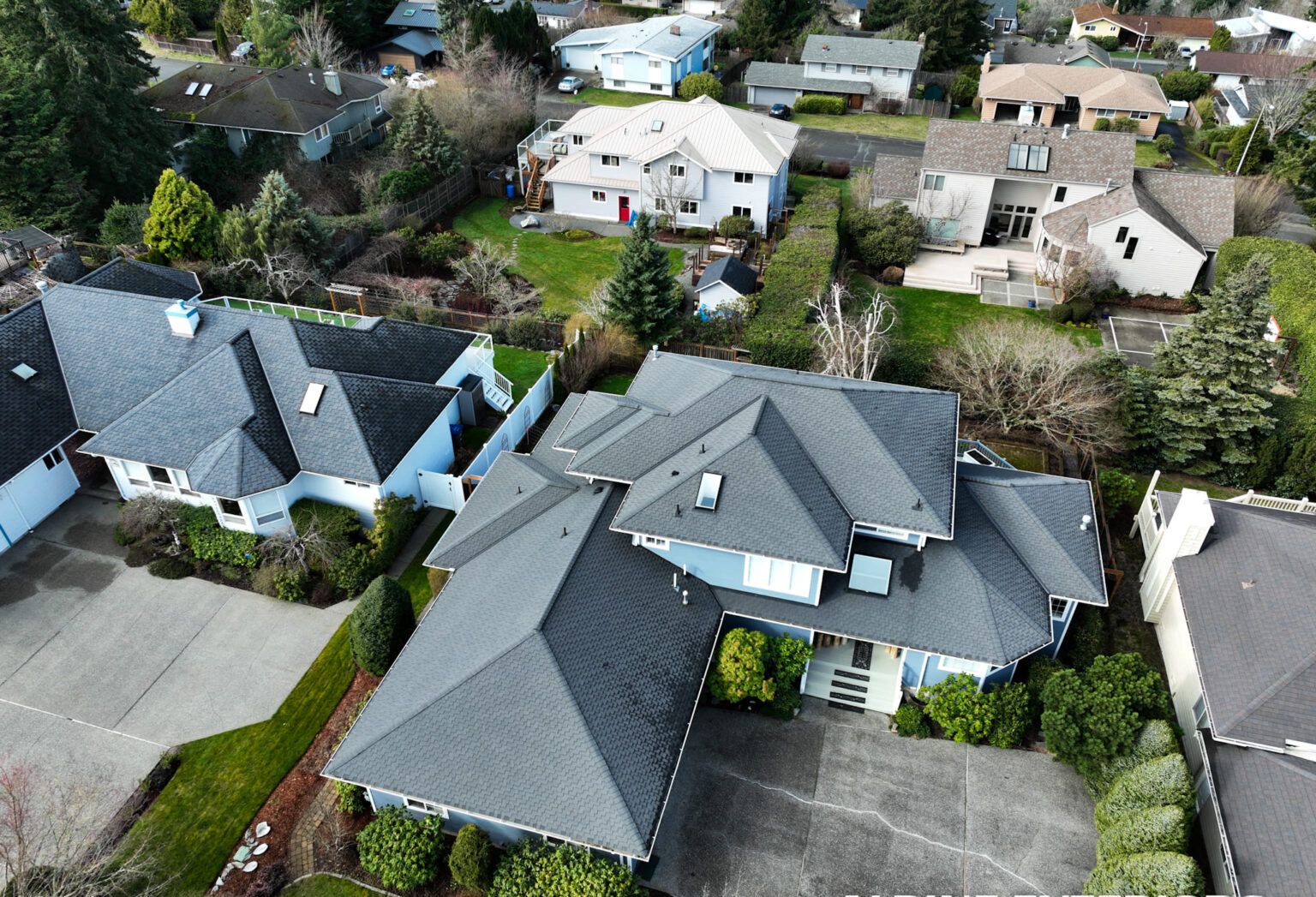
If you want the lowest long-term maintenance and the best resistance to moss, algae, and moisture damage in a place that sees rain for most of the year, HardiePlank fiber cement siding is usually the better fit for Bellingham, Ferndale, Lynden, Blaine, Birch Bay, and the islands. If you're restoring a historic home, working within a neighborhood design covenant that calls for real wood, or you're committed to the specific look and feel of natural cedar and are prepared to keep up with refinishing, cedar lap siding still has a legitimate place here. Neither material is wrong — the right one depends on how much upkeep you want to sign up for and what the house needs to look like.
HardiePlank is a cement-based composite board manufactured to look like traditional lap siding, available pre-primed or with factory-baked color (ColorPlus) in a range of textures, including smooth and cedar-grain finishes. It's become the default recommendation for a lot of homes we work on around Whatcom County because it doesn't rot, doesn't feed insects, and doesn't swell and shrink the way wood does when it's wet for weeks at a time — which, from November through April, describes most of our siding.
The tradeoffs are real, though. Fiber cement is heavy, which means installation is more labor-intensive and less forgiving of mistakes — joints, flashing, and caulking all have to be done correctly the first time, because the board itself won't hide a sloppy install the way a natural material sometimes can. It also has to be field-cut with a saw and dust-collection setup (fiber cement dust is a respiratory hazard), so it's not a material for a casual DIY weekend. And while it won't rot, unpainted or poorly maintained fiber cement can still grow moss and algae on north-facing walls and shaded elevations the same as anything else — it just won't rot underneath that growth.
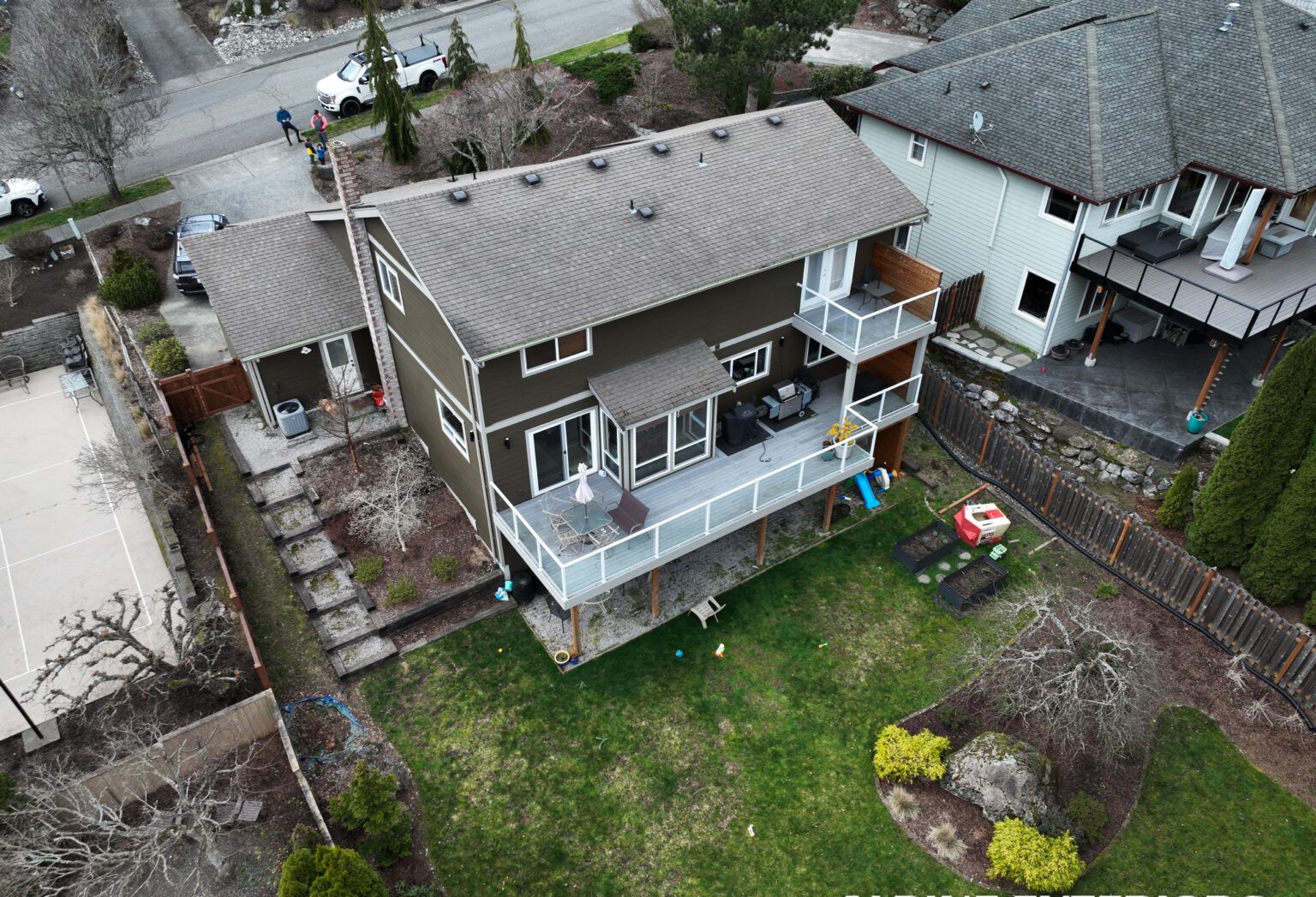
Western red cedar is a Pacific Northwest material through and through, and there's a reason it's been used on homes here for generations — it has natural oils that resist decay and insects better than most softwoods, it takes stain and paint beautifully, and it has a warmth and grain pattern that fiber cement, even with a wood-grain texture, doesn't fully replicate. For period homes in Fairhaven or older neighborhoods in Bellingham, or for owners who specifically want that look, cedar remains a defensible choice.
The honest drawback is maintenance. Cedar needs to be refinished — stained or painted — on a recurring cycle, and in a climate with this much sustained moisture, skipping that maintenance is where cedar siding gets into trouble fast. Wood rot at butt joints, around window and door trim, and at the bottom courses near grade is one of the most common repair calls we get on older homes in this area, especially where wind-driven rain off Bellingham Bay or the Strait has been hitting one exposed wall for years. Cedar also needs a functioning rain-screen gap and correctly lapped building paper or house wrap behind it — cedar installed tight to the sheathing without an air gap traps moisture and rots from the back, where you won't see it until the damage is advanced.
| Factor | HardiePlank Fiber Cement | Cedar Lap Siding |
|---|---|---|
| Installed cost | Moderate to higher upfront, mainly due to labor and specialized cutting | Material and labor costs vary widely by grade of cedar; clear-grade cedar can run comparable to or above fiber cement |
| Lifespan | Multiple decades with periodic repainting; manufacturer warranties commonly run 30+ years on the material itself | Can last decades if maintained correctly, but service life drops sharply wherever moisture management or refinishing is neglected |
| Maintenance | Repaint every 10-15 years depending on exposure; occasional caulk and moss treatment on shaded walls | Restain or repaint every 3-7 years depending on finish and exposure; regular inspection for rot at joints, trim, and grade |
| Appearance | Consistent, uniform boards; wood-grain textures approximate but don't fully match real cedar's look | Authentic wood grain and warmth; ages and weathers naturally if left unfinished, which some owners like and others don't |
For most of the homes we see across Whatcom County — from tight in-town lots in Bellingham to more wind-exposed sites in Blaine, Birch Bay, and out on the islands where getting a crew and materials over by ferry adds cost and lead time to every future maintenance visit — HardiePlank is the more practical long-term choice. Less frequent maintenance matters more when a repaint or repair trip is genuinely harder to schedule, and fiber cement's resistance to rot removes the single biggest failure point we see on older wood-sided homes in this climate. It also plays well with the wall assemblies required to meet current Washington State Energy Code continuous insulation and air-sealing requirements, since it installs cleanly over rigid insulation and a rain-screen furring system without the added moisture sensitivity that wood introduces.
That said, we don't tell every customer to rip off good cedar. If a home already has sound, well-maintained cedar siding with a properly detailed rain screen behind it, and the owner is committed to staying on top of refinishing, there's no reason to replace it just because fiber cement exists. Where cedar tends to lose the argument here is on north- and west-facing walls that catch wind-driven rain off the Bay or the Strait, on homes up toward Sudden Valley and the foothills where freeze-thaw cycling stresses any gaps in the finish, and on lower-maintenance rental or vacation properties where nobody's realistically going to restain every few years. In those situations, fiber cement's lower attention requirement outweighs cedar's appearance advantage. Alpine Exteriors installs both materials and will walk a specific house — its exposure, its existing wall assembly, and the owner's appetite for maintenance — before recommending one over the other rather than defaulting to whichever is easier to sell.
Not inherently — cedar is one of the more rot-resistant softwoods available — but our extended wet season means any gap in maintenance, flashing, or the rain-screen gap behind the boards has more time to do damage before it dries out again. Cedar that's properly installed and refinished on schedule holds up fine; cedar that's neglected for a few seasons in a row tends to show rot at joints and lower courses sooner here than in a drier climate.
Yes. Moss and algae growth is driven by shade and moisture, not by what the siding is made of, so a north-facing wall under overhanging trees can develop the same green or black staining on fiber cement as on wood. The difference is that fiber cement won't rot underneath that growth the way wood can, so it's more of a cosmetic cleaning issue than a structural one.
It's not automatically a bad choice, but wind-driven rain off open water puts more sustained moisture load on exposed walls, which raises the bar for how well the rain screen, flashing, and finish schedule need to be executed and maintained. Some owners in those spots still choose cedar for the look and are diligent about upkeep; others find fiber cement's lower maintenance a better match for that exposure.
Neither siding material by itself satisfies the code — compliance comes from the full wall assembly, including continuous insulation, air sealing, and vapor control appropriate to the house's construction. Both HardiePlank and cedar can be installed over a code-compliant assembly with a rain-screen gap; the choice between them is about durability and maintenance, not energy performance.
If you're weighing HardiePlank against cedar for a home in Bellingham, Ferndale, Lynden, Blaine, Birch Bay, Sudden Valley, or the islands, Alpine Exteriors (WA contractor license ALPINI751OW) can look at your specific exposure, existing wall assembly, and budget and give you a straight recommendation — not just a sales pitch for whichever material is easier to install. Reach out for an on-site estimate before you commit either way.