
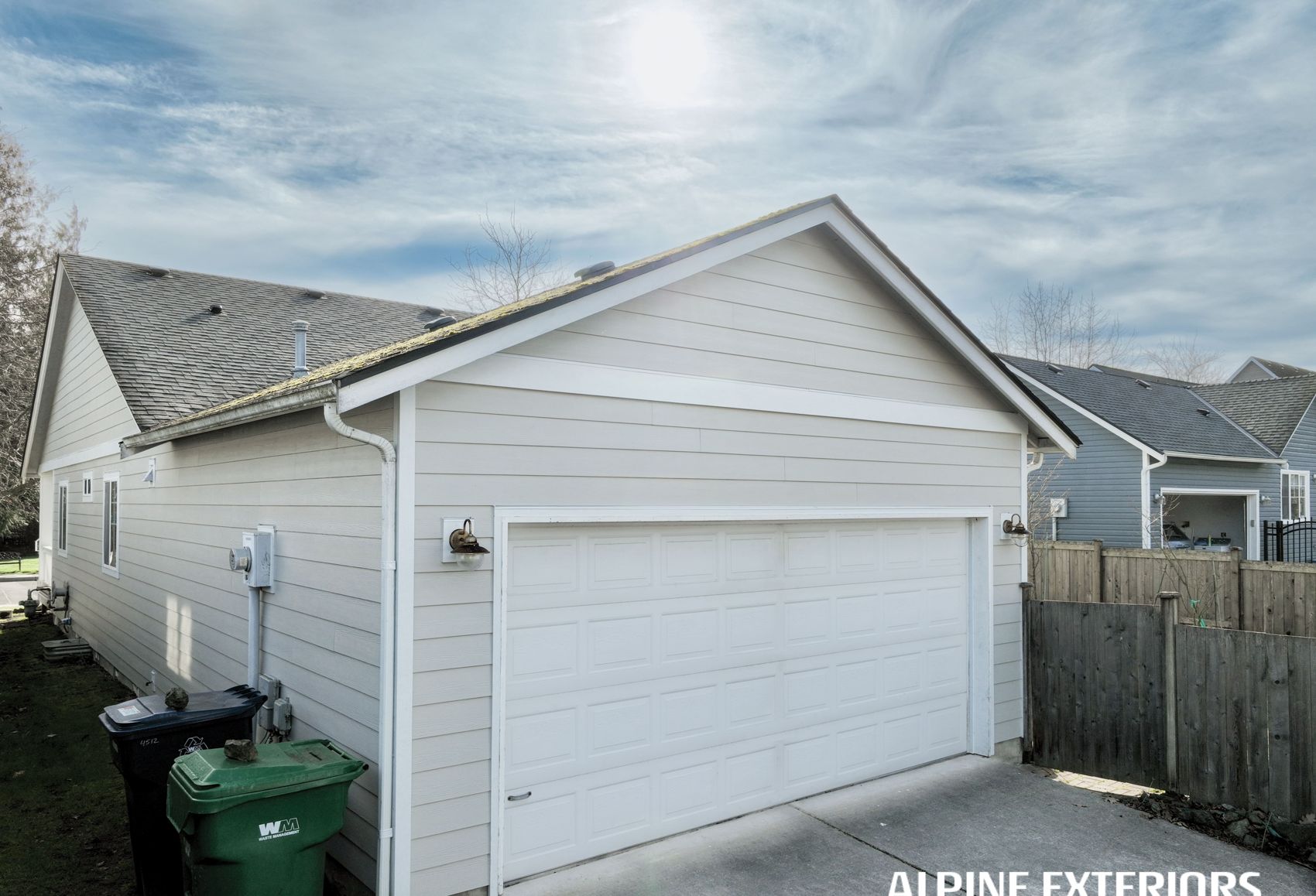
Yes — siding installed on a Cordata home has to satisfy the wind and moisture provisions in the Washington State Building Code, not just look good going up. In practice that means the product has to be documented as code-compliant, the fasteners have to hit framing at the right spacing and depth, and the drainage plane behind the siding has to be intact before the wall is closed up. Most of that work happens where a homeowner never looks — behind the boards, under the wrap, in the nailing pattern — which is exactly why it gets skipped on cut-rate jobs.
Washington doesn't write its own siding code from scratch. It adopts the International Residential Code with state amendments as the Washington State Building Code, and layers the Washington State Energy Code (WSEC) on top for insulation, air sealing, and continuous exterior insulation. Cordata sits inside Bellingham city limits, so permits for siding replacement, new construction, or major re-siding jobs there run through City of Bellingham Permit Services rather than the county building division — but the underlying code is the same one enforced everywhere in Whatcom County, including unincorporated areas like Sudden Valley or the islands under county jurisdiction.
Unlike states that maintain a statewide product-approval database, Washington leans on the manufacturer's own documentation to prove a siding product is code-compliant. That usually means one of three things: an ICC-ES (International Code Council Evaluation Service) evaluation report that spells out fastening schedules and wind limits for the product; published installation instructions tied to a recognized ASTM standard (fiber cement to ASTM C1186, vinyl to ASTM D3679, for example); or, when a wall falls outside what the manufacturer covers — a tall gable, an exposed bluff lot, an unusual fastening pattern — a stamped engineering letter. The building official reviewing the permit wants to see that documentation, and the field inspector checks the installed work against it, not against a generic assumption that "siding is siding."
Fastening is where most of the actual code compliance lives. Nails or screws have to penetrate solid framing to a minimum depth the manufacturer specifies — commonly somewhere around 1 to 1-1/4 inches into solid wood, though the exact number varies by product and has to come from that product's own installation sheet, not a generic rule of thumb. Fastener spacing tightens as wind exposure goes up, and fastener material has to resist corrosion, which matters more here than in a dry inland climate. When rigid foam is added under the siding to hit Washington State Energy Code insulation targets, fasteners have to run longer to still reach that same depth of solid framing through the extra foam thickness — an easy detail to miss if the crew is using leftover fasteners sized for a different job.
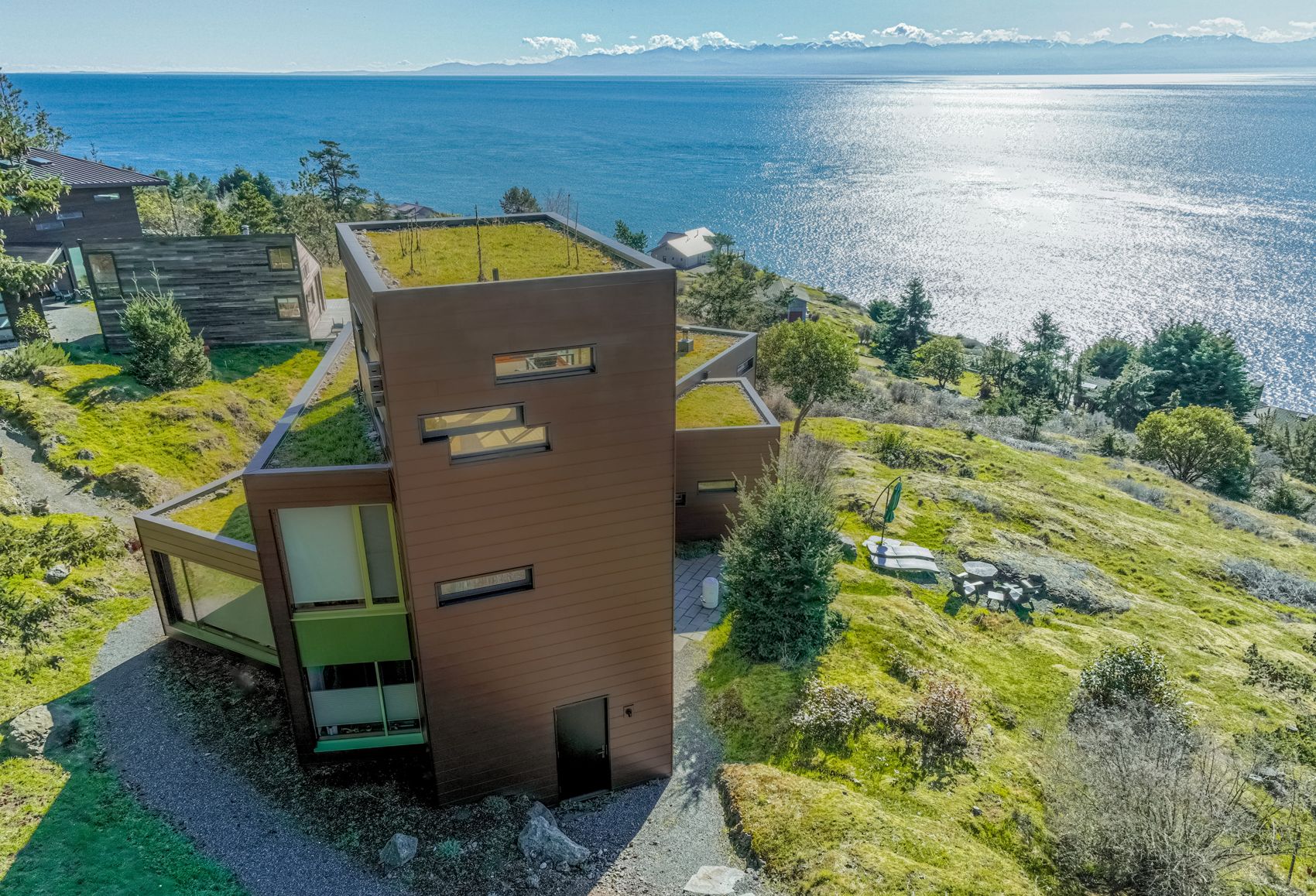
Whatcom County doesn't deal with hurricane-force design events, so the wind provisions homeowners here should care about look different from what you'd read about in a Gulf Coast siding article. What actually stresses siding in and around Cordata is a combination of near-constant damp weather, wind-driven rain funneling in off Bellingham Bay and the Strait of Georgia, and long stretches where a wall assembly simply doesn't get a chance to fully dry out between storms. That's a moisture-management problem as much as a wind problem, and the two are connected: a wind-driven rain event pushes water sideways into laps and seams that would stay dry in calmer weather, and if the drainage plane behind the siding isn't doing its job, that water has nowhere to go but into the sheathing.
Exposure varies more across Whatcom County than most homeowners assume. Cordata itself sits a few miles inland from the bay and has enough tree cover and surrounding development to generally fall into a lower wind-exposure category than open shoreline. Properties right on the water — Birch Bay, Blaine's waterfront, Semiahmoo, exposed island bluffs — see meaningfully higher wind pressure against the wall and often warrant a tighter fastening schedule or an engineered detail rather than the manufacturer's baseline table. Elevated or ridge-exposed lots, including some of the higher ground around Sudden Valley, can also see wind funneling that a flat, tree-sheltered lot never experiences.
| Location type | Typical wind exposure | What it usually means for siding |
|---|---|---|
| Inland, tree-sheltered (most of Cordata) | Lower exposure | Manufacturer's standard fastening table is usually sufficient |
| Open shoreline (Birch Bay, Blaine waterfront, exposed island lots) | Higher exposure | Tighter fastener spacing or an engineered fastening schedule may be needed |
| Elevated or ridge-exposed ground (parts of Sudden Valley, some Lynden high ground) | Higher exposure | Wind funneling can exceed baseline assumptions; a site-specific check is worth doing |
Moss and algae are the other constant. Shaded, north-facing walls under mature trees — common throughout Cordata's residential streets — stay damp longer than a south-facing wall in full sun, and that's exactly the condition moss and algae need to take hold. It's mostly cosmetic, but sustained moisture sitting against siding also softens caulking, feeds wood rot at trim and butt joints, and can shorten the life of a paint or finish coat. Freeze-thaw cycling, which is a real durability factor in the higher foothill communities toward Mt. Baker, is a smaller issue at Cordata's lower elevation, where the marine air moderates most cold snaps — but it isn't zero, and a hard freeze on already-saturated siding or trim is still capable of cracking a joint that a drier product would have shrugged off.
None of this requires becoming a code expert. It requires asking the right questions before work starts and not treating the permit and inspection as paperwork to get through.
The honest tradeoff is time and cost. Proper fastening schedules, a rainscreen gap, correctly sized fasteners for foam thickness, and keeping documentation on hand all add labor and material cost over a bare-minimum installation, and a site that turns out to need engineering review because of exposure will take longer to permit than a straightforward inland lot. Alpine Exteriors builds that time into its estimates rather than surprising a homeowner mid-project, and treats the code and inspection process as a floor to build from, not an obstacle to route around.
Cordata is inside Bellingham city limits, so siding permits for addresses there go through City of Bellingham Permit Services. Homeowners in unincorporated parts of the county — including many rural and island properties — go through Whatcom County's building division instead. Both enforce the same Washington State Building Code and Washington State Energy Code, so the underlying requirements for siding don't change; only which office issues the permit does.
Most inland, tree-sheltered lots — which describes a large share of Cordata — can be sided with a manufacturer's standard product line following its published installation instructions or ICC-ES report, without needing a special high-wind-rated version. Properties on open shoreline or elevated, wind-exposed ground are the ones more likely to need tighter fastening or a specific engineered detail, and that's worth confirming before materials are ordered.
Corrosion-resistant fasteners matter more here than in a dry climate, given how much of the year siding stays damp and how close much of Whatcom County sits to saltwater. Hot-dip galvanized or stainless fasteners, sized to whatever penetration depth the specific siding product's installation sheet calls for, are the standard approach — and that sizing has to be rechecked whenever rigid foam insulation is added under the siding, since the fastener needs to travel through the foam and still reach full depth in solid framing.
An inspector isn't grading a home for moss or algae staining — that's a maintenance and appearance issue, not a code item. What an inspector is checking is fastening pattern and depth, flashing and drainage details at penetrations and terminations, and whether the weather-resistive barrier behind the siding was installed and lapped correctly before the siding went on. Moss tends to show up later as a symptom of a wall that stays wet too long, which is often connected to the same drainage details an inspector does check.
Siding that's fastened correctly, backed by the right product documentation, and installed with real drainage behind it will handle a Whatcom County winter without drama — the kind that isn't will show it within a few wet seasons. Alpine Exteriors is a licensed Washington contractor (license ALPINI751OW) serving Bellingham, Ferndale, Lynden, Blaine, Birch Bay, Sudden Valley, and the islands, and pulls permits, documents products, and schedules inspections as a normal part of every siding job rather than an afterthought. If you're planning a re-side in Cordata or anywhere else in Whatcom County, reach out to Alpine Exteriors for an assessment of your home's exposure, product options, and what the permit process will actually involve.