
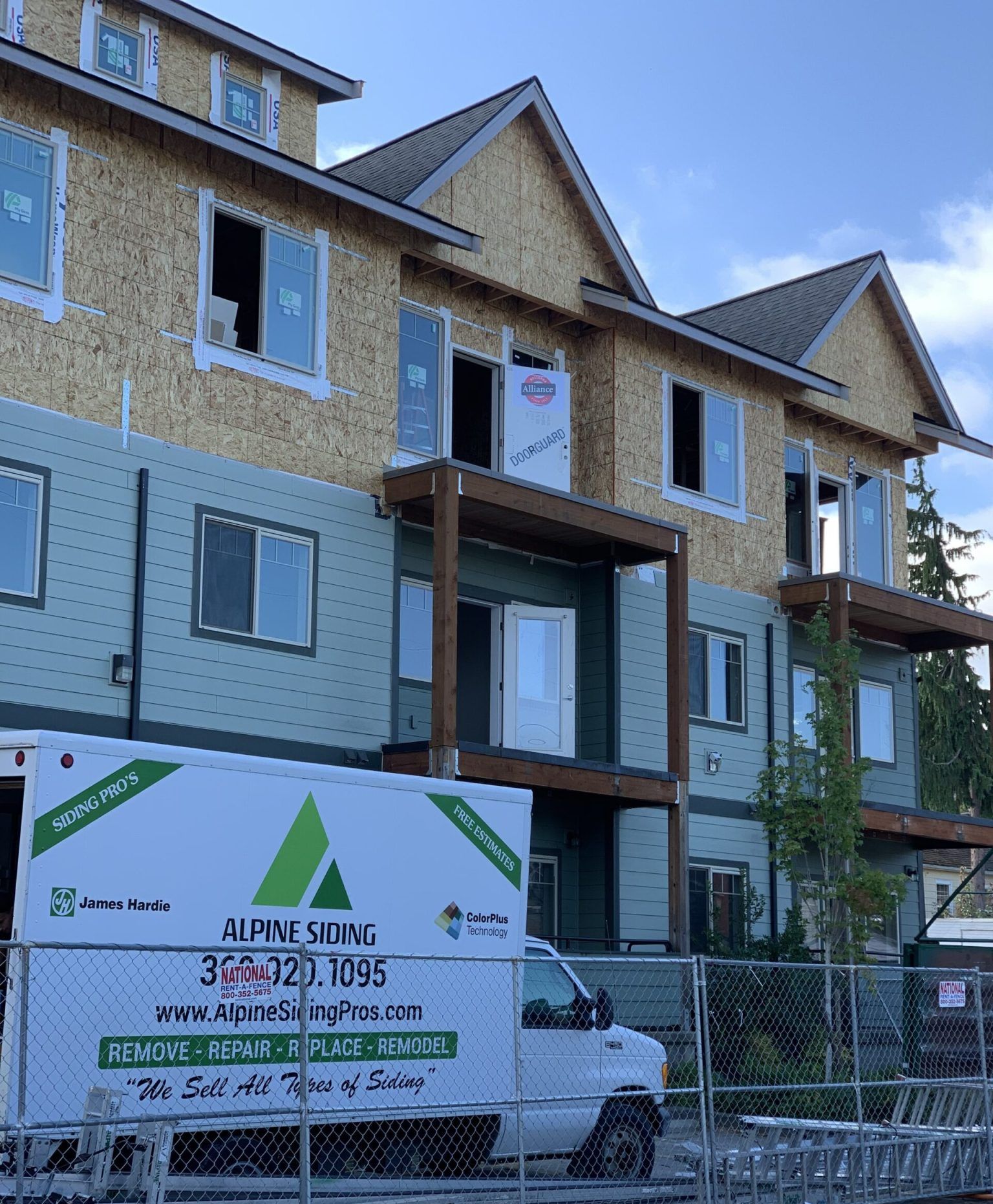
Edgemoor sits right on the water side of Bellingham, which means its older homes take a steady beating from wind-driven rain coming off Bellingham Bay and the Strait of Georgia. Add in the shade from mature evergreens along Chuckanut Drive and the surrounding bluffs, and you get siding that stays damp longer than it would a few miles inland — the classic setup for moss, algae streaking, and hidden wood rot behind old lap siding. If you own a home in Edgemoor and you're staring down a siding replacement, this page walks through the process in plain terms: how long it actually takes, what has to happen before crews show up, what each stage of the job looks like, and what you can do to make the project go smoother. We wrote this from the perspective of Alpine Exteriors, a Whatcom County siding contractor, but the sequence below applies whether you hire us or someone else — use it to know what a competent crew should be doing at each point.
For a typical single-family home in Edgemoor — say 1,800 to 2,800 square feet — a full siding replacement usually runs somewhere between one and three weeks of on-site work once crews start, not counting the weeks of lead time before that for permitting and material ordering. Smaller jobs (a single wall, a rot repair section, or a rear addition) can wrap in a few days. Larger homes, homes with a lot of dormers and trim detail, or homes where we find significant sheathing rot once the old siding comes off, run longer. Whatcom County's rain pattern is the biggest wildcard: we don't install siding, house wrap, or flashing in active rain, so a string of wet days in November or a Pineapple Express event in January can stretch a two-week job into three or four calendar weeks even though the actual labor hours don't change much. Homeowners who want the shortest, most predictable timeline should aim for a start date in the July–September dry stretch, though we do work through the wetter months when the forecast cooperates.
It's worth being honest that "on schedule" in siding work means something a little different than in, say, roofing. Roofers can sometimes push through light drizzle under tarps. Siding can't — wet substrate under new house wrap and cladding traps moisture instead of shedding it, which defeats the whole point of the job. A contractor who tells you a hard, weather-independent date for a project starting in the shoulder seasons either hasn't done many jobs in this county or is telling you what you want to hear.
Three things typically need to be sorted before a crew ever touches your house:
During this pre-construction window, we also do a hands-on inspection of the existing wall assembly — checking window and door flashing, looking for soft spots around deck ledgers and hose bibs, and checking attic and crawlspace ventilation, since poor ventilation combined with our wet climate is a common driver of the sheathing rot we find once old siding comes down.
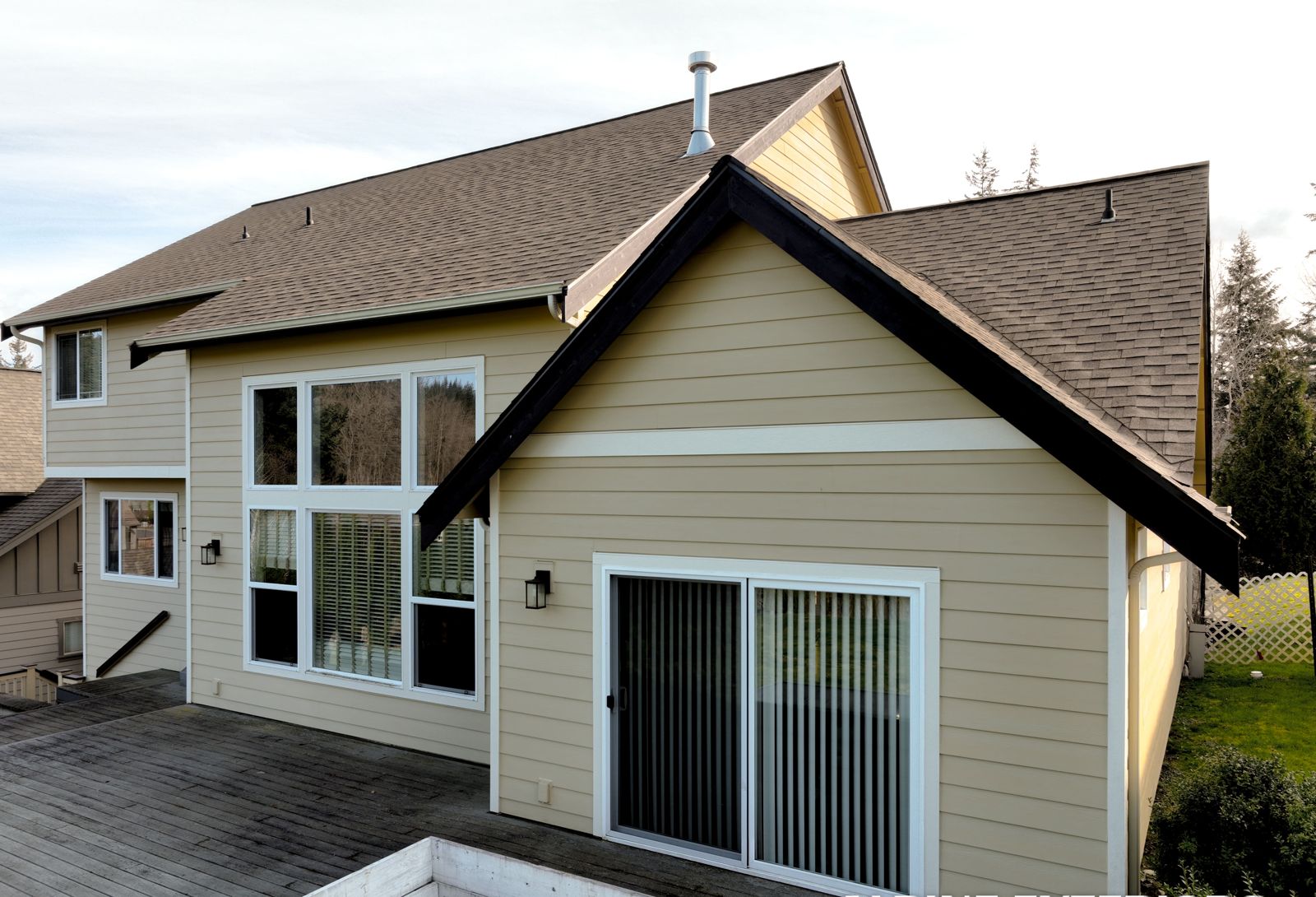
Every job is a little different, but a siding replacement in this area generally moves through the following stages in order:
A few simple steps on your end make the project go faster and protect your belongings:
Once installation wraps, the county or city building inspector signs off on any permitted work — this is a required step, not an optional formality, and you should insist on seeing the final inspection result rather than taking a contractor's word that "it's fine." After that, a thorough crew does a final cleanup pass: magnetic sweep for stray nails and screws, removal of the dumpster and staging materials, and a walk of the yard to reset anything that was moved. We then do a walkthrough with the homeowner, going wall by wall to check color match, caulking lines, trim reveals, and that all flashing and trim details were installed as specified. This is the point to flag anything that doesn't look right — a good contractor would rather fix a nail pop or a caulk line now than have you discover it after the crew is gone.
Be aware that some cleanup items are outside a siding contractor's scope — for example, restoring lawn areas compacted by scaffolding or ladders, or repainting interior walls if vibration caused hairline drywall cracks. Ask what's included before work starts so there are no surprises at the walkthrough.
New siding in this climate still needs basic homeowner upkeep. Because of the moss and algae growth this area is prone to under tree cover and on north-facing walls, plan on a gentle wash — low-pressure water and a soft brush or a mild cleaning solution, never an aggressive pressure washer aimed directly at seams — once or twice a year to keep growth from taking hold. Keep gutters clear so overflow doesn't run down the wall face, and keep an eye on caulking at trim joints and penetrations, since caulk is a maintenance item that eventually needs to be refreshed regardless of who installed it.
Warranty coverage on a siding job is really two separate things: the manufacturer's product warranty (covering material defects, and varying significantly by product line and manufacturer) and the contractor's workmanship warranty (covering installation quality). Get both in writing, understand what voids each one — improper cleaning methods and unauthorized modifications are common exclusions — and confirm whether the workmanship warranty is transferable if you sell the house. Alpine Exteriors carries Washington state contractor license ALPINI751OW; ask any contractor you're considering for their license number and verify it's active before signing a contract.
New siding installed to current standards should also help with energy performance — proper house wrap, sealed penetrations, and (where included) a continuous insulation layer contribute toward the wall assembly requirements in the Washington State Energy Code. If energy performance is a priority for your project, ask your contractor how the specified wall assembly meets code requirements for your climate zone rather than assuming any new siding automatically improves efficiency — the insulation and air-sealing details matter more than the cladding material itself.
You often can't know for certain until the old siding comes off, but there are warning signs worth checking now: soft or spongy spots when you press on the siding near the bottom courses or under windows, paint that bubbles or peels in the same spots repeatedly, and dark staining or a musty smell in the wall cavity from the inside. A pre-project inspection can probe these areas, but final confirmation happens at tear-off — which is also why a fixed, no-surprises quote for an older home's siding job is unrealistic, and reputable contractors build in a process for pricing rot repair as a change order rather than guessing upfront.
Yes, but with real limitations. We schedule around forecasted dry windows, work in sections so open wall area is minimized, and use temporary weather protection over exposed sheathing between work sessions. What we won't do is install house wrap, flashing, or siding directly onto wet substrate, so a wet fall or winter stretch means more schedule flexibility is needed, not that the project is impossible.
Almost never for a re-siding job. Work happens outside, power and water stay on, and interior access is unaffected except for noise during working hours and occasional short periods where a door or window opening is temporarily uncovered. The main disruption is exterior — landscaping access, parking near the work zone, and tolerating the noise of nail guns and saws for the duration.
There's no single right answer — it depends on your budget, your home's style, and how much maintenance you want to take on. Fiber cement resists moisture and pest damage well and holds paint longer than wood, but it's heavier and pricier. Vinyl is low-maintenance and budget-friendly but can look less premium on higher-end homes and is more prone to impact damage. Cedar looks classic and is common in this region's older homes, but it demands the most upkeep against moisture and moss if it isn't properly ventilated and maintained. Whatever material you choose, the flashing and drainage details behind it matter as much as the cladding itself for keeping wind-driven rain out.
If you're weighing a siding replacement on a home near the water in Edgemoor or anywhere else in Whatcom County, the details above — permitting, material lead times, sheathing condition, and correct flashing for our wind-driven rain — are what separate a job that lasts decades from one that needs redone in ten years. Alpine Exteriors serves Bellingham, Ferndale, Lynden, Blaine, Birch Bay, Sudden Valley and the islands, and we're happy to walk your property, point out what we see, and give you a straightforward assessment of scope before you commit to anything. Reach out to schedule an on-site evaluation and get a realistic timeline and cost range for your home.