
If you own a home on South Hill, the ridge of older neighborhoods rising above downtown Bellingham with views out over Bellingham Bay and the Strait of Georgia, your siding decision has to answer to two things at once: the character of the house and the weather it sits in. Many South Hill homes are Craftsman bungalows, foursquares, and mid-century houses tucked under mature maple, cedar, and fir canopy, which means shade, dampness, and years of moss and algae buildup on north- and east-facing walls. Add wind-driven rain that comes straight off the water during fall and winter storms, and the siding on a South Hill house works harder than siding on a drier, more sheltered lot inland. Below we compare James Hardie fiber cement siding and vinyl siding on the factors that actually matter here, then give a straight answer on which one we would recommend for most South Hill homes and why.
For most South Hill homes, especially older houses with wood-frame construction under tree cover, we lean toward James Hardie fiber cement. It resists the moisture, moss, and freeze-thaw cycling that this hillside neighborhood and the surrounding foothills see more of than flatter, more open parts of Whatcom County, and it holds up to wind-driven rain coming off the Bay without the seams and gaps that can let water track behind vinyl panels. Vinyl siding still has a legitimate place here. It's the more budget-friendly option, it's genuinely low-maintenance in the sense that it never needs painting, and it can be the right call on a rental property, a detached garage or ADU, or a home where the owner plans to sell within a few years and wants to control upfront cost. The honest answer isn't one-size-fits-all. It depends on how long you're keeping the house, how shaded the lot is, what the existing sheathing and moisture barrier look like, and what you're willing to spend now versus later. The sections below walk through both products so you can weigh that trade-off with real information rather than a sales pitch.
James Hardie fiber cement siding is a blend of cement, sand, and cellulose fiber formed into planks or panels, then either factory-primed for field painting or finished with Hardie's ColorPlus baked-on color system. It's heavier and more rigid than vinyl, which matters in a place like South Hill where wind gusts off the water can work lighter materials loose over time if they weren't installed with a tight fastening schedule to begin with. Fiber cement doesn't feed mold or algae the way bare wood does, and it won't rot, which is a real issue on South Hill's older homes where original cedar siding or an early replacement product has often trapped moisture against the sheathing for decades under tree canopy. It's also non-combustible, which some homeowners value even though wildfire exposure isn't the primary driver of siding choice on this side of the Cascades.
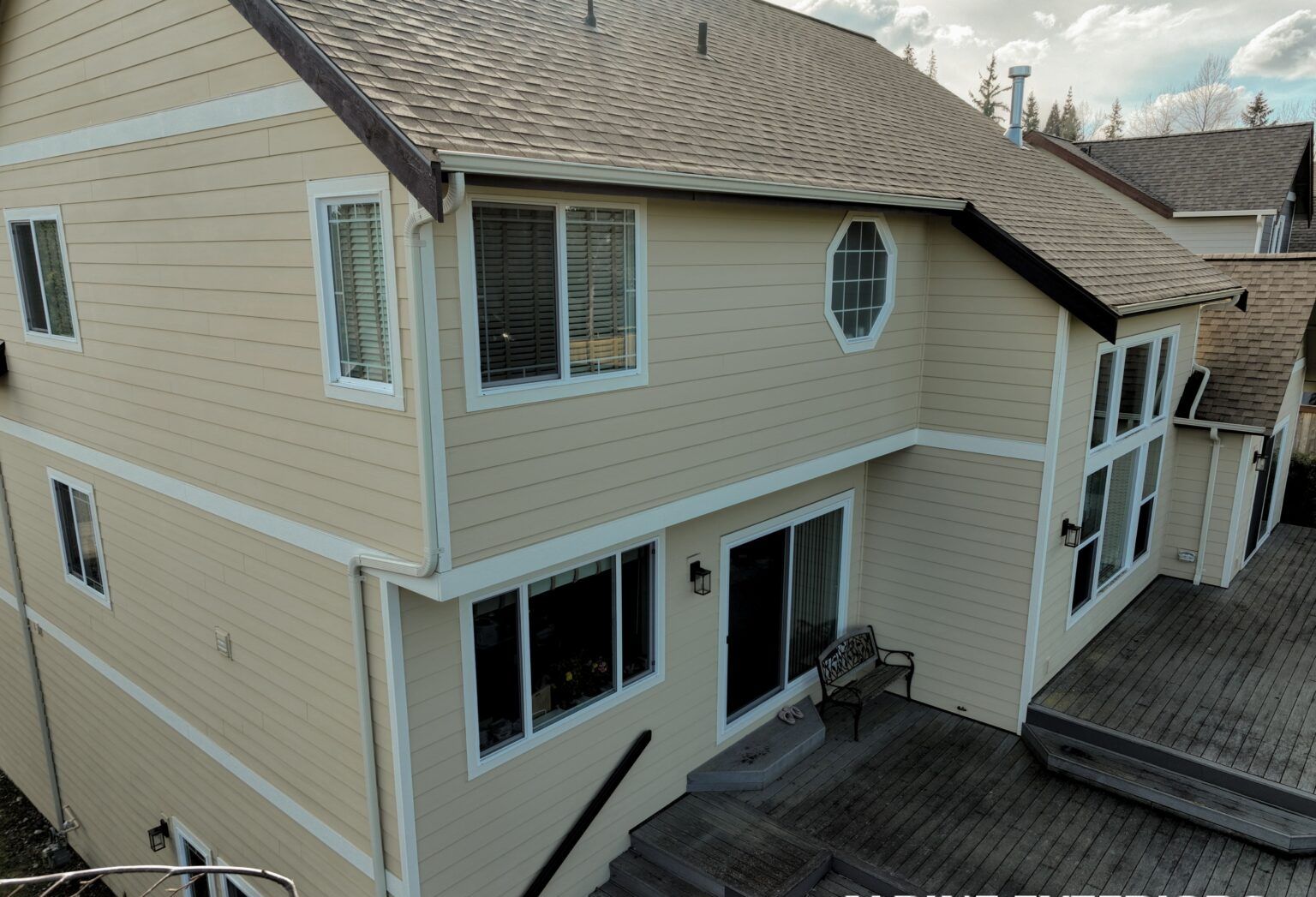
Vinyl siding is an extruded PVC product that interlocks in horizontal or vertical panels and never needs painting, since color runs through the material rather than sitting on top of it. Its biggest advantage is cost: it's less expensive to buy and faster to install than fiber cement, which keeps labor costs down too. It's genuinely low-maintenance in the everyday sense — an occasional rinse with a garden hose or a soft wash keeps most vinyl looking presentable, and it won't rot or attract wood-boring insects the way old cedar siding can. On South Hill, vinyl's weak points show up around moisture management more than the material itself. Vinyl panels are installed with expansion gaps and rely on J-channels, starter strips, and overlapping seams to shed water; if those details aren't installed correctly, or if wind-driven rain off the Bay gets forced sideways into a seam during a strong southwesterly storm, water can get behind the panels and sit against the sheathing and house wrap, where it won't dry out quickly under tree shade. That's largely a workmanship and detailing risk rather than a flaw in vinyl itself, but it's a real one on exposed or heavily shaded South Hill walls.
Rough installed cost ranges below are general figures for planning purposes only, not a quote — your actual cost depends on the size and shape of the house, tear-off scope, and how much trim and detail work is involved.
| Factor | James Hardie Fiber Cement | Vinyl Siding |
|---|---|---|
| Typical installed cost | Roughly $9–$16 per square foot installed, varying with trim and finish | Roughly $4–$9 per square foot installed, varying with panel style and thickness |
| Expected lifespan | Often 30-plus years with proper installation and periodic repainting/caulk upkeep | Often 20 to 30 years, shorter if seams or flashing details were done poorly |
| Maintenance | Periodic repainting (longer intervals with ColorPlus), caulk inspection at joints, occasional soft washing | No painting; occasional soft washing; watch for cracked panels and failed seams after storms |
| Appearance | Wide range of profiles and textures, holds crisp paint lines and shadow lines well over time | Wide range of colors and styles, but can look slightly less substantial up close and may fade unevenly with age |
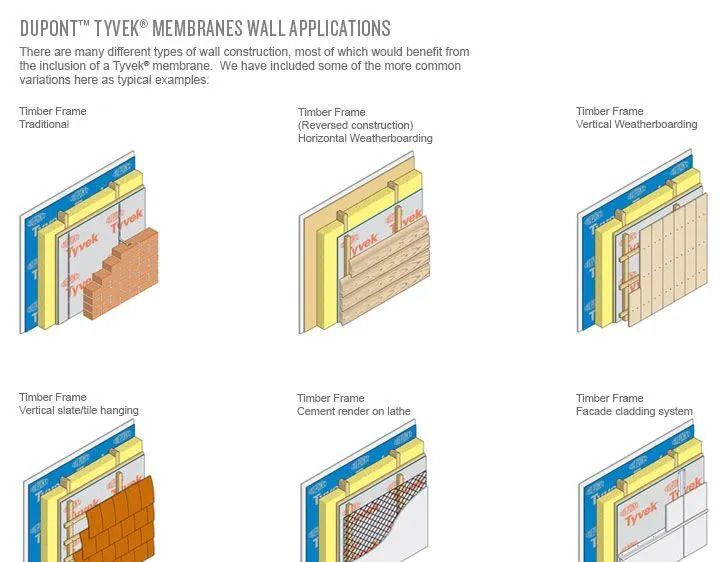
If your South Hill home is one of the neighborhood's older houses with original wood siding showing rot, or if the lot sits under heavy tree cover where moss and trapped moisture have been a recurring problem, we typically recommend James Hardie fiber cement. The reasoning comes down to how this specific neighborhood behaves: South Hill's elevation and orientation toward the water expose walls to wind-driven rain more directly than siding on a sheltered inland lot, and the tree canopy that gives the neighborhood its character also keeps north- and east-facing walls damp for longer stretches after every rain. Fiber cement's resistance to rot and moisture absorption, combined with its ability to take and hold paint over a long service life, fits that combination well. It's also worth noting that Whatcom County construction falls under the Washington State Energy Code, which sets prescriptive requirements for wall insulation and can call for continuous exterior insulation depending on the wall assembly; fiber cement siding is compatible with rigid foam or mineral wool continuous insulation strategies used to meet those code paths, and Alpine Exteriors accounts for that when we scope a re-side rather than just swapping one siding material for another. That said, vinyl isn't the wrong answer everywhere on South Hill. A well-built home on a more open, sun-exposed lot with good roof overhangs and no history of moisture problems can do fine with vinyl, and for owners prioritizing upfront cost over long-term repainting cycles, it's a reasonable, honest choice. Where we'd push back is on installing vinyl over sheathing that already shows signs of moisture damage without addressing that damage first, since vinyl's forgiving maintenance profile can mask a problem building behind it rather than fix it. Alpine Exteriors walks South Hill homeowners through both options on-site, including what the existing wall assembly looks like once old siding comes off, because that inspection often matters more to the final recommendation than either product's marketing does.
Factory-primed James Hardie boards need to be field-painted after installation and repainted on a cycle, though that cycle is typically much longer than it would be for old wood siding, since the fiber cement substrate itself doesn't rot or absorb water the way wood does. Hardie's ColorPlus finish, a factory-applied and baked-on coating, extends the time between repaints further and is worth considering for South Hill homes where ladder access under mature trees makes repainting more of a hassle.
Vinyl can become more brittle in cold temperatures and is more prone to cracking from impact, such as a branch drop or a stray ball, during the colder stretches that move through Whatcom County and the higher ground around South Hill and the foothills near Sudden Valley. It isn't a constant issue given our generally mild winters, but it's a real difference from fiber cement, which handles impact and temperature swings without the same brittleness.
Not entirely prevented, but both materials can be kept in check with periodic soft washing, and trimming back tree limbs to improve airflow and sun exposure on the worst-affected walls helps more than the siding choice itself. Fiber cement's smoother, denser surface tends to be a bit easier to clean without damaging the finish, while vinyl can scratch or dull if pressure-washed too aggressively, so a gentler cleaning approach is the right call either way.
It can, depending on the scope of the project. A full re-side is often a practical time to add or upgrade continuous exterior insulation to meet the wall insulation pathways in the Washington State Energy Code, and that decision affects what siding attachment methods and furring details are needed regardless of whether you choose fiber cement or vinyl. Alpine Exteriors reviews the existing wall assembly and code requirements as part of any re-side estimate so the insulation approach and siding choice get planned together rather than as separate decisions.
Every South Hill lot handles moisture, shade, and wind off the Bay a little differently, so the right siding choice really does depend on your specific house. Alpine Exteriors, WA contractor license ALPINI751OW, offers on-site evaluations for South Hill and the rest of Whatcom County, including Bellingham, Ferndale, Lynden, Blaine, Birch Bay, Sudden Valley, and the islands, where we look at your existing siding, sheathing condition, and sun exposure before recommending James Hardie fiber cement, vinyl, or a mixed approach for additions and outbuildings. Reach out to Alpine Exteriors for a straightforward, no-pressure assessment of what your home actually needs.