
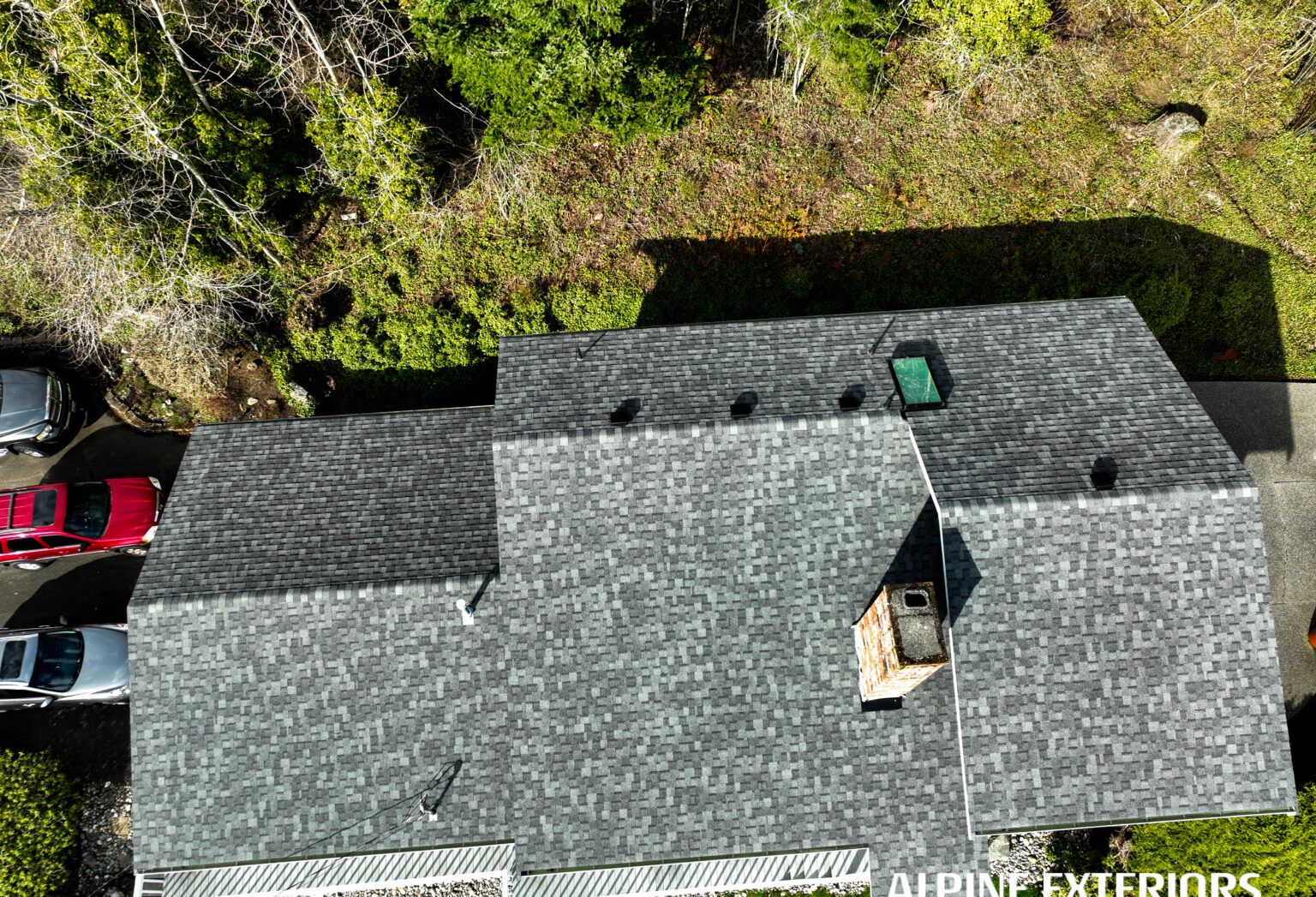
Siding installed on Alabama Hill has to satisfy two separate sets of rules at once: the wind and water-resistance provisions in the Washington State Building Code (which adopts the International Residential Code with state amendments), and the thermal envelope requirements in the Washington State Energy Code. In practice that means the siding product itself needs a manufacturer installation guide or an ICC-ES evaluation report backing up its wind rating, the fasteners and nailing pattern have to match that documentation exactly, and the weather-resistive barrier and flashing underneath the siding have to be installed so wind-driven rain can't get behind it. None of this is exotic — it's the same code every builder in Whatcom County works under — but Alabama Hill's elevation and exposure make the fine print matter more than it does two miles away at sea level.
Siding is not engineered in isolation. The Washington State Building Code requires that exterior wall coverings be installed according to either the manufacturer's published instructions or a recognized standard, such as ASTM D3679 for vinyl siding or the applicable ASTM standard for fiber cement. Those instructions specify the fastener type (corrosion-resistant, typically hot-dip galvanized or stainless in coastal exposure), the fastener spacing along studs, and the minimum penetration into framing. A siding panel that looks correctly installed but is nailed on 24-inch centers instead of the 16-inch centers the manufacturer calls for is under-fastened for the wind loads that panel was rated for, even though nothing about it looks wrong from the ground.
Underneath the visible siding, code requires a continuous weather-resistive barrier (typically a housewrap or building paper) lapped shingle-style so water sheds outward, with flashing integrated at every window, door, deck ledger, and roof-to-wall intersection. This is where wind-driven rain actually causes damage — not through the face of the siding itself, but through gaps at penetrations where wind pressure can force water sideways and upward under laps that weren't sealed or lapped correctly. The Washington State Energy Code adds another layer on top of this: continuous insulation or cavity insulation values, air-sealing details, and in many assemblies a vapor-permeable but water-resistive barrier so the wall can dry to the outside. A siding job that satisfies wind and water requirements but ignores the energy code's air-sealing details will pass a rough framing look but fail a proper inspection, or worse, trap moisture in the wall over a few wet winters.
Alabama Hill sits high enough above downtown Bellingham that homes there catch wind coming off Bellingham Bay and the Strait of Georgia largely unobstructed, especially on the south and southwest-facing elevations. That's a meaningfully different exposure than a house tucked into a low, tree-sheltered lot closer to the water. Wind-driven rain during a fall or winter frontal system doesn't just fall on Alabama Hill roofs — it gets pushed sideways into wall assemblies with real force, which is exactly the condition that exposes weak flashing details and under-fastened siding.
Whatcom County's rain pattern compounds this. It's not the total rainfall that damages siding here so much as the persistence — long stretches of low-intensity rain punctuated by wind events, with shaded, moisture-retentive conditions in between. That combination is ideal for moss and algae growth on north-facing and heavily treed elevations, which many Alabama Hill lots have given the mature tree cover in the neighborhood. Moss holds moisture against the siding surface far longer than open rain exposure alone would, and on wood siding or older fiber cement without a rainscreen gap, that sustained dampness is a direct path to wood rot at butt joints, corner boards, and anywhere caulk has failed. We see this constantly on older Alabama Hill homes where the original siding was installed tight to the sheathing with no drainage gap — it's not a wind failure, it's a slow moisture failure that started at a flashing detail years earlier.
Freeze-thaw cycling is a smaller factor here than it is up toward Sudden Valley and the Lake Whatcom foothills, where elevation and cold-air drainage push overnight temperatures below freezing more often through the winter. On Alabama Hill it's a secondary concern rather than a primary one, but it still matters at any point where trapped moisture in a wall cavity can freeze and expand — another reason the drainage plane behind the siding, not just the siding face, is where the real protection happens.
Most of what protects a house on Alabama Hill happens before the first course of siding goes up, not after. A few things worth insisting on:
Cost for a full siding replacement on an Alabama Hill home varies widely with square footage, product choice, and whether a rainscreen gap and full re-flashing are part of the scope — as a rough range, expect fiber cement re-siding with proper drainage detailing to run higher than a like-for-like vinyl swap, since the labor for flashing and furring is a real cost driver, not just the material. Alpine Exteriors can walk through actual numbers for a specific house rather than a generic range.
There's no separate Alabama Hill wind zone in the code — the same Washington State Building Code wind provisions apply across Whatcom County. What changes is exposure: a product rated for a given wind speed only performs that way if it's fastened exactly per its manufacturer instructions, and an exposed elevation on Alabama Hill has less margin for a shortcut in fastening than a sheltered lot does.
In most cases yes, particularly if sheathing, flashing, or the weather-resistive barrier is being disturbed or replaced, which is standard on a full re-side. Straight cosmetic panel replacement over an otherwise undisturbed assembly is sometimes treated differently, but that determination should come from the City of Bellingham or Whatcom County building department, not assumed.
Typically the weather-resistive barrier and its laps, flashing at penetrations and transitions, the fastener type and spacing against the manufacturer's schedule, and clearance from grade and roofing per code. Inspectors are generally not evaluating paint color or aesthetic finish — they're checking the parts of the assembly that determine whether water gets into the wall.
Both can perform well if installed correctly — the wind and water performance comes far more from the fastening, flashing, and drainage plane than from the material itself. Fiber cement tends to hold up better against moss and algae over time on shaded elevations, while vinyl is generally lower maintenance where sun exposure is more consistent. Neither material substitutes for a properly detailed rainscreen and flashing on an exposed elevation.
If you're planning a re-side on Alabama Hill or anywhere else in Whatcom County — Bellingham, Ferndale, Lynden, Blaine, Birch Bay, Sudden Valley, or the islands — Alpine Exteriors can walk your specific elevation, flashing details, and wind exposure before any work starts, not after. Alpine Exteriors holds Washington contractor license ALPINI751OW and handles the permitting and inspection process directly with the local building department. Reach out for a walk-through and an honest assessment of what your home's exposure actually calls for.