
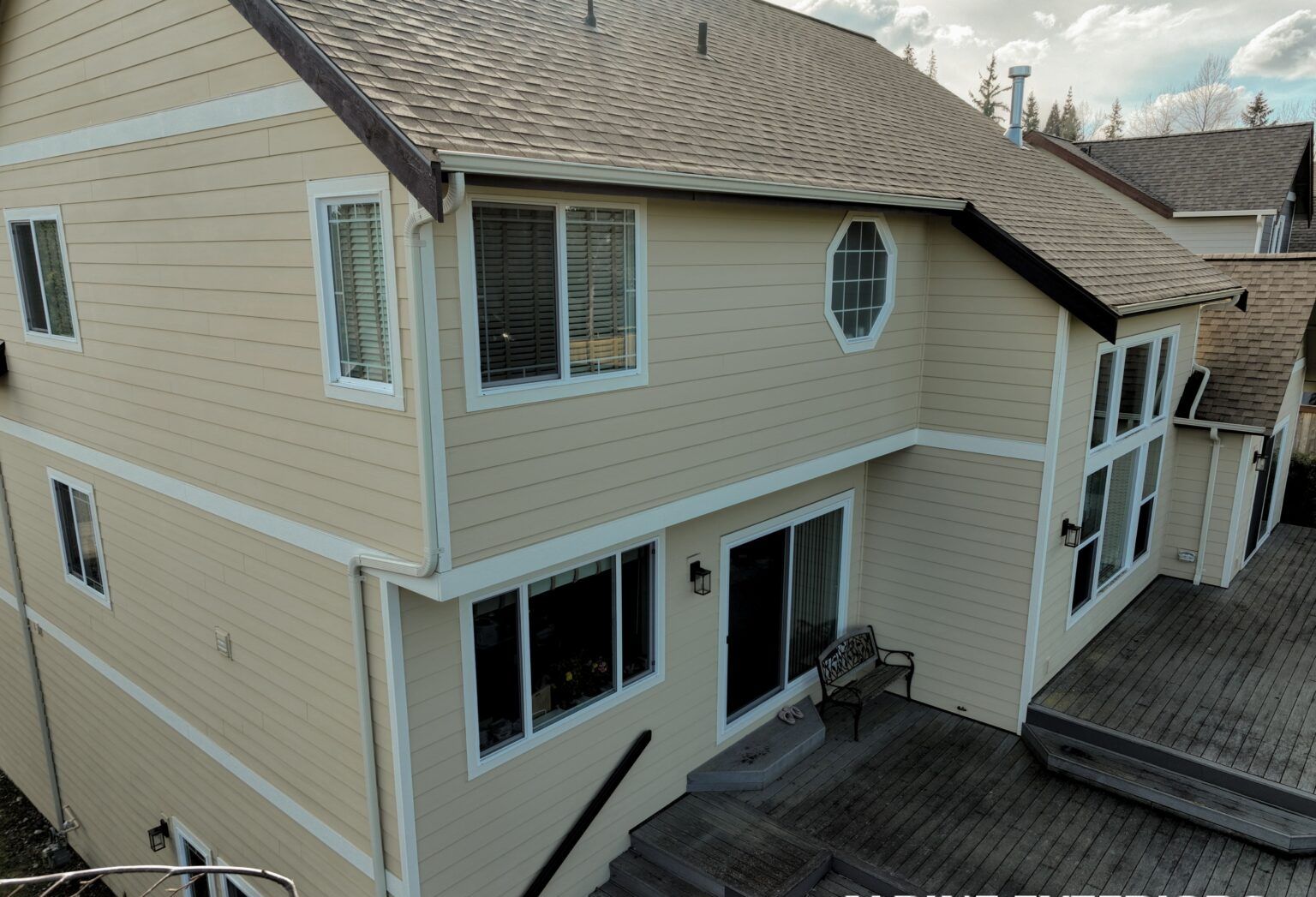
A drainage gap is a narrow open space, usually a quarter-inch to a full inch, built between the back of the siding and the water-resistive barrier over the wall sheathing. Its job is simple: give any water that gets past the siding somewhere to drain and evaporate instead of sitting against the sheathing and framing.
Every siding system, no matter how well installed, lets some moisture through eventually. Caulk joints shrink and crack, nail penetrations open slightly as wood moves with the seasons, and wind can drive fine mist under lap joints. What determines whether a wall stays healthy for decades or starts rotting within one isn't whether water gets behind the siding — it's what happens to that water once it's there.
Older installations often nailed siding straight to the house wrap with no space at all — a face-sealed assembly that depends entirely on caulk, paint film, and perfect flashing to keep every drop of water out. That works fine for years, right up until one seam fails. Once water gets behind a face-sealed wall it has nowhere to go; it sits against the sheathing until the wood underneath stays damp far longer than it should.
A drainage gap changes that. Builders create it a few ways: vertical furring strips fastened over the water-resistive barrier before the siding goes on, a manufactured drainage mat, or engineered panels with spacer ribs built into the back. Whichever method is used, water that reaches the back of the siding runs down the gap instead of pooling, and outside air moving through that same space helps whatever moisture remains dry out before it can feed rot. Most systems also include small weep openings at the bottom of the wall and vents near the top so air actually moves through the cavity. This whole approach is usually called a rainscreen, and it has become the standard recommendation for siding in wet marine climates like this one.
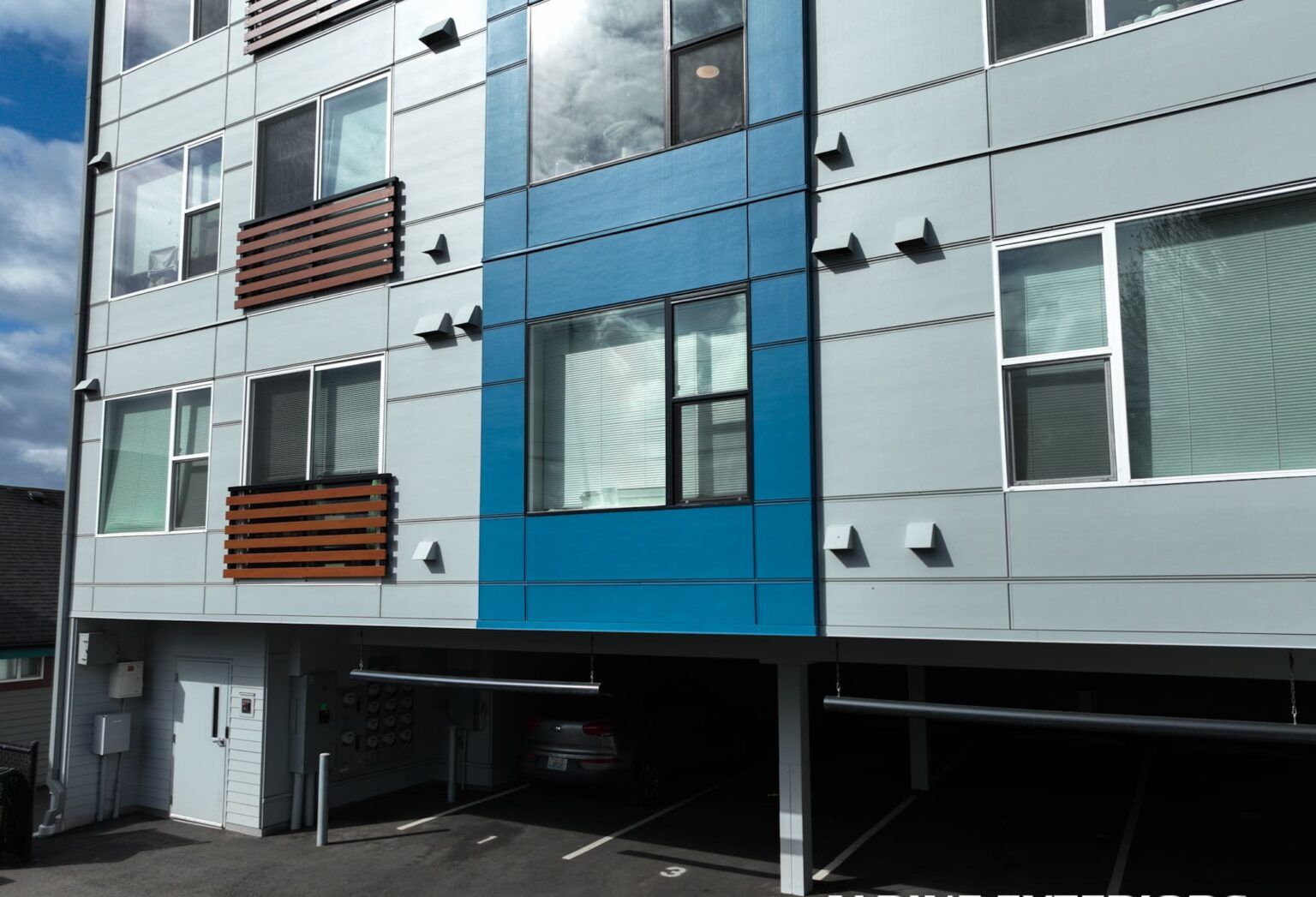
The case for a drainage gap isn't the same everywhere, and it's worth being specific about why it matters more here than in a drier climate.
Persistent, low-intensity rain is the biggest factor. Whatcom County doesn't get pounded by short, violent storms so much as it gets weeks of steady drizzle from fall through spring, so a wall assembly here spends far more total hours wet than one in a climate with occasional heavy downpours followed by long dry stretches. Siding that sheds water quickly but doesn't ventilate well can stay damp for days at a stretch through a Bellingham winter.
Wind-driven rain off Bellingham Bay and the Strait of Georgia and the Strait of Juan de Fuca adds another layer. Homes with west- or southwest-facing walls in Blaine, Birch Bay, Point Roberts, and on the islands take rain sideways during winter windstorms, pushing moisture into lap joints and trim edges that would stay dry on a calmer exposure. A drainage gap doesn't stop that wind-driven water from getting behind the cladding occasionally, but it gives it somewhere to go instead of soaking into the sheathing.
Moss and algae growth is common on north-facing walls and anywhere tree cover keeps a wall shaded, which describes a lot of wooded lots around Ferndale, Lynden, and Sudden Valley. A mossy or algae-covered surface holds moisture against the siding face longer than a clean, sun-exposed one does, which increases how much water eventually reaches seams and fastener holes.
Wood rot is the practical risk that ties this together, and it's worth being honest about it. This region's mild, rarely-freezing winters mean the fungi that cause rot stay active nearly year-round wherever conditions are damp, unlike colder climates where hard freezes shut rot growth down for months at a time. A wall that traps moisture here doesn't get much of a seasonal break.
Freeze-thaw cycling is a smaller but real factor at higher elevations — in the foothills around Sudden Valley and areas closer to the Mount Baker foothills — where temperatures swing across freezing more often than they do at sea level in Bellingham proper. Trapped water that freezes and expands inside a wall cavity, or within fiber cement or stucco, can accelerate cracking over time.
The Washington State Energy Code is relevant here too, in a way that's easy to miss. Recent code cycles push toward continuous exterior insulation on many wall assemblies, and the most common way builders meet that is with rigid foam board fastened to the sheathing, then vertical furring strips over the foam to hold the siding. Done correctly, that furring layer creates a drainage gap as a byproduct of meeting the code's insulation target. Done without weep and vent openings, that same cavity can trap moisture against the foam with nowhere to escape — worse than having no gap at all. The code doesn't spell out drainage gap requirements directly, but the assemblies it encourages need one detailed properly.
If you're planning to re-side a home in this area, ask directly whether the installation includes a rainscreen gap or drainage plane behind the siding — not just a house wrap with siding nailed straight to it. Alpine Exteriors builds this into its siding replacement projects specifically because of how much time walls in this climate spend wet, and it's a fair question to put to any contractor bidding the work.
Not strictly. Building code requires a water-resistive barrier and a drainage plane at minimum, and some products — properly installed brick veneer, for instance, or certain vented cladding systems — already manage moisture on their own. A dedicated rainscreen gap is a step above the code minimum, and given how much rain this area sees over a typical year, it's a reasonable upgrade to ask for rather than a strict requirement on every wall.
Generally, no. The gap has to sit between the siding and the wall behind it, so it can only go in as siding comes off and goes back on. If one wall or section is being redone, a gap can be added to that section — but there's no way to retrofit it under siding that's staying in place.
No, and that distinction matters. A drainage gap manages moisture behind the siding, not growth on the exposed face of it. Moss and algae on the surface come down to shade, dampness, and exposure to open air, and dealing with them still means cleaning, trimming back overhanging vegetation, and choosing a siding finish that resists growth.
It varies with the method chosen and the size and complexity of the house, but as a general range, expect it to add somewhere from a few hundred to a couple thousand dollars on a typical siding replacement — more on homes with extensive trim and window detail. Getting a real number for your home means having a contractor look at the actual walls and product options, since ballpark figures online won't reflect your roofline, exposure, or siding material.
If you're weighing a siding replacement anywhere from Bellingham to Ferndale, Lynden, Blaine, Birch Bay, Sudden Valley, or the islands, it's worth having someone look at the actual wall assembly before you settle on a product or a budget. Alpine Exteriors is a licensed Washington contractor, license ALPINI751OW, and has spent enough winters watching how local walls hold up to know that what's happening behind the siding matters as much as what it looks like from the street. Reach out for a straightforward look at your home's current siding, an honest read on whether a drainage gap makes sense for your project, and a plan that fits both this climate and your budget.