
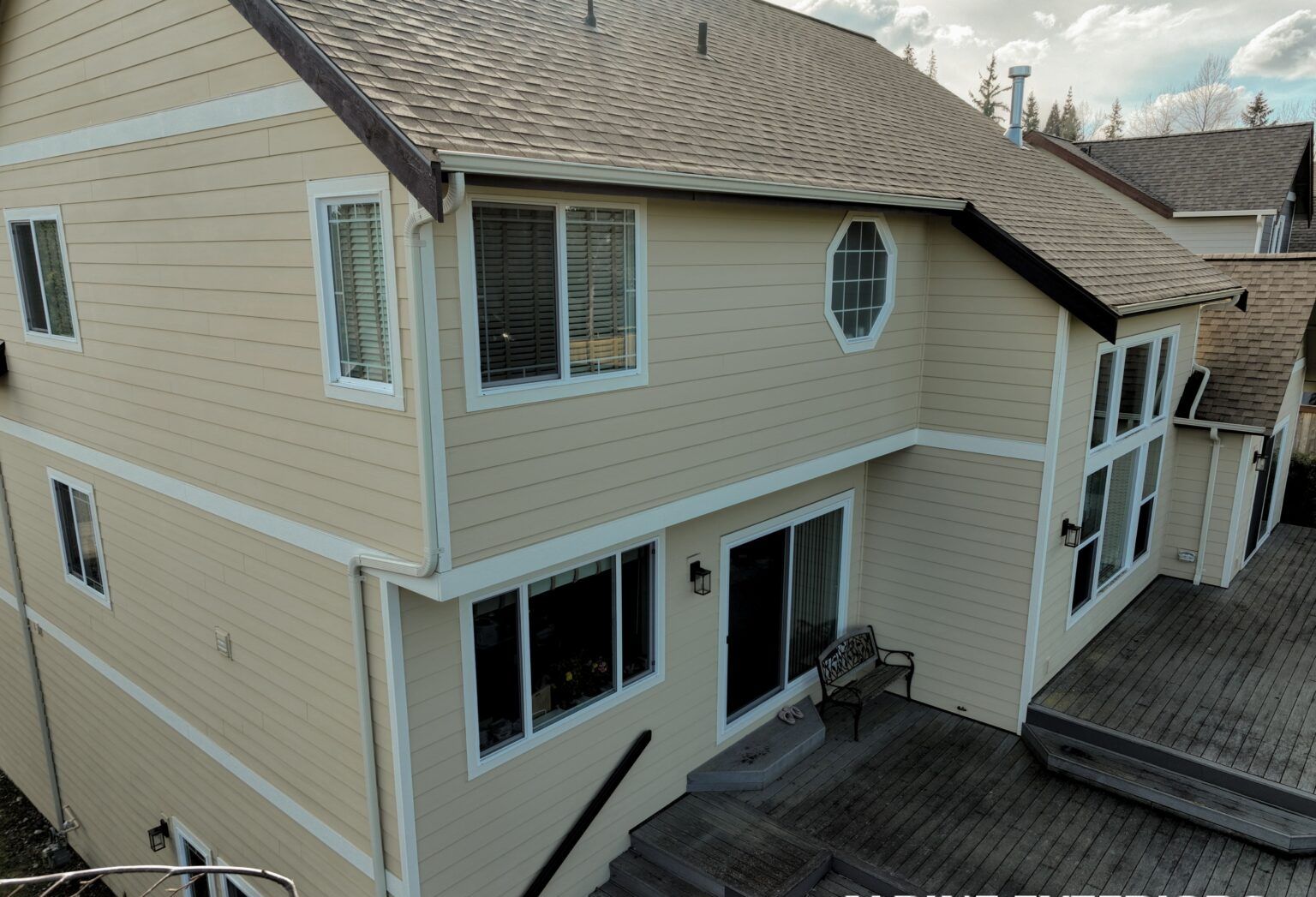
Homeowners in Fairhaven ask some version of this question almost every week: what does it actually cost to reside a house with James Hardie fiber cement in this part of Whatcom County? There isn't one number that fits every home. Fairhaven's mix of older Craftsman bungalows, Victorian-era cottages near Historic Fairhaven, and newer infill homes closer to Chuckanut Bay all come with different wall conditions underneath the existing siding, and that hidden condition often matters more to the final price than the siding product itself. Below is a realistic look at the price range, the specific factors that push a Fairhaven project toward the low or high end, and how to read a quote so you're comparing contractors on equal footing rather than just comparing bottom-line numbers.
Installed James Hardie fiber cement siding in the Bellingham and greater Whatcom County market generally falls in a broad range per square foot of wall area, with the low end reflecting a straightforward tear-off over sound sheathing and the high end reflecting extensive rot repair, complex trim, and a factory-finished ColorPlus product. On a typical Fairhaven single-family home, that translates into a wide total-project range once you account for size, stories, and how much of the original wall assembly has to be rebuilt before new siding goes on. We're intentionally not quoting a single figure here, because doing so without seeing the house would be guessing, and guessing is how homeowners end up either sticker-shocked mid-project or suspicious of a bid that seemed too good to be true.
What actually sets the number for a given house is less about the brand of siding and more about what's happening at the wall. Fairhaven's older housing stock, combined with decades of Pacific Northwest rain, means a meaningful share of re-siding jobs uncover rotted sheathing, soft trim, or moisture trapped behind old wood or vinyl siding once the crew starts stripping walls. That's not a scare tactic — it's simply the reality of siding a home in a marine climate where the original siding has been absorbing wind-driven rain off Bellingham Bay and the Strait of Georgia for a long time. The table below breaks down the main factors that move a Fairhaven quote from the low end of the range toward the high end.
| Cost Factor | Low End of the Range | High End of the Range |
|---|---|---|
| Tear-off and disposal of existing siding | Single layer of siding, straightforward removal, easy dumpster access | Multiple layers, old wood or asbestos-era siding requiring special handling, tight lot with limited disposal access |
| Sheathing and framing repair | Walls test dry, sheathing is sound, no rot found once old siding comes off | Rotted sheathing or wall framing behind old siding, common on older Fairhaven homes with a history of trapped moisture |
| Siding profile and product selection | Standard HardiePlank lap siding in one profile | Mixed profiles — HardieShingle accents, HardiePanel, board-and-batten details typical of Fairhaven's Craftsman and cottage styles |
| Finish: factory ColorPlus vs. field paint | Standard factory-applied ColorPlus finish in a stock color | Custom field-painted finish, multiple trim colors, or color-matching to preserve a historic look |
| Trim, fascia, and architectural detail | Simple rectangular footprint, minimal trim | Dormers, bay windows, multiple gables, and the ornate trim common on older Fairhaven and South Hill homes |
| Home size and number of stories | Single-story, smaller footprint | Two or more stories, steep or cut-up rooflines requiring more staging and labor |
| Site access and logistics | Flat lot, clear street access for equipment and disposal | Hillside lots (Sudden Valley), bluff-edge waterfront access, or island properties requiring ferry scheduling and extra mobilization |
Every siding estimate is built on a set of assumptions about what's behind the current siding, and in Fairhaven those assumptions get tested more often than in drier climates. A few specific conditions tend to shift the price after the contract is signed:
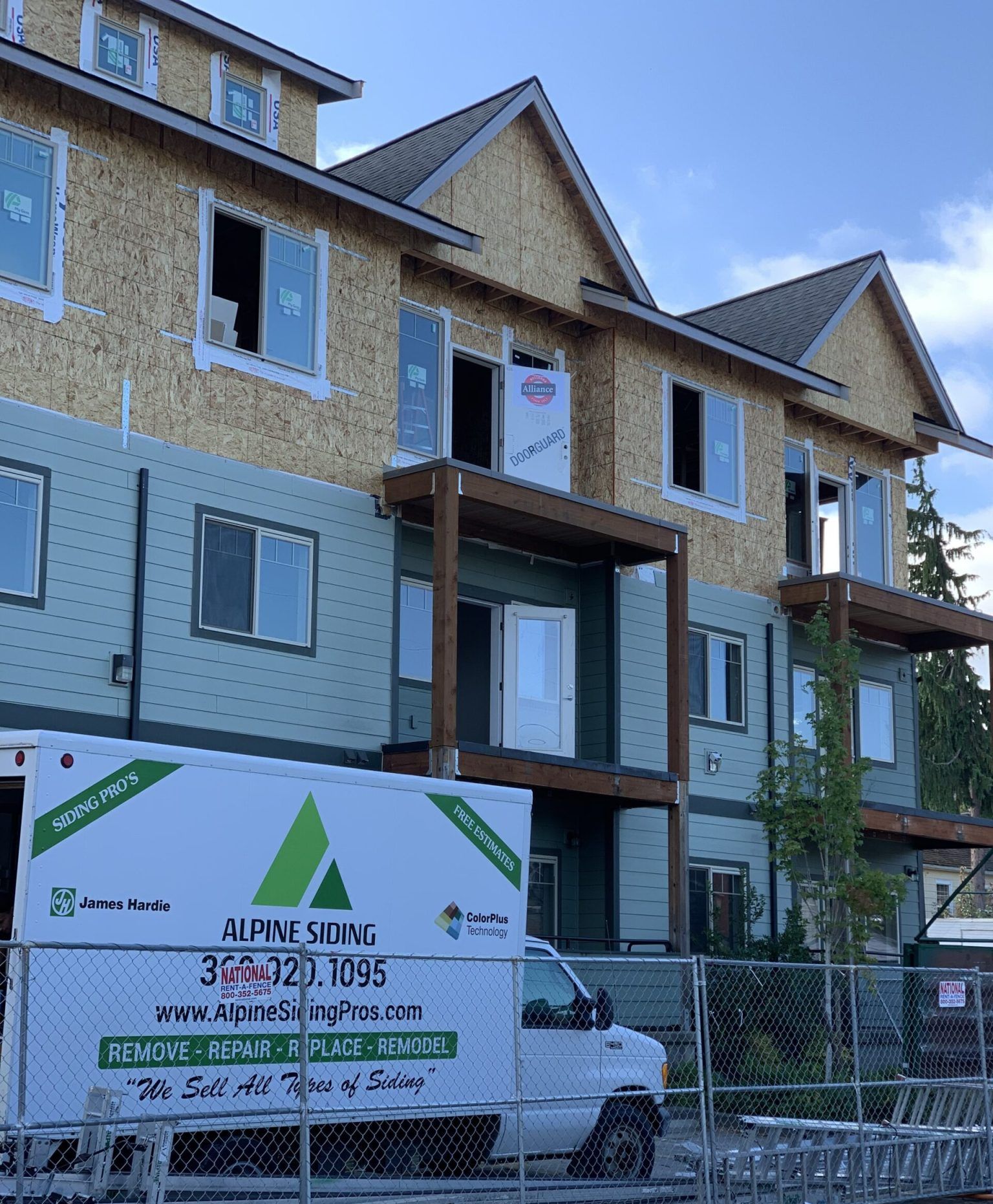
A siding quote that's genuinely useful to compare should spell out more than just a total dollar figure. At minimum, expect a written quote to cover:
Alpine Exteriors builds quotes this way specifically because Fairhaven's older housing stock makes surprises more likely than not, and a vague quote is where those surprises turn into arguments mid-project.
Two bids that look close on the bottom line can represent very different scopes of work. When comparing quotes for a Fairhaven siding project, it helps to line them up against a few specific questions:
A licensed, established contractor should be able to answer every one of these without hesitation. Alpine Exteriors holds Washington contractor license ALPINI751OW and can walk through each line item of a quote in person before any contract is signed.
Full re-siding projects are a significant expense, and most homeowners in Whatcom County either finance the work through a home equity line, a contractor-arranged financing partner, or a combination of savings and financing rather than paying the full amount up front. It's worth asking any contractor what financing partners they work with and what the actual terms are — promotional rates on contractor financing can carry conditions that matter more than the headline number.
On the insurance side, most siding replacement in Fairhaven is a maintenance and improvement project rather than a storm-damage insurance claim, since the wind and rain patterns here don't typically produce the sudden, discrete damage that triggers a homeowner's policy. Where insurance does come into play is when a specific event — a windstorm that tears off a section of siding, a fallen branch, or water intrusion traced to a failed flashing detail — causes damage that can be documented and dated. In those cases, photos of the damage, a written contractor assessment, and a clear description of cause (not just "old siding") make the claims process go smoother. It's reasonable to ask a contractor whether they've worked with insurance adjusters before and whether they can provide documentation formatted the way an adjuster expects.
Separately, if rot repair turns out to be extensive once walls are opened, it's worth checking whether that portion of the work is coverable under any existing moisture-damage or dwelling policy provisions — this varies by carrier and policy, so it's a conversation with your insurance agent rather than something a contractor can promise on your behalf.
Two homes of similar size can have very different wall conditions underneath the existing siding. A house that's had consistent gutter maintenance and good roof overhangs often has sound sheathing, while a similar house with a history of clogged gutters or minimal roof overhang may have hidden rot that only shows up once the old siding is removed. Trim complexity, the number of stories, and whether the finish is factory ColorPlus or field-painted also account for real differences in price between otherwise comparable homes.
Generally yes, a straightforward lap siding installation tends to run less than shingle-style siding or panel systems with battens, mainly because of the extra labor time those profiles require, not because the raw material itself is dramatically more expensive. Many Fairhaven homes use a mix — lap siding on the main walls with shingle or board-and-batten accents on gables or a front-facing feature — which lands somewhere in between on a per-square-foot basis.
In most cases, yes — a full re-siding project typically requires a building permit in Bellingham and unincorporated Whatcom County jurisdictions, and the scope of the project can also trigger review under the Washington State Energy Code if wall insulation or the exterior envelope is being modified. Permit requirements and energy code applicability can vary by specific jurisdiction and project scope, so it's worth confirming directly with the local building department or asking your contractor to walk through it before work starts.
Timelines vary with home size, weather windows, and how much rot repair turns up once the old siding comes off, but homeowners should expect a project to run from a couple of weeks to well over a month for larger or more complex homes. Whatcom County's rainy stretches, especially in fall and winter, can also extend timelines if a crew has to pause for weather rather than install over wet sheathing.
The only way to get an accurate number for your specific home is a walk-through that looks at wall condition, trim detail, access, and the siding profile that makes sense for your house. Alpine Exteriors serves Fairhaven along with the rest of Whatcom County — Bellingham, Ferndale, Lynden, Blaine, Birch Bay, Sudden Valley, and the islands — and provides written, itemized estimates rather than a single verbal number. If you're weighing James Hardie siding for a Fairhaven home, reach out for an on-site assessment and a quote you can actually compare against others line by line.