
If you're pricing out PVC trim for a home in Bellingham, Ferndale, Lynden, Blaine, Birch Bay, Sudden Valley, or one of the islands, you've probably already noticed that quotes swing more than you'd expect. Two homes on the same street can get bids that differ by thousands of dollars, and it's rarely because one contractor is padding the number. PVC trim pricing in this part of Washington is driven by how much of the old trim has to come off, what condition the wall sheathing is in once it does, how the home is shaped, and how hard it is to reach. This page walks through a realistic range for the region, what pushes a bid up or down, what a legitimate quote should spell out, and how to compare bids that don't look like they're for the same job.
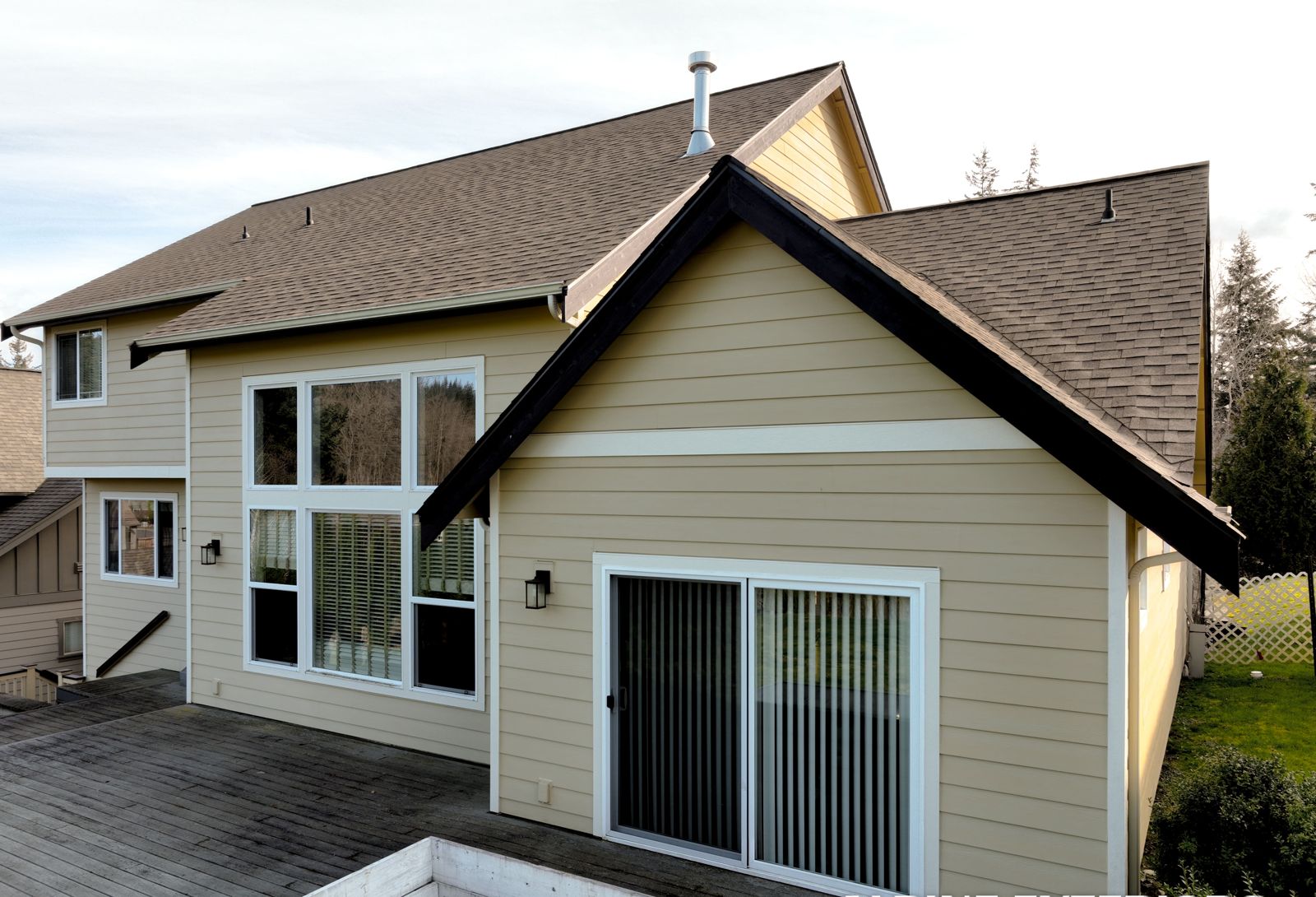
PVC (cellular vinyl) trim is priced by the linear foot installed, and that per-foot number moves a lot based on profile size, thickness, and how much substrate repair is hiding underneath the old boards. For a straightforward trim replacement on a Whatcom County home — fascia, rake boards, and window/door casing, in decent condition underneath — homeowners typically see per-linear-foot pricing in a fairly wide band, with the low end covering simple, accessible runs of standard 1x4 or 1x6 profile and the high end covering thicker stock, decorative corner or crown detail, and second-story or steep-roof access. Whole-home totals scale from there depending on how trim-heavy the house is: a simple ranch with minimal trim runs will land well below a Victorian-style or heavily gabled farmhouse with corner boards, window returns, and frieze board on every elevation.
The table below breaks out the factors that move a PVC trim bid up or down in this market. Treat these as directional ranges, not a quote — the only way to get an actual number is a site visit, because so much of the real cost here is determined by what's found once old trim comes off.
| Cost Factor | Pushes Toward Low End | Pushes Toward High End |
|---|---|---|
| Trim scope / coverage | Fascia only, or a single elevation | Fascia, rake, corner boards, window and door casing on all elevations |
| Board profile and thickness | Standard 1x4/1x6 flat stock | Thicker stock, crown or dentil detail, custom-milled profiles |
| Existing trim removal and substrate condition | Sound sheathing, trim comes off clean | Rotted sheathing or framing found under old wood trim, requiring rebuild before new trim goes on |
| Home height and access | Single story, ground-level ladder work | Two-plus stories, steep pitch, scaffolding or lift required |
| Finish | Factory-finished PVC in a stock color | Custom color match or field-painted trim |
| Delivery logistics | Mainland Whatcom County, standard delivery | San Juan Islands or other ferry-dependent locations, added freight and scheduling |
Trim pricing here isn't generic — the reasons a bid comes in higher or lower are tied pretty directly to how this climate treats a house. A few things we see consistently on jobs across Bellingham, Ferndale, Lynden, and the bay-facing communities:
A trim quote that's just a single lump-sum number is hard to evaluate and hard to hold anyone to later. A quote worth comparing should spell out, at minimum:
At Alpine Exteriors, we write our trim quotes this way on purpose — broken into scope, removal, a defined approach to any rot found underneath, and finish — because a homeowner comparing bids should be able to see exactly what they're paying for at each stage, not just a bottom-line number.
Once you have two or three bids in hand, the temptation is to just look at the total and go with the lowest one. That's how homeowners end up with mid-project change orders that erase whatever they saved up front. A few things worth checking before comparing totals:
Many exterior contractors, including Alpine Exteriors, can point homeowners toward third-party financing options for trim and broader exterior projects, which can make it easier to spread payment over time rather than paying the full project cost up front. Terms vary by lender and by credit, so it's worth asking early in the quoting process what's available rather than after you've picked a contractor.
On the insurance side, it's worth setting expectations honestly: routine PVC trim replacement due to age, gradual wood rot, or moss and algae damage is generally treated as home maintenance, not an insurable event, and most homeowners insurance policies won't cover it. Where insurance can come into play is if trim damage is tied to a specific, sudden covered peril — for example, wind damage during a storm that visibly tears trim loose, rather than gradual moisture intrusion that built up over years. If you suspect storm damage is involved, document it with photos as soon as it's safe to do so and talk to your insurance carrier before work starts, since coverage decisions typically hinge on cause and timing.
For most Whatcom County homes, yes, because the ongoing maintenance and repaint cycle that wood trim needs in a persistently wet climate adds up over the years in a way that offsets the higher upfront cost of PVC. PVC doesn't absorb moisture the way wood does, so it holds up better against the wind-driven rain and constant damp shade that drive wood rot and moss growth here. It's not maintenance-free, though, and it isn't automatically the right call on every home — for a house with a short remaining ownership horizon or a very tight budget, a straightforward wood repair and repaint may still make more sense.
Timelines depend heavily on scope, access, and how much hidden rot repair turns up once the old trim comes off, but weather is the other big variable here — our rainy stretches, particularly in fall and winter, can push a project that would otherwise wrap in a few days out over a longer calendar window. A contractor quoting your job should give you a range rather than a fixed date, and should be upfront that the schedule may shift if rain days stack up.
Factory-finished PVC trim generally doesn't need repainting for a long time, since the color is embedded rather than applied as a surface coating that can chalk or fade the way paint on wood does. If you choose a custom or field-painted color instead of a factory finish, it will eventually need repainting like any painted exterior surface, just typically less often than wood trim because the substrate itself isn't moving, swelling, or absorbing moisture the way wood does.
Installation can happen in cooler, wetter months, but active rain during the work itself isn't ideal, especially around sealant and flashing steps where a dry substrate matters for a good seal. Most Whatcom County contractors plan around weather windows rather than refusing to work in winter outright, but expect more schedule flexibility to be built into a quote for a project timed during our wettest months.
The only way to turn these ranges into a real number for your home is a walk-through that accounts for your specific trim scope, access, and whatever condition is hiding under the existing boards. Alpine Exteriors (WA contractor license ALPINI751OW) quotes PVC trim projects across Bellingham, Ferndale, Lynden, Blaine, Birch Bay, Sudden Valley, and the surrounding islands, with an itemized bid that separates scope, removal, any rot repair found, and finish so you know exactly what you're paying for before work starts. If you're comparing bids or just trying to figure out what your home's trim project should realistically cost, reach out for a walk-through and a written quote.