
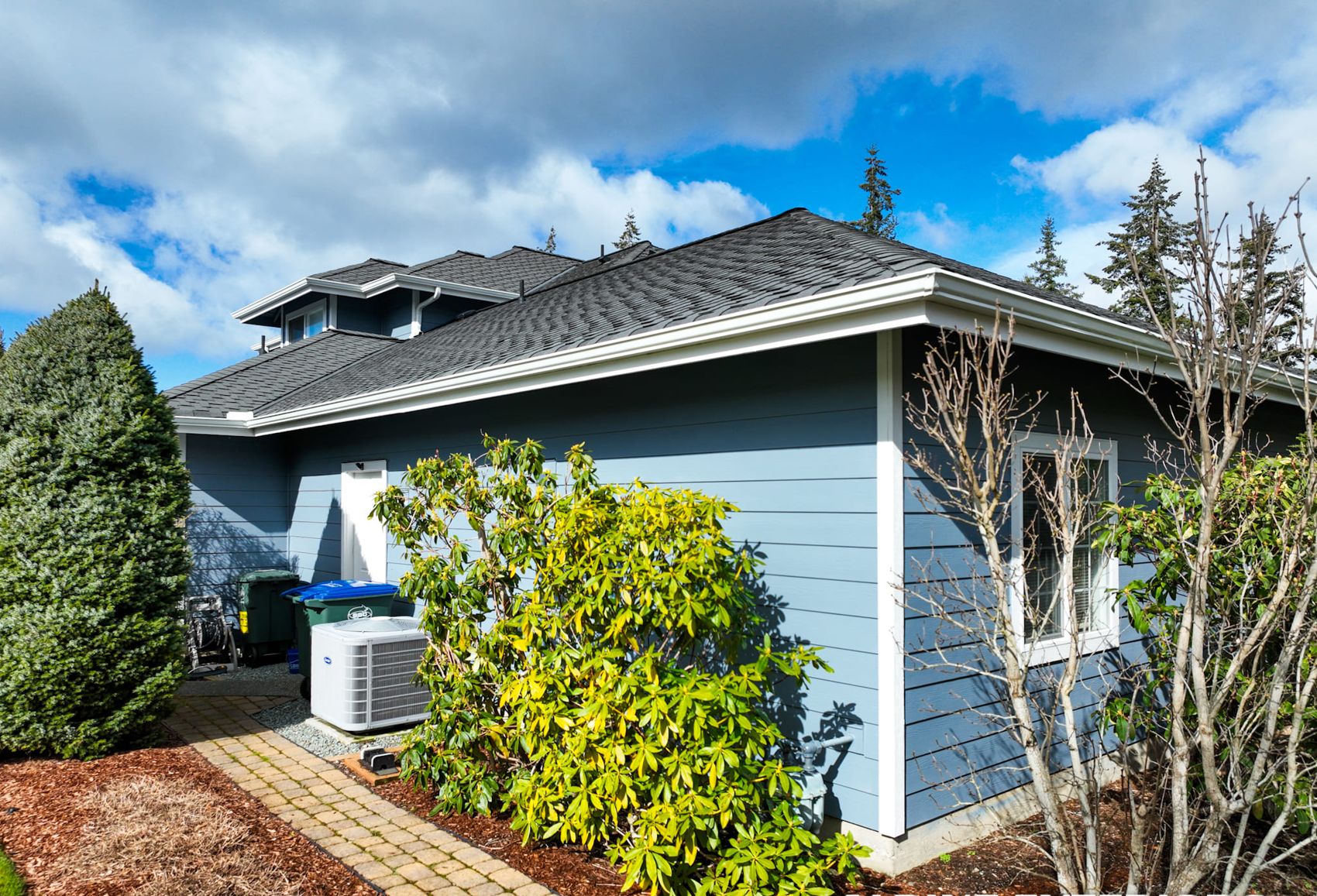
Replacing the siding on a home in Silver Beach is a different project than replacing siding almost anywhere else in the country, and the price reflects that. Silver Beach sits on the shore of Lake Whatcom, wedged between the water and the wooded foothills that rise toward Sudden Valley, which means homes here absorb a steady diet of Pacific moisture nine or ten months of the year, plus wind-driven rain that comes off Bellingham Bay and funnels up the valley during winter storms. Add moss and algae growth on shaded north walls, occasional freeze-thaw cycling at the higher foothill elevations, and older homes with decades of accumulated wood rot behind the original siding, and you get a climate that is genuinely harder on exterior cladding than most of the country ever sees. That is the honest starting point for any conversation about James Hardie fiber cement siding cost here: the number depends far less on the brand of siding than on the condition of what is underneath it, and how much water intrusion the crew finds once the old siding comes off.
For a typical single-family home in this part of Whatcom County, a full James Hardie replacement generally spans a broad range — from a modest project on a small, simple, rot-free home up to a much larger figure on a large or complicated home with significant sheathing repair, steep roof lines, or extensive trim work. Homeowners who collect several bids often see a wide spread even for similar square footage, and that spread is almost always explained by differences in scope rather than one contractor simply being cheaper for the same job. Treat any number you hear, including ranges in this article, as a planning figure rather than a quote — the only way to get a real number is a walk-through of your specific home.
The table below breaks the total into the factors that actually move a Silver Beach siding bid, showing what tends to push a project toward the low end versus the high end. These aren't standalone add-on prices to be summed; they're the components that make up the overall range, and any two of them together can shift a project from the low end to the high end on their own.
| Cost factor | Pushes toward the low end | Pushes toward the high end |
|---|---|---|
| Tear-off and disposal of old siding | Old siding is sound and comes off easily in large sections | Multiple layers, brittle old material, or difficult disposal logistics |
| Sheathing and wood rot repair | Sheathing is dry and intact once old siding is removed | Long-term water intrusion has damaged sheathing or framing, requiring partial or full replacement |
| James Hardie product line | Standard HardiePlank lap profile in a common width | HardieShingle staggered-edge profile or HardiePanel vertical siding with more cutting and detail |
| Finish: factory ColorPlus vs. field paint | Field-painted in a standard light color | Custom-matched ColorPlus factory finish or dark tones |
| Trim and accessories | Simple corner boards and window trim | Extensive decorative trim, multiple gables, or dormers |
| Home size, stories, and roofline | Single-story home with a simple rectangular footprint | Multi-story home with a steep roofline, dormers, or a wrap-around porch |
| Site access | Flat, easy-access in-town lot | Steep lake-front or hillside lot near Lake Whatcom requiring extra staging |
| Permits and code-driven upgrades | Standard permit and inspection only | Required upgrades to the water-resistive barrier or wall insulation under the Washington State Energy Code once walls are opened |
Beyond the line items in the table, a handful of site-specific realities routinely move Silver Beach quotes up or down. Lake-facing lots here are often steep, with limited driveway access and homes set close to the water or tucked into hillside grades toward Sudden Valley, which slows staging, scaffolding, and material delivery compared with a flat in-town lot in Ferndale or Lynden. Multi-story homes and homes with complex rooflines, dormers, or wrap-around porches require more cutting, more flashing detail, and more labor hours per square foot of wall than a simple one-story home.
The amount of existing wood rot is usually the biggest single variable, and it is genuinely unknown until the old siding is off. A home that has had persistent leaks around window heads or at deck ledger connections can hide sheathing damage that only becomes visible mid-project, which is why a fair contract should spell out a per-sheet or per-square-foot repair rate rather than leaving it as a vague allowance. Trim complexity adds up quickly on older lake homes with decorative window surrounds, corner boards, and fascia details, since HardieTrim has to be custom-cut and fastened correctly to hold up against wind-driven rain off the bay. Color choice matters too, since dark factory colors and custom-matched ColorPlus tones typically cost more than standard light colors. Finally, timing plays a role: the dry-season installation window in Whatcom County is short, and contractors booked solid through summer sometimes price shoulder-season work differently than peak-season work.
A quote that is actually useful for comparison should read like a scope of work, not a one-line estimate. At minimum it should specify the exact James Hardie product and profile being installed, the fastener pattern called out in the manufacturer's installation instructions, and the weather-resistive barrier and flashing details that will go behind the siding, since these are what actually keep wind-driven rain out of the wall assembly in this climate. It should state whether tear-off and haul-away of the old siding are included, what happens if hidden rot is found once walls are opened, and what the per-unit rate is for any sheathing or framing repair beyond a stated allowance.
A complete quote also lists the trim package; states whether ColorPlus factory finish or field paint is being used and how many coats; names who pulls the building permit required for exterior re-siding in most Whatcom County jurisdictions; states the manufacturer's product warranty and the contractor's separate labor warranty in writing; gives a realistic start-to-finish timeline that accounts for typical fall and winter rain delays; and includes the contractor's Washington state license number so it can be verified before any deposit changes hands.
Comparing two siding bids side by side only works if they are pricing the same job. Start by confirming that every bid specifies the same James Hardie product line and profile, since a HardiePlank lap quote and a HardieShingle quote are not interchangeable and will never land at the same price. Next, check that tear-off, disposal, and any sheathing repair are handled the same way across bids — a number that looks low is often simply excluding rot repair or assuming none will be found, which shifts risk onto you mid-project rather than pricing it upfront.
Ask each contractor directly whether the crew installing the siding is employed in-house or subcontracted, and ask for addresses of a few completed jobs in Whatcom County you can drive by, ideally in a similarly wet, lake-adjacent, or bayfront setting so you can see how the product has weathered. Verify the contractor's Washington state contractor license and general liability and workers' compensation insurance directly rather than taking a business card's word for it. Be cautious of a bid that arrives dramatically lower than the others with no site visit, since a proper Silver Beach bid usually requires walking the exterior and at least spot-checking a section of existing siding for rot before a firm number is possible. Finally, read the payment schedule; a reasonable one ties payments to completed phases of work rather than requiring most of the money upfront.
Most homeowners in Silver Beach pay for siding work through some combination of savings, a home equity line of credit, or a financing plan offered through the contractor or a third-party lender that partners with home improvement companies. Several such programs allow fixed monthly payments spread over a period of years, which can make a full re-side more manageable than paying the total cost at once. It's worth asking any contractor you're considering, including Alpine Exteriors, what financing partners they work with and whether the terms involve a promotional no-interest period, since those offers usually carry a deferred-interest clause that applies retroactively if the balance isn't paid off in time.
On the insurance side, homeowners often assume that rot or water damage behind old siding will be covered by a homeowners policy, but most policies are written to exclude damage from long-term, gradual moisture intrusion and only cover sudden, accidental events like a storm-caused breach or a burst pipe. That distinction matters here because slow leaks around old flashing or failed caulking are common in a climate with this much sustained rainfall, and an insurer may deny a claim tied to rot that developed over years rather than a single event. If you suspect storm damage contributed to your siding failure, document it with photos and a contractor's written assessment before starting demolition — once old siding and rot are removed, there's no way to prove the damage's cause or timeline to an adjuster after the fact.
A straightforward single-story home with sound sheathing and no significant rot typically takes a matter of days to a couple of weeks once work begins, while a larger or more complex home, or one requiring extensive sheathing repair, can take several weeks. In Whatcom County the bigger variable is often weather rather than labor, since crews generally avoid installing fiber cement siding during active rain to protect the weather-resistive barrier and fresh caulk joints, so projects scheduled in the wetter fall and winter months should build in extra calendar time for rain delays compared with a summer install.
Fiber cement itself does not feed mold or algae the way wood or some composite products can, since it isn't an organic food source for spores, but any exterior surface in a shaded, humid spot near the lake or islands will still collect surface moss and algae over time simply from the environment. The advantage of James Hardie siding here is durability rather than immunity: it holds up to repeated washing without the swelling, splitting, or paint failure that wood siding eventually suffers, and a factory ColorPlus finish resists staining better than field-applied paint, but periodic gentle cleaning is still part of maintaining its appearance on a lake-adjacent home.
Most exterior siding replacement projects in Bellingham and the surrounding Whatcom County jurisdictions require a building permit, since replacing siding down to the sheathing counts as substantial exterior work under the Washington State Energy Code and local building codes, and re-siding is also the point at which code often requires bringing wall insulation or the water-resistive barrier up to current standards if the wall assembly is being opened up. A licensed contractor should handle pulling the permit and scheduling any required inspections as part of the project, and it's worth confirming that in writing before work starts.
Fiber cement generally costs more upfront than vinyl siding, but the comparison looks different once you weigh it against this specific climate. Vinyl can warp, crack in cold snaps, or fade under UV exposure over time, and it offers little resistance to wind-driven rain finding gaps at seams, while properly installed James Hardie siding is heavier, more rigid, and backed by a manufacturer product warranty that reflects its expected lifespan in wet Pacific Northwest conditions. Whether the higher upfront cost is worth it depends on how long you plan to own the home and how much you value lower long-term maintenance, but for homes intended to be kept for many years in a climate this wet, fiber cement is generally the more durable long-term choice.
If you're weighing James Hardie siding for a home in Silver Beach, Sudden Valley, or anywhere else around Lake Whatcom or Bellingham Bay, the most useful next step is a walk-through with a contractor who will look closely at your existing siding, check for rot at the usual failure points, and put the scope in writing before quoting a price. Alpine Exteriors, Washington contractor license ALPINI751OW, works throughout Whatcom County and can walk your specific home, explain what's driving your number, and put together a written, itemized quote you can compare against any other bid you collect. Reach out to Alpine Exteriors to schedule a look at your home and get a real, scoped estimate rather than a guess.