
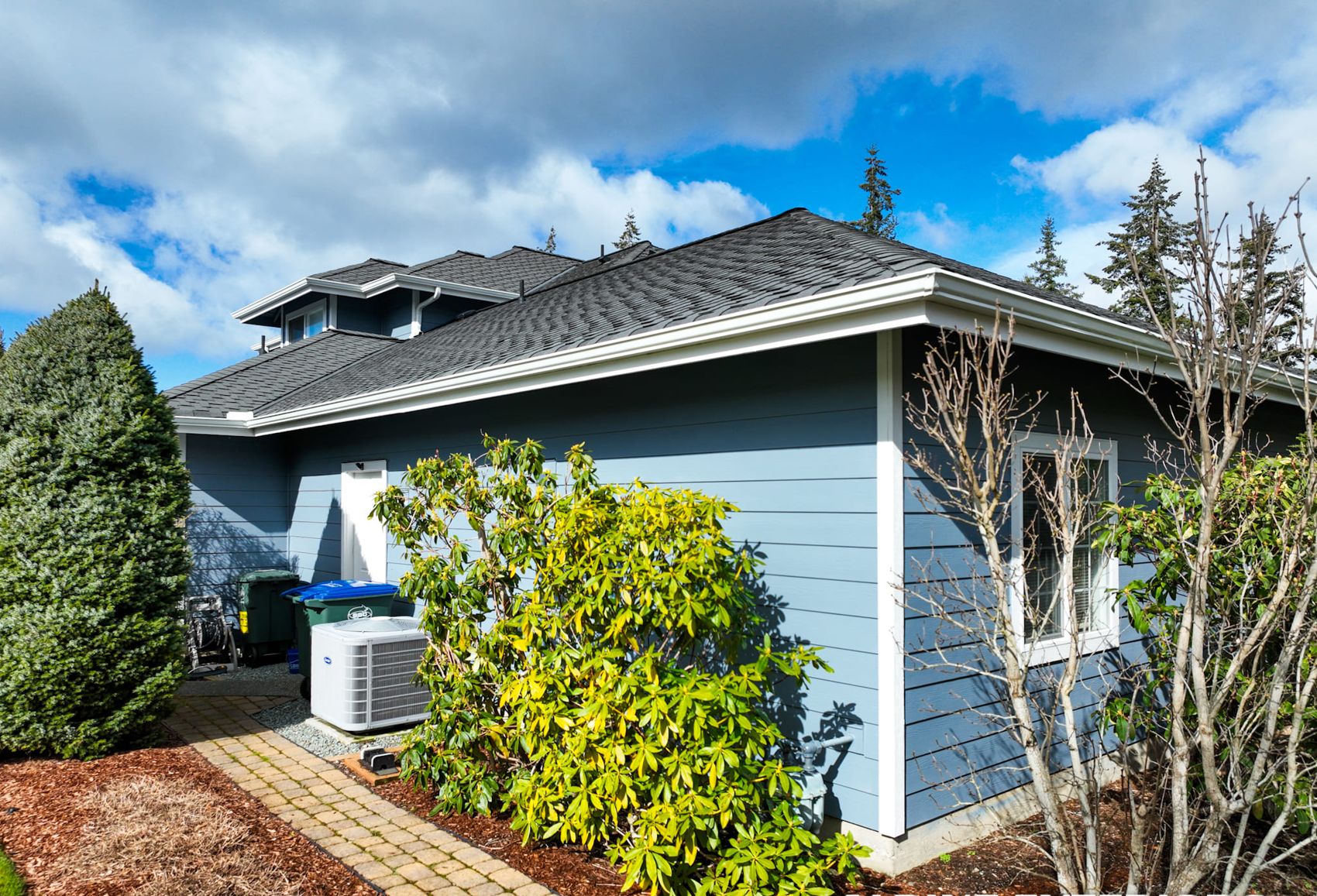
Acme sits in the foothills east of Bellingham, closer to the Mount Baker corridor than to the shoreline, and siding out here tends to fail differently than it does in Blaine or Birch Bay. Instead of salt air and open wind off the water, homes in Acme deal with heavy tree cover, damp shade, and cold air that settles into the valley overnight — a combination that keeps siding and the wall behind it wet longer than homes closer to town. When Whatcom County homeowners start pricing a full siding replacement, the first thing most people want is a single number. The honest answer is a range, because the same size house can cost meaningfully different amounts depending on what's hiding under the old siding and which material replaces it.
For a typical single-story or split-level home in the Acme area, a full siding replacement — tear-off, repair of any damaged sheathing, a new weather-resistive barrier, and installation of new siding — generally lands somewhere in the low five figures to the mid-to-high five figures, depending heavily on material choice and how much rot repair turns up once the old siding is off. Two-story homes, homes with a lot of trim, dormers, or roof breaks, and homes where the original siding was installed straight over damp sheathing tend to land at the higher end. The range below is intentionally wide: a vinyl re-side on a straightforward rectangular house with sound sheathing is a very different project than a fiber-cement re-side on a home with dry rot around several window sills, which is a common discovery on older Acme properties once the siding finally comes off.
| Cost Factor | Typical Low | Typical High |
|---|---|---|
| Vinyl siding, installed (per sq ft) | $6 | $11 |
| Fiber cement siding, installed (per sq ft) | $9 | $16 |
| Engineered wood siding, installed (per sq ft) | $8 | $14 |
| Cedar or real wood siding, installed (per sq ft) | $11 | $20 |
| Tear-off and disposal of existing siding (per sq ft) | $1 | $3 |
| Sheathing or rot repair (per sq ft of affected wall) | $3 | $9 |
| New weather-resistive barrier / house wrap (per sq ft) | $0.50 | $1.50 |
| Trim, flashing and detailing around openings (per linear ft) | $4 | $9 |
| Steep access, scaffolding, or lift rental | +10% | +20% of labor |
These are regional planning ranges, not a quote for a specific house. Only an on-site inspection — one that includes probing a few spots for hidden rot — turns a range like this into a real number.
A quote that's actually useful for comparison — rather than just a bottom-line number — should spell out:
The lowest bid on paper is sometimes the lowest bid because it's leaving something out — tear-off, a rot allowance, permit costs, or proper flashing detail — not because the contractor found a more efficient way to do the same job. Line up quotes side by side and check that they're pricing the same material grade, the same scope (tear-off versus overlay), and the same trim and flashing work. Ask each contractor how they handle a change order if rot is found after tear-off begins; a vague answer here is a bigger red flag than a higher price. Verify that the contractor carries current liability insurance and, if they'll have employees on a ladder, workers' compensation coverage — ask for the certificate rather than taking their word for it. Ask whether the crew doing the work is in-house or subcontracted, and ask for references from projects on homes of a similar age and exposure, ideally elsewhere in the foothills or elsewhere in Whatcom County rather than a fair-weather coastal project. Get the final scope, price, and payment schedule in writing before any deposit changes hands.
Many siding contractors, including Alpine Exteriors, can offer or arrange third-party financing that spreads the cost of a project into monthly payments; a home equity line of credit or a personal loan are the other common routes homeowners take. Whichever way you go, read the interest rate and term length carefully — a lower monthly payment over a longer term can end up costing more overall than a slightly higher payment on a shorter one.
On the insurance side, siding that's simply aged out, or that's grown moss and algae over years of shade and damp, is almost always treated as ordinary maintenance and isn't something a homeowner's policy will cover. What sometimes is covered is sudden damage — a wind event that tears siding loose, a falling tree limb, or water intrusion traced to a specific storm event rather than gradual wear. If you suspect storm damage rather than age-related wear, photograph it before any repair work starts and consider getting an independent inspection from a contractor who isn't also trying to sell you the repair, since insurers weigh unbiased documentation more heavily than a sales estimate.
For a typical single-story or split-level home, most full siding replacements — tear-off, any needed sheathing repair, new weather barrier, and new siding — fall somewhere between the low five figures and the mid-to-high five figures, with the final number driven mostly by material choice, home size, and how much hidden rot repair the project needs. A two-story home with more trim and roof breaks will generally sit toward the higher end of that range.
Overlay is less expensive up front because it skips demolition and disposal, but Alpine Exteriors and most experienced contractors recommend against it on any home with suspected moisture problems, which is common in a climate this wet. Installing over old siding traps whatever is happening underneath, hides sheathing damage instead of fixing it, and can shorten the life of the new siding.
It can, but only if the project addresses what's behind the siding, not just the exterior finish. Washington State Energy Code sets requirements for the weather-resistive barrier and, on many projects, continuous insulation, and meeting those requirements during a re-side can measurably tighten a home's building envelope — something that matters more in Acme's colder foothill nights than it might closer to the water. Simply swapping old siding for new, with no attention to the insulation or air barrier behind it, won't do much for the heating bill on its own.
Timeline depends on home size, material, how much rot repair turns up, and the weather window, since crews generally avoid installing over wet sheathing in a region that sees rain across most of the year. A straightforward single-story project in dry summer weather typically moves faster than a larger or more complex home scheduled during a wetter stretch of the year; your contractor should be able to give a realistic range once they've seen the house.
Every one of the ranges above is a starting point for a conversation, not a substitute for someone standing at your house and looking at what's actually behind the siding. Alpine Exteriors is licensed in Washington (ALPINI751OW) and works throughout Whatcom County — Acme, Bellingham, Ferndale, Lynden, Blaine, Birch Bay, Sudden Valley, and the islands — and can walk your property, check for the rot and moisture issues that are common in this climate, and put together a written, itemized quote so you know exactly what you're comparing before you decide.