
For most Semiahmoo homes, fiber cement siding is the best overall match for the moisture, moss, and wind-driven rain this stretch of Whatcom County deals with year-round. It shrugs off standing water, doesn't feed algae the way bare wood does, and holds paint far longer than vinyl in the marine air coming off Semiahmoo Bay and Drayton Harbor. Engineered wood siding is a reasonable second choice if it's installed and flashed correctly and repainted on schedule, and metal panel siding earns a place on modern or contemporary builds near the water where low maintenance matters more than a traditional look. Vinyl still has a role on budget-driven remodels and rentals, but it's rarely our first recommendation this close to the coast. Cedar is beautiful and it's part of the region's building tradition, but on a home that actually sits on the Semiahmoo spit or along the water, plan on a maintenance schedule most owners underestimate.
None of this is a guarantee that one product will perform identically on every house — orientation, roof overhangs, tree cover, and how the last contractor detailed the flashing all matter as much as the siding material itself. Alpine Exteriors has been sorting through these tradeoffs on homes from Blaine to Sudden Valley long enough to know that "best" siding really means best for a specific wall, in a specific spot, not one product for every house.
Semiahmoo sits close enough to Semiahmoo Bay and the Strait of Georgia that wind direction changes what "protected" means from one side of a house to the other. The criteria below are what Alpine Exteriors actually weighs when walking a property near the water, not a marketing checklist — they're the ones that separate a siding job that lasts twenty-plus years from one that needs board replacement in five.
Fiber cement — a blend of cellulose fiber, sand, and portland cement, sold in lap boards and panels — is the material we recommend most often for homes exposed to the bay. It doesn't absorb water the way wood does, it won't warp, and factory-applied finishes hold color for a long time even through the gray, low-sun-angle winters here. Because it's dense and non-organic, algae and moss have a much harder time getting a foothold than they do on bare or lightly sealed wood.
The downsides are real. It's heavier than vinyl or wood, so installation is slower and labor makes up more of the cost. Field cuts release silica dust and need to be done with the right saw blade and dust control, not a quick score-and-snap. And while the boards themselves resist moisture, a fiber cement job is only as good as the flashing, house wrap, and rainscreen gap behind it — cut corners there and you can still get moisture trapped behind the siding, even though the boards look fine from the yard.
Typical installed cost runs roughly $9–$16 per square foot depending on siding profile, trim complexity, and whether old siding needs to be removed first; that's a planning range, not a quote.
Vinyl is inexpensive, comes in a wide range of colors and profiles, and never needs painting, which makes it a common choice for rental properties and budget remodels around Whatcom County. It also won't rot, since there's no organic material for moisture to attack.
Where it struggles here is wind and UV. Gusts off the water can catch loose panels or work at fasteners over the years, and darker vinyl colors can fade or warp under repeated wet-dry cycling faster than manufacturers like to advertise. Seams and J-channels are also where moisture tends to find its way behind the panel on a windward wall, and once it's back there, vinyl doesn't dry out as forgivingly as fiber cement. It's a reasonable option on a sheltered wall or an interior lot away from direct exposure to the bay, but we'd think twice about it as the sole siding on a home that sits right on the water.
Cedar has a long history in this part of Washington and it still looks the part — warm, regional, and a natural match for older farmhouses and the wooded lots around Sudden Valley. Properly installed, back-primed, and finished with a breathable stain or paint, it can perform well for decades.
The honest catch is maintenance. Semiahmoo's steady dampness is hard on any organic siding: wood that stays wet for days at a time is what feeds moss, mildew, and eventually rot, especially near ground contact, under deck ledgers, and anywhere water sheets off a roof without a gutter to catch it. We see this constantly on older Whatcom County homes — cedar that looked fine from the street with soft, rotten sheathing once we pulled a few boards. If you love the look of cedar, budget for re-staining every few years and inspect the lower courses and any shaded north wall annually.
Engineered wood siding — resin-treated, factory-primed wood strand or fiber composite panels and lap boards — gives a lot of the look of traditional wood siding without cedar's full maintenance load. It's lighter than fiber cement, easier to install, and holds paint reasonably well when the manufacturer's caulking and touch-up instructions are actually followed.
Its weak point is unsealed or damaged cut edges. If a butt joint isn't primed and caulked correctly, or if the surface gets impact damage, moisture can wick into the panel and cause swelling or delamination faster than it would on solid wood. On a wind-exposed wall facing the bay, that detail work matters more than it would a mile inland — it's really an installation-quality issue as much as a product one.
Steel and aluminum panel siding has become more common on newer and remodeled homes near the water, particularly on contemporary designs around Semiahmoo and Blaine. It doesn't rot, doesn't feed algae, and stands up to wind-driven rain about as well as any material on this list, since seams can be detailed to shed water aggressively.
The tradeoffs are cost, denting, and look. Metal panel systems run toward the higher end of the cost range, hail or impact damage can dent panels in a way that's hard to spot-repair, and it reads as a modern material — it won't be the right fit if you're trying to match a traditional or craftsman-style home. Fastener corrosion is also worth asking about directly: in the salt-influenced air this close to the water, stainless or coated fasteners matter more than they would inland.
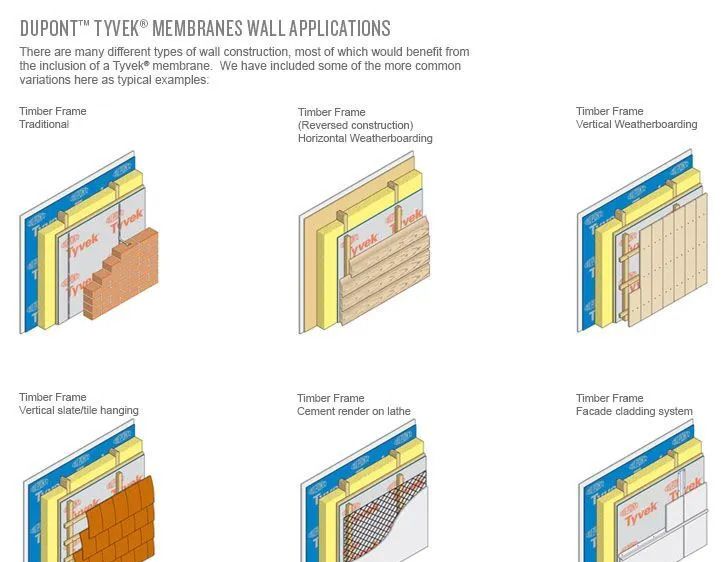
A few choices come up often enough in estimates that they're worth calling out directly. Traditional stucco is uncommon in this climate for good reason — it's a material suited to dry regions, and in a place that gets steady rain for months at a stretch, hairline cracks that would be a non-issue somewhere arid become a path for water intrusion here. We also steer people away from any siding installed directly against sheathing with no rainscreen gap, regardless of material; the Washington State Energy Code and current best practice both point toward a drainage gap and drainage plane behind the cladding, and skipping it is one of the most common reasons we get called out to a home with rot only eight or ten years after a full re-side. Finally, be cautious of any wood-contact detail at grade — siding that runs down to touch soil, mulch, or a deck surface with no gap will wick moisture and rot regardless of species or coating, cedar and engineered wood alike.
For most homes with real exposure to wind off the bay, yes — the extra upfront cost usually pays for itself in fewer repairs and a paint job that holds up longer, especially on south- and west-facing walls that take the brunt of storms. On a sheltered wall or a secondary structure, vinyl can be a perfectly reasonable way to save money.
It depends far more on installation quality than on age alone. Well-installed fiber cement or metal siding can last several decades with basic upkeep, while wood siding that was installed without a rainscreen gap or proper flashing can show rot in well under fifteen years. Pulling a few boards to check the sheathing behind them tells you more than the siding's age does.
Some, though it's a milder version of what you'd see on the open coast. The main things to watch are fastener corrosion on metal siding and trim, and faster paint or finish wear on the walls that face directly into the bay. Choosing coated or stainless fasteners and a durable finish on exposed sides is a reasonable precaution.
If the project involves opening up the wall assembly — removing siding down to the sheathing, adding insulation, or replacing the water-resistive barrier — the work needs to meet the applicable requirements of the Washington State Energy Code for that wall type. A straightforward like-for-like siding swap with no insulation changes has fewer code triggers, but it's worth confirming with your contractor before work starts.
Every wall on a bay-front home carries different exposure, and the right siding choice for your south wall might not be the right choice for the shaded side facing the trees. Alpine Exteriors is a licensed Washington contractor (WA license ALPINI751OW) working throughout Whatcom County — Bellingham, Ferndale, Lynden, Blaine, Birch Bay, Sudden Valley, Semiahmoo, and the islands — and we're glad to walk your home, pull a board or two if there's any doubt about what's underneath, and put together options that match your budget and how exposed your specific walls really are. Reach out to schedule a walkthrough and get a straight answer about what will actually hold up on your home.