
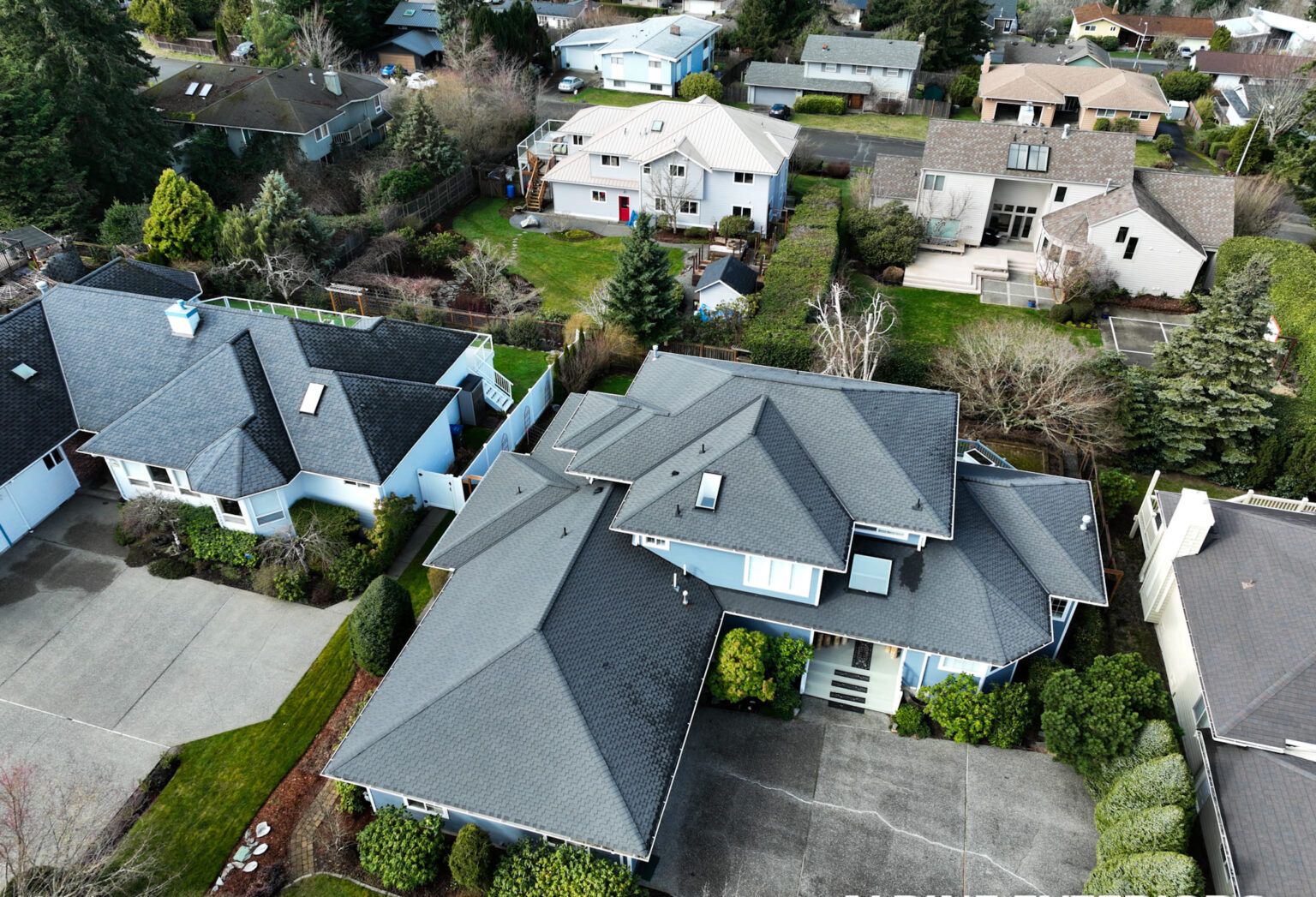
Edgemoor sits right on Bellingham Bay, tucked among mature evergreens and older waterfront homes that have absorbed decades of Pacific Northwest weather. That combination — big trees shading roofs and walls for most of the day, salt-tinged air off the bay, and wind-driven rain that comes sideways during a southwesterly blow — makes siding condition in this neighborhood different from what you'd find a few miles inland in Lynden or Sumas. If you're pricing out a siding replacement here, the honest answer is: it depends, but there is a real, predictable range once you know what drives it. This guide walks through that range, what pushes a project toward the low or high end, and what to expect when quotes start landing in your inbox.
For a typical single-family home in the Edgemoor/Bellingham area, full siding replacement tends to land somewhere between the low five figures and the high five figures, with most projects clustering in a broad middle band depending on material, home size, and how much of the wall assembly underneath has to be rebuilt. Vinyl replacement on a straightforward, moderate-size home sits at the lower end of that range. Fiber cement (James Hardie and similar products) and engineered wood run meaningfully higher, both because the material costs more and because it takes longer to install correctly. Cedar and other real-wood siding, which is still common on Edgemoor's older homes, can land anywhere in the range depending on whether it's being repaired in sections, re-sided in wood again, or replaced with a lower-maintenance material.
The table below breaks out the main cost factors we see driving Whatcom County siding quotes and gives a rough sense of how each one pulls the price up or down. These are directional ranges, not a quote — every home's actual number depends on its specific condition and layout.
| Cost Factor | Low End | High End |
|---|---|---|
| Material — vinyl | Lower cost per square foot; fast install | Upgraded profiles/thickness push toward mid-range |
| Material — fiber cement | Mid-range per square foot | Higher end, especially with factory-primed color and detailed trim |
| Material — cedar/wood | Mid-range for standard patterns | Highest end for clear-grade cedar and custom detailing |
| Tear-off and disposal | Minimal if old siding comes off clean | Higher if multiple layers or old wood siding must be hauled |
| Sheathing and rot repair | Low if wall sheathing is sound | Substantially higher if rot has reached the studs |
| House wrap / moisture barrier upgrade | Modest add if wrap is already adequate | Higher if a full rain-screen or drainage plane is being added |
| Trim, fascia, and window detailing | Low for simple box construction | Higher for Edgemoor's more architecturally detailed older homes |
| Access and site conditions | Low for flat, open lots | Higher for steep waterfront lots, retaining walls, and mature landscaping |
A handful of region-specific realities show up again and again once a crew actually opens up the walls in Edgemoor and the surrounding Bellingham Bay shoreline:
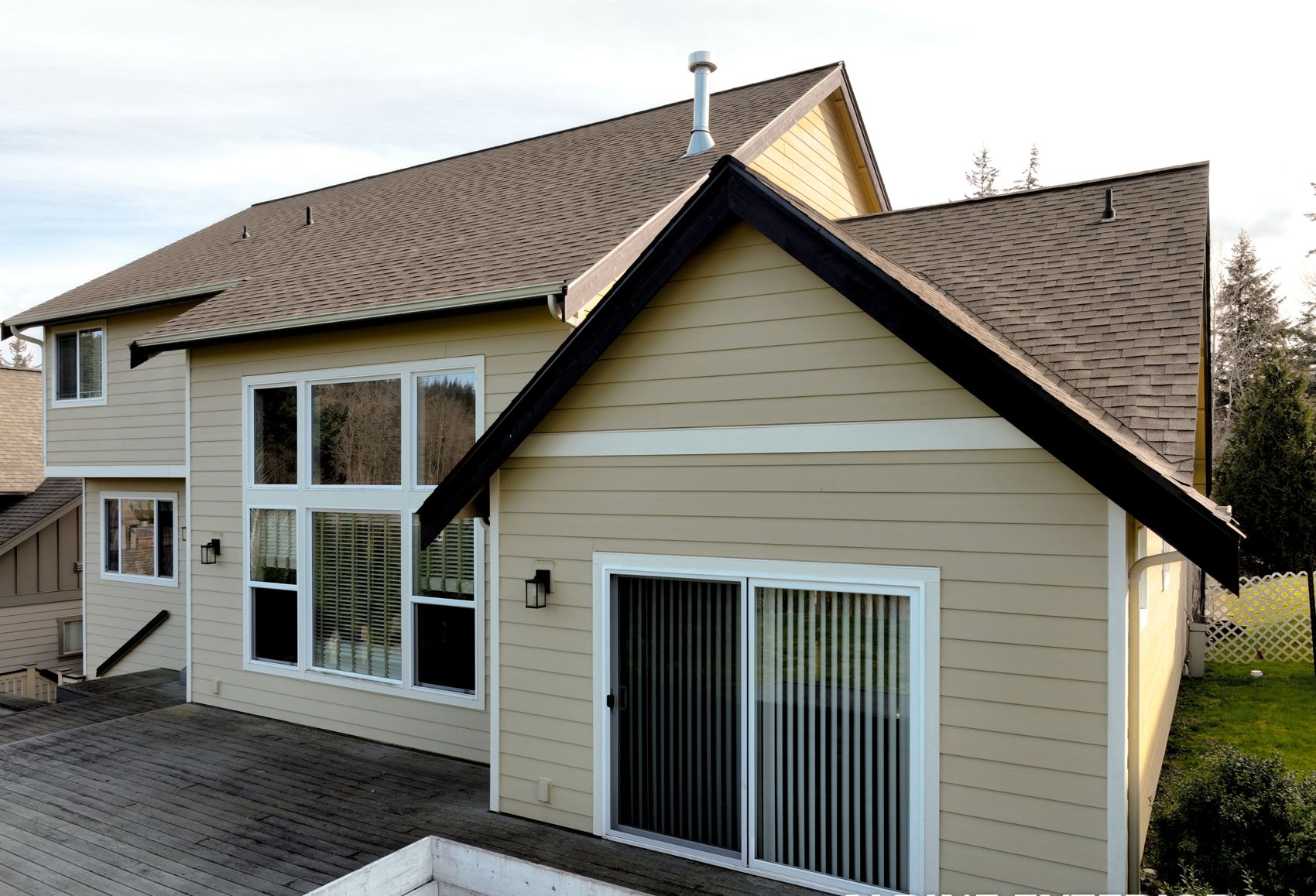
A siding quote that's actually usable — one you can compare apples-to-apples against another bid — should spell out more than just a total number. Look for:
At Alpine Exteriors, we walk every quote through this list with the homeowner before any work starts, specifically because the biggest source of disputes on siding jobs is scope that was assumed but never written down.
The lowest number on paper is rarely the cheapest project once the work is underway. When you're lining up two or three bids, resist comparing just the bottom-line total and instead compare scope line by line. A quote that's meaningfully lower than the others is worth a direct question: does it include tear-off? Does it assume the sheathing is sound, with rot repair billed separately later? Is it using a thinner or lower grade of the same material category? None of that makes a lower bid dishonest, but it does mean it isn't actually the same project as the higher one next to it.
It's also worth asking each contractor how they plan to handle moisture management specifically — given how much of Whatcom County's siding damage traces back to water finding its way behind the cladding, a contractor who can speak specifically to house wrap, rain-screen detailing, and flashing sequencing is generally the one who understands the actual failure modes in this climate, not just the installation of the finish material. Ask to see recent local work if possible, and confirm the WA contractor license is current and in good standing before signing anything. Alpine Exteriors' license number, ALPINI751OW, is verifiable through the Washington State Department of Labor & Industries — any Whatcom County contractor's license should be similarly easy to check.
Most siding replacement is treated as a maintenance and improvement project rather than an insurance claim, since normal wear, moss growth, and age-related rot generally fall outside standard homeowner's policy coverage. That said, if damage is tied to a specific, sudden event — a storm that tore siding loose, a falling branch, or similar — it's worth a call to your insurance carrier before starting repairs, since that portion of the work may be covered even if the broader re-siding isn't. Keep photos of any storm damage and a contractor's written assessment on hand if you go that route.
For homeowners financing the project outright, many contractors, including Alpine Exteriors, can point you toward third-party financing options or work with you on a payment schedule tied to project milestones (materials ordered, tear-off complete, install complete, final inspection). Because siding project costs swing so much based on what's found once the old material comes off, it's worth asking upfront how a financed amount is adjusted if rot repair adds to the scope mid-project, so there are no surprises on either end.
Different contractors make different assumptions about what's behind the existing siding until they actually open it up. One bid might assume the sheathing is sound and only price the visible install, while another builds in an allowance for rot repair based on the home's age and exposure. Material grade, trim scope, and whether a rain-screen gap is included also vary between bids even when both are technically quoting "the same material." The way to make bids comparable is to ask each contractor to itemize their assumptions rather than just comparing the bottom line.
Soft spots when you press on the siding, paint that bubbles or peels in the same spots repeatedly, dark staining running down from window sills, and a musty smell near exterior walls are all signs worth flagging to a contractor before the estimate visit. Homes shaded heavily by trees or close to the water, which describes much of Edgemoor, are more likely to have moisture-related damage than homes in drier, more open parts of Whatcom County, so it's worth mentioning tree cover and sun exposure when you're describing the property.
Both hold up reasonably well in this climate when installed correctly, and the better choice often comes down to the home's style, your maintenance preferences, and budget rather than one material being clearly superior. Fiber cement tends to resist moss and algae staining a bit better over time and holds paint well, which some Edgemoor homeowners prefer given the tree cover in the neighborhood, but it costs more upfront and takes longer to install. Vinyl is lower cost and low-maintenance but can look and perform differently depending on product quality, and isn't always the right fit for older homes with more traditional architectural detailing.
It can, particularly if the project includes upgrading or adding continuous insulation as part of meeting current Washington State Energy Code requirements for the work being done. Even without a major insulation upgrade, replacing old, gapped, or damaged siding along with fixing the house wrap underneath typically tightens up the building envelope and reduces drafts, which homeowners in Whatcom County's damp, cool climate often notice on their winter heating bills.
Every Edgemoor property carries its own combination of tree cover, sun exposure, age, and wall condition, which is exactly why a general price range only gets you so far. Alpine Exteriors, WA contractor license ALPINI751OW, serves Edgemoor and the rest of Whatcom County — including Bellingham, Ferndale, Lynden, Blaine, Birch Bay, Sudden Valley, and the islands — and can walk your specific home, point out what's driving your number up or down, and put together a written quote that spells out material, scope, and assumptions clearly. If you're trying to figure out where your project actually falls in the range, that on-site look is the fastest way to get a real answer instead of a guess.