
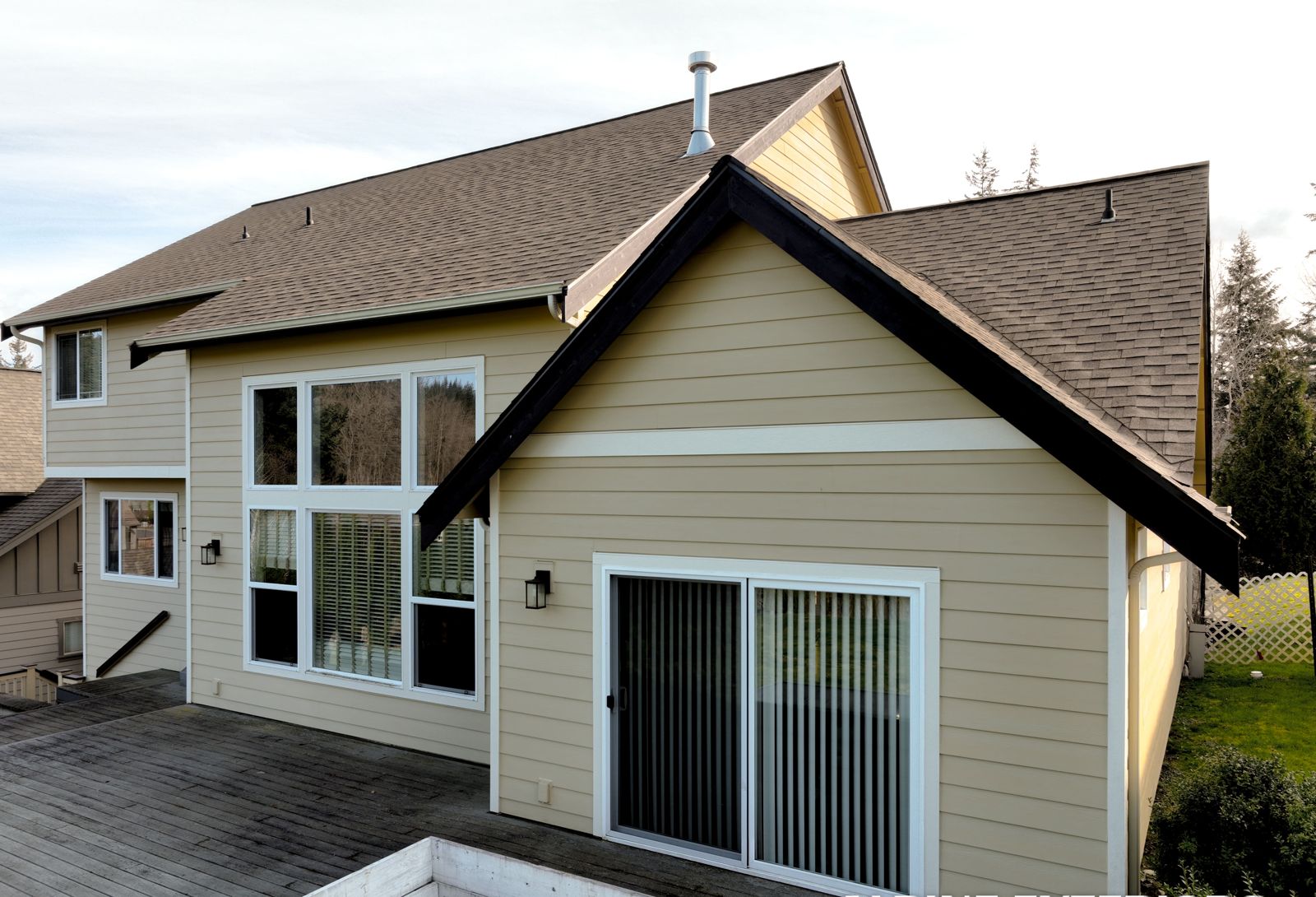
Maple Falls sits up against the foothills of Mount Baker, and that location shapes what siding replacement actually costs here in ways that a generic online calculator won't capture. Homes in this part of Whatcom County deal with a wetter, colder microclimate than Bellingham or the county's lowland towns — more standing snow load in some winters, more freeze-thaw cycling on north-facing walls, and long stretches of shade under fir and cedar canopy that keep siding damp well after a storm has passed. Add in the steady rain that defines a Pacific Northwest winter and it's easy to see why moss, algae staining, and slow wood rot show up on Maple Falls homes faster than they would in a drier climate. This page walks through realistic price ranges, the specific factors that push a Maple Falls quote up or down, what a trustworthy bid should include, and how to compare estimates without getting burned by a number that looked good on paper but didn't hold up once the crew opened the walls.
There is no single honest number for "siding replacement cost" because the range depends heavily on the size of the home, the material chosen, and — especially in this area — how much hidden damage is waiting under the old siding. What we can say is that Maple Falls jobs tend to land in the same broad band as the rest of rural and foothill Whatcom County, generally running somewhat higher than a straightforward in-town tear-off-and-replace because of rot repair, sheathing replacement, and the extra time it takes to properly detail a moisture barrier in a climate that gives siding almost no chance to dry out between rain events. Homeowners who get a quote that sits far below every other bid should ask specifically what's being left out, because on a foothill home the answer is usually rot repair, proper flashing, or a rainscreen gap — all of which matter more here than in a dry climate.
| Cost Factor | Typical Low | Typical High | Notes |
|---|---|---|---|
| Vinyl siding, standard profile | Lower end of the range | Mid-range | Least expensive material; performs adequately if the moisture barrier underneath is done right |
| Fiber cement siding | Mid-range | Upper-mid range | Popular in this climate for its resistance to moisture and moss staining; heavier to install |
| Engineered wood siding | Mid-range | Upper-mid range | Needs careful sealing at cut edges to hold up to constant PNW dampness |
| Cedar or natural wood siding | Upper-mid range | Highest | Beautiful in a foothill setting but demands ongoing maintenance against rot and moss |
| Wood rot / sheathing repair | Adds a modest amount | Can add substantially | Common on Maple Falls homes with shaded, north-facing, or tree-covered walls |
| Tear-off and disposal of old siding | Adds a modest amount | Adds a moderate amount | Higher on multi-layer re-sides or older homes with more material to haul out |
| House size and number of stories | Scales with square footage | Scales with square footage | Two-story and steep-site homes need more staging and access equipment |
| Trim, corners, and detail work | Adds a modest amount | Adds a moderate amount | Custom trim around windows, gables, and dormers takes more labor time |
Several conditions specific to Maple Falls and the surrounding foothill communities push a quote higher or lower than the county average. The first and biggest variable is what's found once the old siding comes off. Wood rot from years of wind-driven rain working its way behind poorly lapped siding, or moisture trapped by moss and algae growth on shaded walls, is common enough in this area that any contractor who promises a firm price before inspecting the sheathing is guessing. A home near Silver Lake Road or tucked into tree cover will often need more sheathing repair than a home on an open, sun-exposed lot in town.
Second, material choice matters more here than in a milder climate. Cedar and other natural wood sidings look right at home in Maple Falls but require the homeowner to stay ahead of moss treatment and refinishing, or the same rot problems return within a decade. Fiber cement has become popular locally precisely because it resists moisture damage and doesn't feed algae growth the way untreated wood can.
Third, the Washington State Energy Code plays a real role in cost. Depending on the scope of the re-side and whether wall assemblies are being opened up, code compliance can require upgrades to continuous insulation or air sealing that weren't part of the original construction. This isn't a cost contractors invent to pad a bid — it's a legitimate code requirement that affects material and labor once walls are exposed, and it's worth asking about early rather than discovering it mid-project.
Fourth, site access and terrain around Maple Falls can add cost that wouldn't apply on a flat in-town lot — longer driveways, steep grades, limited staging space, and greater distance for material delivery and debris haul-off all factor into labor time.
Finally, freeze-thaw cycling in the foothills is harder on aging siding and trim than the milder coastal towns near Bellingham Bay experience. Cracked caulking, split trim boards, and separated seams that let water in over a Maple Falls winter often mean more incidental repair is bundled into a re-side here than it would be closer to the water.
A complete, honest quote for siding replacement in this area should spell out more than just a total dollar figure. Look for these elements in writing before signing anything:
Alpine Exteriors builds quotes this way specifically because verbal promises don't hold up when a wall turns out to have more rot than expected. A written scope protects both the homeowner and the contractor.
The hardest part of shopping siding quotes is that two bids for the "same job" can be wildly different projects underneath. Before comparing prices, make sure every bid covers the same material grade, the same underlayment and rainscreen approach, and the same assumptions about rot repair. A bid that's noticeably cheaper is often cheaper because it skips the drainage gap, uses a thinner material, or quietly assumes zero hidden damage — an assumption that rarely holds true on an older Maple Falls home.
Confirm that any contractor you're considering is licensed with Washington's Department of Labor & Industries and carries active liability insurance; license status can be checked directly through L&I's public lookup. Ask for a couple of recent local references, ideally in the foothill or rural parts of the county rather than only in-town jobs, since the conditions differ. And be wary of anyone unwilling to put a per-unit rate on unforeseen rot repair — that's the single line item most likely to change the final bill on a re-side in this climate, and a contractor who plans for it up front is being straight with you. Alpine Exteriors carries Washington contractor license ALPINI751OW and is glad to have that verified before any work begins.
Most contractors offer financing options for a project of this size, whether through a third-party lender or a home equity line, and it's worth asking early in the quote process since financing terms can affect the total cost. Some utility or state weatherization programs offer incentives tied to energy code upgrades, which can offset part of the cost when a re-side includes added insulation — ask your contractor whether the specific work qualifies.
On the insurance side, it's important to understand what a homeowner's policy typically will and won't cover. Sudden, specific damage — a tree limb through a wall during a windstorm, for example — is usually covered. Gradual wood rot from years of moisture exposure, moss growth, or normal wear is typically treated as a maintenance issue and excluded. If you suspect storm damage contributed to your siding's condition, document it with photos and a contractor's written assessment before filing a claim, since insurers will want evidence the damage was sudden rather than long-term deterioration.
The combination of tree cover, foothill freeze-thaw cycling, and consistently damp conditions means more homes here have some degree of hidden wood rot or sheathing damage by the time siding is replaced, and site access can also add labor time compared to a flat in-town lot. Material choice and house size still matter most, but these regional conditions are why a firm price before inspection isn't realistic.
Soft spots when pressed, dark staining, bubbling paint, or a spongy feel near the bottom of walls and around window trim are common signs, but a lot of rot in this climate hides behind the siding where it can't be seen until removal begins. A contractor can do a limited probe inspection at a few likely spots, but a full picture usually isn't possible until the old material comes off.
It can, depending on the scope of the work and whether the wall assembly is opened up during the project. Re-sides that involve replacing sheathing or adding new insulation layers may need to meet current continuous insulation or air-sealing requirements under the code, which is worth discussing with your contractor before the project starts so it's reflected in the quote rather than discovered mid-job.
It depends on your priorities. Vinyl is the most budget-friendly option and holds up fine when the moisture barrier behind it is installed correctly, but it can show impact damage more easily. Fiber cement and engineered wood cost more up front but tend to resist moss staining and moisture intrusion better over the long term, which matters in an area that sees as much sustained rain as Maple Falls does.
Every siding job in Maple Falls is a little different once you account for tree cover, sun exposure, existing rot, and the specific material a homeowner wants. The only way to get a number that actually reflects your house is a walk-through inspection rather than a phone estimate. Alpine Exteriors serves Maple Falls and the rest of Whatcom County, from Bellingham and Ferndale to Lynden, Blaine, Birch Bay, Sudden Valley, and the islands, and can walk your property, point out what's driving your specific cost range, and put together a written quote you can actually compare against other bids. Reach out to schedule a look at your home before committing to a project of this size.