
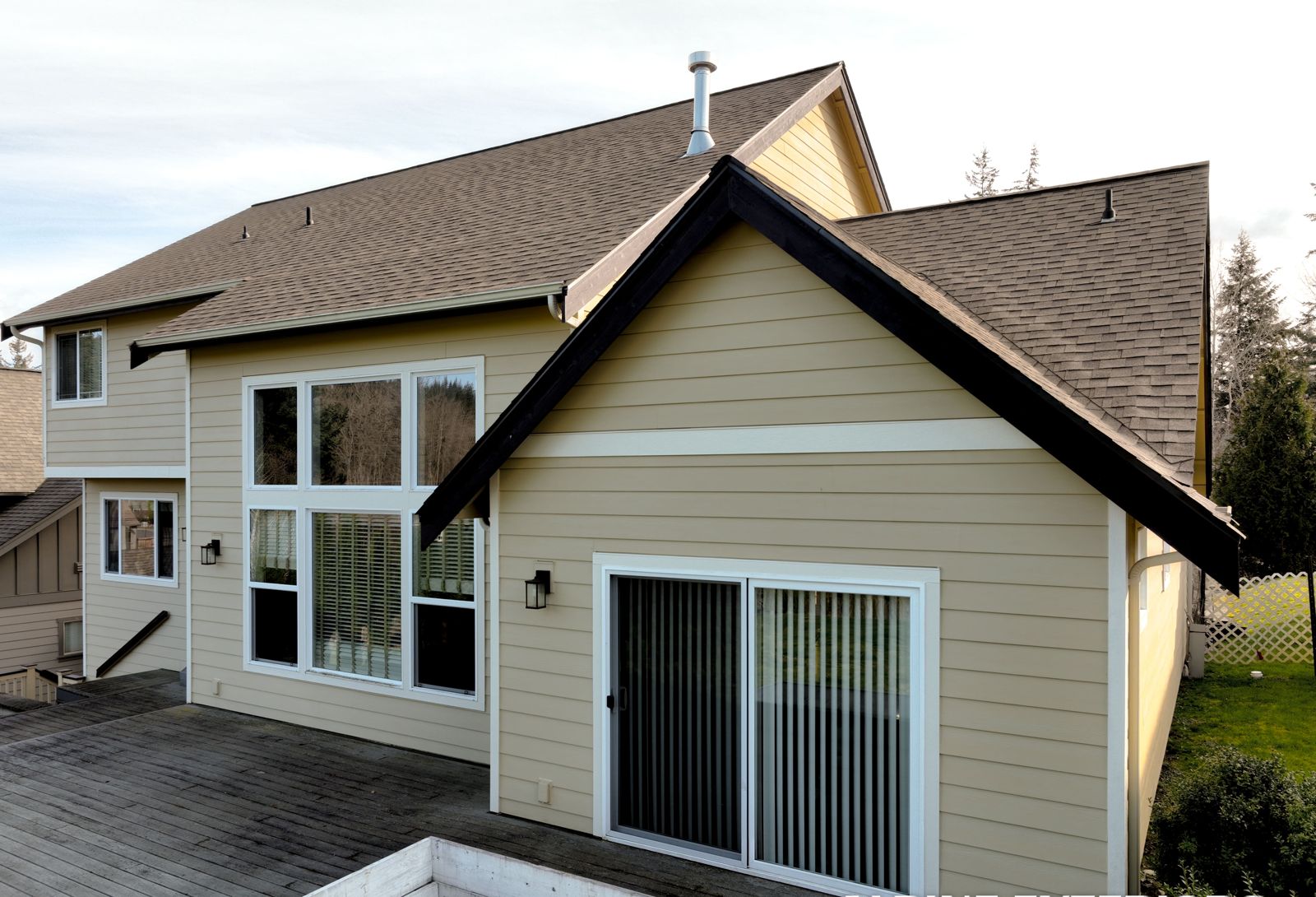
Trim boards take more weather abuse than almost any other part of a house. They cap the ends of siding, wrap window and door openings, and sit at the roofline where water runs off and pools. In a climate like ours — long wet seasons, wind-driven rain off Bellingham Bay and the Strait of Georgia, and moss that colonizes anything shaded and damp — the trim material you choose has an outsized effect on how the whole exterior ages. At Alpine Exteriors we get asked constantly whether cellular PVC trim or Hardie (fiber cement) trim is the better call for homes from Fairhaven to Lynden to the islands. The honest answer is that both are good products; the right one depends on where the trim sits on the house and how much upkeep you want to do.
If you want trim you never have to repaint and that will not rot no matter how much water sits against it, cellular PVC is the stronger choice — especially at high-exposure spots like window sills, deck ledgers, and anywhere trim meets a roof-to-wall transition where flashing can fail slowly over the years. If you want trim that visually disappears into a Hardie plank or shingle siding job, takes paint like real wood, and costs less up front, Hardie trim is the better fit, particularly on gables, frieze boards, and corner boards that stay reasonably dry under generous overhangs. Most of the Whatcom County homes we work on end up with a mix: Hardie trim on the bulk of the house paired with Hardie fiber cement or PVC siding, and PVC substituted in the handful of spots that take the worst water exposure — porch columns, low decks, and window sills on the west and southwest elevations that catch the prevailing wind-driven rain.
Cellular PVC trim is extruded rigid vinyl foam, typically supplied by brands like AZEK or Versatex, cut and installed the same way a carpenter would install painted wood trim. It has no wood fiber, so it cannot rot, and it does not absorb water, so it will not swell, cup, or delaminate even if it sits in standing moisture for weeks at a time. That makes it a strong performer at the ground-contact and near-grade locations that are so common in this region — porch skirting in Birch Bay, deck fascia in Sudden Valley, and window sills below unheated bonus rooms where condensation and rain both collect.
The tradeoffs are real, though. PVC trim expands and contracts more than wood or fiber cement with temperature swings, so installers need to leave proper gaps and use trim-head screws or specialized adhesives rather than fighting the material with too many fasteners — done wrong, you get buckled runs on long fascia boards, particularly on south-facing walls that see more direct sun. It also costs more per linear foot than fiber cement in most cases, and while factory colors and cellular PVC's smooth or wood-grain finishes have improved a lot, it can still read as slightly plasticky up close compared to a well-painted wood or Hardie profile. Moss and algae do not feed on PVC the way they can find a foothold in porous surfaces, but the material still needs an occasional rinse in our climate, the same as any exterior surface exposed to Whatcom County's humidity and shade.
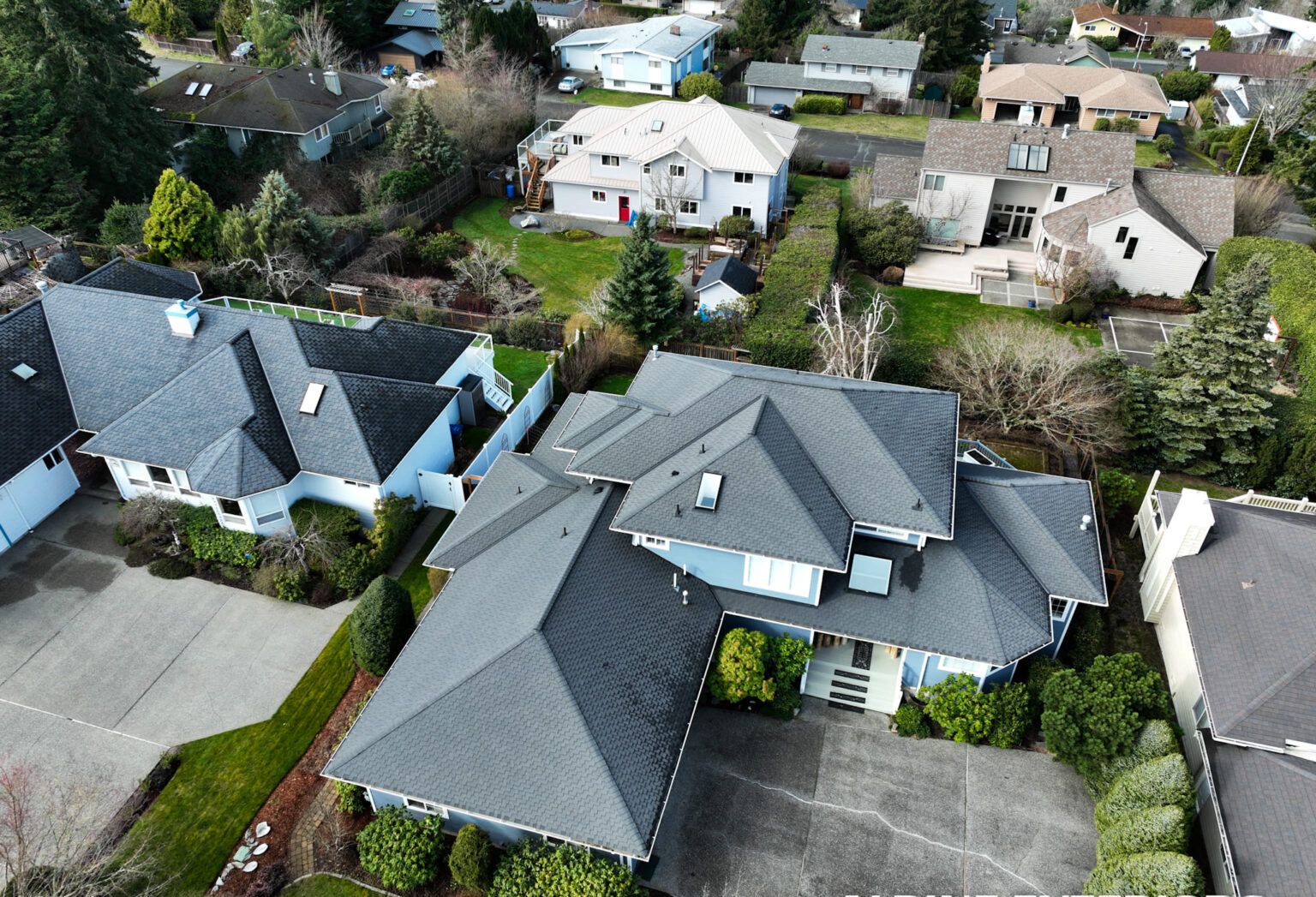
Hardie trim — HardieTrim boards, made from Portland cement, sand, and cellulose fiber — is the fiber cement counterpart most often paired with James Hardie siding, and it is what we install most often across our Whatcom County jobs. It is dimensionally stable across temperature swings, so long fascia and corner boards stay straight for years without the expansion issues PVC can show, and it accepts high-quality acrylic paint the way wood does, which means color matching to a specific siding shade or a custom trim accent is straightforward. It is also noncombustible, which some homeowners value simply for the added peace of mind, and it resists moss and algae growth better than raw wood, though it is not immune — a shaded north wall in Ferndale or a piece under a heavy tree canopy in Sudden Valley will still need occasional cleaning.
Fiber cement's real vulnerability is at cut ends and fastener penetrations. If a board is field-cut and the raw edge is not primed and sealed, or if caulking at butt joints is skipped or fails over time, water can wick into the cellulose fiber and cause swelling or spalling at that specific point — this is almost always an installation-quality issue rather than a product flaw, but it means the workmanship matters as much as the material. It is also heavier than PVC, which is not a homeowner concern day to day but does mean it benefits from being installed by a crew used to handling and cutting it correctly, including proper blade use to control silica dust. And because it needs paint, it is not a truly zero-maintenance product — expect a repaint cycle every decade or so depending on sun exposure and elevation, the same as painted wood trim would need, though at a much slower rate of failure.
| Factor | PVC Trim | Hardie Trim (Fiber Cement) |
|---|---|---|
| Upfront cost | Higher — typically runs more per linear foot in material and labor | Lower to moderate — generally less expensive material, comparable install labor |
| Lifespan in this climate | Very long at wet, low-exposure spots; no rot risk even with standing water contact | Long at properly flashed, well-detailed locations; vulnerable at unsealed cut ends or failed caulk joints |
| Maintenance | Occasional rinse to clear moss/algae film; no repainting required unless color change is wanted | Needs repainting roughly every 8-12 years depending on sun exposure; joints need caulk inspection |
| Appearance | Clean, uniform look; can read as slightly synthetic up close; limited factory profiles | Closely mimics painted wood; widest range of profiles and custom paint colors |
For most Whatcom County homes, we recommend Hardie trim as the primary material and reserve PVC for the specific locations where water simply sits or splashes the most. That split reflects how our weather actually behaves rather than a blanket rule. The bulk of a house's trim — corner boards, frieze boards under the eave, window and door casings on covered elevations — sits under enough roof overhang that it dries out between storms, and that is exactly the environment where Hardie trim performs well for a long service life and gives you a paint-matched, traditional look. The trouble spots are narrower than people expect: porch columns and skirting near grade, deck ledger boards, window sills on unprotected south and west walls that catch wind-driven rain off the Bay, and any trim near an entry that gets splash-back from a walkway or driveway. In those specific spots, PVC's total indifference to standing water is worth the added cost, because it removes the recurring failure point rather than just slowing it down.
Two other regional factors shape the decision. First, moss and algae are a fact of life anywhere shaded and damp in this county, from downtown Bellingham lots under mature conifers to wooded properties around Lake Whatcom — neither material stops growth entirely, so plan on an annual soft wash regardless of what you choose. Second, whatever trim you select needs to work with the wall assembly required under the Washington State Energy Code, which governs the continuous insulation and air-sealing details behind the cladding on most new builds and major re-sides in this region; trim thickness and flashing details need to be coordinated with that assembly, not bolted on as an afterthought. Alpine Exteriors builds that coordination into every siding and trim estimate, because trim that looks right but is not integrated with the water-resistive barrier and code-required insulation layer will fail early no matter which material it is made from.
Yes, and it is common practice — many of the homes Alpine Exteriors trims out use Hardie boards for the majority of the exterior with PVC substituted at porch columns, deck fascia, or window sills that see the most water exposure. The key is matching paint sheen and color carefully, since the two materials can take finish coatings slightly differently, and making sure the transition points are properly flashed so water is directed away rather than trapped where the two materials meet.
Lower-grade cellular PVC can chalk or discolor with years of UV exposure, though our cloud cover limits direct sun compared to sunnier climates, which slows that process. Choosing a reputable manufacturer and, if a color change is wanted, using a paint rated for PVC substrates keeps the finish looking consistent for longer. It is not a maintenance-free guarantee against all discoloration, just a slower timeline than in high-UV regions.
Fiber cement itself does not rot the way wood does, because it is a cement-based product rather than a wood-fiber board, but it can absorb moisture at unsealed cut ends, nail holes, or failed caulk joints and swell or spall at that specific point over time. Proper factory-primed cut ends, correct fastening, and maintained caulk joints prevent this in the vast majority of cases — the failures we see almost always trace back to an installation shortcut rather than the material itself.
It depends on where it is going. Paying the PVC premium across an entire house's trim package is rarely worth it when most of that trim sits under dry, well-protected eaves. Paying it at the specific wet spots — near-grade trim, deck areas, unprotected sills — is usually a smart, targeted investment because it removes a recurring repair item rather than just delaying it, and Alpine Exteriors can walk your specific elevations to identify exactly which locations justify the upgrade.
Trim decisions are easiest to get right when someone looks at your actual elevations, overhangs, and exposure before recommending a material. Alpine Exteriors (WA contractor license ALPINI751OW) works throughout Whatcom County — Bellingham, Ferndale, Lynden, Blaine, Birch Bay, Sudden Valley, and the islands — and can walk your home to point out exactly where PVC trim earns its cost and where Hardie trim is the smarter, more economical choice. Contact Alpine Exteriors for a straightforward on-site assessment and a written estimate that reflects your home's actual exposure, not a one-size-fits-all recommendation.