
Custer sits in the flat, wind-exposed farmland between Ferndale and Blaine, close enough to Drayton Harbor, Birch Bay, and the Strait of Georgia that homes here take weather from two directions: wet marine air pushing in off the water, and cold, dry outflow winds that funnel down from the Fraser Valley through the Sumas Gap in winter. That combination shapes what siding replacement actually costs on a Custer property, and it's worth understanding before you start collecting quotes. This guide lays out realistic ranges, the local conditions that push a bid higher or lower, what a complete quote should include, and how to compare bids without getting fooled by a number that looks good on paper but leaves out half the job.
There's no single number that fits every house, and any contractor who quotes a price over the phone without seeing your walls is guessing. That said, homeowners in Custer and the surrounding Whatcom County towns can generally expect siding replacement to fall into a wide range depending on material, house size, and how much of the wall assembly underneath needs to be fixed along the way. Vinyl and engineered wood siding sit at the lower end of the range per square foot; fiber cement and true cedar sit higher, both in material cost and in the skilled labor required to install them correctly in a wet climate. The table below breaks out the main cost drivers so you can see where your project is likely to land.
| Cost Factor | Typical Low | Typical High | Why It Varies |
|---|---|---|---|
| Siding material (installed, per sq. ft.) | Low end for vinyl/engineered wood | High end for fiber cement/cedar | Material cost, cutting waste, and install labor differ a lot by product |
| Tear-off and disposal | Minimal if old siding comes off clean | Significant if layered over old siding or lead paint is present | Multiple layers, staples, or hazardous materials slow demolition |
| Sheathing and rot repair | Little to none on a well-maintained home | Substantial on homes with hidden moisture damage | Whatcom County's wet winters let rot spread behind siding unseen for years |
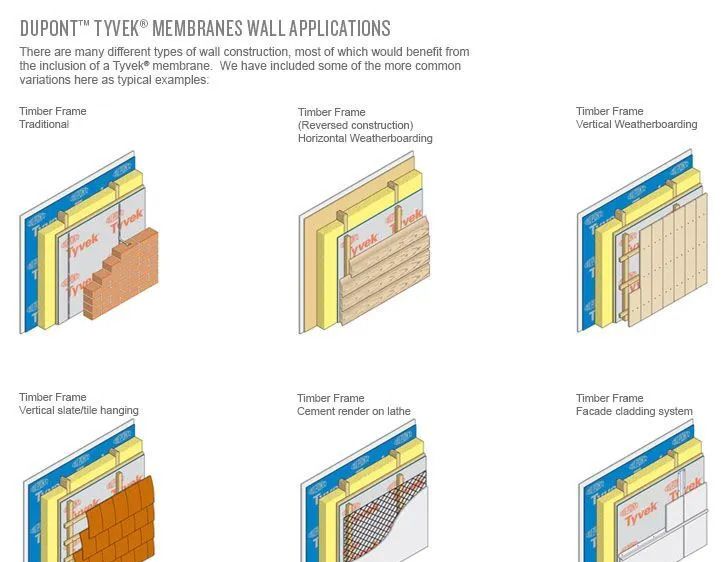
| Weather-resistive barrier and flashing | Standard house wrap on straightforward walls | Higher with complex window/door flashing and taped seams | Wind-driven rain off the Strait demands careful water management details |
| Trim, corners, and fascia | Basic trim replacement | Full trim package with custom details | Farmhouses and older Custer homes often have unique trim profiles |
| Story count and roofline complexity | Single-story, simple gable | Two-story with dormers, bay windows, or steep pitches | Staging, scaffolding, and cutting time go up with height and detail |
| Permits and code compliance | Straightforward like-for-like replacement | Higher when continuous insulation or WSEC upgrades are triggered | Washington State Energy Code requirements can add insulation work |
Keep in mind these ranges describe the spread you'll see across bids for otherwise similar homes, not a formula you can plug your square footage into and get a firm number. The only reliable way to get an actual price is a walk-around inspection, ideally with a few boards or a section of siding pulled to check what's happening underneath.
Several conditions specific to this part of Whatcom County have an outsized effect on the final cost, more than most homeowners expect going in.
Wood rot from long, wet winters. Custer doesn't get the intensity of a coastal storm town, but it gets months of steady, low-grade dampness, and that's often worse for wood siding and sheathing than the occasional hard rain. Rot tends to hide behind siding at window sills, at the bottom courses near grade, and around poorly flashed trim, and it's rarely visible until the old siding comes off. A quote that assumes no rot repair, then discovers extensive damage mid-project, is one of the most common reasons a "final" price changes.
Moss and algae on shaded, north-facing walls. Homes tucked under trees or facing away from the sun stay damp longer, and that moisture holds moss and algae growth against the siding surface. Beyond the cosmetic issue, sustained moss growth traps water against the substrate and accelerates deterioration, which is one more reason a contractor should check moisture readings on those walls specifically rather than assuming the whole house is in the same condition.
Wind-driven rain off Drayton Harbor and the Strait. Custer's open, low-lying position near the water means storms can drive rain sideways into wall assemblies, especially on west- and southwest-facing elevations. This is a water-management problem more than a structural one — it puts real weight on flashing details at windows, doors, and butt joints, and on getting the weather-resistive barrier lapped correctly. Skipping these details to save labor time is a common shortcut on cheap bids, and it's the kind of thing that doesn't show up as a problem until a few winters later.
Freeze-thaw cycles from Fraser Valley outflow winds. When cold air spills down from British Columbia through the Sumas Gap, Whatcom County's northern edge — including Custer — can see sharp temperature swings that don't happen further south. Moisture trapped in siding or sheathing that freezes and thaws repeatedly expands cracks and loosens fasteners over time. Homes with existing moisture problems are more vulnerable to this cycle, which is another argument for fixing the water problem, not just the surface material.
Washington State Energy Code requirements. Depending on the scope of the project and how much of the exterior wall assembly is being opened up, a re-side can trigger Washington State Energy Code provisions around continuous insulation or air sealing. This isn't automatic on every replacement, but it's worth asking about early, since it can change both the cost and the construction detail of the job.
A trustworthy siding quote spells out the scope in enough detail that you could hand it to a different contractor and get the same job built. At minimum, look for:
Alpine Exteriors builds quotes around this level of detail because a vague scope is where disputes and change orders come from later. If a bid you're comparing doesn't spell out most of these items, it's worth asking the contractor directly before assuming it's included.
The lowest number on paper is not always the lowest cost in practice. When you have two or three quotes in hand, line up the scope items above side by side before you look at price at all. A bid that's a few thousand dollars lower but excludes rot repair, uses a thinner or lower-tier siding product, or skips proper flashing detail isn't actually a better deal — it's a different, smaller job wearing the same name.
A few concrete checks worth doing on any contractor you're considering:
It's also worth being honest with yourself about what you're optimizing for. If budget is the primary constraint, say so up front and ask the contractor to show you where corners can reasonably be cut without compromising the wall's water management — versus where cutting corners just defers a cost to a few years down the road.
Most siding contractors, Alpine Exteriors included, can point you toward financing options for a re-side, whether that's a contractor-arranged payment plan, a home equity line of credit, or a retail lender that specializes in exterior remodeling. Terms and rates vary by lender and by your credit profile, so it's worth getting quotes from more than one financing source rather than accepting the first offer presented alongside your siding bid.
On the insurance side, it's important to separate two different situations. If your siding was damaged by a specific, sudden event — a windstorm that tore off panels, a falling branch, debris impact — your homeowner's policy may cover repair or replacement, and your contractor can help document the damage for an adjuster. But if the issue is long-term wood rot, moss-related deterioration, or general wear from years of Whatcom County's damp climate, that's typically treated as a maintenance issue and is unlikely to be covered. Most policies exclude gradual deterioration by design. Before assuming insurance will offset the cost, it's worth a direct conversation with your adjuster about what your specific policy actually covers, since language varies by carrier.
Timelines depend heavily on house size, material, and how much rot repair turns up once the old siding comes off, but homeowners should expect the work to span roughly one to a few weeks for a typical single-family home under normal weather. Whatcom County's rainy stretches, particularly in fall and winter, can add delays since siding installation generally needs to happen in dry conditions to protect the wall assembly underneath.
Sometimes, but it depends on the material and how it's held up. Vinyl and some engineered products can be difficult to color-match after sun exposure fades the original panels, so a partial repair may end up visibly mismatched. It also matters whether the rot causing the damage is isolated or has spread along the wall behind adjoining sections — a contractor should check moisture levels beyond just the visibly damaged area before recommending a spot repair over a fuller replacement.
New siding installed with a correctly detailed weather-resistive barrier and flashing can significantly reduce water intrusion at the wall, which is often a root cause of interior moisture, mold, or musty smells in older homes. It's not automatic, though — the improvement comes from the water management system behind the siding, not the siding material itself, so the installation detail matters as much as the product choice.
There's no single best answer, since it depends on maintenance habits, budget, and how exposed a given wall is to wind-driven rain. Fiber cement resists moisture and moss growth well and holds paint longer than wood, but costs more upfront. Vinyl is lower-maintenance and budget-friendly but can look less premium and may show wear at seams over time. Cedar looks natural and performs well when properly maintained, but requires more regular upkeep — staining or sealing — to keep moisture out in a climate this consistently damp. The right choice usually comes down to how much ongoing maintenance you're willing to do versus how much you want to spend now.
Ranges are useful for planning, but the only way to know what your specific project costs is a walk-around look at your walls, your trim, and — where it's accessible — what's happening behind the existing siding. Alpine Exteriors serves Custer along with Bellingham, Ferndale, Lynden, Blaine, Birch Bay, Sudden Valley, and the islands, and can put together a detailed, itemized quote that accounts for your home's specific exposure and condition rather than a generic estimate. If you're weighing siding replacement and want a straight answer on scope and cost, reach out to schedule an in-person estimate.