
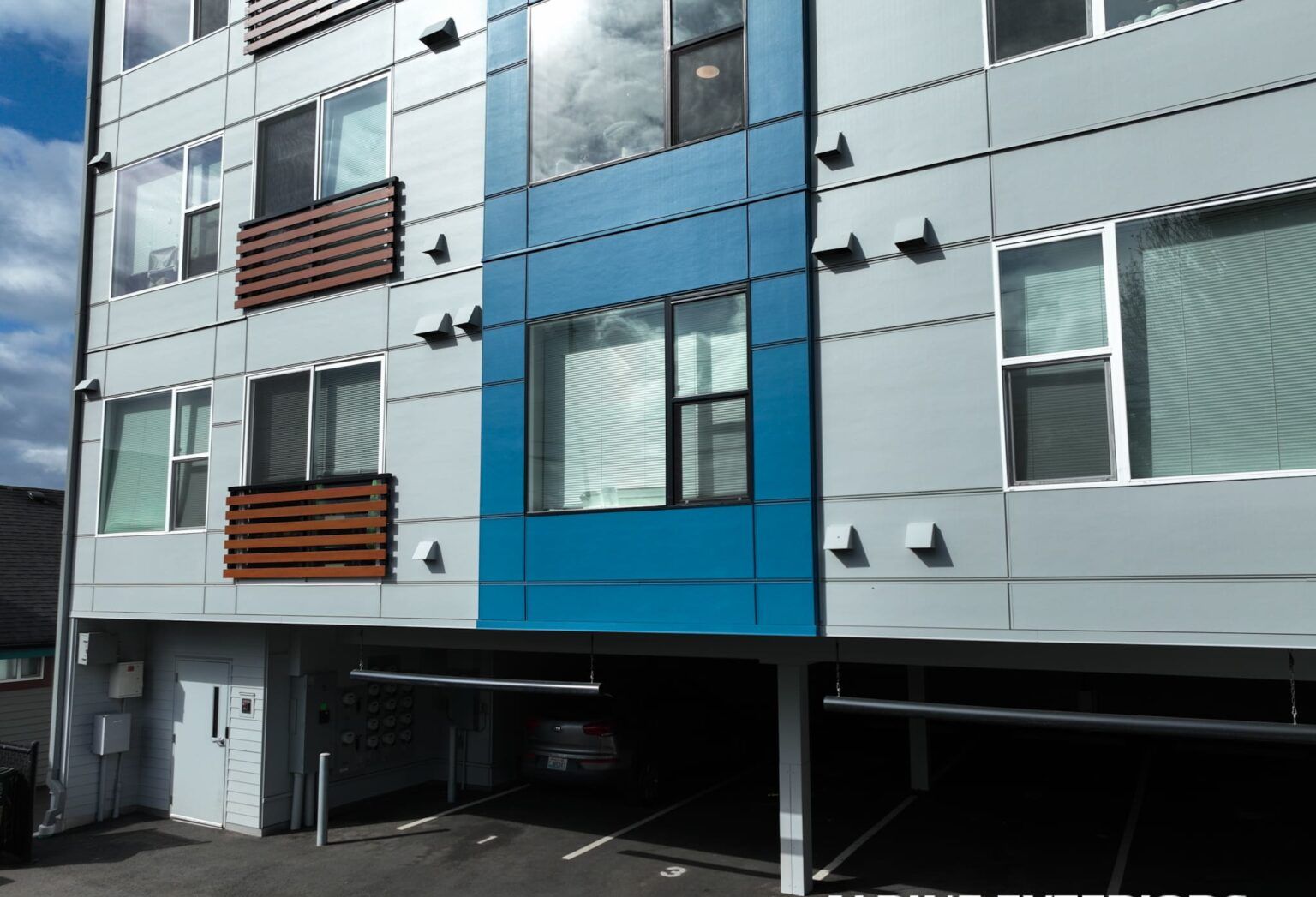
In Acme, storm damage to siding usually shows up as swelling, dark streaking, or panels that have started to pull away from the wall rather than a single dramatic blowout. That's because the damage here builds slowly, through repeated soaking and drying cycles, rather than from one violent weather event.
Acme sits in the Nooksack River valley at the base of the Mount Baker foothills, and that location means the town gets more annual rainfall than Bellingham or the coastal parts of Whatcom County. Water isn't the enemy by itself; it's water that gets behind or trapped against the siding that causes problems. When a storm drives rain sideways, or when snowmelt and runoff from the surrounding hillsides keep the ground and lower walls saturated for days, wood and even fiber-cement siding can hold moisture longer than the material or the underlying house wrap was ever designed for.
Over time that trapped moisture leads to a few specific outcomes: wood siding softens and eventually rots, especially at butt joints, corners, and anywhere caulking has failed. Lap siding cups or bows as the front face dries faster than the back. Nails back out as the wood swells and shrinks with the seasons, leaving small gaps that let more water in behind the panel. And on the north- and west-facing walls that stay shaded longest, moss and algae take hold on the surface, holding moisture against the siding even when the weather itself has cleared. None of this requires a named storm to happen — it's the cumulative effect of a wet climate acting on a building envelope, punctuated by the occasional windstorm that finishes off siding that was already compromised.
It's worth being specific here, because "storm damage" means something different depending on where you are in the county. Blaine, Birch Bay, and parts of Bellingham that face the water take wind-driven rain directly off Bellingham Bay and the Strait of Georgia — gusts push rain horizontally into walls and around window and door trim, which is a different failure mode than what Acme deals with. Acme is inland and doesn't get that same direct exposure. Instead, its weather signature comes from three things: sitting in a river valley that traps moisture and fog longer than open areas, being ringed by second-growth forest and mature trees that drop limbs and needles onto roofs and siding during windstorms, and gaining enough elevation toward the foothills that freeze-thaw cycling is a real factor in a way it mostly isn't down in Bellingham proper.
That freeze-thaw piece matters more than most homeowners expect. When water that has already worked its way into a seam, a nail hole, or a crack in old paint freezes overnight and then thaws the next afternoon, it expands and pushes the damage wider each cycle. In Acme, where nighttime lows dip below freezing more often during winter than they do closer to the water, this slow mechanical prying-open of existing weak points is a bigger contributor to siding failure than any single storm event. Combine that with the persistent rain and the shade from surrounding trees and hillsides that slows drying time, and you get siding that's under more sustained moisture stress than the same product would face in a drier or sunnier location, even one just twenty minutes away.
After a windstorm, heavy rain event, or once you notice something looks off, a walk-around inspection catches most problems before they become expensive ones. Look for these specific things:
If you find damage, photograph it right away, from a distance and up close, with a date visible if possible. That documentation matters for the next step: if the damage is significant, contact your homeowner's insurance carrier and ask specifically whether it's covered as wind or storm damage, since policies vary in how they treat gradual moisture damage versus a discrete storm event — this is often the difference between a covered claim and a denied one, so it's worth asking the adjuster to be specific about which category they're applying. Get a written estimate from a licensed contractor before repairs begin, since most insurers want documentation of both the damage and the proposed scope of work. Don't wait on soft or rotted siding hoping it will hold through another winter; the freeze-thaw cycles common in Acme make small problems worse every season they're left alone, and what starts as a repair to a few boards can turn into sheathing replacement if water gets far enough behind the wall.
It's also worth knowing that any full siding replacement in Whatcom County needs to meet the insulation and moisture-barrier requirements in the Washington State Energy Code, not just match what was there before. That's a genuine consideration when comparing quotes — a lower bid that skips a proper weather-resistive barrier or doesn't address existing rot in the sheathing isn't actually cheaper once you account for what it will cost to fix later.
Most of what we see in Acme is cumulative — moisture that's been getting behind siding for one or more seasons, made worse by a specific windstorm that finally knocks a weakened panel loose or breaks a rotted board. It's rare to find a house with no prior moisture issues that a single storm damaged outright, which is why regular inspection matters more here than reacting only after severe weather.
Generally no. Moss and algae growth is typically treated as a maintenance issue rather than storm damage, since it develops gradually rather than from a specific covered event. Where insurance usually does come into play is if that same moisture buildup contributed to rot that then failed during a windstorm — that's a conversation to have directly with your adjuster, since the line between maintenance and storm damage isn't always drawn the same way by every policy.
Blaine and Birch Bay sit right on the water and take wind-driven rain straight off Bellingham Bay and the Strait, which pushes moisture into trim, window edges, and wall penetrations directly. Acme, being inland in the river valley, deals more with prolonged dampness, shaded walls that don't dry out, forest debris from wind events, and freeze-thaw cycling at its higher elevation. The materials fail in similar ways eventually, but the mechanism and the timeline are different.
There's no perfect material for a wet, shaded, freeze-prone valley, and it's honest to say each option comes with a tradeoff. Fiber-cement resists rot well but is heavier and needs correct installation and caulking to perform. Engineered wood and vinyl handle moisture differently and each has its own failure points in freeze-thaw conditions. The choice usually comes down to your home's exposure, your budget, and how much upkeep you're willing to do — a proper installation with attention to flashing and drainage matters as much as the material itself.
If your Acme home has been through a recent windstorm, or you've noticed soft spots, streaking, or moss taking hold on a shaded wall, it's worth getting eyes on it before another wet season passes. Alpine Exteriors, WA contractor license ALPINI751OW, works throughout Whatcom County — including Acme's foothill and river-valley homes as well as the coastal exposure in Blaine, Birch Bay, and Bellingham — and can walk your siding with you, point out what's cosmetic versus what needs attention, and put together a written estimate you can also use for an insurance claim if the damage qualifies. Reach out to Alpine Exteriors to schedule a look at your siding before the next storm finds the weak spot first.