
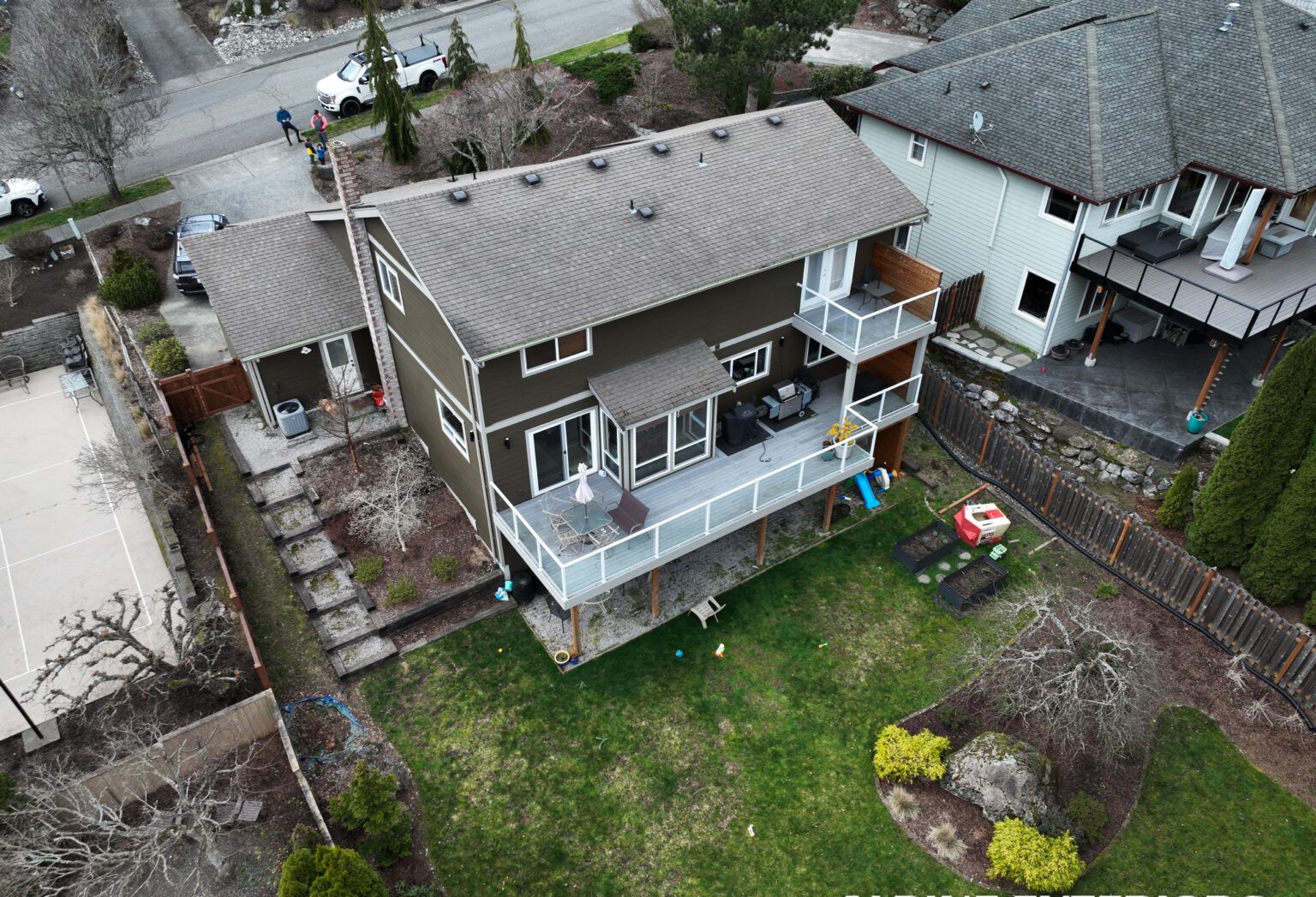
Toad Lake sits in a pocket of Whatcom County that most siding guides never bother to think about specifically. It's a mix of older ranch and split-level homes from the 1960s through the 1990s, a scattering of newer infill construction, and lots of mature Douglas fir and western red cedar canopy that keeps yards shaded and driveways mossy well into summer. That tree cover, combined with our long rainy season, wind-driven storms off Bellingham Bay and the Strait, and the occasional hard freeze that rolls down off the foothills, makes siding selection here a genuinely different decision than it would be on an open lot in eastern Washington or a dry subdivision. This guide walks through what actually holds up around Toad Lake, what doesn't, and why.
For most Toad Lake homes, fiber cement lap siding and engineered wood siding are the two strongest all-around choices. Both resist the moisture load that comes from being shaded most of the day, both take paint or factory finish well, and both give a contractor room to detail proper flashing and a drainage gap where the siding meets trim, windows, and the foundation. Vinyl siding is a fair budget option, especially on sun-exposed south and west elevations, though it shows algae staining more readily in deep shade than the other options. Cedar can still work if an owner is genuinely willing to keep up with refinishing, and metal panel siding is worth a look on newer or remodeled homes where the look fits. Alpine Exteriors, WA contractor license ALPINI751OW, has replaced siding on a fair number of Toad Lake area homes and the pattern is consistent: the materials that fail early here are almost always the ones that trap water against wood sheathing in a shaded wall, not the ones that simply get rained on.
Toad Lake isn't coastal in the way Birch Bay or Blaine's waterfront is, but it still sees plenty of wind-driven rain when fall and winter frontal systems move through off Bellingham Bay and the Strait of Georgia, pushing water sideways into laps, seams, and trim joints rather than letting it simply run down the wall. Layer that on top of a neighborhood where mature fir and cedar trees shade a lot of rooflines and north-facing walls for most of the day, and you get siding that stays damp longer than it would on an open lot even after the rain itself has stopped. That's the main driver of moss and algae growth on north and east elevations here, and it's the reason two identical products can perform very differently depending on which side of the house they're installed on.
We also weighed how each material handles freeze-thaw cycling. Whatcom County doesn't get deep, sustained winter cold, but it does get repeated short freezes, especially when cold air drains down from the foothills toward Lake Whatcom and settles into low-lying areas overnight. Materials that hold moisture behind them get stressed by that freeze-thaw cycling even if the cold snap only lasts a day or two. Beyond climate, we looked at how each siding option pairs with a wall assembly that meets the Washington State Energy Code, since code compliance is really about the whole wall system — continuous insulation, the water-resistive barrier, and often a drainage gap — rather than the cladding by itself. Finally, we factored in realistic maintenance. A lot of Toad Lake homes are long-term owner-occupied properties, and most owners we talk to want siding they can largely forget about, not a biennial painting project.
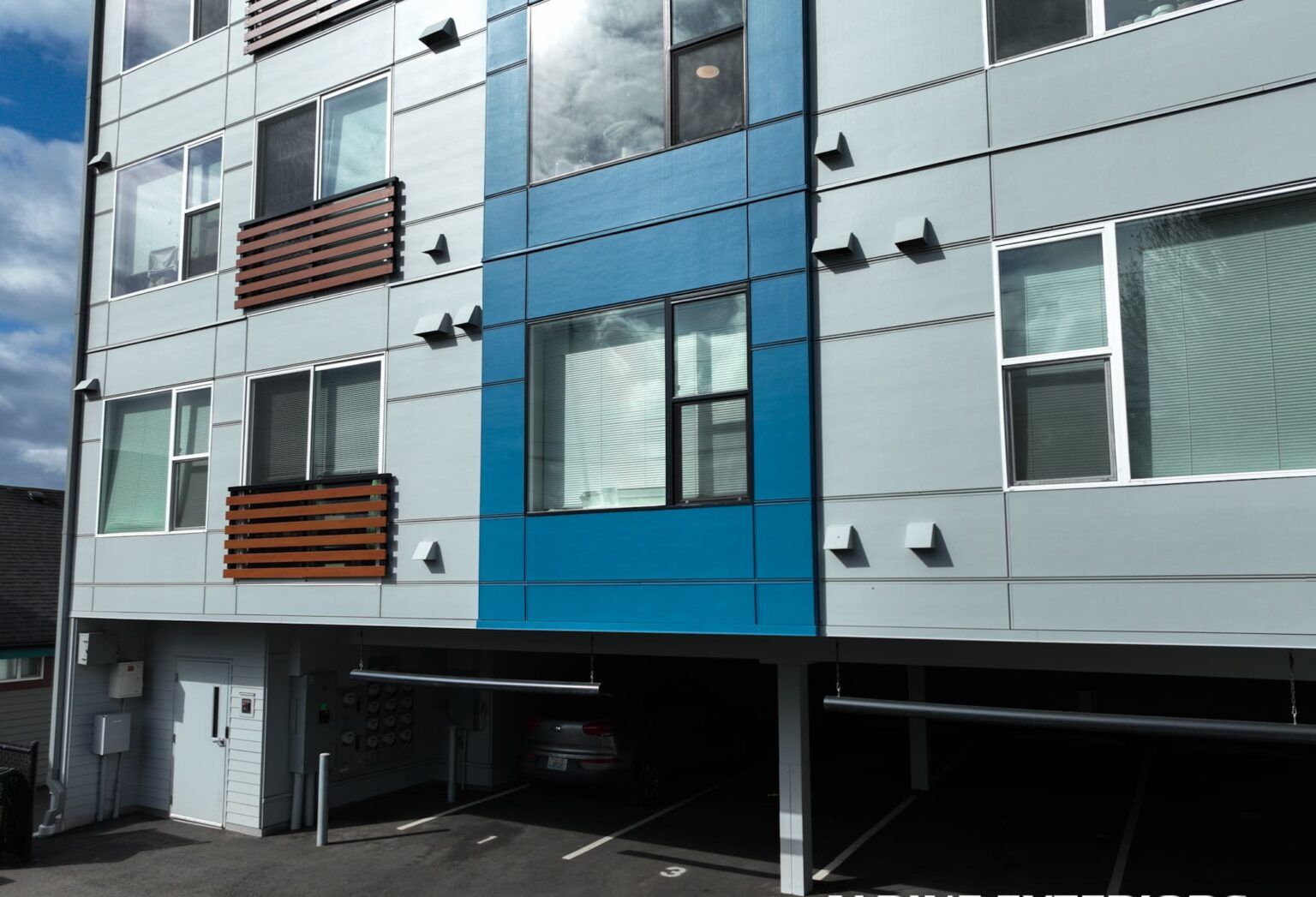
Fiber cement is a cement-and-cellulose composite that's become the default recommendation for a lot of homes in this climate, and for good reason. It doesn't rot, it holds paint significantly longer than solid wood, and it doesn't feed moss and algae the way untreated wood fiber does, which matters on the shaded elevations that ring most Toad Lake lots. It's dimensionally stable across our wet-to-dry swings, so it doesn't cup or warp the way some wood products can.
The honest downsides: it's heavy, which makes installation more labor-intensive and means installation quality really matters — cut edges need to be sealed and caulk joints need to be detailed correctly, or you end up with the exact moisture intrusion the material is supposed to prevent. It also costs more upfront than vinyl, and repairs to a damaged section usually mean replacing whole boards rather than a quick patch.
Engineered wood siding — strand-based lap and panel products that are factory-primed and treated for moisture resistance — is lighter and easier to install and repair than fiber cement, and it gives a warmer, more traditional look that fits a lot of the older Toad Lake ranch and split-level homes. It's a reasonable middle ground for owners who want something closer to real wood in appearance without cedar's maintenance burden.
It's still a wood-based product, though, which means cut ends and any exposed edges need to stay sealed. In the deepest-shade lots near the lake itself, it needs slightly more attentive caulk maintenance than fiber cement does, and it's a step behind fiber cement in raw resistance to prolonged dampness. It's a good option, just not quite a set-and-forget one on the shadiest lots.
Vinyl remains the most budget-friendly option and it genuinely doesn't rot, which counts for something in a wet climate. On sun-exposed elevations — usually south and west-facing walls that get more direct light through breaks in the tree canopy — it holds up reasonably well for a long service life with essentially no maintenance beyond an occasional wash.
Where it struggles here is on the shaded, north-facing walls that are common on wooded Toad Lake lots. Algae staining shows more visibly against vinyl's smooth, often lighter-colored surface than it does on textured fiber cement or engineered wood, and lighter panels can develop a chalky look under UV exposure over the years. Vinyl also needs to be installed with room to expand and contract with our temperature swings; installed too tight, it can buckle. It's a legitimate option for budget-conscious owners, but we'd steer it toward the sunnier sides of a shaded lot rather than the whole house.
Cedar has real roots in this region and a lot of older homes around Toad Lake and Lake Whatcom already wear it, so matching or replacing in kind has genuine appeal for owners who want to keep that character. It's repairable board by board, breathes well, and looks the part.
The tradeoff is maintenance, and it's a real one. Cedar needs refinishing or restaining on an actual schedule to keep water out, and on the shadiest lots near the lake it's the most vulnerable material on this list to moss growth, rot, and pest damage if that schedule slips even a year or two. Owners who go with cedar here should go in with eyes open: the upkeep cost over fifteen or twenty years often exceeds what a lower-maintenance material would have cost installed, and a missed refinishing cycle can turn into a rot repair project instead of a cosmetic one.
Steel or aluminum panel siding is a smaller share of what we install around Toad Lake, but it's worth mentioning because it fits a lot of newer construction and remodels well. It sheds wind-driven rain effectively, doesn't feed moss or algae growth, and asks almost nothing of an owner in terms of upkeep.
The tradeoffs are practical ones for this specific neighborhood: mature fir and cedar trees around Toad Lake do drop limbs, and metal panels can dent from falling debris in a way fiber cement generally won't show as visibly. Without proper underlayment it can also be noisier in heavy rain than other claddings. And on an older ranch-style home, metal's more modern look is a style choice as much as a performance one — it doesn't suit every house on the block.
A few choices come up often enough in estimates and repair calls that they're worth calling out directly:
Yes, more than on an open lot. Shade from mature fir and cedar keeps walls damp longer after rain, which is exactly the condition that encourages moss and algae and stresses moisture-sensitive materials over time. The tree cover doesn't rule out any particular siding, but it does mean the details — sealed edges, a drainage gap, correct flashing — matter more here than they would on a sunnier property.
It depends heavily on the material and which side of the house it's on. Cedar needs the most frequent attention and should be inspected yearly, with refinishing on a real cycle rather than an as-needed basis. Fiber cement and engineered wood hold factory or field-applied paint considerably longer, often stretching well past a decade before repainting is needed, especially on sun-exposed elevations. Shaded, north-facing walls will generally need attention sooner than sunny ones regardless of material.
We recommend one, particularly on shaded walls, even where it isn't strictly required. A furred-out gap between the siding and the water-resistive barrier lets incidental moisture drain and dry instead of sitting against the wall assembly, which matters more in a climate with this much rainfall and this much shade-driven dampness than it would somewhere drier.
The Washington State Energy Code sets prescriptive requirements for wall insulation and, depending on the compliance path chosen, can call for continuous insulation as part of the overall wall assembly rather than just insulation between the studs. It governs the wall system as a whole — insulation levels, air sealing, and the water-resistive barrier — rather than mandating a specific siding material, so a re-side project is a good opportunity to bring an older wall assembly up to current code requirements while the siding is off.
Every lot around Toad Lake gets a different mix of sun and shade, and the right siding for a wooded, north-facing wall isn't always the right call for the sunnier side of the same house. Alpine Exteriors, WA contractor license ALPINI751OW, has walked plenty of Whatcom County homeowners through exactly this kind of house-specific decision, from Bellingham and Ferndale out to the islands. If you're weighing siding options for a Toad Lake home, we're glad to take a look at the specific walls, shade pattern, and existing wall assembly and give you a straight assessment of what will actually hold up.