
Storm damage to siding in Cordata rarely announces itself with one dramatic event. In most cases, what a homeowner assumes was caused by a single windstorm is actually the storm exposing a weakness that persistent Whatcom County rain and moisture had already been working on for a season or more. If a recent windstorm off Bellingham Bay has you checking the exterior of your home, start with the bottom courses of siding, the seams around windows and doors, and any wall section below a roof valley or gutter overflow point, since those are the places wind-driven rain concentrates first. A lifted or cracked panel is obvious. A soft spot, a dark stain that doesn't dry out between rain events, or a section of siding that sounds hollow when tapped is just as important and far easier to miss.
Whatcom County storms are usually not about peak wind speed the way a coastal hurricane event would be. What matters more here is duration and direction. A fall or winter system can push steady wind-driven rain against the same wall for hours, and Cordata sits high enough and open enough, especially on lots facing west or southwest toward Bellingham Bay and the Strait of Georgia, that certain elevations catch more of that driving rain than a sheltered lot in a wooded part of town would. Water forced sideways under pressure behaves differently than water simply falling on a roof. It finds the top edge of a lapped board, a nail hole with a failed sealant, a mitered corner, or the trim around a window and works its way behind the siding rather than running off the face of it. Once moisture gets behind fiber cement, wood, or vinyl siding, it has nowhere to evaporate quickly in a climate that doesn't offer many dry, breezy days to dry the wall cavity out. That's the mechanism behind almost every serious siding failure in this part of Whatcom County: not the storm itself, but the storm pushing water into a gap that a drier climate would have let dry out before it did real damage.
Moss and algae are part of the same story, even though they look cosmetic rather than structural. A north-facing wall in Cordata, or one shaded by mature trees, stays damp for extended stretches between storms, and that constant moisture is exactly what moss and algae need to establish themselves on siding, especially at seams, under trim, and along the bottom few courses near grade. On its own, a light growth of moss is mostly an appearance issue. Left for a few seasons, though, it holds water against the siding surface and against fasteners, which accelerates exactly the kind of hidden rot that a storm later exposes. Wood trim and wood-based siding products are the most vulnerable, but even fiber cement and engineered wood siding can develop soft, failing joints where moisture has been trapped behind moss or debris for a long time. This is why storm damage assessments in this area almost always turn up two problems at once: the acute damage from the wind event, and the slower, moisture-driven deterioration that made that section of the wall weak enough to fail in the first place.
There's also a freeze-thaw component that matters more in the higher and more inland parts of Whatcom County than it does right on the water, but it's still relevant to Cordata during the cold snaps that occasionally drop down from the Fraser Valley. When saturated wood siding, trim, or sheathing freezes, the water trapped inside expands, and that expansion widens existing cracks and loosens fasteners. When it thaws again, the wall doesn't spring back to its original shape. A few freeze-thaw cycles in a row, layered on top of siding that was already holding moisture from fall rains, is often what turns a hairline crack that a homeowner never noticed into a panel that visibly separates from the wall during the next windstorm. It's a slower process than the coastal wind exposure, but the two work together over a typical Whatcom County winter.
Cordata isn't dealing with hurricane-force wind events, storm surge, or the kind of wind-borne debris damage that building codes in hurricane-prone states are written around, and it's worth saying plainly that none of that applies here. What actually sets this part of Washington apart is the combination of near-constant fall and winter rain, direct exposure to wind coming off Bellingham Bay and the Strait of Georgia, and a growing season long enough that moss, algae, and shade from mature landscaping are a year-round maintenance issue rather than a seasonal one. A house in a drier inland climate can tolerate a small siding flaw for years because it gets enough dry weather to keep drying out between problems. A house in Cordata rarely gets that break between October and April, which is exactly why small gaps and failed sealant joints turn into rot and staining faster here than they would somewhere with a shorter wet season.
Elevation and orientation matter more locally than most homeowners expect. Cordata sits on higher ground in north Bellingham, and lots that face open toward the water or toward prevailing southwest wind get noticeably more wind-driven rain exposure than a similar house tucked into a wooded lot in south Bellingham or set low in a valley. Two houses built the same year with the same siding product can age very differently depending on which wall takes the weather. The islands, Blaine, and Birch Bay deal with a similar coastal exposure; Lynden, Sudden Valley, and the areas closer to the foothills see more of the freeze-thaw pattern described earlier because temperatures swing lower and stay there longer inland. Cordata gets a mix of both, which is part of why storm damage inspections here often turn up problems on more than one side of the house rather than a single obvious trouble spot.
The Washington State Energy Code is also part of this conversation, even though it isn't the reason siding fails. When siding is damaged badly enough to need replacement rather than a spot repair, that work has to meet current WSEC requirements for the wall assembly, which typically means attention to the water-resistive barrier, proper flashing details at windows and penetrations, and in many cases additional continuous insulation compared to what an older Cordata home was built with. That's not a bad thing. A storm-damage repair is often the one point where a homeowner can correct an older wall assembly's weak points, tighten up flashing that was never installed correctly, and bring the wall closer to current energy code performance, all as part of work the insurance claim may already be paying for. It does mean a full re-side after storm damage sometimes costs more, and takes a bit more planning, than a like-for-like patch would.
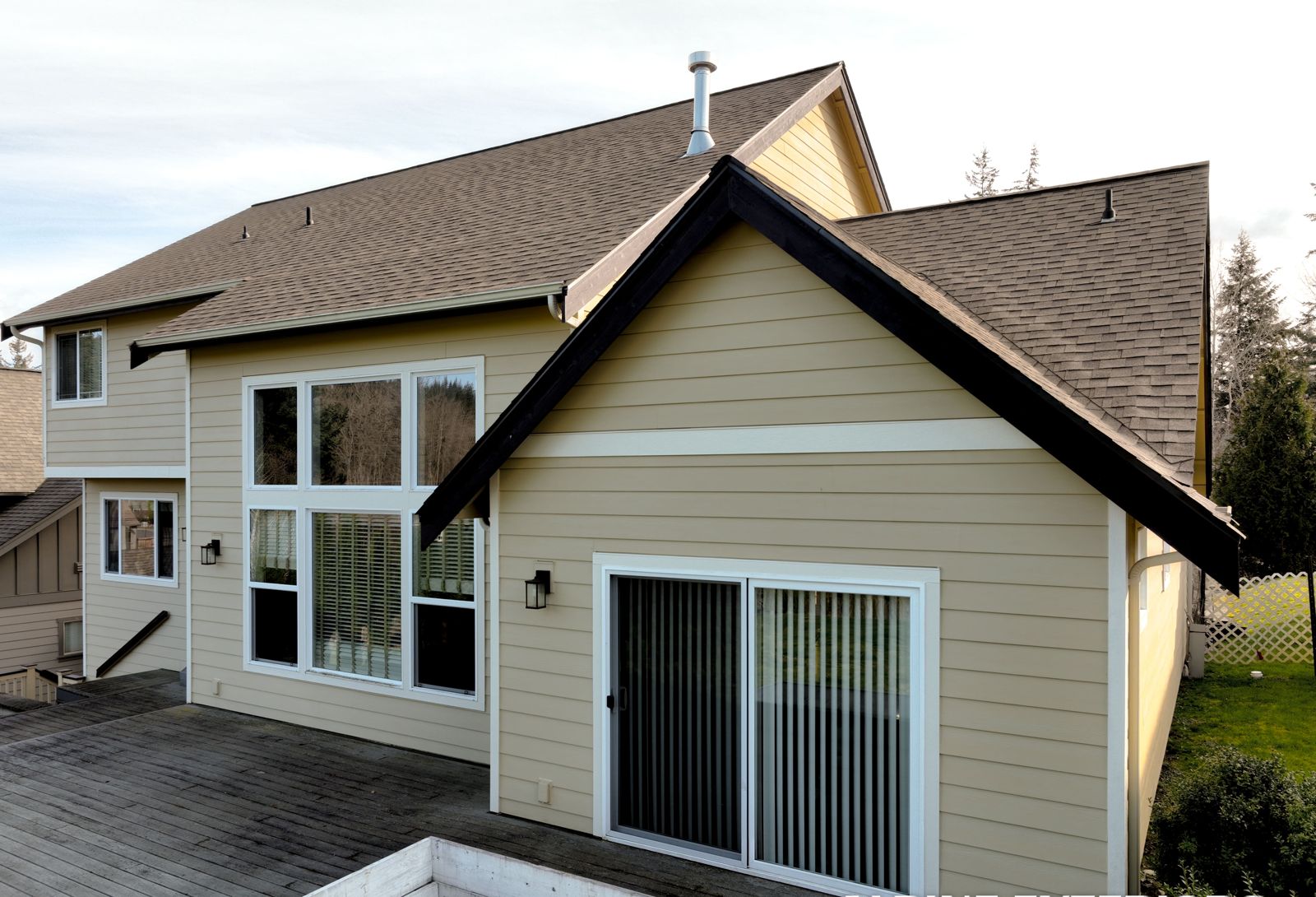
The first thing to do after a windstorm or a heavy rain event is walk the exterior of the house on a dry day and look, rather than assume everything is fine because nothing is obviously broken. Check the bottom three or four courses of siding near grade, the corners, the trim around every window and door, and any wall beneath a roof valley, dormer, or gutter that tends to overflow. Press on suspect areas gently with a gloved hand; siding that flexes, feels soft, or sounds hollow compared to the panel next to it is telling you something even if the paint looks fine. Take dated photos of anything that looks off, including the moss and staining that might seem like a separate, lower-priority issue. Insurers and contractors both work faster and more accurately from photos taken close to the event than from a description given weeks later.
If the damage looks like it happened during a specific storm, contact your insurance company promptly and be specific about the date and the event. Homeowners policies in Washington generally cover sudden, storm-caused damage but are far more likely to push back on damage that an adjuster reads as long-term neglect, deferred maintenance, or ordinary moss and weathering, so the photo documentation and the timeline you give matters. It's fair to expect some pushback if there's visible rot or moss buildup near the damaged area, since that raises the question of how much of the failure was the storm and how much was pre-existing. Being upfront about that with your insurer, rather than hoping it goes unnoticed, tends to go better than the alternative.
Don't let storm-damaged siding sit through a Whatcom County wet season while you decide what to do. An open seam or a cracked panel that would be a minor repair in August can be letting water into the wall assembly all winter, and by spring the repair scope can be considerably larger than it would have been if it had been addressed in the first few weeks. Get a written scope of work from a licensed contractor rather than a verbal estimate, and confirm the contractor is actually licensed to do exterior work in Washington before you sign anything; it's a quick check and it protects you if something goes wrong later. Alpine Exteriors, for example, holds Washington state contractor license ALPINI751OW, and any contractor working on your home should be able to give you a license number just as readily. A written scope should also spell out whether the work includes bringing the wall assembly up to current Washington State Energy Code requirements, since that affects both the price and the timeline, and it's better to know that going in than to be surprised by it partway through the job.
Homeowners insurance in Washington typically covers siding damage that can be tied to a specific, sudden storm event, such as a windstorm that lifts or cracks panels or drives a branch into the wall, but it's not designed to cover the gradual deterioration that moss, trapped moisture, and age cause on their own. In practice, an adjuster looking at a Cordata home may see both at once, since the storm often exposes a spot that was already compromised. Getting clear photos, noting the date of the storm, and having a contractor's written assessment that separates acute storm damage from pre-existing wear all make the claims process more predictable, though every policy and every adjuster is a little different.
Storm damage tends to look sudden and localized: a cracked or missing panel, a piece of trim torn loose, staining that appeared right after a specific windstorm, or a section of wall that's visibly out of alignment with the rest of the house. Ordinary wear and moss growth, by contrast, builds up gradually over more than one season, usually on shaded or north-facing walls, and shows up as a green or black film across a broad area rather than a sharp break in one spot. The two often overlap on an older Cordata home, which is exactly why a hands-on inspection, rather than a glance from the street, is worth doing before you file a claim or hire a contractor.
Speed matters more in Whatcom County than it would in a drier climate, mainly because the wet season gives moisture so many chances to get behind exposed siding and keep working on the wall while you wait. A repair that's scheduled within a few weeks of the storm, while the weather allows a contractor to open up the wall, dry it out, and close it back up properly, tends to stay a contained repair. The same damage left through several more months of rain is more likely to have spread into the sheathing or framing behind it, which turns a straightforward siding repair into a larger and more expensive project.
Not always, but often enough that it's worth planning for. A small patch repair to a limited section of siding usually doesn't trigger a full energy code review. A larger repair or full re-side, especially one that opens up a significant portion of the wall, generally does need to meet current Washington State Energy Code requirements for the wall assembly, which can mean updated water-resistive barrier and flashing details and sometimes additional continuous insulation compared to what was there originally. Ask your contractor directly whether your specific scope of repair will trigger those requirements before the work starts, since it affects both the price and the schedule.
If a recent storm has left you looking at soft spots, cracked panels, or staining on your siding, it's worth having someone look at it before the next round of Whatcom County rain gets behind the wall. Alpine Exteriors serves Cordata and the rest of Bellingham along with Ferndale, Lynden, Blaine, Birch Bay, Sudden Valley, and the islands, and can walk your exterior with you, point out what's storm damage versus what's longer-term wear, and put together a written scope you can hand to your insurance company. Reach out for an inspection while the weather's cooperating rather than waiting until the next storm makes the decision for you.