
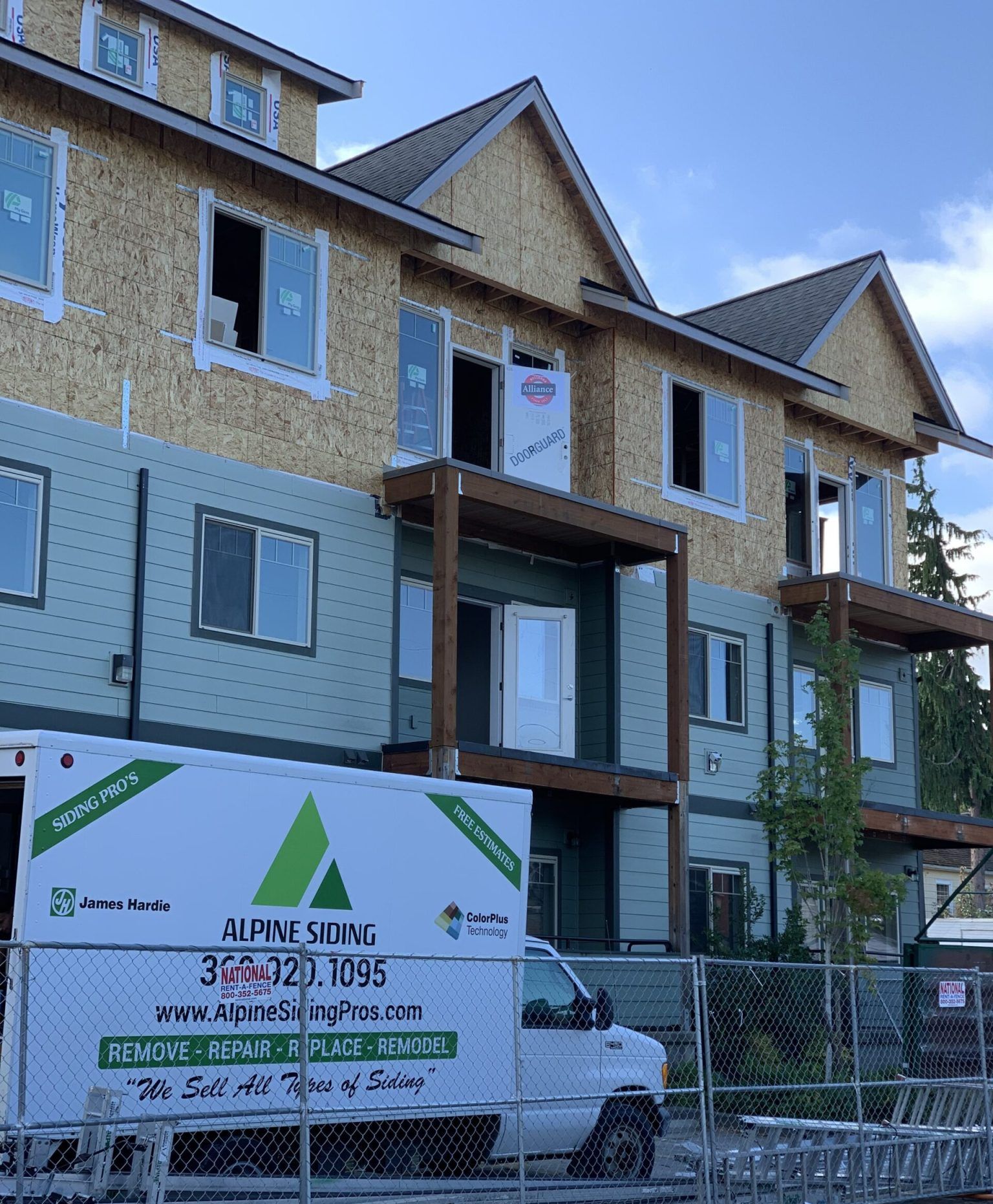
If your home sits along the Lake Whatcom shoreline in Geneva, or up in the wooded draws nearby, your siding works harder than siding almost anywhere else in Whatcom County. Tree cover holds moisture against the wall longer after a storm, the lake adds its own humidity, and the closer tree canopy means more shade, more debris in the gutters, and more moss spores landing on north-facing walls. This checklist walks you through a homeowner-level inspection you can do in about 30-45 minutes with a ladder, a flashlight, and a garden hose. It will not catch everything a trained eye or a moisture meter can find, but it will tell you where to look closer and when it is worth having someone qualified take a second look.
Geneva and the surrounding Whatcom County communities — Bellingham, Ferndale, Lynden, Blaine, Birch Bay, Sudden Valley, and the islands — share a climate that is more punishing to siding than most people realize, mostly because the damage is slow and quiet rather than dramatic. We get a long, wet fall-through-spring stretch where a wall can stay damp for days at a time, which is exactly the condition wood rot and mold need. Homes near Lake Whatcom and the shoreline properties around Sudden Valley get extra ambient moisture off the water, and homes closer to Bellingham Bay or the Strait of Juan de Fuca catch wind-driven rain that pushes water sideways into laps, seams, and trim joints that were never designed to handle water moving horizontally. None of this is hurricane weather — we are not designing against wind-borne debris or storm surge — but sustained drizzle, fog, and gusty rain events add up over a decade in ways that are easy to miss until a wall is already soft.
Moss and algae are the most visible symptom of this climate, and while a green tinge on the north side of a house is mostly cosmetic, moss that has built up a mat holds water against the siding surface and accelerates whatever is happening underneath. Up in the foothill areas around Lake Whatcom and Sudden Valley, winter nights can dip below freezing while days climb back above it, and that freeze-thaw cycling is hard on any siding that has already absorbed water — trapped moisture expands as it freezes and can pop paint, crack caulk, or widen existing cracks in fiber cement. Finally, the Washington State Energy Code sets minimum performance standards for the building envelope on any permitted re-side or new construction, which matters for this checklist because failed or gapped siding is also an insulation and air-sealing problem, not just a cosmetic one.
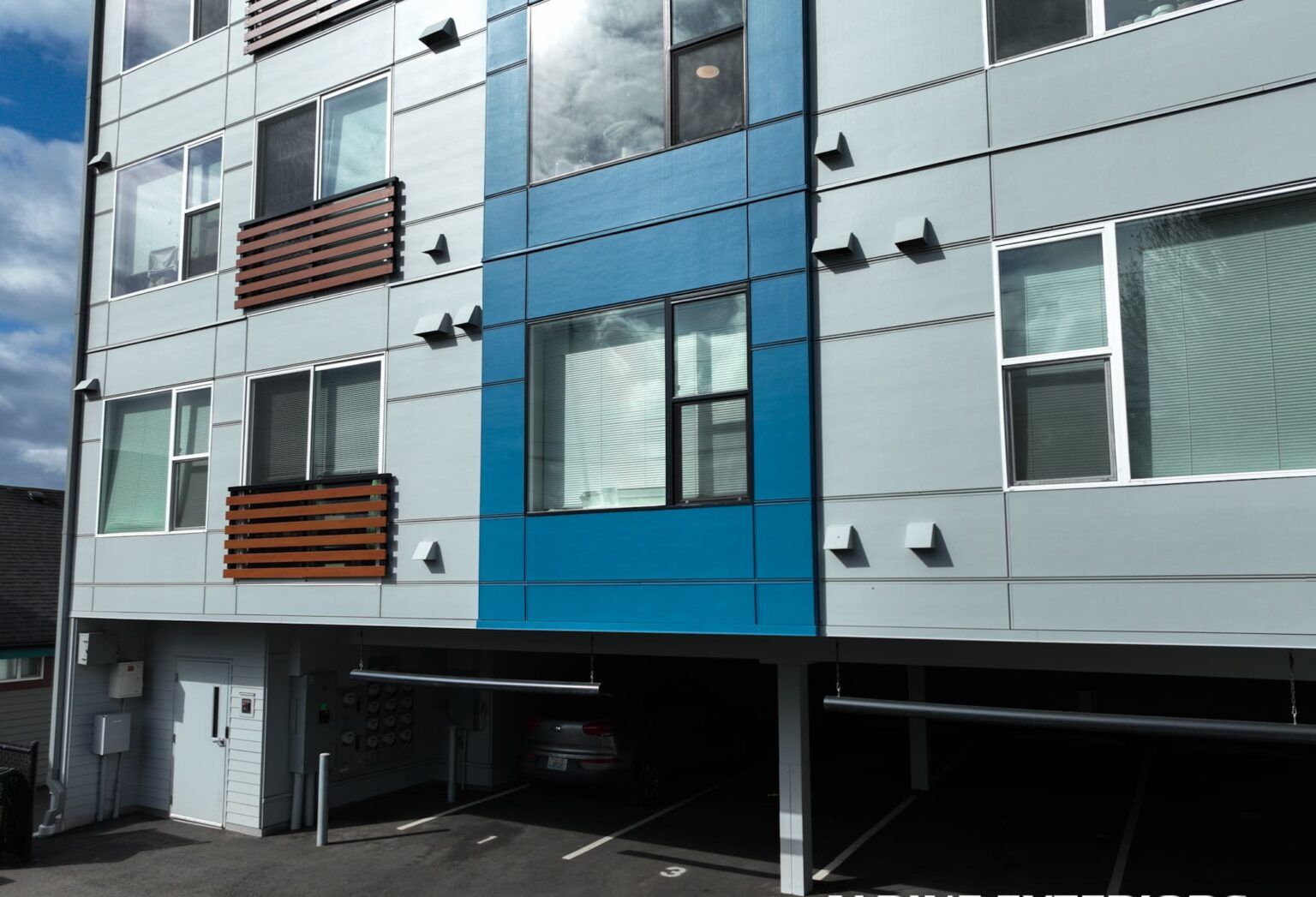
Not every failed item on this list is an emergency, and it helps to sort what you find into rough categories before deciding on next steps. Cosmetic issues — light surface algae, chalky paint, minor caulk cracking in a single spot — are worth noting and scheduling for the next dry stretch of weather, but they are not urgent. A soft washing with a low-pressure setting (never a high-pressure power washer directly on siding seams, which can force water behind the material) and a mildewcide-rated wash can handle light moss and algae. Fresh caulk in small gaps is a reasonable weekend project if you are comfortable with a caulk gun and have picked a dry forecast window.
Anything that involves soft or spongy material, visible rot, a consistent water stain, or a musty smell should be treated differently. Take a photo and note the date — these problems tend to progress slowly, so a record helps you or a contractor gauge how fast it is moving. Do not simply caulk over or paint a soft board; sealing the surface without addressing what is underneath traps moisture in rather than keeping it out, and it can make the eventual repair larger and more expensive. If a section is actively letting water through during a rainstorm, a temporary cover (a tarp secured well above and around the affected area, not directly stapled into open wood) can limit further damage until a proper repair happens, but that is a stopgap, not a fix.
Be honest with yourself about scope. A single cracked board or a few feet of failed caulk is often a manageable repair. Rot that has spread across multiple boards, shows up at more than one location, or traces back to a flashing failure usually means the repair needs to open up more of the wall than it looks like from the outside — and that is a job better scoped by someone who does this regularly.
Call a licensed contractor rather than handling it yourself when you find soft or rotted wood in more than one location, staining that keeps returning after cleaning, flashing that is visibly rusted or pulled away, or any sign of moisture reaching the interior of the house. Also call in a professional before doing major caulk or paint work over an area you are not sure about — sealing surface symptoms without diagnosing the cause is one of the more common mistakes homeowners make, and it usually costs more to undo later than it would have to fix properly the first time.
A professional inspection typically includes a moisture meter reading at suspect areas, which tells you the actual moisture content inside the material rather than just what is visible on the surface — this is genuinely useful because siding can look fine while the substrate underneath is already saturated, or look stained while actually being dry and stable. Alpine Exteriors, licensed in Washington under ALPINI751OW, inspects siding across Whatcom County, including Geneva, Bellingham, Ferndale, Lynden, Blaine, Birch Bay, and Sudden Valley, and can tell you honestly whether you are looking at a spot repair, a partial re-side of the affected elevation, or something more extensive. It is worth noting that a full inspection and any resulting repair takes real time to schedule correctly, especially through the wetter months when everyone in the county is dealing with similar issues — plan ahead rather than waiting until a problem is already visible from the street.
A walk-around self-inspection using this checklist twice a year — once in early fall before the wet season and once in spring — is a reasonable baseline for most homes in Geneva and the surrounding areas. Homes with heavy tree cover, lake-facing walls, or siding older than 15-20 years benefit from checking a bit more often, particularly after any unusually windy rain event off the bay or the Strait.
No. Surface moss and algae are extremely common on shaded, north-facing walls in this climate and often do not indicate any structural problem at all — they are more about shade and humidity than about a failing wall. The distinction is whether the moss wipes away easily and the board underneath feels firm, versus moss growing over a soft, discolored, or crumbling area, which does warrant a closer look.
It can, though the effect depends on how much of the wall assembly was compromised. Gaps, rot, and degraded insulation behind siding all reduce the effectiveness of the wall's thermal envelope, and the Washington State Energy Code sets minimum insulation and air-sealing standards specifically because envelope performance affects heating and cooling costs. That said, siding repair alone is not a guaranteed fix for a high energy bill — insulation levels, windows, and air sealing elsewhere in the house all factor in too.
The checklist above is designed for a homeowner to do without special equipment, and most people can complete it safely from a stable ladder and the ground. Its limits are real, though — a visual and touch inspection cannot measure actual moisture content inside a wall, and some failure points (behind flashing, inside a wall cavity) are not visible at all from outside. Treat this checklist as a screening tool that tells you when something deserves a second, more technical look, not as a substitute for one.
If this checklist turned up a few items you are not sure about, that is exactly the situation a professional walk-through is for. Alpine Exteriors serves homeowners throughout Whatcom County — Geneva, Bellingham, Ferndale, Lynden, Blaine, Birch Bay, Sudden Valley, and the islands — and can give you a straightforward read on what you are looking at, what it will take to fix, and what can reasonably wait. Reach out to schedule an inspection before the next wet season settles in.