
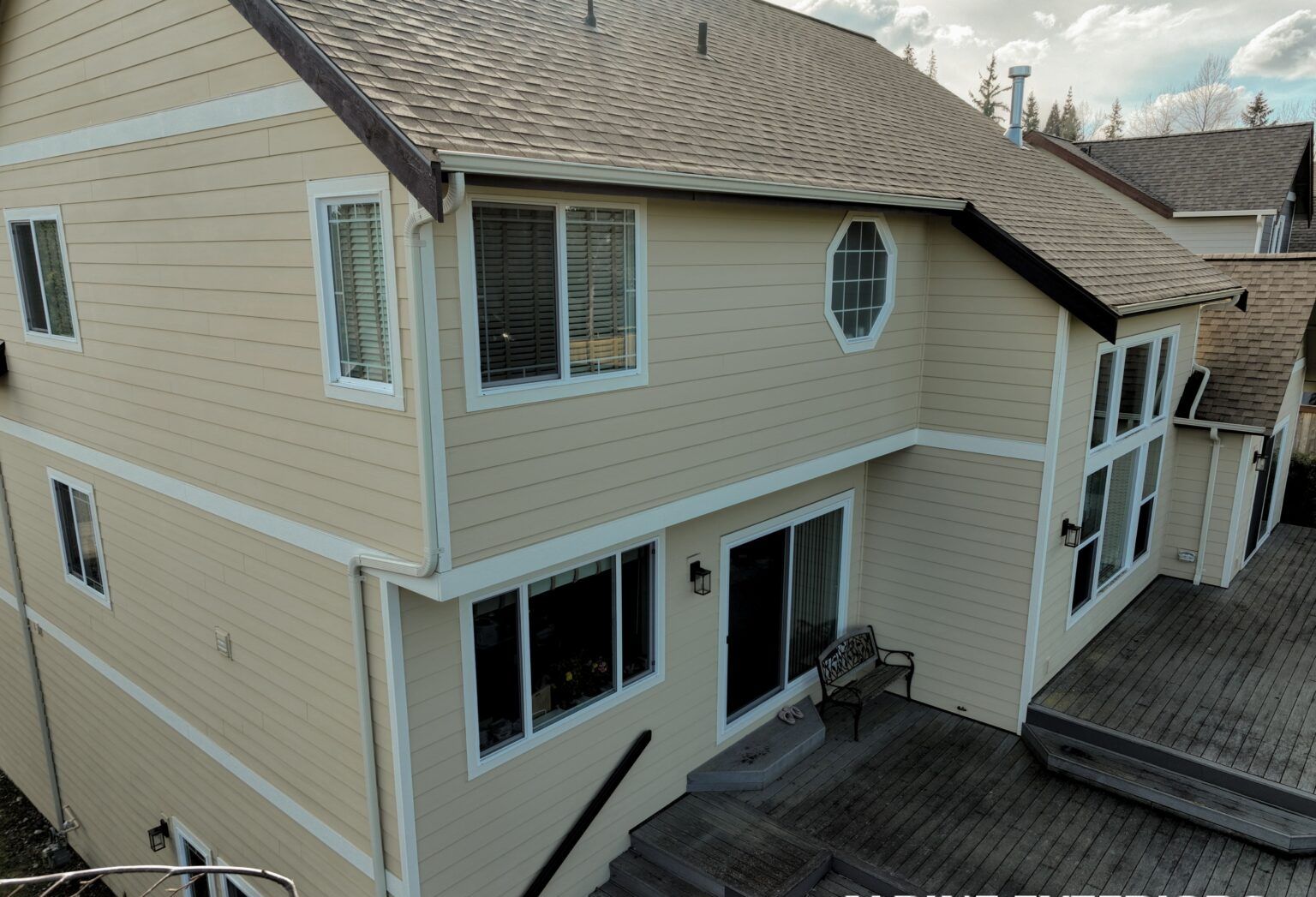
Alabama Hill sits above downtown Bellingham on the slope between Lake Whatcom and the flats near I-5, which means homes here get a mix of weather that not every Whatcom County neighborhood deals with in equal measure: heavy tree cover that keeps siding shaded and damp longer after a storm, elevation and exposure that can catch wind gusts funneling in off Bellingham Bay and the Strait of Georgia, and the occasional hard freeze that settles into the foothills once cold air drops down from the Fraser Valley. None of that is exotic or dramatic — this isn't hurricane country — but it adds up to steady, patient wear on siding, trim, and flashing. A short inspection twice a year catches small problems while they're still cheap to fix.
Whatcom County gets a long, wet fall-through-spring stretch, and Alabama Hill's mature tree canopy means siding in shaded yards can stay damp for days after a rain event ends elsewhere in Bellingham. That prolonged moisture is exactly what moss, algae, and eventually wood rot need to get established. Homes on the west- and south-facing slopes of the hill also catch more of the wind-driven rain that comes off Bellingham Bay during winter storms — rain that doesn't just fall straight down, it gets pushed sideways into laps, seams, and trim joints that were never designed to shed water horizontally.
Then there's the cold. Alabama Hill's elevation, modest as it is, means it can sit a few degrees cooler than the waterfront on a clear winter night, and Whatcom County as a whole sees enough freeze-thaw cycling each winter to matter. Water that has worked its way behind or under a siding panel can freeze, expand, and pry the material loose — a slow process that often shows up as a fastener popping out or a seam opening a little wider each year. None of this is hurricane-force wind or flood-zone stuff; it's cumulative, quiet damage, which is exactly the kind a homeowner can miss until it's expensive.
Finally, if you're ever planning a siding replacement or a re-side over new sheathing, the Washington State Energy Code has requirements for the water-resistive barrier, air sealing, and continuous insulation that go on underneath the visible siding layer — it's not just about the material you see from the street. Any inspection that turns up rot or a failed barrier is also a reminder to plan the repair with that code in mind, not just patch the surface.
Walk the full perimeter of the house on a dry day, working from the foundation up, and use these groups to keep the pass organized. A pair of binoculars helps for anything above the first story — resist the urge to climb a ladder onto wet or mossy roofing to get a closer look.
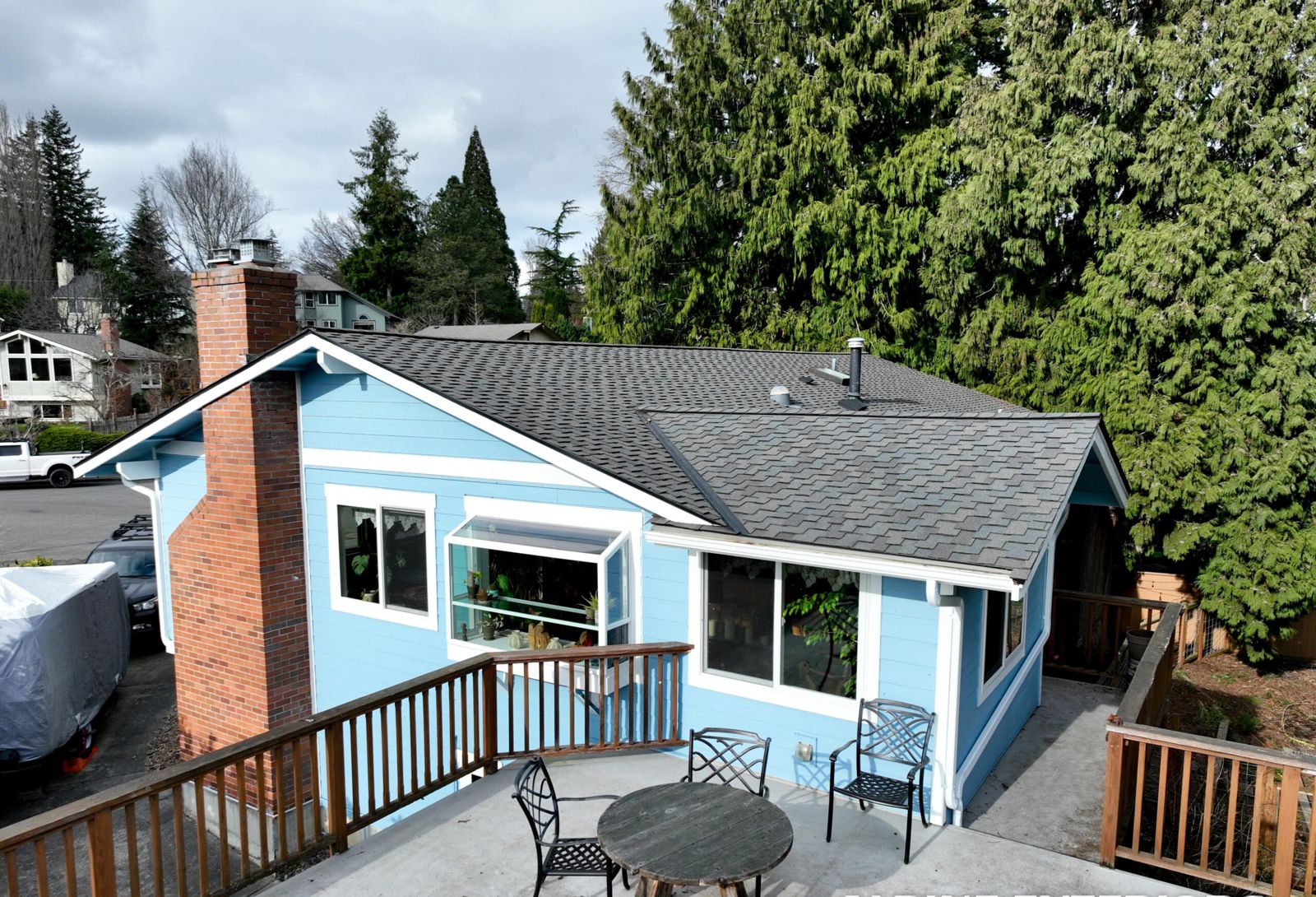
Not every item on this list means a full re-side. A single popped nail, a short run of failed caulk, or light algae staining on a shaded wall are all reasonable DIY fixes for a homeowner comfortable on a ladder: re-set the fastener, strip and re-caulk the joint, or wash the affected area with a mild cleaner and a soft brush (avoid a pressure washer on siding seams — it drives water in rather than out). Re-check the spot after the next heavy rain to confirm the fix held.
Anything that involves soft or spongy wood, a musty interior smell, staining that's spreading rather than staying put, or growth returning quickly after cleaning deserves a closer look before you just patch the surface. Surface repairs on top of hidden rot only buy a season or two before the problem reappears, usually larger. If you're not sure how far a soft spot extends, that uncertainty itself is the signal to bring in someone who can open up the area and check the sheathing underneath.
Call in a licensed contractor once an issue crosses from cosmetic into structural, or once it's in a spot you can't safely or fully inspect yourself. That includes any soft wood you can push a screwdriver into, flashing problems above a second story, staining that suggests water has already reached the framing, or a re-side that will involve upgrading the water-resistive barrier and insulation to meet current Washington State Energy Code requirements. It's also worth a professional opinion any time you find rot in one spot and want to know whether it's isolated or part of a wider moisture problem working its way along a wall.
Alpine Exteriors inspects homes throughout Bellingham, Ferndale, Lynden, Blaine, Birch Bay, Sudden Valley, and the islands, and we see the same handful of failure points repeat across Alabama Hill and neighboring hillside streets — shaded north walls, kick-out flashing that was left off during a re-roof, and bottom-course rot where landscaping was built up against the siding over the years. A second set of eyes that's used to the local pattern of wear can usually tell you in one visit whether you're looking at a weekend fix or a bigger repair.
Twice a year is a reasonable baseline for most homes in this area — once in late fall before the wettest months set in, and once in spring after the freeze-thaw season has passed, to catch anything that opened up over the winter. Homes with heavy tree cover or a north-facing wall that rarely dries out may benefit from an extra mid-winter check of the shaded side specifically.
Light surface algae staining on a shaded wall is mostly cosmetic and can usually be cleaned. Moss is a different story — it holds a cushion of water directly against the siding surface and can work into seams and under trim, which turns a cosmetic issue into a moisture one if it's left to spread for a season or two. Treat visible moss as a cue to clean it off and check the wall underneath, not just as a wall-color problem.
It can, though the mechanism is easy to miss. Water that has already worked its way behind a panel or into a seam expands when it freezes, which pries fasteners loose or widens a gap a little more each cold snap. It's rarely one dramatic event — it's a slow accumulation over several winters, which is why a fastener that was tight last fall can be loose by spring.
A small, like-for-like patch typically doesn't trigger a permit, but a larger re-side — especially one that exposes the sheathing or adds new insulation — falls under the Washington State Energy Code's requirements for the water-resistive barrier and continuous insulation, and your local building department can tell you whether a permit applies to the scope you're planning. It's worth asking before work starts rather than after.
If your walk-around turns up more than one or two items on this list, or you'd rather have someone who knows Alabama Hill's particular mix of shade, wind, and winter cold take a look, Alpine Exteriors (WA contractor license ALPINI751OW) offers siding inspections across Whatcom County, from Bellingham and Ferndale out to Lynden, Blaine, Birch Bay, Sudden Valley, and the islands. A short visit now is almost always cheaper than the repair that waiting produces.