
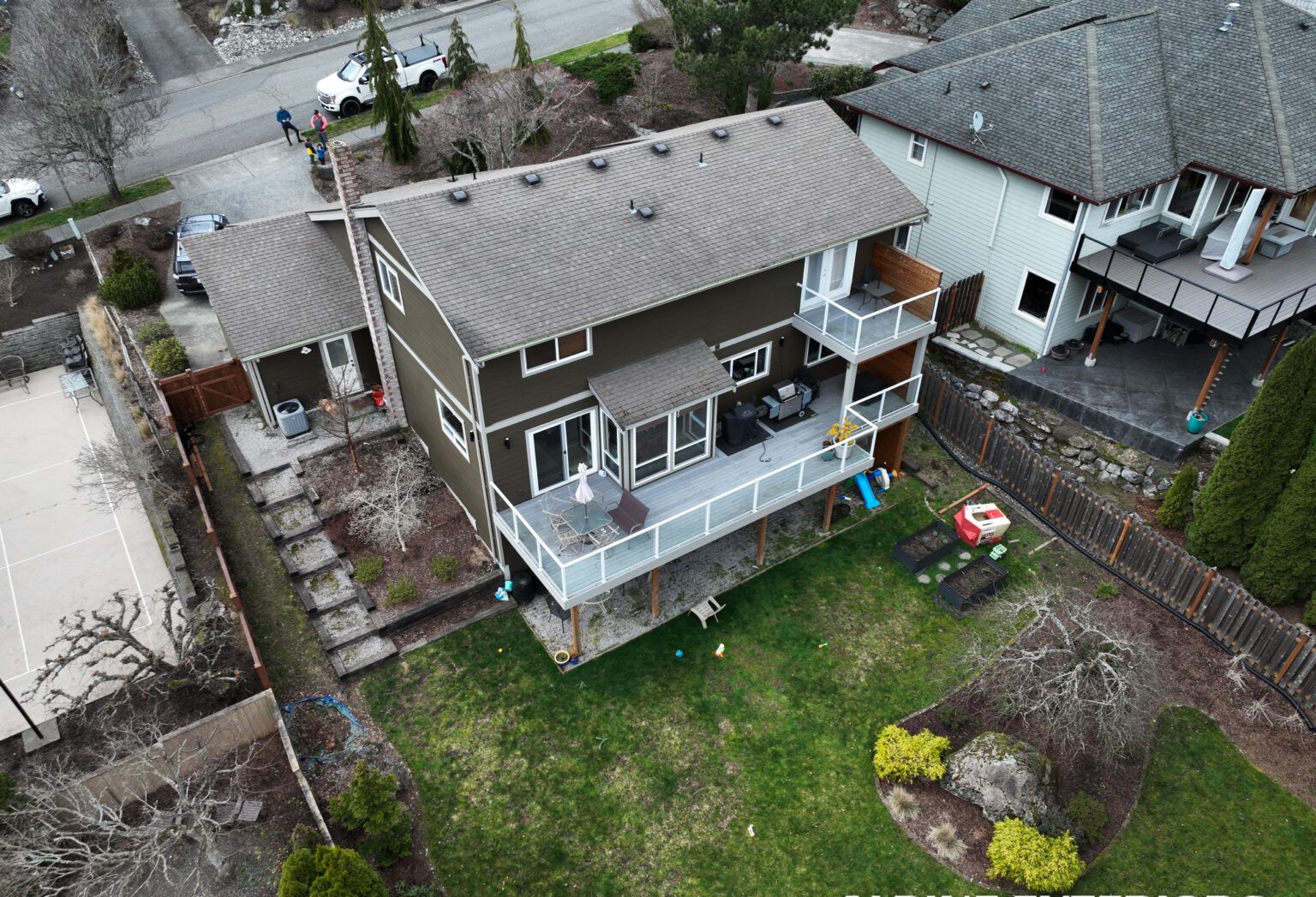
This checklist walks through what to look for on a siding walk-around, why each item matters in this specific corner of Washington, and when a quick fix isn't enough. It reflects patterns Alpine Exteriors sees repeatedly on inspections across Whatcom County, not a generic list written for a different climate.
Meridian sits in that stretch of unincorporated Whatcom County between Bellingham and Lynden, where open farmland gives way to tree-lined lots and low pockets that hold fog well into the morning. The climate reads as mild on paper, but mild and easy on siding are not the same thing. The wet season here runs roughly October through May, and a lot of homes go months at a time without more than a day or two of real drying weather. That kind of sustained dampness is harder on cladding than a handful of intense storms would be, because moisture gets time to work into small gaps and stay there.
Three regional factors matter most when you're checking your own siding. The first is wind-driven rain — storms that build over Bellingham Bay and the Strait of Georgia don't just fall straight down, they come in sideways, especially on west- and south-facing walls with a clear line to the water or to open fields. That sideways push drives water into laps, seams, and trim joints that would stay dry in a calm rain. The second is moss and algae growth, which thrives in the shade of the fir and cedar stands common on Meridian lots and on any wall that stays damp longer than it should. The third is freeze-thaw cycling. Meridian itself sits at fairly low elevation, but temperatures still dip below freezing on winter nights, and homes closer to the foothills or up around Sudden Valley near Lake Whatcom see more frequent freeze-thaw swings. Water that has worked into a hairline crack expands when it freezes and widens that crack — a small caulk failure in November can be a real gap by February.
None of this is hurricane country, and you won't find wind-rating or impact-resistance rules in the local code the way you would in a coastal hurricane zone. What does apply here is the Washington State Energy Code, which sets requirements for the wall assembly — continuous insulation, air sealing, and weather-resistant barriers — whenever a significant portion of siding is removed and replaced. That's worth knowing before you get to the repair section below, since a full-wall reside is a different scope of work than swapping a few boards.
Walk the full perimeter of the house on a dry day if you can, and bring a flashlight, a screwdriver or awl, and a phone camera. Work section by section rather than eyeballing the whole house at once — moisture problems tend to be localized, and it's easy to miss one bad panel if you scan too quickly.
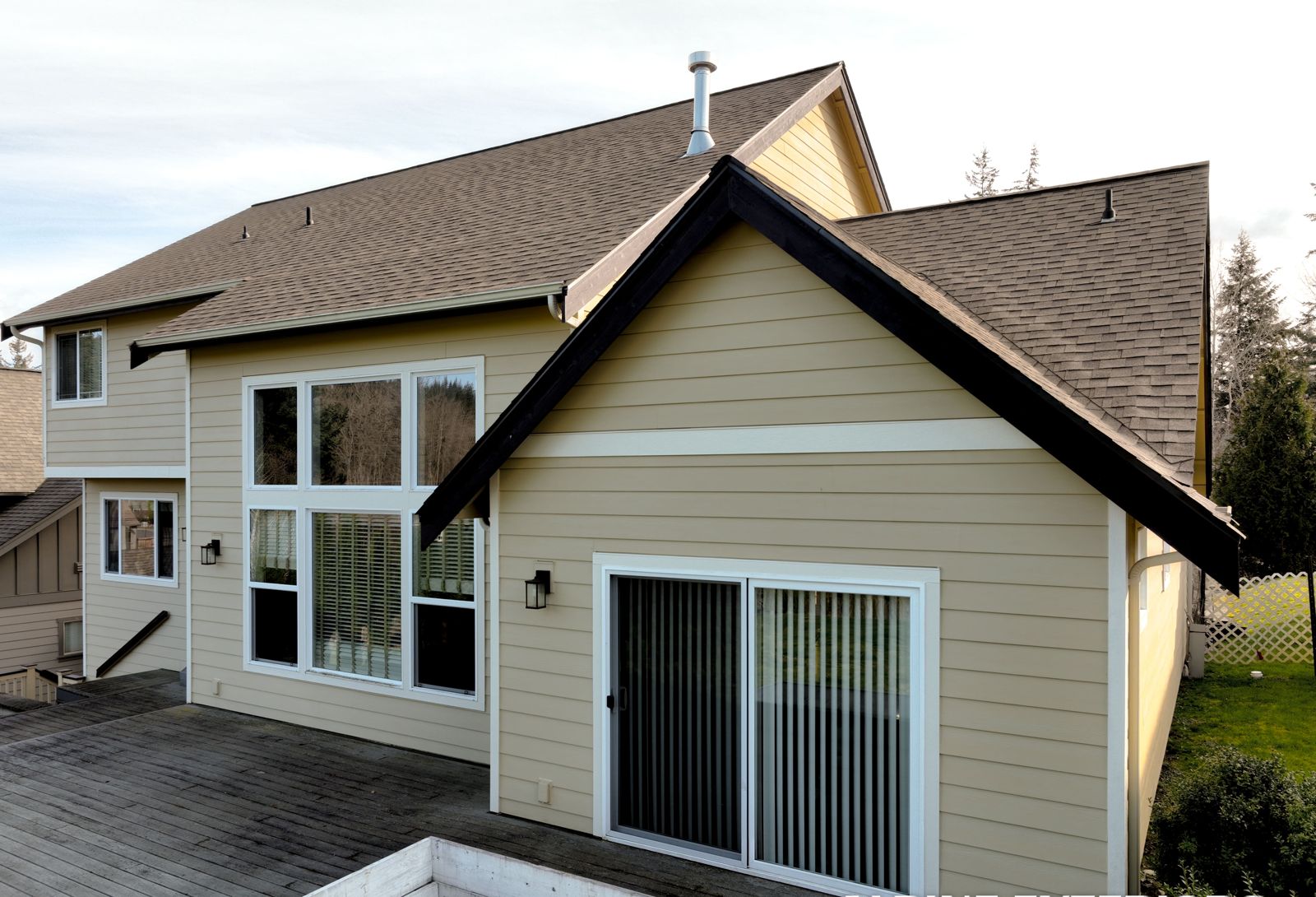
Not every failed item means a full reside. Start by taking a photo and noting the location — you'll want that record whether you fix it yourself or bring in a contractor. A single soft board, one bad caulk joint, or moss on one shaded wall is usually a targeted repair: replace the damaged section, address whatever is keeping that spot wet (a tree branch, a misaligned sprinkler, a clogged gutter), and reseal properly. Don't just caulk over a soft or rotted board and call it done — caulk holds back water, it doesn't stop wood that's already rotting, and sealing over the problem just hides it until it spreads.
If you're finding failures in more than one area, or the same spot keeps failing after you've fixed it, that's usually a sign the underlying moisture barrier or flashing detail is wrong rather than the visible siding itself. That's a bigger job, and if the repair ends up covering a significant portion of a wall, it will likely fall under the Washington State Energy Code's requirements for the assembly behind the cladding — continuous insulation and a proper weather-resistant barrier, not just new boards on the outside. It's worth asking any contractor how they'll handle that before work starts, rather than finding out afterward that it wasn't addressed.
Timing matters too. Whatcom County's drier stretch generally runs from late spring through early fall, and that's the realistic window for exterior siding work — trying to do a proper job during the wettest months usually just traps moisture behind the new material.
Some of this checklist is well within reach for a homeowner comfortable on a ladder. Other findings are worth a second opinion. Call a professional if you find a soft spot larger than the palm of your hand, rot in a structural trim board or corner post, staining that comes back shortly after you clean it, active pest activity, or moisture problems on more than one wall of the house. It's also worth having someone experienced take a look before you commit to a large repair or a full reside, since what looks like a siding problem on the surface is sometimes a roofing or flashing problem underneath.
Alpine Exteriors inspects siding throughout Whatcom County — Bellingham, Ferndale, Lynden, Blaine, Birch Bay, Sudden Valley, the islands, and communities like Meridian in between — and can tell you honestly whether you're looking at a repair or something larger. The company holds Washington contractor license ALPINI751OW.
A walk-around twice a year is a reasonable baseline — once in late fall before the heaviest rain sets in, and again in spring after freeze-thaw season has passed. Homes with a lot of tree shade, or ones close to open fields that catch wind off the Bay, benefit from an extra check partway through the wet season since moss and wind-driven rain issues tend to show up mid-winter rather than at the start.
It's not purely cosmetic. Moss holds moisture directly against the siding surface far longer than the surface would otherwise stay wet, and that constant dampness is what eventually leads to rot underneath painted wood or hardboard siding, or to finish breakdown on fiber cement. A light dusting of algae on a shaded wall isn't an emergency, but a thick moss mat that's been there for a season or more is worth clearing and checking underneath.
You can, but it's easy to do more harm than good. High pressure aimed directly at lap siding can force water up and behind panels, particularly at seams and butt joints, which creates the exact moisture problem you're trying to prevent. If you do wash siding yourself, use a wide fan tip, keep the wand at a downward angle in line with the laps, and avoid spraying directly into trim joints or window flashing.
A targeted repair — cutting out a rotted board or two, addressing the moisture source, and patching the section — is usually a modest job, often in the low hundreds to low thousands of dollars depending on access and how much needs to be opened up. A full wall reside, especially one that has to meet current Washington State Energy Code requirements for insulation and weather barriers, is a much larger project and can run well into the thousands. Getting a professional opinion before damage spreads is generally the cheaper path in the long run.
If this checklist turned up more than one or two soft spots, recurring moss, or trim you're not confident about, it's worth having a second set of eyes on it before the next wet season sets in. Alpine Exteriors serves homeowners throughout Whatcom County, including Meridian, Bellingham, Ferndale, Lynden, Blaine, Birch Bay, Sudden Valley, and the islands, and can walk your property with you to point out what's a quick fix and what needs closer attention. Reach out to schedule a siding inspection and get a straight answer about where your home stands.