
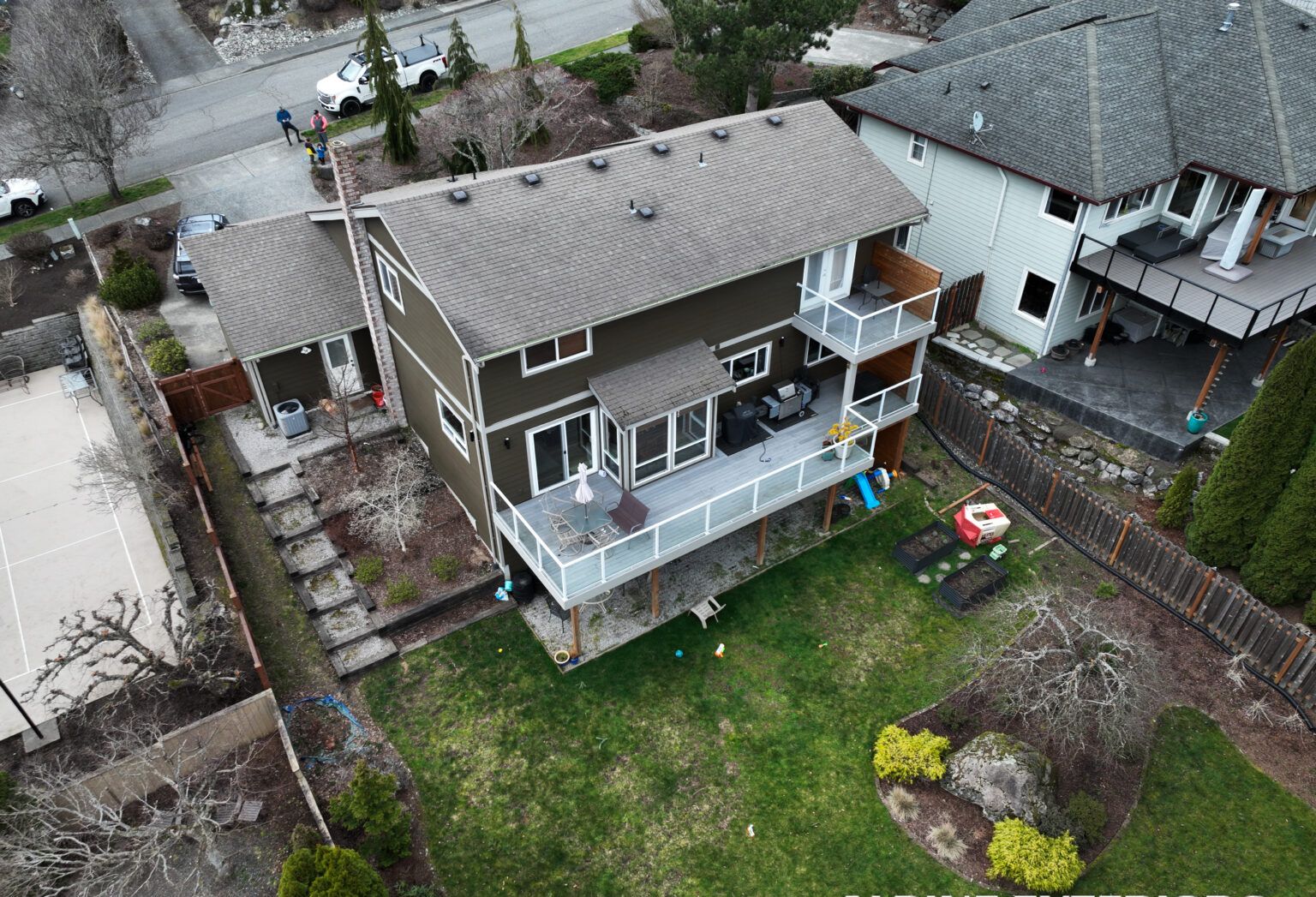
Whatcom County doesn't get hurricanes or hail the size of golf balls, but it makes up for that with something steadier and, in its own way, just as hard on a house: months of persistent rain, wind-driven moisture off Bellingham Bay and the Strait of Georgia, and enough shade and humidity to turn a north-facing wall into a moss farm within a couple of seasons. From Blaine and Birch Bay down through Ferndale, Bellingham, and Lynden, out to Sudden Valley and the islands, siding here spends most of the year doing a slow, constant job of shedding water rather than surviving one dramatic event. Fall is the natural checkpoint. Whatever the summer dry spell hid — a hairline gap in the caulking, a soft spot behind a downspout, a shingle that curled slightly in the August sun — the first real atmospheric river of October will find it.
There's also a code angle worth knowing about. The Washington State Energy Code requires a continuous water-resistive barrier and a proper drainage plane behind exterior cladding on most residential construction, and it sets minimum standards for the insulation and air-sealing that sit just behind your siding. A siding failure isn't only cosmetic — a gap that lets bulk water in can wet insulation, reduce its real-world performance, and eventually rot the sheathing the energy code assumes stays dry and intact. None of this requires alarm. It requires about an hour with a ladder, a flashlight, and this list before the wet season sets in for good.
Siding surface and finish
Trim, flashing, and joints
Base of walls and ground clearance
Moss, algae, and organic growth
Ventilation and moisture management
Fasteners and attachment points
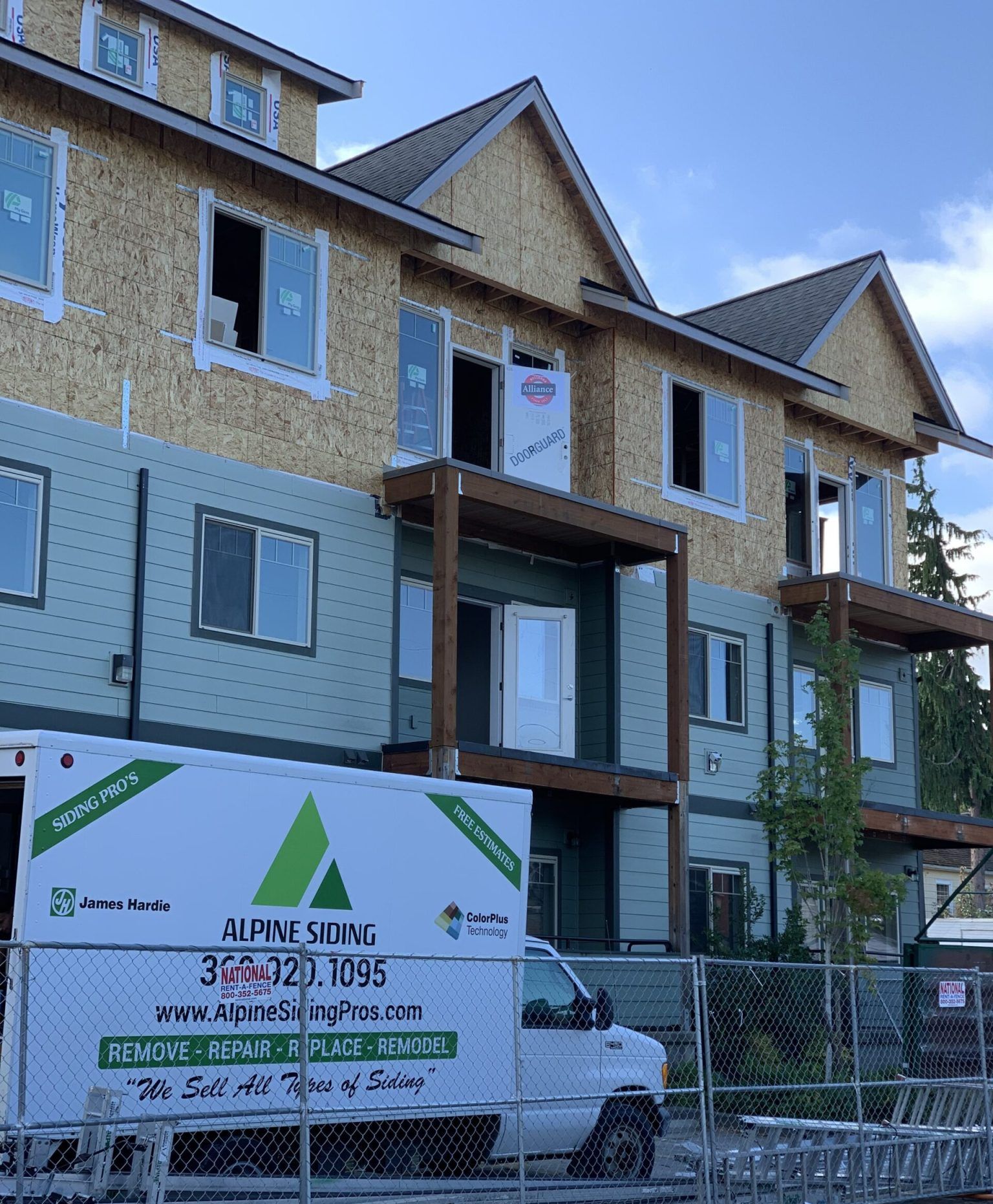
Not every failed item is an emergency, and treating them differently matters. A small caulking crack or a light dusting of algae is a maintenance task: clean it or reseal it before the wet season locks it in for six months. Recaulking is genuinely a DIY-friendly job for most homeowners comfortable on a short ladder — the key is using an exterior-grade sealant rated for the substrate and giving it dry weather to cure, which in Whatcom County sometimes means picking a narrow window between storm systems.
Soft or spongy siding, staining that bridges from outside to inside, or any bowing panel is a different category. These usually mean water has already gotten past the surface and into the wall assembly, and probing further without knowing what's behind the siding can do more harm than good — it's easy to hide a small rotted area by patching over it, or to turn a contained problem into a bigger one by removing the wrong piece first. At that point it's worth having someone open a small inspection area rather than guessing.
Moss and algae deserve an honest note: pressure washing siding yourself is one of the more common ways homeowners in this region accidentally force water behind lap siding or up under shingle butts, which then causes the exact rot the cleaning was meant to prevent. A soft wash at low pressure, using the correct dilution and pointed downward in the direction the siding sheds water, is far safer than a rented pressure washer on a high setting.
Call a licensed contractor rather than continuing on your own when you find soft or spongy siding anywhere on the wall, interior staining that lines up with an exterior trouble spot, siding that's visibly separated from the wall or bowing outward, moss that regrows in the same spot within a season of cleaning it, or any sign of active insect activity in the wood. Any of these can mean the water-resistive barrier or sheathing behind the siding has already been compromised, which is a repair, not a maintenance task.
Alpine Exteriors inspects and repairs siding throughout Bellingham, Ferndale, Lynden, Blaine, Birch Bay, Sudden Valley, and the surrounding islands, and can tell you honestly whether a spot needs a patch, a full section replacement, or nothing more than better drainage nearby. Alpine Exteriors holds Washington contractor license ALPINI751OW, and doing this work correctly in this climate sometimes means not overselling a fix — redirecting a downspout can solve more than replacing boards would.
Twice a year covers most homes well: once in fall before the heavy rain season starts, and once in spring after it lets up, to catch anything the winter caused. Homes on more exposed sites — close to Bellingham Bay, up on Sudden Valley's slopes, or on the islands where wind off the Strait hits harder — sometimes benefit from a quick look after any unusually strong storm as well, just checking for obviously popped fasteners or new staining rather than a full inspection.
It's genuinely both, and which one matters depends on how long it's been there. A light surface film cleaned off within a season is mostly cosmetic. Moss and algae left to establish for a year or more start holding moisture against the siding continuously, which is where it stops being appearance and starts contributing to rot, especially on wood and engineered wood products. It's worth treating early rather than waiting until it looks bad enough to bother you.
Indirectly, yes. The Washington State Energy Code sets minimum insulation and air-sealing performance for exterior walls, and those numbers assume the wall assembly — including the water-resistive barrier behind the siding — stays dry and intact. A siding failure that lets water reach wet insulation can measurably reduce its real-world performance even though the code itself doesn't inspect existing siding directly. It's more of a practical consequence than a compliance violation, but it's a real one.
Often, yes, and it's usually the more cost-effective first move — a fresh finish and updated caulking can add years to siding that's otherwise structurally sound. The honest limit is that paint and caulk can't fix wood that's already rotted or a substrate that's already failed underneath; in those cases a fresh coat just hides the problem for a season before it resurfaces, usually in a worse spot.
An hour spent walking the exterior of a Whatcom County home in September or early October is cheap insurance against a winter of steady rain finding every weak point on its own schedule. If this checklist turns up something you're not sure about — a soft spot, a stubborn patch of moss, staining that wasn't there last year — Alpine Exteriors is happy to take a look and give a straight answer about what it actually needs. Alpine Exteriors, WA contractor license ALPINI751OW, serves Bellingham, Ferndale, Lynden, Blaine, Birch Bay, Sudden Valley, and the islands.