
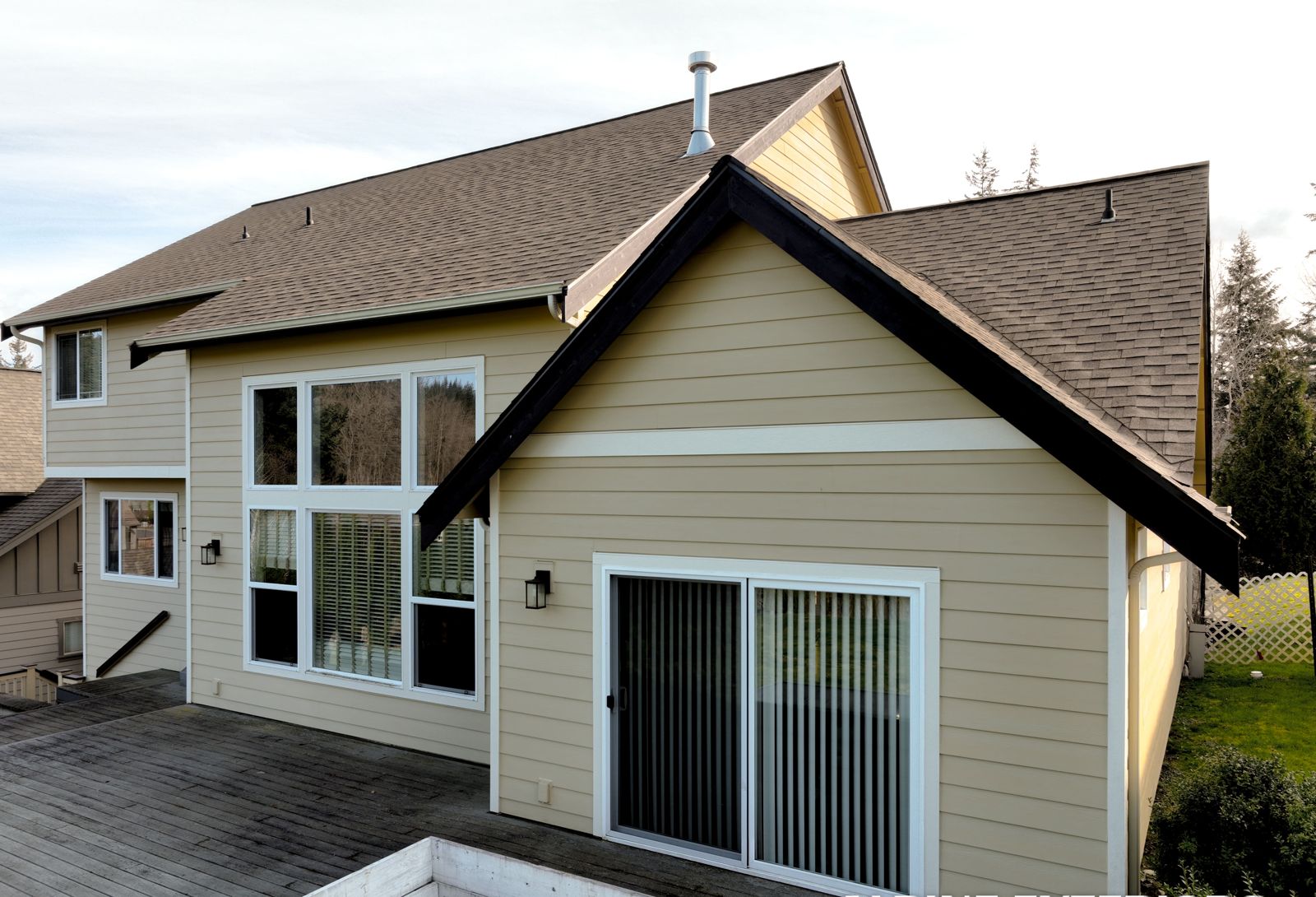
Everson sits along the Nooksack River in the eastern half of Whatcom County, close enough to Bellingham Bay and the Strait of Georgia that marine air still reaches this far inland, but far enough up the valley that the river adds its own weather on top. Low fog pools in the bottomland through fall and winter, driving rain funnels down the Nooksack corridor most winters, and cold snaps bring enough freeze-thaw cycling to stress anything on a house that's already compromised. A siding replacement here is not a same-day swap of panels. Done correctly, it is a sequence: tear-off, inspection and repair of what's underneath, a new moisture barrier, flashing, new siding, trim, and cleanup — each step depending on the one before it.
For a typical Everson home — roughly 1,800 to 3,200 square feet of exterior wall on a single-family house — a full tear-off and James Hardie fiber cement installation usually takes somewhere between 6 and 12 working days once a crew is actively on site. That's active work days, not calendar days; factor in Whatcom County's wet-season delays and the real window from start to finish often runs longer. Homes with two stories, extensive trim detail, or sheathing that needs repair take longer than a single-story home with plain walls and simple rooflines. Weather is the biggest variable in any schedule: installers won't put fiber cement over damp sheathing, so a stretch of driving rain can push a finish date back by several days without anyone doing anything wrong.
Not every siding problem calls for a full replacement, and it's worth knowing the difference before you commit to one. A homeowner can often get by with a patch or spot repair — a handful of damaged boards, fresh caulk, a repaint — if the problem is limited and the sheathing underneath is still sound. Full replacement becomes the right call when several signs an Everson home is struggling show up at once: soft or spongy spots when you press on the siding, paint that keeps failing in the same spots no matter how often it's redone, boards cupping or pulling away from the wall, moss or algae staining that returns within a season of cleaning, visible rot at butt joints or corners, or a heating bill that's crept up in a way that points to a compromised wall assembly. One or two of these signs might mean a repair is enough. Several together — especially on an older Everson home with original wood siding — usually mean the wall assembly itself needs attention, not just the surface.
Whether a permit is required depends on scope. Cosmetic re-siding — new siding installed without disturbing the sheathing or the wall assembly underneath — is often permit-exempt both inside Everson city limits and in unincorporated Whatcom County. A full tear-off that exposes sheathing, replaces rotted framing, or touches window and door flashing is a different matter, and it typically does require a permit, since the local building department wants to inspect the water-resistive barrier and flashing before it's closed back up. Projects inside Everson city limits go through the City of Everson; projects outside city limits go through Whatcom County Planning & Development Services. If the project also touches wall insulation or the vapor barrier — common on older homes being upgraded during the same job — the Washington State Energy Code's requirements for wall assemblies come into play too. A contractor who has pulled permits in this specific jurisdiction before can usually tell you within a short walk-around whether your project needs one, rather than guessing.
Not every property in Everson sits under a homeowners association, but some newer subdivisions do, and other Whatcom County communities — Sudden Valley is the clearest example — run design review committees that require color and material approval before work starts. If your property carries covenants, get your siding color and product approved in writing before you order material. Reordering after a rejected submittal adds weeks nobody budgeted for.
Material lead time is the step people most often underestimate. James Hardie's factory-finished ColorPlus finish colors are usually available through regional distribution within a couple of weeks, but a less common plank profile, a special trim detail, or a color that's temporarily out of stock can push lead times to four to six weeks or longer. Field-painted alternatives — primed fiber cement, or primed spruce or cedar wood siding — skip the color-matching wait but add a painting step, and a paint schedule, after installation. If you already know the look you want, order it early rather than assuming it will show up the week you need it.
There are several fiber cement brands on the market, and vinyl, engineered wood, and traditional wood siding all still get installed around Whatcom County. Alpine Exteriors installs James Hardie fiber cement as its primary product line because, in a climate defined by sustained moisture rather than heat or wind, fiber cement holds up in ways the alternatives don't reliably match. That said, no material is free of trade-offs, and it's worth understanding what you give up with each option before you commit to one.
| Material | Moisture & moss resistance | Typical maintenance | Notes for this climate |
|---|---|---|---|
| Vinyl | Water sheds off but offers no protection once behind the panel | Occasional wash; no repainting | Can warp or crack with temperature swings; damaged sections are replaced, not repaired |
| Primed spruce/cedar wood | Weakest of the group in sustained rain and shade | Repaint or reseal every few years | Repairable board by board, but the most vulnerable to Whatcom County's long wet season |
| SmartSide engineered wood | Better than solid wood; treated strand core | Periodic repaint | Costs less than fiber cement; shorter track record in this climate than Hardie |
| James Hardie fiber cement | Strong; resists moisture, moss, and pest damage | Annual soft wash; occasional caulk check | Heavier to install and costs more upfront; holds finish longest |
Vinyl siding costs less upfront and installs quickly, but it can warp or crack with temperature swings and offers little protection if water gets behind it — and once a panel is cracked or faded, there's no refinishing it, only replacing the section. Traditional wood siding, whether cedar or primed spruce, has real appeal and can be repaired board by board, but it's the material most vulnerable to this region's rain and moss, and it needs a repaint or reseal on a schedule most homeowners underestimate. SmartSide engineered wood splits the difference — it resists moisture better than solid wood and costs less than fiber cement, but it's still a wood-based product with a treated strand core, and its track record in a climate this wet is shorter than fiber cement's. Fiber cement costs more upfront and is heavier to handle during installation — that's the honest trade-off — but it doesn't rot, resists moss far better than wood, and holds paint or factory finish longer than any of the alternatives above.
Before hiring anyone for the job, it's worth asking a short list of direct questions:
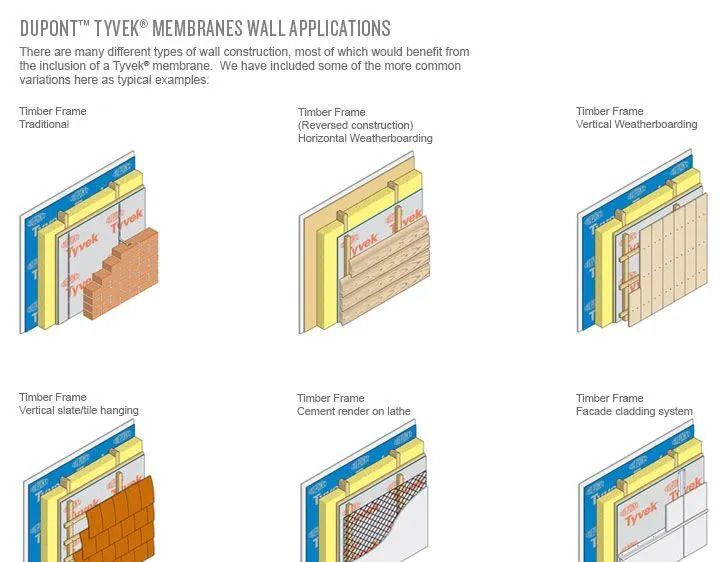
Once permits are settled and material has arrived, the work itself follows a consistent order on nearly every job.
A few things on your end make the project run smoother:
We're happy to take an hour before the crew shows up to walk a homeowner through exactly what a given week will look like, because a surprise on install day is avoidable with a short conversation beforehand.
If the project pulled a permit, a local building inspector signs off at the relevant stage — usually a sheathing and weather-resistive-barrier inspection before siding closes the wall, and sometimes a final inspection after. Beyond the official inspection, a straightforward final walkthrough with the crew lead should cover caulking lines, finish consistency, trim seams, flashing visible at penetrations, and a check that fasteners are set correctly and not overdriven. Cleanup should mean the yard is free of siding scraps, packaging, and stray fasteners — the magnet sweep matters more than it sounds like, since a nail left in the lawn is exactly the kind of thing that ends up in a tire or a bare foot weeks later.
Fiber cement siding is close to maintenance-free compared to wood, but "close to" isn't "zero." In a climate defined by persistent rain, shaded lots, and a long moss season on north-facing walls and anything under tree cover, some periodic attention keeps siding looking and performing the way it should for the long run.
James Hardie's product warranty covers the siding material itself against manufacturing defects, with separate — usually shorter — coverage for ColorPlus finish. That's a manufacturer warranty, not a workmanship warranty, and it doesn't cover installation errors. Ask any contractor bidding the job what their own workmanship warranty covers and for how long, and get it in writing. Alpine Exteriors backs its installations with a workmanship warranty separate from the manufacturer's material coverage, and holds Washington contractor license ALPINI751OW — worth confirming for any contractor you're considering, since active licensing and insurance are the baseline, not a bonus.
Everson gets the moderating effect of marine air off Bellingham Bay and the Strait, so it doesn't see the extreme swings some inland areas do, but the Nooksack Valley adds sustained rain, low fog that keeps surfaces damp longer than open ground would, and enough freeze-thaw cycling in cold snaps to widen any crack or gap that's already there. The cumulative effect on siding is less about one dramatic event and more about years of cycling moisture — seams that were fine at installation slowly open, fasteners loosen, paint fails first in the shaded and north-facing spots, and moss gets a foothold anywhere airflow and sun are limited. None of it happens fast, which is exactly why it goes unnoticed until a wall needs more than a patch.
Because in a climate where moisture is the dominant stress, not heat or wind, fiber cement's resistance to rot, pests, and moss has the strongest track record of the options available, and Hardie specifically backs its product with regional distribution and a finish warranty that field-painted alternatives can't match. It isn't the cheapest option, and it's heavier and slower to install than vinyl, which is a real trade-off worth weighing against your budget — but for a full replacement meant to last decades in this weather, it's the material we're willing to stand behind.
For a typical single-family home, plan on roughly 6 to 12 active working days for a full tear-off and James Hardie installation, though that range moves with the size of the house, how much trim detail is involved, and whether the sheathing underneath turns out to need repair. Weather is the wildcard: crews won't install over wet sheathing, so a run of driving rain during the wet season can add days that have nothing to do with the crew's pace.
The biggest factors are square footage of wall area, how much of the sheathing underneath needs to be repaired or replaced once it's exposed, the complexity of trim and roofline detail, and which product line and finish you choose — a factory ColorPlus finish costs more than a field-painted primed board but saves a paint cycle down the road. Site access matters too: a home with tight side yards, steep grade, or limited staging space takes more crew time than an open lot. As a rough planning range, fiber cement replacement projects in this region often land somewhere between $9 and $16 per square foot of wall area installed, though a firm number only comes from a walk-around of your specific home.
| Cost factor | Why it moves the price |
|---|---|
| Wall square footage | Sets the baseline material and labor quantity |
| Sheathing condition | Rot found after tear-off adds repair cost that can't be fully known before the wall is opened |
| Trim and roofline complexity | More corners, dormers, and transitions mean more cutting and detail labor |
| Product and finish choice | ColorPlus finish, custom trim, or engineered wood price differently than standard field-painted panels |
| Site access | Tight lots, steep grade, or limited staging space slow crew movement |
A crew that already works Whatcom County knows which Everson-area jobs need a City of Everson permit versus a county one, what a design review committee in a place like Sudden Valley is going to ask for, and how far out to order material so a wet-season forecast doesn't stall a job for weeks. That local familiarity is worth as much as the product on the wall. Alpine Exteriors serves Everson and the rest of Whatcom County — Bellingham, Ferndale, Lynden, Blaine, Birch Bay, Sudden Valley, and the islands — and is happy to walk any homeowner through a straightforward, honest assessment of whether their home needs a patch or a full replacement, what it will realistically cost, and how the schedule lines up with material lead times. Reach out to start that conversation before the next wet season makes the decision for you.