
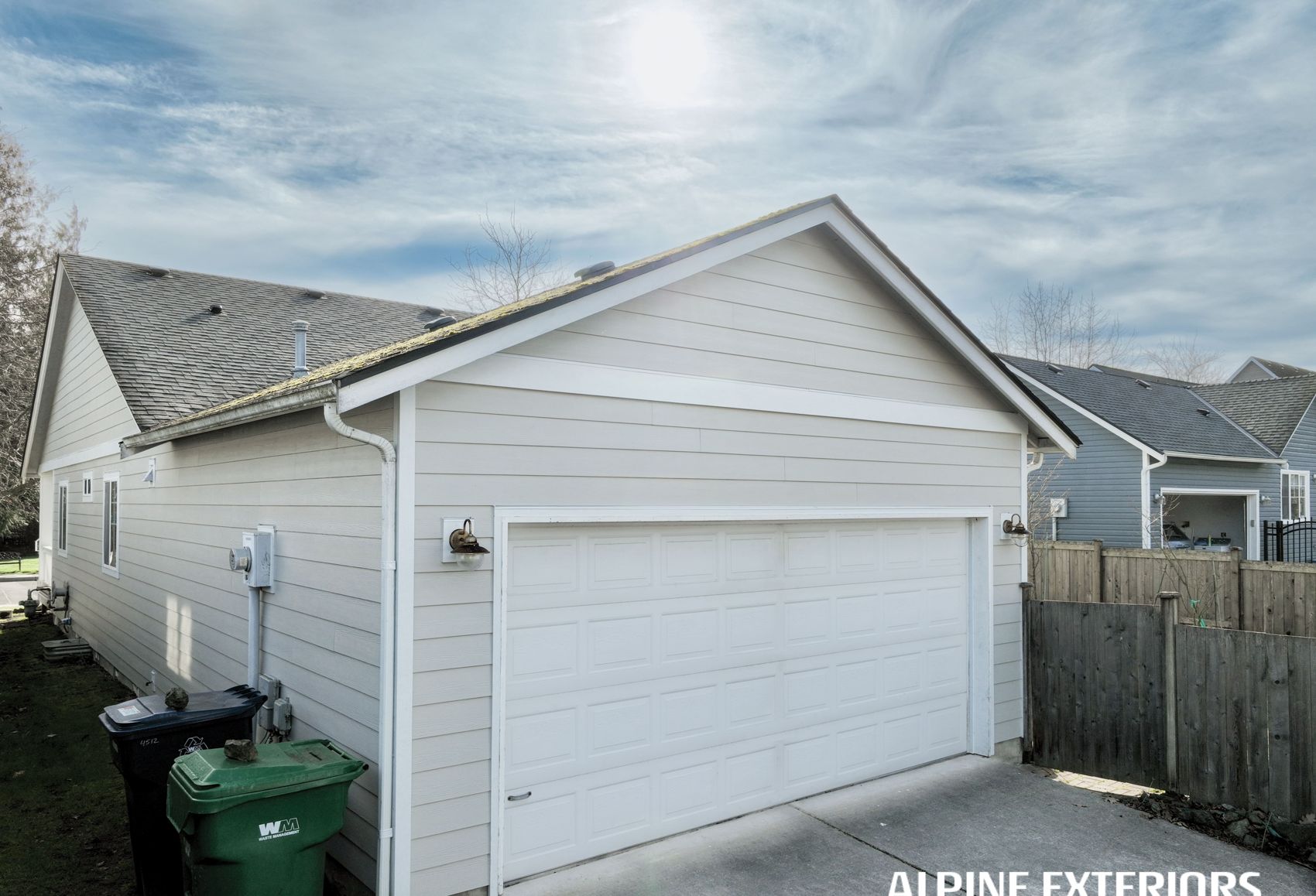
Replacing siding on a Downtown Bellingham home is a different job than the same project out in Lynden or Sudden Valley, and not just because of the older housing stock. Downtown parcels tend to sit closer together, closer to the street, and closer to Bellingham Bay, which means wind-driven rain off the water, tight staging space, and in some cases a historic overlay all factor into how the work actually unfolds. For a typical single-family or duplex-scale home, most siding replacements in this neighborhood run somewhere between one and three weeks of active work once materials are on site, depending on square footage, how much rot repair is uncovered once the old siding comes off, and how many days get lost to steady rain. That range is a real range, not a guarantee — a small bungalow with clean sheathing underneath can wrap in under two weeks, while a larger Victorian-era home with hidden water damage around window trim can stretch closer to a month.
It helps to think of the project in two timelines that overlap: the paperwork and ordering timeline, which often starts weeks before a single tool touches the house, and the on-site construction timeline, which is the part most homeowners picture when they think "siding job." Alpine Exteriors walks Whatcom County homeowners through both, because the ordering delays are usually what catch people off guard, not the actual installation.
Most straightforward siding replacements in Whatcom County — same footprint, no structural changes — fall under routine permitting through the City of Bellingham Permit Center, though the exact requirement depends on scope, whether sheathing is being replaced, and whether the work touches load-bearing elements. Homes in or near Bellingham's historic districts, including several blocks of the downtown core, may also need a design or compatibility review before a permit is issued, which can add one to several weeks depending on the review calendar. We pull the permit and handle the city's inspection scheduling as part of the project, but the homeowner is the one who needs to check whether an HOA, a historic commission, or a private covenant applies to their specific address — those approvals are not something a contractor can fast-track, and starting demolition before they clear is a real risk we won't take on a client's behalf.
Material lead time is the other piece that needs to happen early. Fiber cement lap siding, certain factory-finished colors, and some trim profiles are made to order and can take anywhere from two to eight weeks to arrive, longer if a specific color match or a less common reveal size is chosen. Vinyl and engineered wood products generally move faster, but availability still shifts with the manufacturer's production schedule. We order material as soon as the contract and color selections are locked in, precisely because a downtown Bellingham job stalled halfway through, waiting on a container of siding panels while the house sits half-wrapped in house wrap through a rainy stretch, is the outcome everyone wants to avoid.
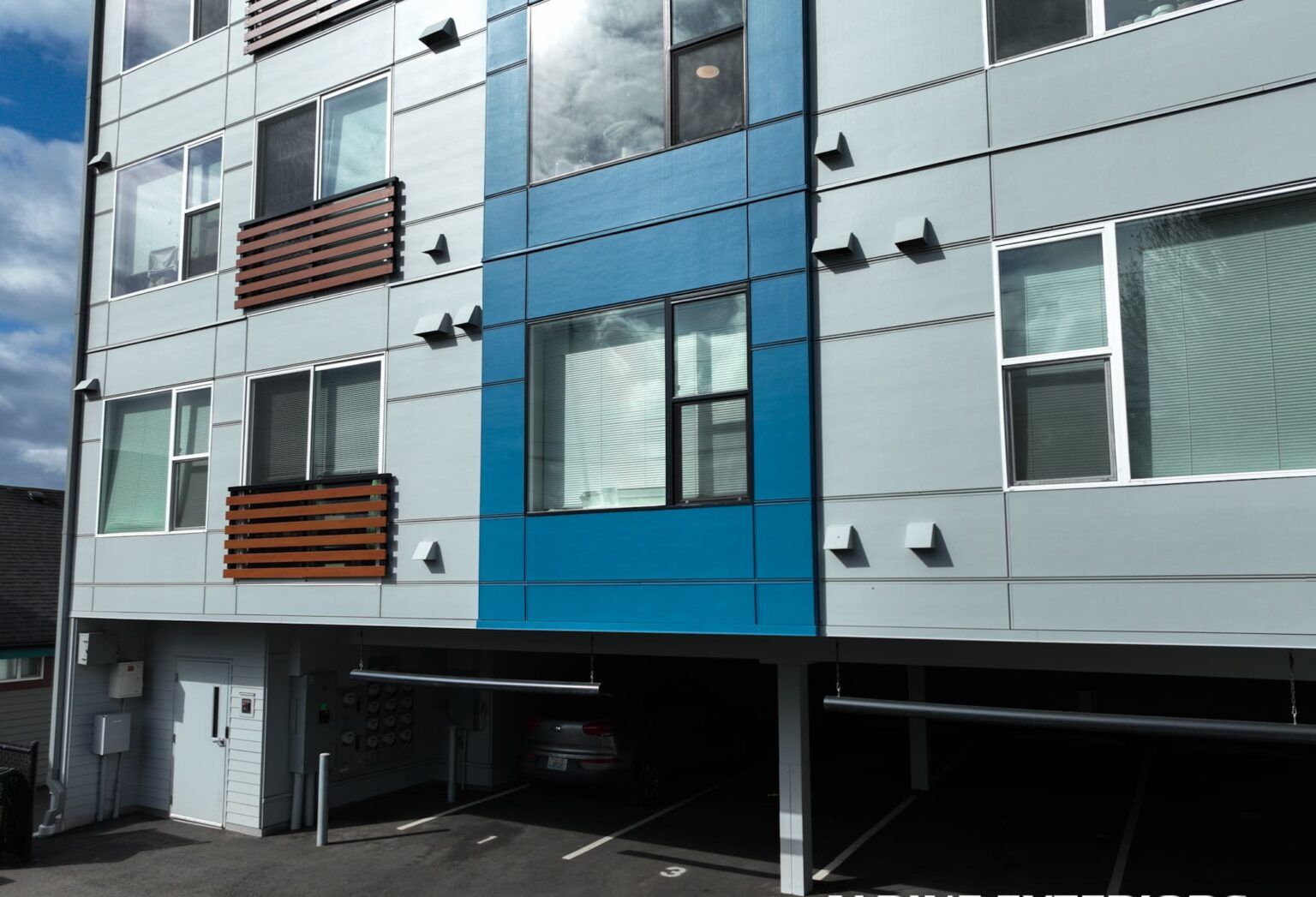
Once the permit is in hand and material has arrived, the physical work follows a fairly consistent sequence, though weather and what's found underneath the old siding can shuffle the exact pace.
1. Site protection and staging. Downtown lots often have limited driveway or side-yard space, so the first day is usually spent setting up scaffolding or ladders, protecting landscaping, walkways, and any parked vehicles, and laying down tarps to catch debris. On narrow lots we coordinate with neighbors ahead of time if staging will spill into a shared access strip.
2. Removal of existing siding. Old siding — whether it's aging cedar lap, aluminum, or vinyl — comes off in sections rather than all at once whenever practical, which limits how much of the wall sheathing is exposed to rain on any given day. This is also the point where hidden problems surface: wood rot around window sills, soft sheathing near ground contact, or moss and algae staining that has worked its way past the old cladding. Bellingham's persistent rain and humidity make this kind of hidden moisture damage common enough that we build a rot-repair allowance into most estimates rather than treating it as a surprise change order.
3. Sheathing repair and weather-resistive barrier. Any rotted or delaminated sheathing gets cut out and replaced before a new weather-resistive barrier (house wrap) goes on. Seams, window openings, and penetrations are flashed and taped with particular attention to wind-driven rain — a real factor for homes with west- or southwest-facing walls exposed to weather coming off the Bay and the Strait of Georgia. This layer is arguably more important to the home's long-term dryness than the siding itself, and it's also where the Washington State Energy Code comes into play: depending on the scope of the project, code can require continuous insulation or specific air-sealing details at this stage, which we account for in the plan rather than bolting on after the fact.
4. Insulation and code upgrades, where applicable. If the project scope triggers Washington State Energy Code requirements — which varies based on how much of the wall assembly is being opened up — this is when continuous rigid insulation or upgraded house wrap gets added. Not every siding job re-opens enough of the wall to trigger these requirements, so this step doesn't apply to every project; we confirm what applies during the estimate, not after demolition starts.
5. New siding installation. Panels or lap boards go up from the bottom of the wall upward, with careful attention to starter strips, corner trim, and window and door flashing. This is the longest single stage and the one most visible from the street, which matters on a block where neighbors are watching a downtown home get a facelift.
6. Trim, caulking, and paint or finish work. Fascia, corner boards, and window trim get finished out, seams get caulked where appropriate, and any field-painted material gets its finish coats. Factory-finished products skip most of this, which is one reason some homeowners choose them specifically to reduce future maintenance.
A few things on the homeowner's side make the job go smoother and protect belongings during a multi-week exterior project:
Depending on the permit scope, the City of Bellingham may require one or more inspections — commonly a sheathing or weather-barrier inspection before siding closes the wall up, and a final inspection once the work is complete. We schedule these as part of the project timeline rather than leaving them for the homeowner to chase down. Daily cleanup during the job keeps nails, cut-offs, and packaging out of yards and gutters, and a final cleanup pass covers the whole property, including checking gutters and window wells for debris that can wash into the storm drains during Bellingham's wetter months.
The final walkthrough is where we go around the house together, check seams, trim lines, and flashing details up close, and address anything that doesn't meet spec before calling the job finished. This is also the right time to ask questions about caring for the new siding through the region's wet winters, since moss and algae growth is an ongoing maintenance issue here regardless of which siding material was chosen.
New siding is not maintenance-free in Whatcom County's climate, even with the best materials. Persistent rain and shade from mature trees make moss and algae growth likely on north-facing walls over time; periodic gentle washing (never high-pressure blasting directly at seams) keeps this in check without damaging caulking or trim. Gutters should be checked each fall to keep water moving away from the wall assembly rather than sheeting down it, since that kind of chronic wetting is what leads to the sheathing rot we sometimes find behind old siding during tear-off. In the foothills-adjacent parts of the county, freeze-thaw cycles can also stress caulked joints over the years, so a walk-around inspection every couple of years to check trim caulking is worth the half hour it takes.
Material warranties vary by manufacturer and product line — fiber cement, vinyl, and engineered wood each carry different terms, and factory-finished colors typically carry separate finish warranties from the substrate warranty. Alpine Exteriors backs its installation workmanship separately from those manufacturer warranties, and we go over both in writing before the contract is signed so there's no ambiguity about what's covered if an issue shows up down the road. As a licensed Washington contractor (ALPINI751OW), we also stand behind the permit and inspection process itself — if an inspector flags something, resolving it is on us, not an added cost to the homeowner.
Light, intermittent rain rarely halts a job outright since crews can work under staged tarps and sequence tasks around it, but sustained heavy rain does slow or pause exterior work, particularly during sheathing replacement and house wrap installation when the wall is most exposed. Given how much of the year sees measurable rainfall in Bellingham, we build some weather buffer into the schedule rather than promising a fixed number of working days.
It's common enough in this region that we plan for it rather than treat it as a shock. Any soft or water-damaged sheathing, framing, or trim gets identified, photographed, and discussed with the homeowner before repair work proceeds, along with a clear cost for the additional repair. We do not paper over rot with new siding — sealing in existing moisture damage just guarantees a bigger problem in a few years.
Not for most of the project, though it helps to be reachable by phone in case a decision is needed quickly, such as approving unexpected repair work. We do ask that someone be available for the pre-start walkthrough, any required inspection windows, and the final walkthrough at the end.
It can, particularly when the project scope includes upgrading the weather-resistive barrier and adding continuous insulation as required under the Washington State Energy Code for the applicable wall assembly. The siding material itself has a smaller effect on energy performance than the air-sealing and insulation work done underneath it, so the real gains come from doing that layer correctly, not from the exterior finish alone.
If you're weighing a siding replacement on a Downtown Bellingham home — or anywhere else in Whatcom County, from Ferndale and Lynden to Blaine, Birch Bay, Sudden Valley, or the islands — Alpine Exteriors can walk the property with you, explain what permitting and material lead times look like for your specific address, and lay out a realistic timeline before any contract is signed. Reach out to schedule an on-site assessment and get a straightforward look at what your project will actually involve.