
If you've noticed a cluster of small round holes marching up a corner board or gathering under the eaves of your Bellingham, Ferndale, or Lynden home, you're not imagining things — and you're not alone. Woodpecker damage is one of the more common siding complaints we see across Whatcom County, from the in-town lots of Bellingham to the tree-lined properties around Lynden and the shoreline homes near Blaine and Birch Bay. The birds themselves aren't the whole story, though. What they find underneath the siding usually matters more than the holes themselves.
Woodpecker damage shows up in a few recognizable patterns, and knowing which one you're looking at helps determine what's actually going on behind the siding.
Other clues worth checking for: sawdust-like debris (frass) on the ground below the holes, soft or spongy siding when you press on it near the damage, staining or dark streaking radiating from the holes, and moss or algae growth on the siding surface nearby — a sign the material has been holding moisture longer than it should.
Whatcom County has a fairly specific combination of factors that make siding attractive to woodpeckers, and it's worth understanding them separately from the bird behavior itself.
The biggest factor is our persistent rain. Long stretches of low-intensity rainfall, especially through the fall and winter, keep siding surfaces damp for extended periods. Combined with limited direct sun on north-facing walls and shaded areas under mature trees — common on older Bellingham lots and wooded properties near Sudden Valley — this creates ideal conditions for moss and algae to take hold. Once moss establishes itself on wood or fiber-cement siding, it holds moisture against the substrate, and that trapped moisture is what eventually leads to wood rot underneath. Rot-softened wood is far easier for insects to colonize, and insect activity is exactly what draws woodpeckers in the first place. In a lot of cases, the woodpecker isn't creating a problem — it's flagging one that already existed.
Wind-driven rain off Bellingham Bay and the Strait of Georgia adds another layer, particularly for homes in Blaine, Birch Bay, and other shoreline-exposed areas. When rain is pushed sideways into siding laps, seams, and trim joints instead of just running down the face, water finds its way behind poorly sealed siding far more easily. That trapped moisture behind the cladding is a prime spot for hidden rot that isn't visible until a woodpecker (or a contractor) opens it up.
Up in the foothills — around parts of Lynden and the higher elevations toward the Cascades — freeze-thaw cycling plays a role too. Water that gets into small cracks or checks in wood siding expands when it freezes, widening those cracks over repeated cycles. That mechanical damage, on top of moisture exposure, accelerates the softening process that makes wood attractive to insects and birds alike.
Older wood siding, particularly cedar lap and older T1-11 panel products common on homes built before the 1990s, is more vulnerable than modern engineered wood or fiber-cement siding, simply because the coatings and treatments have worn thin over the decades. Hardboard siding installed in the 1980s and 90s is also a frequent target — it drums easily and rots from the inside if caulking has failed.
Not every woodpecker hole is an emergency, but a few situations do call for prompt attention rather than a wait-and-see approach.
Treat it as urgent if: the hole penetrates all the way through the siding into the wall cavity (you can see insulation, sheathing, or daylight through it); you find soft, crumbling wood around the hole when you press it with a screwdriver; there's visible staining or a musty smell near an exterior wall on the interior side of the house; or the damage is near a window, door, or roofline where water intrusion could quickly spread to framing. In any of these cases, the concern isn't the woodpecker — it's that moisture and rot have likely already reached structural wood, and every additional wet season makes the repair bigger and more expensive.
It's less urgent, though still worth scheduling, if the holes are shallow drumming marks on trim with no soft wood underneath, or if you catch fresh nesting activity early in spring before a full season of rain has had a chance to get behind the siding. In those cases you have some room to plan the repair rather than treating it as a rush job — but "less urgent" doesn't mean "ignore it." An open hole of any kind is an invitation for the next rainy stretch to get behind the cladding.
This is the decision that actually determines your cost, and it's worth being honest about the trade-offs rather than defaulting to the more profitable answer.
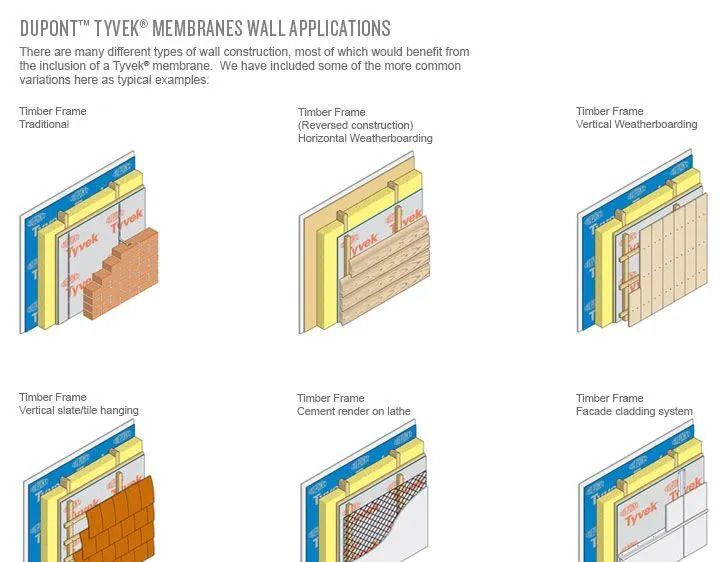
Spot repair makes sense when the damage is isolated to one or two boards or panels, the surrounding sheathing and framing test solid and dry, and the siding material is still generally sound elsewhere on the wall. In these cases, we cut out the damaged section, check the water-resistive barrier and sheathing behind it, patch or replace that barrier as needed, and install a matching piece of siding. On lap siding this can sometimes be nearly invisible; on discontinued or faded products, an exact color match isn't always possible, and that's worth knowing before you commit to a patch. Realistic cost for a straightforward spot repair on one wall section typically runs from a few hundred dollars up into the low thousands, depending on siding type, accessibility, and how much sheathing repair is involved.
Full wall or full-house replacement becomes the more honest recommendation when we find rot in multiple areas rather than one isolated spot, when the siding material itself is old enough that matching pieces are no longer available, or when repeated woodpecker activity across several seasons suggests an underlying moisture problem in the wall assembly that a single patch won't solve. It's a bigger expense up front, but patching a wall that has systemic moisture issues in three or four places over as many years often ends up costing more in aggregate than doing it once, correctly, with proper drainage details behind new siding.
We'll tell you plainly which category your situation falls into, including when a patch is genuinely the right call — not every job needs to be a full replacement, and we'd rather keep your trust than upsell a repair that didn't need it.
Once a repair is done, a few practical steps reduce the odds of a repeat visit from the same bird — or a different one:
None of this eliminates woodpeckers from the neighborhood — they're part of the local ecosystem across Whatcom County and the islands — but it does remove the conditions that make your siding specifically worth their attention.
Often, yes, especially if the underlying attraction — insects, resonant drumming surface, or a good nesting spot — hasn't been addressed. That's why we look at what's behind the hole, not just the hole itself, before recommending a fix; patching the surface without resolving the moisture or insect issue tends to bring the birds right back.
Coverage varies significantly by policy and insurer, and many policies treat bird damage as a maintenance issue rather than a covered peril, particularly if underlying rot contributed to the damage. We'd recommend checking your specific policy language and talking to your agent directly rather than assuming either way — we can provide documentation of the damage and repair scope if you need it for a claim.
For small, shallow drumming holes in sound wood, exterior-grade wood filler or caulk can be a reasonable DIY step. We'd caution against that approach on anything that penetrates through the siding or shows soft wood around the edges, since sealing over hidden rot or insect activity just hides a growing problem rather than fixing it.
Yes — any siding replacement that involves opening up the wall assembly is a good opportunity to verify the wall's insulation and air-sealing meet current Washington State Energy Code requirements for the project scope. We factor this into replacement work rather than just matching what was there before, since re-siding without addressing an outdated assembly can mean re-doing the same wall again down the road.
If you're seeing woodpecker holes on your Whatcom County home, the most useful first step is a proper inspection — not just of the holes, but of the wood and moisture conditions behind them. Alpine Exteriors is a licensed Washington contractor (license ALPINI751OW) serving Bellingham, Ferndale, Lynden, Blaine, Birch Bay, Sudden Valley, and the surrounding islands, and we'll give you a straight answer on whether you're looking at a simple patch or a larger repair — including the drawbacks of each option — before any work begins. Reach out to Alpine Exteriors to schedule a siding inspection and get a clear, no-pressure plan for fixing it right.