
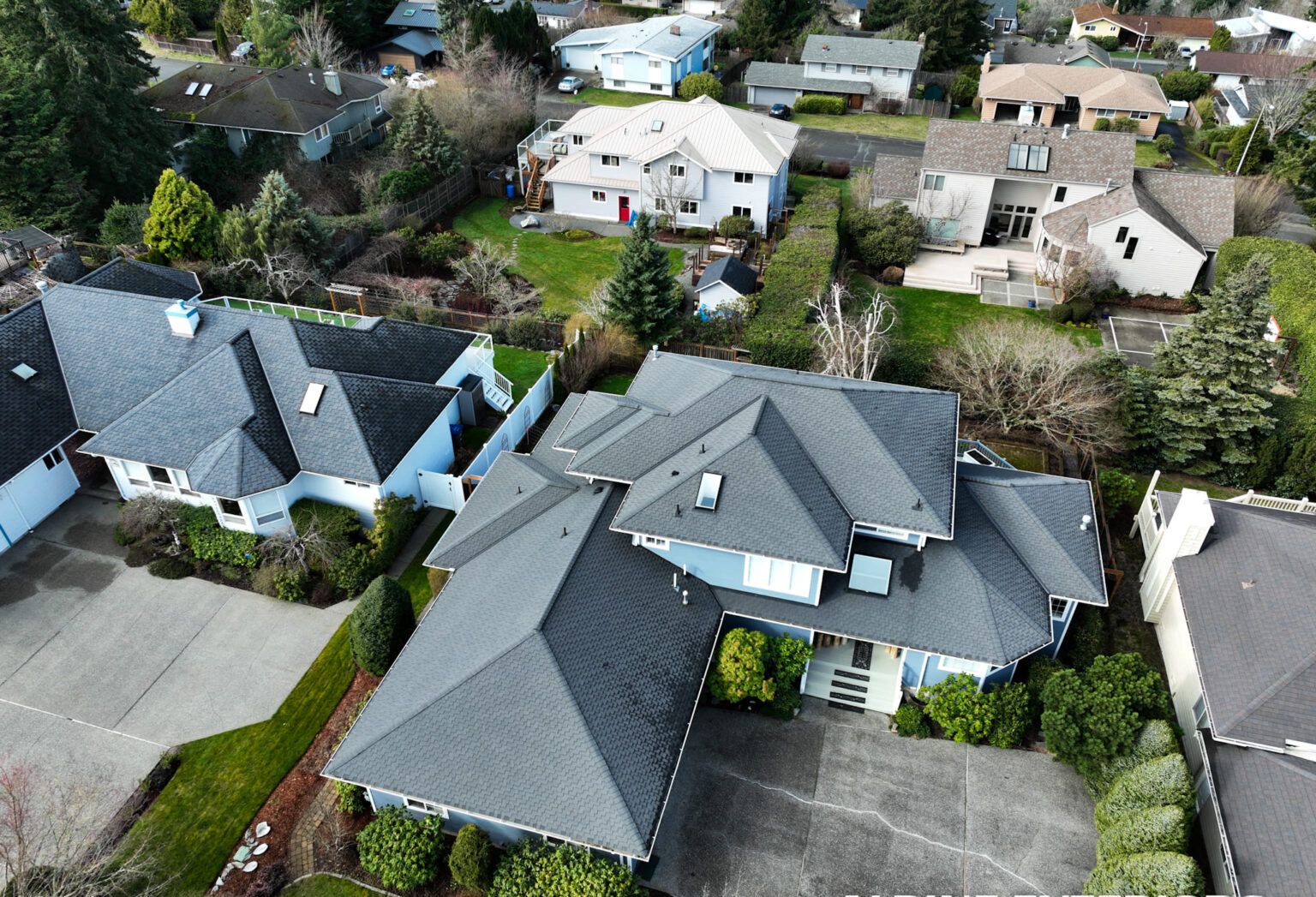
If your Cordata home takes direct wind-driven rain off Bellingham Bay or sits under fir and cedar trees that keep the north side of the house shaded and damp most of the year, James Hardie fiber cement is the siding that will hold up best over the decades you own the house. If your budget is tighter, you're re-siding a rental or a starter home, or you want the fastest possible install with the lowest up-front cost, vinyl is a reasonable, honest choice as long as you go in understanding its limits in our climate. Neither product is wrong for Whatcom County — they're built for different priorities, and the right pick depends on how long you plan to own the home, how exposed the walls are to weather, and what you're willing to spend now versus later.
James Hardie siding is made from cement, sand, and cellulose fibers pressed into planks, panels, or shingle-style pieces, then factory-primed or finished with the ColorPlus baked-on finish system. It's heavy, rigid, and doesn't flex or expand the way vinyl does when temperatures swing. In a place like Cordata, where winter lows in the foothills can dip below freezing while the coast stays milder, that rigidity matters — fiber cement isn't prone to the cracking or warping that comes from repeated freeze-thaw cycling on a less stable material.
The bigger advantage locally is moisture behavior. Whatcom County's marine climate means siding spends a large share of the year wet, shaded, or both, and that's exactly the environment where moss, algae, and mildew take hold on exterior surfaces. Fiber cement doesn't rot, and its factory finish resists the greenish staining that shows up fast on north-facing walls near Cordata's mature tree cover. It also stands up well to wind-driven rain that comes off the Strait of Georgia and Bellingham Bay during winter storms, since properly installed Hardie panels rely on rigid material and correct flashing rather than caulk alone to keep water out.
The honest drawback is cost and install complexity. Fiber cement requires specific fasteners, blade changes (or shears) to avoid silica dust, and correct clearances above grade, decks, and roof lines — all things that matter more in a wet climate where a sloppy install traps moisture behind the cladding instead of shedding it. That means labor accounts for more of the total price than it does with vinyl, and not every crew installs it correctly.
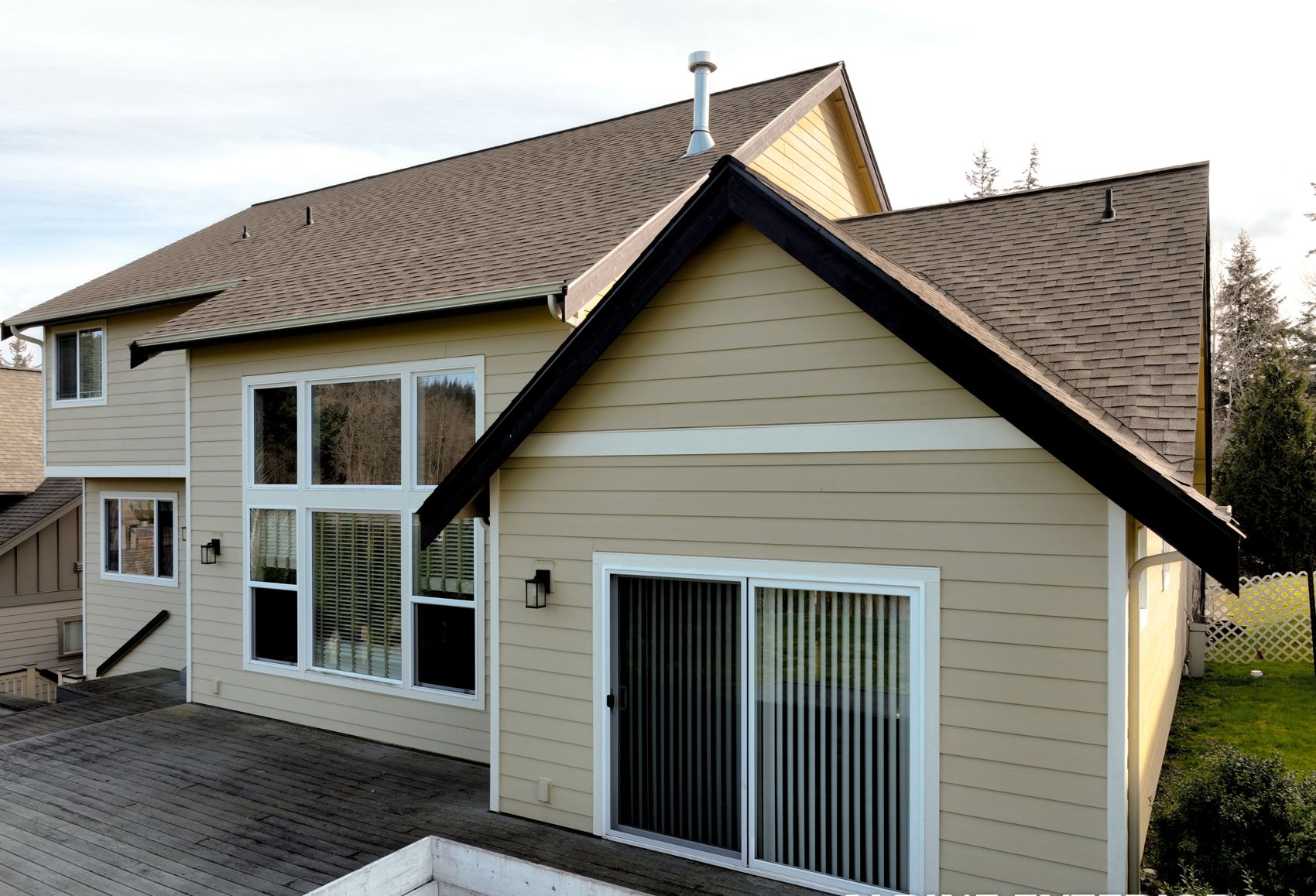
Vinyl siding is extruded PVC formed into interlocking panels that hang on a wall over furring strips or directly on sheathing with a weather-resistant barrier behind it. It's lightweight, comes in a wide range of colors and profiles, including options that mimic cedar shake, and it installs faster than fiber cement, which keeps labor costs down. For a lot of homeowners in Whatcom County, that combination of lower material cost and faster labor is the deciding factor, especially on a rental property or a home you don't plan to own for the next twenty years.
Vinyl has come a long way from the thin, brittle product of decades past. Insulated vinyl siding, which has a foam backing laminated to the panel, adds a modest R-value and helps the panels stay straighter and quieter in wind — worth asking about given how exposed some Cordata lots are to gusts off the bay. Vinyl also never needs painting, and it doesn't rot, which takes wood rot off the table entirely.
The tradeoff that matters most here is durability against our specific weather pattern. Vinyl sheds rain fine when it's installed with correct overlap and flashing, but wind-driven rain can drive water behind loose or improperly lapped panels, and repeated freeze-thaw cycling in the colder pockets around the foothills can make older or lower-grade vinyl more prone to cracking at fastener points over time.
| James Hardie Fiber Cement | Vinyl Siding | |
|---|---|---|
| Installed cost | Generally higher — often in the range of $9 to $16 per square foot installed, depending on profile and trim complexity | Generally lower — often in the range of $4 to $9 per square foot installed, with insulated panels toward the higher end |
| Expected lifespan | Commonly 30 to 50 years with proper installation and periodic repainting if not ColorPlus finish | Commonly 20 to 40 years, with lower-grade product and severe weather exposure trending shorter |
| Maintenance | Occasional washing to keep moss and algae from taking hold; repainting eventually unless factory-finished | Occasional washing; no painting, but cracked or faded panels usually need full replacement rather than a spot fix |
| Appearance over time | Holds color and crisp lines well; factory finish resists fading and staining | Can fade unevenly and show wear at seams and fasteners as it ages; newer insulated profiles look straighter longer |
Cordata sits in north Bellingham, close enough to the bay to catch wind-driven rain in winter storms, and mixed with mature tree cover along the greenways and residential streets that keeps shaded walls damp for long stretches, especially on north- and west-facing elevations. That combination — persistent moisture plus organic growth pressure from moss and algae — is the scenario fiber cement was built for, and it's why we lean toward recommending James Hardie on full re-sides here, particularly on homes with heavy tree shade or unobstructed exposure to storms coming off the Strait.
That said, we don't push Hardie on every job. If you're working with a tight budget, siding a detached structure like a shop or garage, or handling a property you're preparing to sell rather than live in for decades, vinyl is a legitimate answer and we'll say so plainly. Where vinyl falls short in Whatcom County is less about the coastal exposure and more about the freeze-thaw swing you get moving inland toward Lynden, Sudden Valley, and the foothills — colder nights there put more stress on vinyl's fastener points than it sees right along the water.
Whichever material you choose, correct installation matters as much as the product itself. Washington State Energy Code requirements for wall assemblies and moisture management apply regardless of cladding type, and a weather-resistant barrier, proper flashing at windows and penetrations, and correct fastening are what actually keep water out of the wall — not the siding surface alone. Alpine Exteriors installs both systems to those standards, and part of our estimate process is walking you through which elevations on your specific house face the most exposure, since a single Cordata lot can have one wall that badly needs fiber cement and another that would do fine in vinyl.
Yes, in practice it does, mainly because of the factory finish rather than the base material alone. James Hardie's ColorPlus finish is baked on and resists the kind of surface staining that moss and algae spores latch onto, while bare vinyl's slicker but more porous surface tends to pick up green film faster on shaded, damp walls. Both materials need occasional washing in a climate as wet as ours — fiber cement just tends to go longer between cleanings.
Properly installed vinyl with correct panel overlap, nailing, and flashing sheds wind-driven rain fine on most Cordata lots, since the bay's exposure here is moderate rather than a direct waterfront setting. The bigger risk isn't the wind itself but installation shortcuts — panels hung too tight, under-lapped at corners, or missing flashing at windows — which is where water intrusion problems actually start, regardless of which siding you choose.
If you're planning to sell within the next few years, the higher up-front cost of fiber cement is harder to justify purely on your own use, though it can be a selling point buyers notice, especially in a market where they've seen the moss staining vinyl picks up around here. If you're staying long-term, the lifespan and lower repaint frequency tend to even out the cost difference over 15 to 20 years.
If you choose the ColorPlus factory-finished option, you typically won't need to repaint for a long time, often well over a decade, since the finish is baked on under controlled conditions rather than field-applied. If you choose primed Hardie board and have it painted on-site instead, expect to repaint on a more normal cycle, roughly every 8 to 15 years depending on sun exposure and paint quality, similar to painted wood siding.
Every lot in Cordata faces a different mix of shade, wind, and storm exposure, so the right siding choice really does depend on walking your specific walls rather than applying a blanket answer. Alpine Exteriors is a licensed Washington siding contractor (license ALPINI751OW) serving Bellingham, Ferndale, Lynden, Blaine, Birch Bay, Sudden Valley, and the islands, and we're glad to look at your home, point out which elevations are driving the moss or fading you're seeing, and give you honest pricing on both James Hardie and vinyl so you can compare real numbers instead of guessing. Reach out to schedule a walkthrough and get a written estimate for your project.