
Press a thumb into the siding next to an exterior faucet or under the ledger board where a deck meets the house, and if it gives like wet cardboard, you've found one of the most common repair calls we get at Alpine Exteriors. It shows up on homes from downtown Bellingham to Blaine, out to Birch Bay and Sudden Valley, and on the islands. The material almost never fails on its own — a hose bib or a deck attachment punches a hole through the wall's weather barrier, water gets behind the siding, and in a climate as consistently wet as ours, that water rarely gets the chance to dry out before more arrives.
The tell-tale sign is softness you can feel with hand pressure — the siding flexes or dents instead of holding firm. That's usually accompanied by one or more of the following, and it's worth walking the exterior with a flashlight after a dry stretch to check for them:
Soft spots cluster in predictable places: around hose bib penetrations, at the deck ledger-to-house connection, under deck rim joists, and near any spot where a previous owner added something to the wall — a light fixture, a dryer vent, a trellis bracket — without properly resealing the penetration. If you own a home in Sudden Valley or one of the older neighborhoods in Bellingham or Ferndale, check these spots specifically; they show up disproportionately often in our service calls.
Whatcom County's siding failures have a distinct regional signature, and it's worth understanding because it changes how a repair should be done.
The biggest factor is simply how much of the year our siding stays wet. This isn't a region of short, hard downpours that come and go — it's long stretches of drizzle and overcast, low-intensity rain that can sit on a wall for days. A hairline gap in caulking around a hose bib that would dry out quickly in a drier climate instead stays damp for a week at a time here, and that's long enough for wood-based sheathing and trim to start absorbing moisture. Add wind-driven rain off Bellingham Bay and the Strait of Georgia — which hits homes in Blaine, Birch Bay, and the westward-facing parts of the islands harder than inland Lynden — and water gets pushed sideways into gaps that would otherwise stay dry under still-air rain.
Moss and algae compound the problem. They thrive in our shaded, damp conditions, and a colony growing near a hose bib or under a deck overhang holds water against the siding surface far longer than bare material would. That constant dampness is what actually causes wood rot — moss itself doesn't rot wood, but it creates the conditions rot needs.
Deck ledger boards deserve their own mention. Many decks built before flashing best practices tightened up were attached directly to the house rim joist with little more than lag bolts and caulk, with no dedicated ledger flashing or drainage gap behind it. Water running down the house wall hits the top of the ledger and has nowhere to go but into that seam, which is exactly where you'll find soft, discolored siding on a lot of older Whatcom County homes.
Up toward the foothills — Sudden Valley, Deming, Acme, and the areas closer to Mount Baker — freeze-thaw cycling adds another layer. Wood that's already saturated from fall and winter rain will freeze on the occasional cold snap, and the expansion of ice inside wood fibers and around fasteners physically pries the material apart, accelerating decay faster than a milder coastal winter alone would.
It depends on where the soft spot is and how far it's progressed, but "it can wait" is rarely the right answer once you can feel give under your thumb.
A small soft area limited to the siding and trim around a hose bib is a repair, not an emergency — but it won't improve on its own, and every wet season it goes unaddressed gives moisture more time to migrate into the sheathing and wall framing behind it. What starts as a modest caulk-and-patch job can turn into a much larger sheathing replacement if it's left through two or three more Whatcom County winters.
Soft siding at a deck ledger is a different category of concern. That connection is structural — it's what keeps the deck attached to the house — and rot at that joint can loosen the fasteners holding the deck in place. That's not just a cosmetic siding issue anymore; it's worth having inspected promptly, particularly on decks that see regular foot traffic or hold outdoor furniture and grills. If you notice any looseness or movement in the deck itself in addition to soft siding at the ledger, treat that as urgent and have it looked at before the deck sees heavy use again.
Not every soft spot means a full re-side. At Alpine Exteriors we see both ends of this spectrum, and it's worth understanding the difference before a contractor quotes you either extreme.
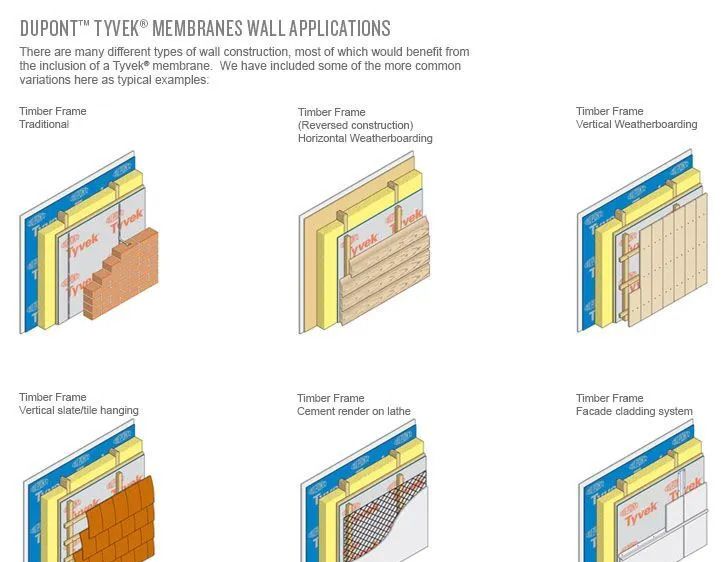
A contained repair — cutting out the affected siding boards or panels, checking and repairing the underlying weather-resistive barrier, replacing any rotted trim, and properly re-flashing the hose bib or ledger connection — is appropriate when the damage is localized and the sheathing underneath is still sound. This is common work and typically runs from a few hundred dollars for a small, single-penetration repair up to a couple thousand dollars for a larger area with trim and flashing work included.
Replacement of a broader section, or the whole wall, becomes the better call when the sheathing itself has gone soft or delaminated, when rot has traveled well beyond the original penetration, or when the existing siding is old enough and thin enough — some original builder-grade material from decades back falls into this category — that patch repairs won't blend and won't hold up as well as the surrounding material ages. If a home has more than one soft spot on the same elevation, it's often more cost-effective in the long run to re-side that whole wall rather than chase repairs one hose bib and one deck ledger at a time.
One honest drawback worth flagging: a full wall re-side in Washington means checking the project against the Washington State Energy Code requirements for exterior wall assemblies, which can mean adding continuous insulation or updating the vapor control layer depending on the scope of work and how the local building department classifies it. That can add cost and a permitting step compared to a like-for-like patch, but it also means the wall performs better once it's closed back up — it's not a reason to avoid the work, just something to plan time and budget for if your project crosses that threshold.
| Situation | Typical Approach |
|---|---|
| Small soft area at one hose bib, sheathing still firm | Localized repair and re-flashing |
| Soft siding at deck ledger with loose deck fasteners | Prompt inspection, ledger flashing repair, possible sheathing replacement |
| Multiple soft spots on one elevation, older siding | Consider re-siding the full elevation |
| Widespread rot across several walls | Full re-side, reviewed against Washington State Energy Code wall requirements |
Most of what causes soft siding around hose bibs and decks in this region is manageable with routine attention rather than expensive upgrades.
Surface mold and algae sit on top of the siding and can usually be washed off without the material losing its firmness underneath. If the siding itself flexes, dents, or feels spongy when you press on it, that softness means moisture has gotten into the material or the sheathing behind it, which is a different problem than a surface growth and won't be solved by cleaning alone.
Not necessarily. Soft siding is often very localized to the penetration where water got behind the weather barrier, and the rest of the wall can be perfectly sound. That said, it's worth checking nearby areas and the interior side of that wall for any related staining, since water sometimes travels sideways or downward before it shows up as visible softness.
Not always. Many ledger flashing repairs can be done by temporarily supporting or partially detaching the deck framing near the affected section rather than a full teardown, especially if the damage is contained to one area. A full deck removal becomes more likely if the ledger board itself or a large section of rim joist has rotted through and needs structural replacement.
A straightforward repair limited to the siding, trim, and flashing around a single hose bib generally falls in the low hundreds to around a thousand dollars, depending on the siding material and how much trim work is involved. Costs rise from there if the sheathing underneath needs replacing or if the damage extends into framing, so an accurate number really depends on what's found once the area is opened up.
If you've found a soft spot near a hose bib or deck on your Whatcom County home, it's worth having someone take a real look rather than guessing at the extent of it from the outside. Alpine Exteriors, WA contractor license ALPINI751OW, inspects and repairs siding throughout Bellingham, Ferndale, Lynden, Blaine, Birch Bay, Sudden Valley, and the surrounding islands, and can tell you honestly whether you're looking at a contained repair or something that calls for a broader fix. Reach out for an inspection before another wet season gives the damage more time to spread.