
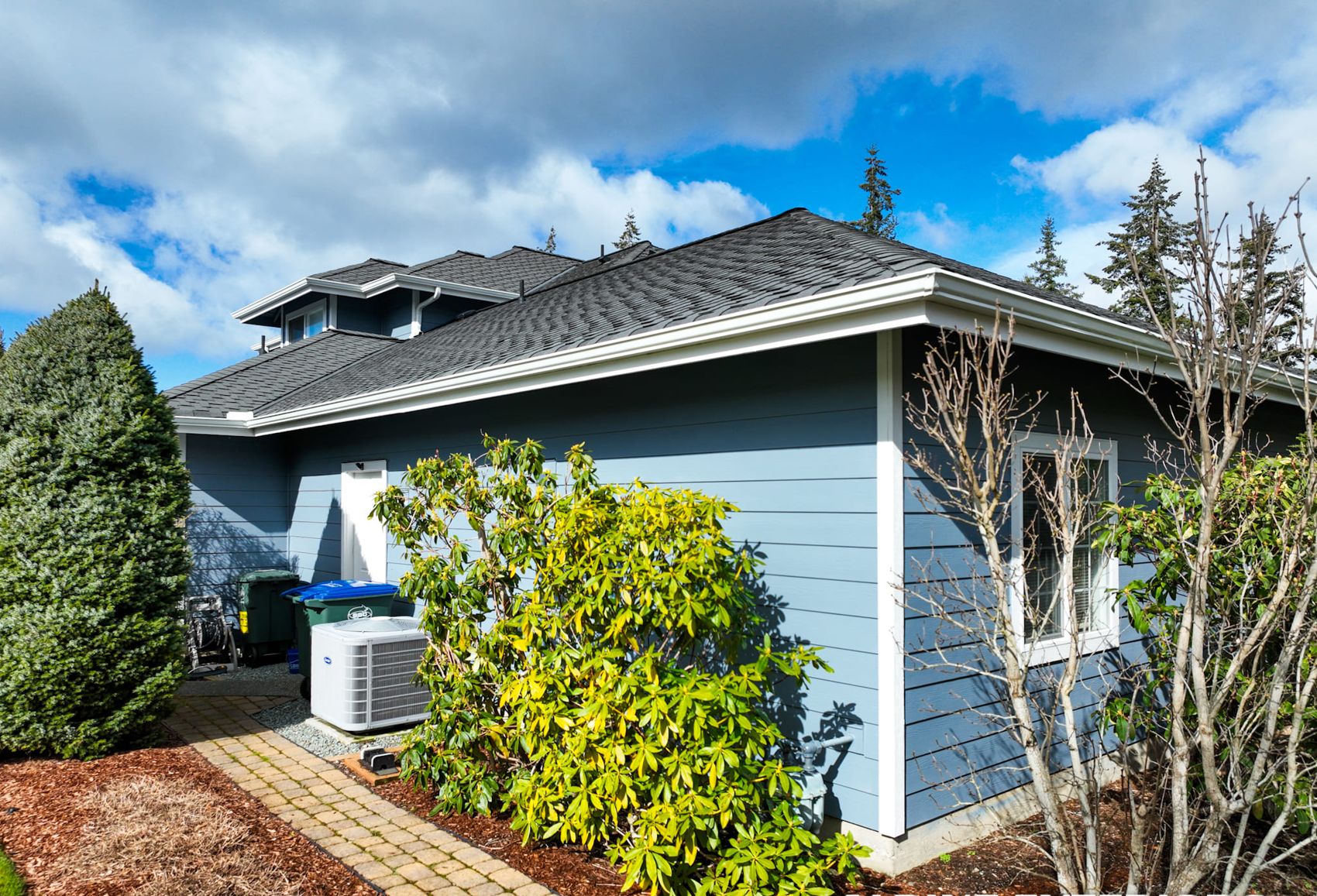
Homeowners in Happy Valley who are ready to re-side their house almost always end up comparing the same two products: James Hardie fiber cement lap siding and vinyl siding. Both are sold by every siding crew in Whatcom County, both show up at the local lumberyards, and both can look good on a finished house. Alpine Exteriors sees this exact comparison come up on nearly every re-side estimate in the neighborhood, and the honest answer is that the right choice depends on your budget, how exposed your walls are to wind-driven rain off Bellingham Bay and the Strait, how much shade and moss pressure your lot carries, and how long you plan to own the home. Fiber cement generally makes more sense for homes that take the brunt of our weather and for owners who want the longest possible service life. Vinyl still has a legitimate place on tighter budgets, on secondary structures, and on walls that are well protected by roof overhangs and mature landscaping. Neither product is wrong. What is wrong is picking one without understanding how it behaves under nine months of Pacific Northwest drizzle, occasional wind-driven storms, and the freeze-thaw swings that show up in the higher, colder parts of Whatcom County.
James Hardie siding is manufactured from a mix of Portland cement, sand, and cellulose fiber that is cured into rigid boards and planks. The company's HZ5 product line is formulated for climates like ours, with freeze-thaw resistance and moisture performance built into the material rather than added as an afterthought. Because it is cement-based, fiber cement does not support mold growth the way exposed wood or the paper facing on some backer products can, and it will not rot the way untreated wood trim does when it stays damp for weeks at a stretch, which is exactly what happens on shaded, north-facing walls in Happy Valley through a typical November-to-March run of weather.
The factory-applied ColorPlus finish is baked on rather than sprayed on site, which matters here because it resists the fading and chalking that constant cloud-filtered UV and damp air can cause over the years. That said, fiber cement is not maintenance-free. The boards still need to be caulked and touched up at trim joints and butt seams, and most homeowners will want to refresh the finish after a couple of decades even with ColorPlus protecting it. Installation is also less forgiving than vinyl: the boards are heavy, they need to be cut with a shear or a saw fitted with a dust-collecting blade because the silica dust is a genuine respiratory hazard, and the fasteners, flashing, and clearance gaps all have to follow the manufacturer's instructions or the warranty is compromised. This is not a confident-weekend-DIYer product — it should go up with a crew that installs it regularly.
Cost is the other honest drawback. Fiber cement runs meaningfully higher than vinyl on both materials and labor, since the installation takes longer and calls for more specialized tools and experience. For a full re-side in Happy Valley, that upfront gap is real, and it's the main reason some homeowners still choose vinyl even after they've heard that fiber cement holds up better against our climate.
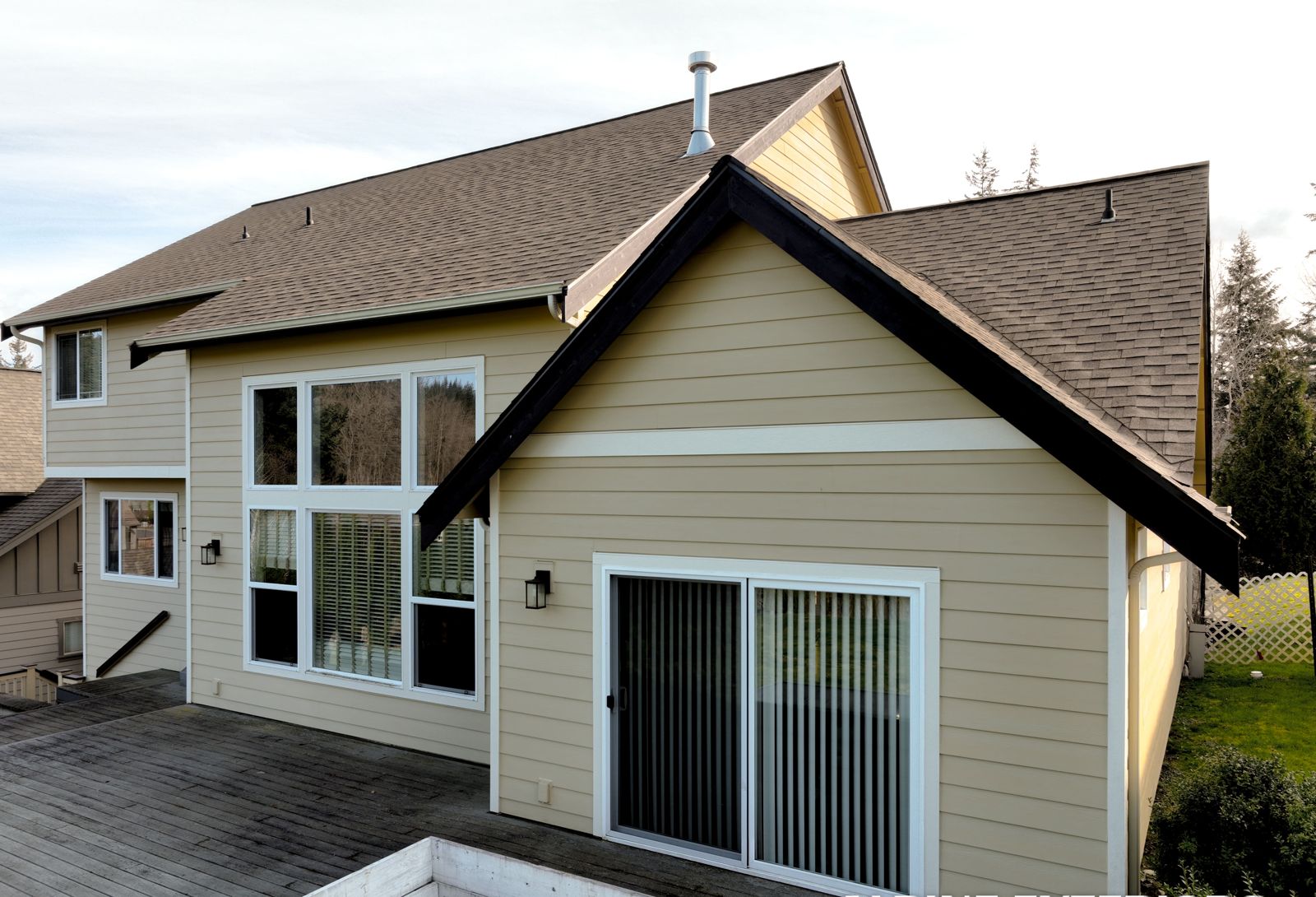
Vinyl siding is an extruded PVC product formed into interlocking panels that hang on the wall rather than being rigidly face-fastened the way fiber cement is. Its biggest advantage is upfront cost: materials and installation are both cheaper than fiber cement, and the panels go up faster since there's no cutting dust to manage and the pieces are lighter to handle. For a rental property, a detached shop, or a house the owner plans to sell within a few years, that lower cost can be the deciding factor, and there's nothing dishonest about choosing it for those reasons.
Vinyl's weaknesses show up more in our specific climate than they would somewhere drier. The panels hang with expansion room built into the nailing slots so they can move with temperature swings, but in the colder pockets of Whatcom County — the Sudden Valley foothills, higher ground, and low spots where frost settles overnight — vinyl becomes noticeably more brittle in freezing weather. A branch strike, a ladder bump, or wind-blown debris can crack a panel in cold conditions in a way it wouldn't at a milder temperature. Because vinyl isn't a rigid air or water barrier on its own, everything depends on the weather-resistant barrier and flashing installed underneath it; if that layer is done poorly, wind-driven rain off the bay can still find its way behind the panels during a strong southwesterly blow. Vinyl also tends to green up with algae and moss faster than fiber cement on shaded, slow-drying walls under big cedars and firs, which describes a lot of Happy Valley lots, especially in the overlapping channels where moisture sits longest. Color choice is another long-term limitation: darker vinyl colors have a history of heat-related warping in sunnier climates, which matters less here, but it also means the lighter, common colors are the ones that perform best over time, so a deep charcoal or forest-green look may push you toward a heavier-gauge, pricier vinyl product or toward fiber cement instead.
Cost, lifespan, maintenance routine, and appearance are the four things nearly every Happy Valley homeowner wants to see side by side, so here's how the two products compare when they're installed and maintained correctly in this climate.
| Factor | James Hardie Fiber Cement | Vinyl Siding |
|---|---|---|
| Cost | Higher material and labor cost; specialized installation adds to the price | Lower material and labor cost; faster, simpler installation |
| Lifespan | Long service life when properly flashed and maintained, often the longest-lasting of the two in wet climates | Moderate service life; can shorten if panels crack from cold-weather impacts or trap moisture behind poor flashing |
| Maintenance | Occasional caulk touch-ups and an eventual repaint; resists rot and holds color well between services | Low routine maintenance and periodic washing, but cracked or faded panels usually need full replacement rather than a spot repair |
| Appearance | Wood-grain or smooth profiles with a factory-baked finish that resists fading and chalking | Wide range of low-cost color and profile options, but finish and color depth are more limited long-term and can look plastic up close |
Happy Valley sits close enough to Bellingham Bay and the Strait that wind-driven rain is a real design consideration, not a theoretical one — storms coming off the water can drive moisture sideways into a wall assembly that isn't detailed correctly, regardless of which siding product sits on the outside. The neighborhood's mature tree cover also means a lot of homes have shaded, slow-drying north and west walls where moss and algae get a head start every fall and don't fully dry out until late spring. And because parts of Whatcom County sit at higher elevation or collect colder overnight air in low spots, freeze-thaw cycling is a genuine factor for anything installed on the outside of a house here, vinyl included.
Given those three conditions together, fiber cement is generally the better long-term match for most Happy Valley homes, particularly on the elevations that take the worst of the weather — the sides that catch the prevailing wind and rain off the water. It resists the wood rot that shows up around window trim and butt joints on older siding, it doesn't get brittle in a cold snap, and it holds paint and color better through our long gray, damp stretches. The Washington State Energy Code also plays into this decision: current prescriptive requirements call for continuous insulation or an equivalent performance path on most exterior walls, and fiber cement integrates cleanly with rigid foam and rainscreen drainage assemblies that help a wall meet code while still shedding bulk water and drying out between storms. Vinyl can be installed over the same assemblies, but the detailing underneath has to be done carefully, since the siding itself isn't adding structural rigidity or an extra drainage plane the way a properly furred fiber cement installation can.
That doesn't make vinyl the wrong answer everywhere in Happy Valley. A detached garage, a wall tucked under a deep eave, or a project where the budget simply doesn't stretch to fiber cement are all reasonable places to use a quality vinyl product and expect a decent, low-maintenance result, especially a mid- or heavy-gauge option rather than the thinnest builder-grade panel. Alpine Exteriors installs both products across Whatcom County and typically walks a Happy Valley homeowner through which elevations are taking the worst of the weather and where a mixed approach — fiber cement on the exposed walls, vinyl on the sheltered ones — can stretch a budget without compromising the parts of the house that need the most protection.
Vinyl becomes more brittle as temperatures drop, and in the colder pockets of Whatcom County — higher ground, low spots where frost settles, and areas farther from the moderating effect of the bay — a hard impact from a branch, a ladder, or wind-blown debris is more likely to crack a panel during a cold snap than it would be on a milder day. This matters more for homes at higher elevation or in exposed rural spots than it does for well-protected walls near the water, where temperatures stay milder.
Both products can pick up green growth on shaded, slow-drying walls, which is common under Happy Valley's tree cover, but fiber cement's cement-based composition and factory finish generally shed algae and moss more easily during a wash than vinyl's channeled panel profile, where spores and moisture tend to sit in the overlaps. Neither product is immune, and periodic gentle washing helps both, but homeowners with heavily shaded north or west walls typically see algae return faster on vinyl than on fiber cement.
For walls that face the prevailing wind and rain off Bellingham Bay and the Strait, most homeowners find the added upfront cost worthwhile because fiber cement resists wood rot, holds its color longer, and doesn't become brittle in cold weather the way vinyl can — all of which lowers the odds of a costly repair or an early re-side. For secondary structures or well-sheltered walls, the cost difference is harder to justify, and a quality vinyl product can be a reasonable, budget-conscious choice instead.
The Washington State Energy Code sets wall assembly performance requirements, generally through continuous insulation or an equivalent path, that apply to new construction and many re-side projects regardless of which siding product is chosen. Both fiber cement and vinyl can be installed as part of a code-compliant assembly, but the rigid foam, rainscreen, and flashing details underneath the siding matter just as much as the siding itself, so it's worth having a contractor confirm the wall assembly meets current code requirements before work begins.
Choosing between James Hardie fiber cement and vinyl siding comes down to your budget, how exposed your walls are, and how long you plan to be in the house — and every Happy Valley property is a little different once you factor in tree cover, elevation, and which direction the weather actually hits. Alpine Exteriors is a licensed Washington siding contractor, license ALPINI751OW, serving Bellingham, Ferndale, Lynden, Blaine, Birch Bay, Sudden Valley, and the islands, and can walk your specific walls with you before recommending a product. Reach out to schedule a site visit and get a written estimate for your home.