
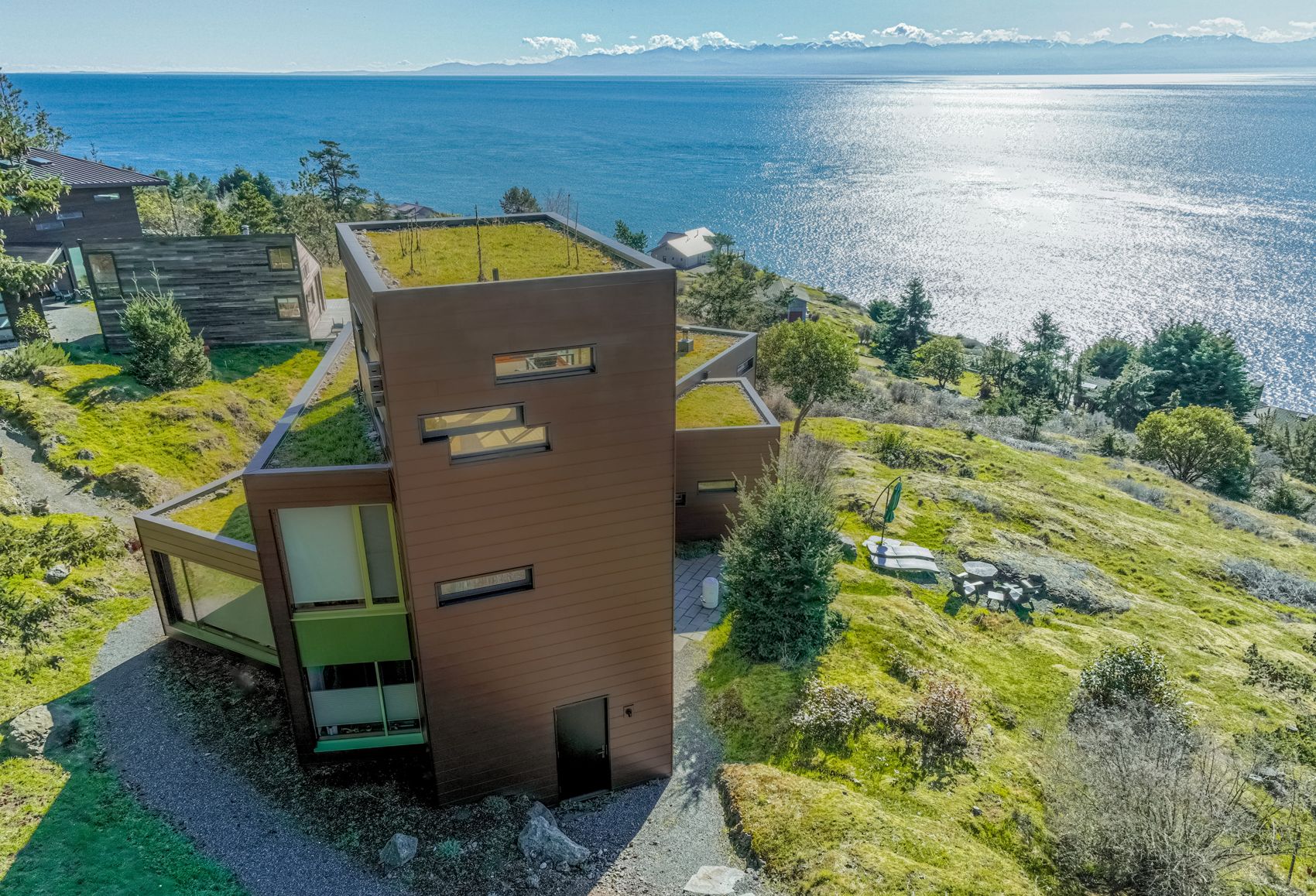
If you own a home on Lummi Island, you already know the weather here plays by different rules than the mainland just across Hale Passage. Wind off the Strait of Georgia drives rain sideways into south and west-facing walls, salt-laden air works on anything metal, and the thick stands of fir and cedar that shade so many island lots keep north walls damp and shaded for weeks at a stretch. Choosing between James Hardie fiber cement siding and vinyl siding isn't just a style decision out here — it's a decision about how your house will hold up against moss, algae, wood rot, and wind-driven rain year after year. Below is an honest, no-hype comparison built around what actually happens to siding on Lummi Island and the rest of Whatcom County, not a generic national breakdown.
For most Lummi Island homes — especially those on exposed bluffs, near the water, or with heavy tree cover and persistent shade — James Hardie fiber cement is the stronger long-term match because it resists moisture intrusion, holds paint, and doesn't soften or warp under the combination of driving rain and salt air. Vinyl siding still has a legitimate place here: it's a reasonable choice for a budget-driven rental property, a detached shop or outbuilding, or a home on a more sheltered inland lot away from direct marine exposure, where its lower upfront cost and low-maintenance color can outweigh its physical limitations. Neither product is wrong in every case — but the island's climate narrows the margin for error more than it would on a typical Whatcom County lot in Bellingham or Lynden.
James Hardie fiber cement is a blend of cement, sand, and cellulose fiber pressed into planks, panels, or shingle-style pieces and then factory-primed or factory-finished with Hardie's ColorPlus coating. It's become the default upgrade siding across Whatcom County over the last decade, and on Lummi Island specifically, it's the material we see holding up best on homes that take a direct hit from wind-driven rain coming off the water. Because it's essentially inert to moisture — it won't absorb water the way wood does, and it won't soften or bow the way vinyl can under heat and pressure — it's well suited to walls that face the Strait directly as well as shaded, damp north elevations tucked under evergreen canopy where moss and algae take hold fastest.
The tradeoffs are real: fiber cement costs more upfront than vinyl, it's heavier and requires proper fastening and flashing detail to perform as designed, and it needs to be painted eventually (ColorPlus finishes last a long time, but a field-painted install or a repaint down the road is a labor cost vinyl simply doesn't have). It also has to be installed correctly to that Hardie spec — gaps, caulking, and clearance at grade matter more here than they do with vinyl, because a poorly detailed install can let moisture behind the boards regardless of how water-resistant the material itself is.
Vinyl siding is PVC formed into interlocking panels that hang on a wall without absorbing moisture into the material itself, and it remains one of the most common sidings in Whatcom County simply because of price and installation speed. It never needs painting, it resists rot outright since there's no organic material for fungus to feed on, and a straightforward vinyl re-side on a modest island home is often the fastest path to a finished exterior on a tighter budget.
Its weak points show up specifically in the conditions Lummi Island delivers in volume. Vinyl panels can warp, buckle, or pull away from the wall under sustained wind-driven rain and gusty exposure, particularly on bluff-front or open-water-facing elevations where wind loads are higher than a typical inland lot. Seams and butt joints are also where wind-driven rain finds its way behind the panel if the underlying weather-resistive barrier and flashing aren't done right, and once moisture gets behind vinyl it can sit there far longer than it would behind a rigid, better-flashed material, since vinyl siding itself doesn't manage bulk water the way its installers intend it to on paper. Cheaper vinyl also tends to fade and become brittle with years of UV and salt air exposure, and on the shaded, damp side of a house, moss and algae will still colonize the panel surface and grow into the laps between courses.
| Factor | James Hardie Fiber Cement | Vinyl Siding |
|---|---|---|
| Installed cost | Higher upfront; typically a meaningful premium per square over vinyl once trim, painting, and proper flashing detail are included | Lower upfront; one of the more budget-friendly full-reside options in the county |
| Lifespan in this climate | Multiple decades when installed and flashed correctly; holds up well against sustained damp and wind-driven rain | Can last a long time on sheltered walls, but exposed, wind-loaded elevations on the island tend to shorten its practical service life |
| Maintenance | Periodic wash-down to keep moss and algae from taking hold, eventual repaint (ColorPlus finishes extend this significantly) | Occasional wash-down for moss and algae, no painting, but panels can need spot repair or replacement after wind events |
| Appearance | Crisp shadow lines, holds paint color true, available in lap, shingle, and panel styles that read as higher-end | Wide color range but a flatter, more uniform look; can look dated faster and doesn't take retouching or color change well |
On Lummi Island, the deciding factor is almost always exposure. A home sitting up on a bluff facing the Strait of Georgia, or anywhere the wind gets a long, open run at a wall before it hits the house, is going to put more stress on siding than a home tucked into the trees on the island's interior. For that exposed category of home, we lean toward James Hardie fiber cement without much hesitation: it holds its fasteners under wind load better than vinyl, it doesn't deform in the heat that can build up on a south-facing wall even in a cool coastal climate, and it gives you a rigid, well-flashed surface that's far less forgiving of the kind of driven rain that finds every gap over a wet Whatcom County winter.
For a shaded, north-facing wall under heavy fir or cedar canopy — common all over the island — the concern shifts from wind to standing moisture and organic growth. Wood siding rots in these spots; vinyl survives but still grows moss in its laps and channels; fiber cement resists the moisture uptake that feeds rot and, kept clean, sheds algae better than either alternative because it isn't feeding organic growth the way wood does and isn't trapping moisture behind loose panel laps the way a poorly sealed vinyl job can.
That said, vinyl isn't automatically the wrong call. If you're sizing a project for a rental cabin, a workshop, or a home on the more sheltered side of the island away from direct marine exposure, and budget is the deciding factor, a quality vinyl product installed with proper house wrap and flashing can perform acceptably for years. We'd rather tell you that honestly than push fiber cement on every job regardless of fit — the goal is a wall assembly that matches the exposure of your specific lot, not a one-size answer.
Either material you choose, the assembly behind it needs to meet the ventilation, moisture-barrier, and insulation requirements of the Washington State Energy Code, which governs wall assembly performance statewide including exterior moisture management details relevant to both vinyl and fiber cement installs. Cutting corners on the water-resistive barrier or flashing behind either product is where most siding failures on the island actually start — not with the siding material itself.
Alpine Exteriors has worked on both fiber cement and vinyl projects throughout Whatcom County, from Bellingham and Ferndale out to Lynden, Blaine, Birch Bay, Sudden Valley, and the islands, and we size the recommendation to the specific lot — not a blanket answer. On Lummi Island in particular, ferry logistics and material lead times mean it pays to get the material choice right the first time rather than re-siding twice.
Vinyl can hold up reasonably well on sheltered lots, but on bluff-front or open-water-facing homes where wind-driven rain hits directly, vinyl panels are more prone to flexing, popping loose at the nailing hem, or letting water past the seams than a rigid fiber cement product. If your lot has a clear, open exposure to the water, that's the strongest argument for stepping up to James Hardie fiber cement.
Yes — moss and algae will colonize almost any siding surface in a shaded, damp spot on Lummi Island, including fiber cement and vinyl. The difference is in how each material handles that growth over time: fiber cement doesn't feed the organic growth or soften from repeated moisture the way wood does, while vinyl resists rot but can trap growth in its overlapping laps. Either way, plan on an occasional gentle wash-down of north-facing and tree-shaded walls.
Fiber cement generally carries a meaningful cost premium over vinyl once you account for the material itself, the additional labor to install and flash it correctly, and painting if you choose a field-finished product rather than factory ColorPlus color. We can't quote an exact number without seeing the home, but expect fiber cement to sit noticeably above a comparable vinyl project on a per-square basis, offset over time by fewer repairs and a longer service life on exposed walls.
The material matters less than the installation detail when it comes to wind-driven rain. Both fiber cement and vinyl need correct house wrap, flashing at windows, doors, and penetrations, and proper fastening to perform as intended under Washington State Energy Code moisture-management expectations. An installer unfamiliar with marine-exposure detailing can undermine even a premium fiber cement product, so experience with island and waterfront conditions matters as much as the material choice itself.
If you're weighing James Hardie fiber cement against vinyl siding for a home on Lummi Island or elsewhere in Whatcom County, Alpine Exteriors can walk your specific lot, look at its wind exposure and shade pattern, and give you a straightforward recommendation rather than a one-size answer. Alpine Exteriors holds Washington state contractor license ALPINI751OW and works throughout Bellingham, Ferndale, Lynden, Blaine, Birch Bay, Sudden Valley, and the islands. Reach out to schedule a walkthrough and get a real cost range for your project.