
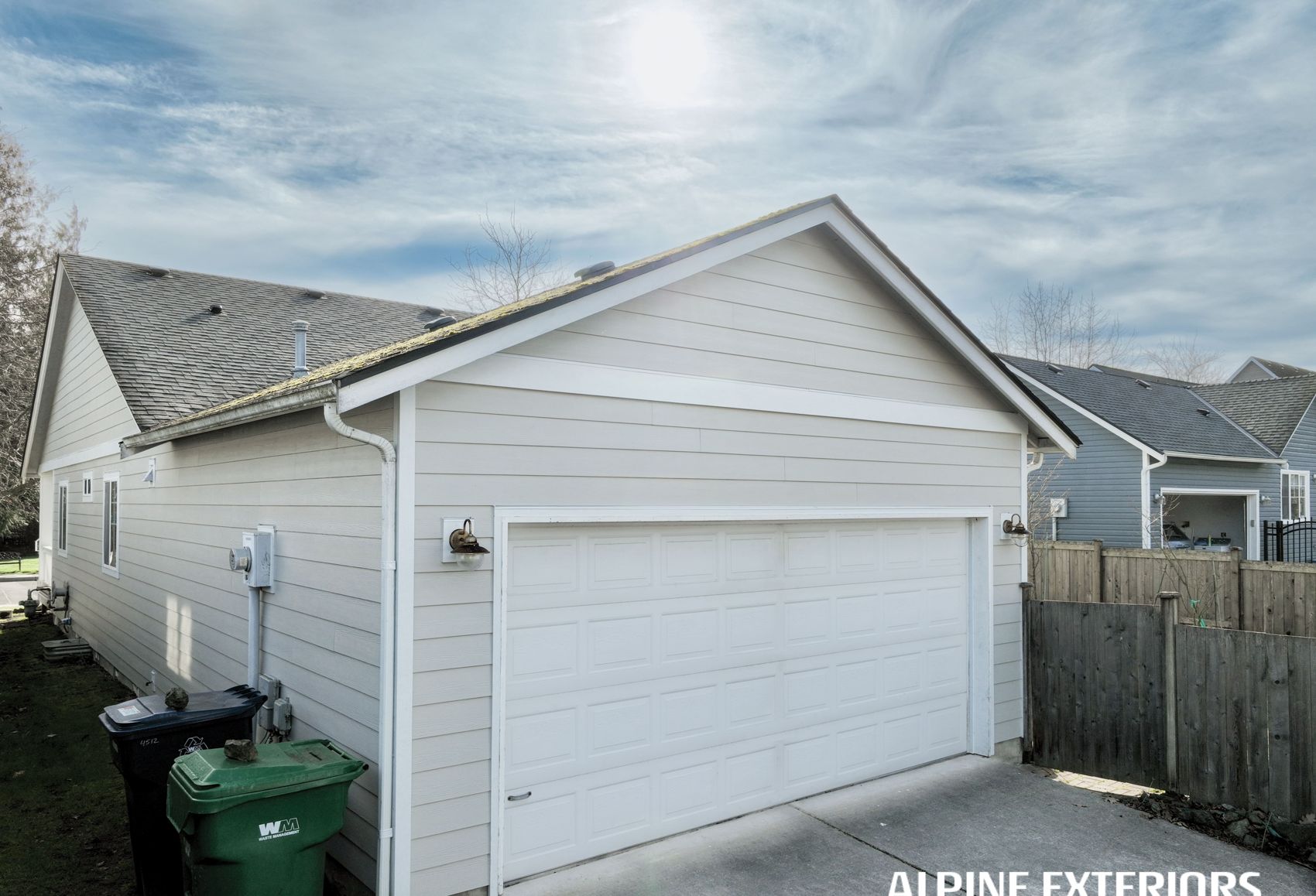
Maple Falls sits at the base of the Mt. Baker foothills, which means most homes here deal with more shade, more standing moisture, and colder winter swings than siding sitting closer to Bellingham Bay. If your house is tucked under a conifer canopy, has north-facing walls that rarely see direct sun, or you're planning to own it for the next twenty-plus years, James Hardie fiber cement is usually the better long-term match for this specific microclimate. If your home gets more open sun exposure, your budget is tighter up front, or you're renovating a rental or a vacation cabin you don't plan to hold onto indefinitely, vinyl siding remains a reasonable and honest choice, as long as it's installed with attention to flashing and expansion gaps for cold-weather movement. Neither product is wrong for Whatcom County — they solve different problems at different price points, and the right pick depends on your home's exposure, your timeline, and how much maintenance you're willing to do.
Fiber cement is a blend of Portland cement, sand, and cellulose fibers pressed into planks or panels, then cured. Because it's largely mineral rather than organic, it doesn't absorb water the way wood does and it won't rot, which matters in a town that sees a genuinely wet nine or ten months a year. James Hardie also engineers specific product lines by climate zone through its HardieZone system, and the products sold into the Pacific Northwest are formulated with local humidity and rainfall in mind rather than being a generic national product. For a foothill town like Maple Falls, where moss and algae take hold quickly on any shaded, damp surface, fiber cement's mineral composition gives mold and mildew far less to feed on compared to organic siding materials, and its factory-applied ColorPlus finish is baked on rather than sprayed, which helps it shed grime and hold color longer between cleanings.
Fiber cement is also heavy — a full board can weigh several times what a comparable length of vinyl weighs — which is part of why it resists wind-driven rain intrusion so well along exposed walls, but it also means installation is more labor-intensive. Boards need to be cut with fiber-cement-rated blades (or shears) to control silica dust, fastened correctly to avoid cracking, and caulked and painted at trim and butt joints unless you're using a pre-finished ColorPlus product. That labor shows up in the estimate. It's also not a fully maintenance-free product: even ColorPlus finishes benefit from a gentle wash every year or two to keep moss from getting a foothold in shaded areas, and standard-primed fiber cement will need repainting on a longer cycle, typically somewhere in the 10 to 15 year range depending on sun and moisture exposure, sooner on north-facing walls that stay damp longest.
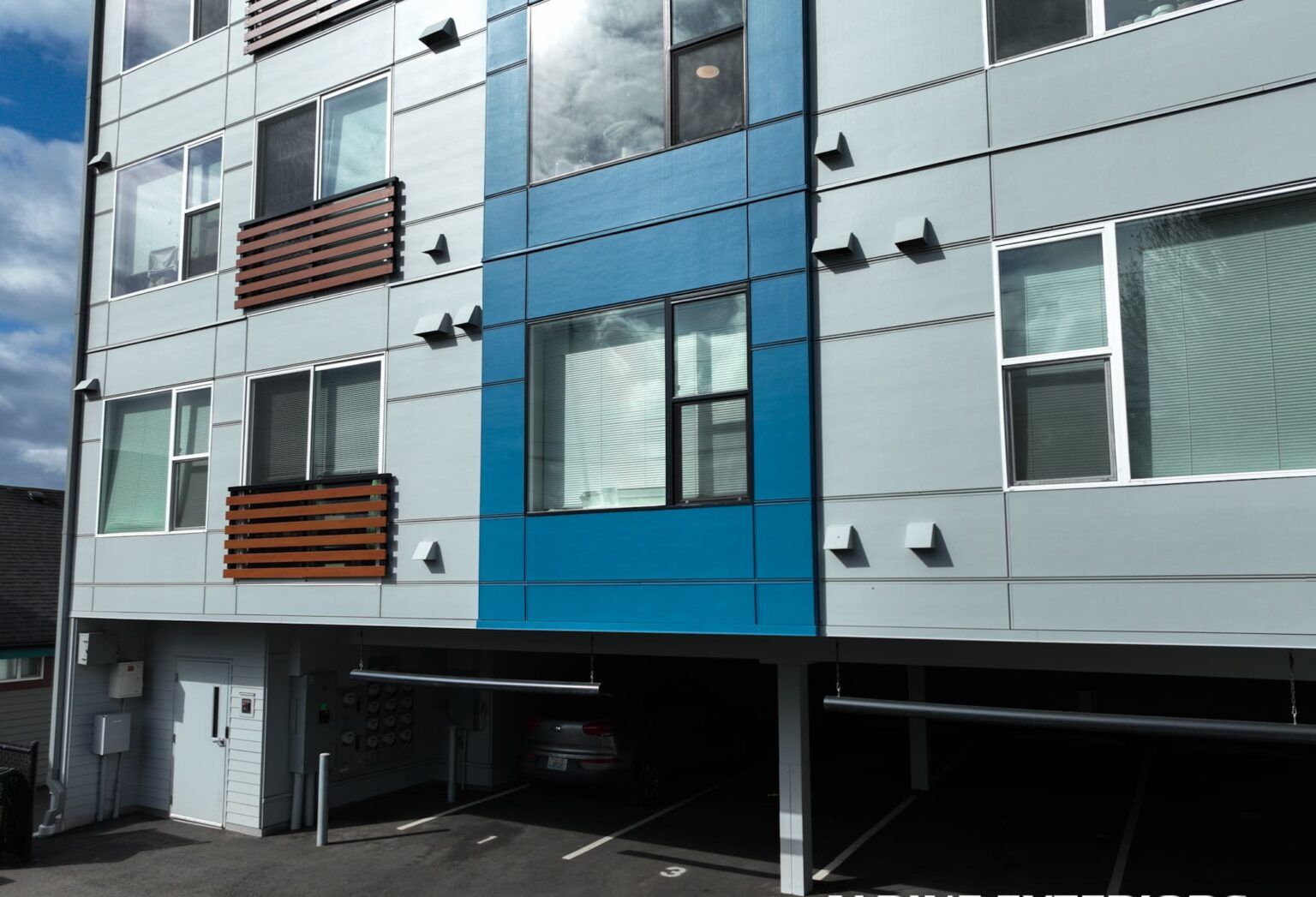
Vinyl siding is extruded PVC, formed into overlapping panels that lock together and hang on the wall rather than being face-nailed tight the way wood or fiber cement is. That loose-hang installation is intentional: vinyl expands and contracts with temperature more than fiber cement does, and panels need room to move or they'll buckle. In a foothill climate like Maple Falls, where winter nights can drop well below freezing while summer afternoons still warm up nicely, that expansion and contraction happens more aggressively than it would along the milder immediate coastline. Vinyl that's installed too tight, or that's older and has already gone brittle from years of cold cycling, is more prone to cracking or popping out of its track during a hard freeze, particularly if something bumps it, like a dropped ladder or ice sliding off a roofline above it.
On the upside, vinyl is genuinely low-maintenance in the sense that matters most to a lot of homeowners: it never needs painting, it's one of the more affordable siding materials on a per-square-foot basis, and installation is faster and less labor-intensive than fiber cement, which keeps labor costs down too. Because Whatcom County skies are overcast more often than not, UV fading — usually vinyl's biggest long-term cosmetic weakness in sunnier climates — is a smaller issue here than it would be in, say, eastern Washington. The real vulnerability in this specific area isn't sun, it's moisture management behind the panels. Vinyl siding doesn't stop water on its own; it relies entirely on the water-resistive barrier and flashing details underneath it to keep rain out of the wall assembly. On an older Maple Falls home with worn or missing house wrap, re-siding in vinyl without addressing what's underneath just traps the same moisture problem behind a new face.
| Factor | James Hardie Fiber Cement | Vinyl Siding |
|---|---|---|
| Installed cost | Roughly $9-$16+ per sq. ft. installed, depending on profile, trim detail, and ColorPlus vs. field-painted finish | Roughly $4-$9 per sq. ft. installed, depending on panel thickness and profile |
| Typical lifespan | Often 30-50 years with reasonable upkeep; the panel itself can outlast several paint cycles | Often 20-30 years, shorter if panels see repeated freeze-thaw stress or physical impact |
| Maintenance | Occasional gentle washing to control moss/algae; repainting roughly every 10-15 years unless ColorPlus finish is still in warranty | Occasional washing; no painting required, but cracked or warped panels usually need full replacement rather than repair |
| Appearance | Crisper shadow lines, holds a painted or wood-grain look convincingly, available in lap, shingle, and panel styles | Wide color and profile range, but seams and panel flex are more visible up close on longer wall runs |
Maple Falls isn't Bellingham or Blaine. It sits inland and uphill, tucked closer to the Mt. Baker foothills than to open water, so wind-driven rain coming off Bellingham Bay or the Strait of Georgia — a real concern for homes out toward Birch Bay or the islands — is less of a factor here. What does matter in Maple Falls is elevation-driven freeze-thaw cycling, dense tree cover that keeps north and east walls shaded and damp for long stretches, and rainfall totals that are high even by Whatcom County standards. Those three conditions together are exactly the scenario where fiber cement earns its higher price tag: it won't rot under a shaded, mossy wall the way wood can, and it doesn't get brittle and crack the way vinyl can during a hard January freeze at higher elevation.
That said, we'd be overselling it to say vinyl has no place in Maple Falls. A well-built, well-sited cabin with good sun exposure, adequate roof overhangs keeping the walls drier, and a competent installer who respects vinyl's expansion gaps and flashes penetrations correctly can perform fine for two or three decades. If you're weighing this for a vacation property you plan to sell or pass on within the next ten to fifteen years, the cost difference between the two products may matter more than the difference in ultimate lifespan. Where we push clients toward fiber cement without much hesitation is on full-time residences with heavy shade, on any wall that catches runoff or standing snowmelt, and on homes where a prior vinyl installation already shows cracked panels or visible moss buildup in the panel laps — that's usually a sign the wall assembly underneath needs attention regardless of which siding goes back up.
Either product, installed correctly, needs to work within the Washington State Energy Code's wall assembly and continuous insulation requirements for this climate zone. That's less about which siding material you choose and more about what goes underneath it — house wrap, flashing at windows and doors, and rigid insulation where the prescriptive path calls for it. Alpine Exteriors treats that underlying assembly as part of the job on every siding install in Whatcom County, not an afterthought bolted on after the pretty part goes up, because a beautiful new exterior over a poorly flashed wall just delays the next repair rather than preventing it.
In practice, yes, mainly because fiber cement is a mineral-based product with a factory-baked finish, so there's less organic material and less surface texture for spores to grip onto compared to some vinyl profiles, and it holds up better to the occasional wash. Neither product is immune — anything on a shaded, damp wall in a conifer-heavy area like Maple Falls will eventually collect some moss or algae film — but fiber cement generally cleans up more easily and doesn't pit or degrade from cleaning the way older or thinner vinyl panels sometimes do.
It can, particularly older panels or lower-grade vinyl that's already gone through many freeze-thaw cycles, or siding installed too tight without room to expand and contract. Impact matters too — vinyl that's brittle from cold is far more likely to crack if it takes a hit from falling ice, a ladder, or debris than the same panel would in warmer weather. Quality vinyl installed with correct expansion gaps holds up reasonably well, but it's still more cold-sensitive than fiber cement.
The energy code governs the wall assembly — insulation levels, air sealing, and in many cases a continuous insulation layer — rather than dictating siding material directly. Both fiber cement and vinyl can be installed over a code-compliant wall assembly; the code consideration is really about making sure whatever insulation and barrier system sits behind either siding meets the prescriptive or performance path requirements for this climate zone, which is worth confirming with your contractor before work starts rather than after the siding is already up.
As a rough planning range, fiber cement often reaches 30 to 50 years before it needs full replacement, though repainting happens on a shorter cycle along the way. Vinyl more commonly lands in the 20 to 30 year range, sometimes less if a wall sees heavy freeze-thaw exposure or repeated impact damage. Actual results depend heavily on installation quality, sun and shade exposure, and how well the wall was flashed and wrapped before either material went up, so treat these as ranges rather than guarantees.
The right siding choice for a shaded, foothill lot in Maple Falls can look different from the right choice for an open, sunny lot two miles away, and the only way to know for sure is to look at your specific walls, exposure, and existing wall assembly. Alpine Exteriors has worked on homes across Whatcom County, from Bellingham and Ferndale down to Lynden, Blaine, Birch Bay, Sudden Valley, and out to the islands, and we're happy to walk your property, point out what we actually see, and give you a straightforward comparison between fiber cement and vinyl for your situation rather than a generic pitch. Alpine Exteriors is licensed in Washington under contractor license ALPINI751OW — reach out for a free, no-pressure estimate before you commit to either material.