
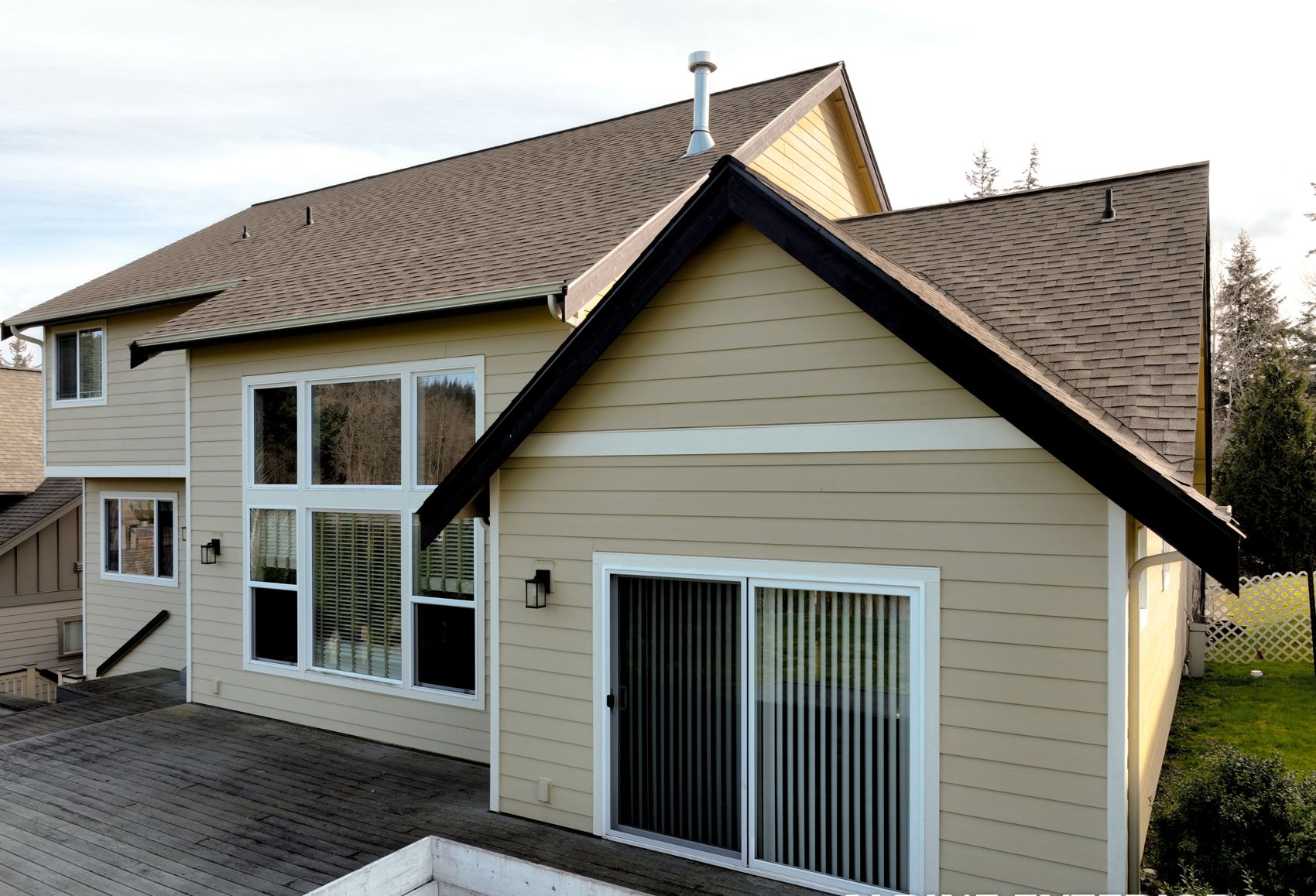
Silver Beach sits right on Bellingham Bay, which means homes here take on a specific combination of punishment: wind-driven rain coming off the water, near-constant marine moisture for much of the year, and the shade from mature evergreens that keeps north-facing walls damp long after a storm has passed. When a homeowner in this neighborhood asks us whether to re-side with James Hardie fiber cement or vinyl, the honest answer is that both products can work — but they work differently, and the conditions specific to living on the bay tend to tip the decision more than most siding comparisons online will tell you. This page walks through both options honestly, including the real drawbacks of each, so you can make a decision that fits your house, your budget, and how long you plan to own it.
If your home sits close to the water, faces open exposure toward the bay or the Strait, has a shaded roofline that stays wet, or you plan to own the house for the long haul and want to minimize repainting and moisture callbacks, James Hardie fiber cement is generally the better fit for Silver Beach. It handles wind-driven rain and constant dampness better than vinyl over a 20-30 year window, and it resists the moss and algae staining that shows up fast on shaded, damp siding in this part of Whatcom County.
If your home is more sheltered — tucked behind other houses or a tree line, away from direct bay exposure — or budget is the deciding factor and you're comfortable with vinyl's shorter practical lifespan, vinyl siding remains a reasonable, lower-cost option that still meets Washington State Energy Code requirements when properly insulated behind it. Neither product is wrong; the right one depends on how exposed your specific lot is and how long you intend to keep the house.
James Hardie fiber cement siding is a blend of cement, sand, and cellulose fiber, formed into planks or panels and factory-finished with a baked-on coating (Hardie's ColorPlus finish) or left primed for field painting. It's become a common choice across the Pacific Northwest specifically because it doesn't absorb moisture the way wood does and doesn't expand and contract with temperature swings the way vinyl does.
For a Silver Beach property, the practical considerations are:
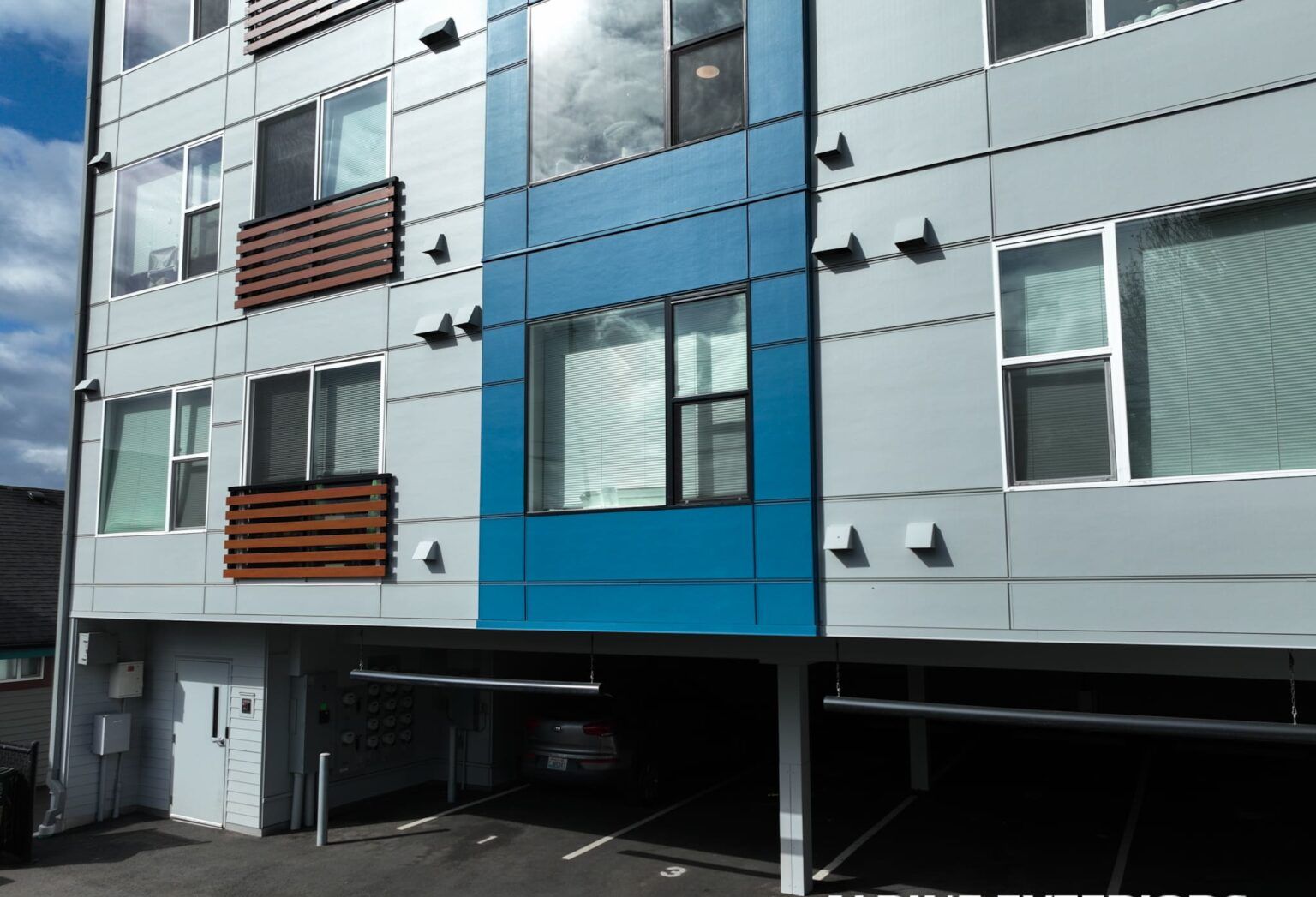
Vinyl siding is a PVC-based product that's been the default siding choice in the Pacific Northwest for decades, largely because of cost and low maintenance. Modern vinyl has improved significantly in thickness and impact resistance compared to what was commonly installed in this area 20-30 years ago.
For a Silver Beach property, the honest picture is:
| James Hardie Fiber Cement | Vinyl Siding | |
|---|---|---|
| Installed cost | Higher — typically the more expensive option per square foot installed, due to material weight and labor | Lower — generally the more budget-friendly option upfront |
| Expected lifespan in this climate | Long-term, often outlasting vinyl by a decade or more when properly installed and maintained | Moderate — solid performance, but generally a shorter practical service life than fiber cement in a marine climate like this one |
| Maintenance | Periodic repainting (roughly every 10-15+ years depending on exposure) plus occasional caulk inspection at joints | Minimal — occasional washing, no repainting, but panels can crack and need spot replacement |
| Moisture / wind-driven rain resistance | Strong — dimensionally stable, doesn't warp or rot from repeated soaking | Moderate — depends heavily on correct flashing and installation detail behind the panels |
| Moss and algae resistance | Better on shaded, damp walls; still needs occasional cleaning | Can show algae and moss staining faster on north-facing or tree-shaded elevations |
| Appearance | Convincing wood-grain or smooth finishes, holds crisp shadow lines well, paintable | Wide color range, smooth or wood-textured, but color is fixed and can look less substantial up close |
Silver Beach isn't a uniform neighborhood from a siding-performance standpoint — a home three streets back from the water with tree cover behaves very differently than a home with an open sightline down the bay. That's the first thing worth walking your property for before deciding anything.
For homes with direct or partial exposure to wind coming off Bellingham Bay or the Strait, we lean toward recommending James Hardie fiber cement. The wind-driven rain that comes with a southwesterly storm here isn't gentle, and it hits siding at an angle that tests lap seams and corner details hard. Fiber cement's dimensional stability and resistance to moisture intrusion give it a real edge on those exposed walls, and the reduced risk of hidden rot behind the siding matters given how much annual rainfall this area gets. We've also found that homes with heavy tree cover — common throughout Silver Beach's more wooded lots — do better long-term with fiber cement because it doesn't feed moss and algae growth as readily as vinyl on perpetually damp, shaded elevations.
That said, we don't push fiber cement on every house. If your home is well-sheltered, budget is a firm constraint, or you're siding a rental or secondary structure where a 15-20 year service life is genuinely sufficient, vinyl remains a legitimate choice that meets Washington State Energy Code requirements for the building envelope when it's installed over proper insulation and a compliant water-resistive barrier. The mistake we see most often isn't choosing vinyl — it's choosing a thin, older-style vinyl product installed without attention to flashing and corner detail, which is what actually causes the moisture problems people end up blaming on the material itself.
Alpine Exteriors has installed both products across Whatcom County, from Bellingham and Silver Beach out to Ferndale, Lynden, Blaine, Birch Bay, Sudden Valley, and the islands, and we'll tell you plainly during a site walk which one makes sense for your specific exposure rather than defaulting to whichever has a better margin. As a licensed Washington contractor (ALPINI751OW), we also handle the flashing, window, and door detailing correctly regardless of which siding you choose — because that detailing, more than the siding material itself, is usually what determines whether a home stays dry for the next 20 years.
In our experience across Whatcom County, yes, particularly on walls with direct bay or Strait exposure. Fiber cement is dimensionally stable and doesn't rely on loose-fitting overlapping panels the way vinyl does, so it's less prone to moisture working behind the surface during a sustained wind-driven storm. Vinyl can still perform well, but it depends more heavily on correct flashing and installation behind the panels to keep water out under those conditions.
It can, though it's not common in a typical winter here since we rarely see extreme sustained cold right on the water. During the sharper cold snaps that occasionally reach the foothills and inland areas, older or thinner vinyl can become brittle and crack from an impact that wouldn't have damaged it in milder weather. Newer, thicker vinyl products handle this better than the vinyl commonly installed 15-20 years ago, but it's still a real limitation compared to fiber cement.
Fiber cement typically costs more both in material and installation, since it's heavier, requires different tools, and takes more labor time to cut, fasten, and finish correctly. We don't publish fixed per-square-foot numbers because it varies with your home's size, trim detail, and whether tear-off of existing siding is needed, but we'll always give you a clear written estimate for your specific project before any work starts.
Siding itself is a cladding layer, not the primary insulation or air barrier, but it does interact with how your wall assembly meets Washington State Energy Code requirements. Whichever siding you choose, what matters most for compliance is what's behind it — the water-resistive barrier, insulation, and air sealing. We make sure that assembly is done correctly regardless of whether you choose fiber cement or vinyl.
If you're weighing James Hardie fiber cement against vinyl for a home in Silver Beach or anywhere else in Whatcom County, the best next step is a site walk rather than a guess based on a comparison chart. Alpine Exteriors will look at your home's actual exposure to wind and rain, the condition of your current siding, and your budget, then give you a straightforward recommendation — including telling you if vinyl is genuinely the smarter choice for your situation. Contact Alpine Exteriors to schedule an assessment and get a written estimate for your project.