
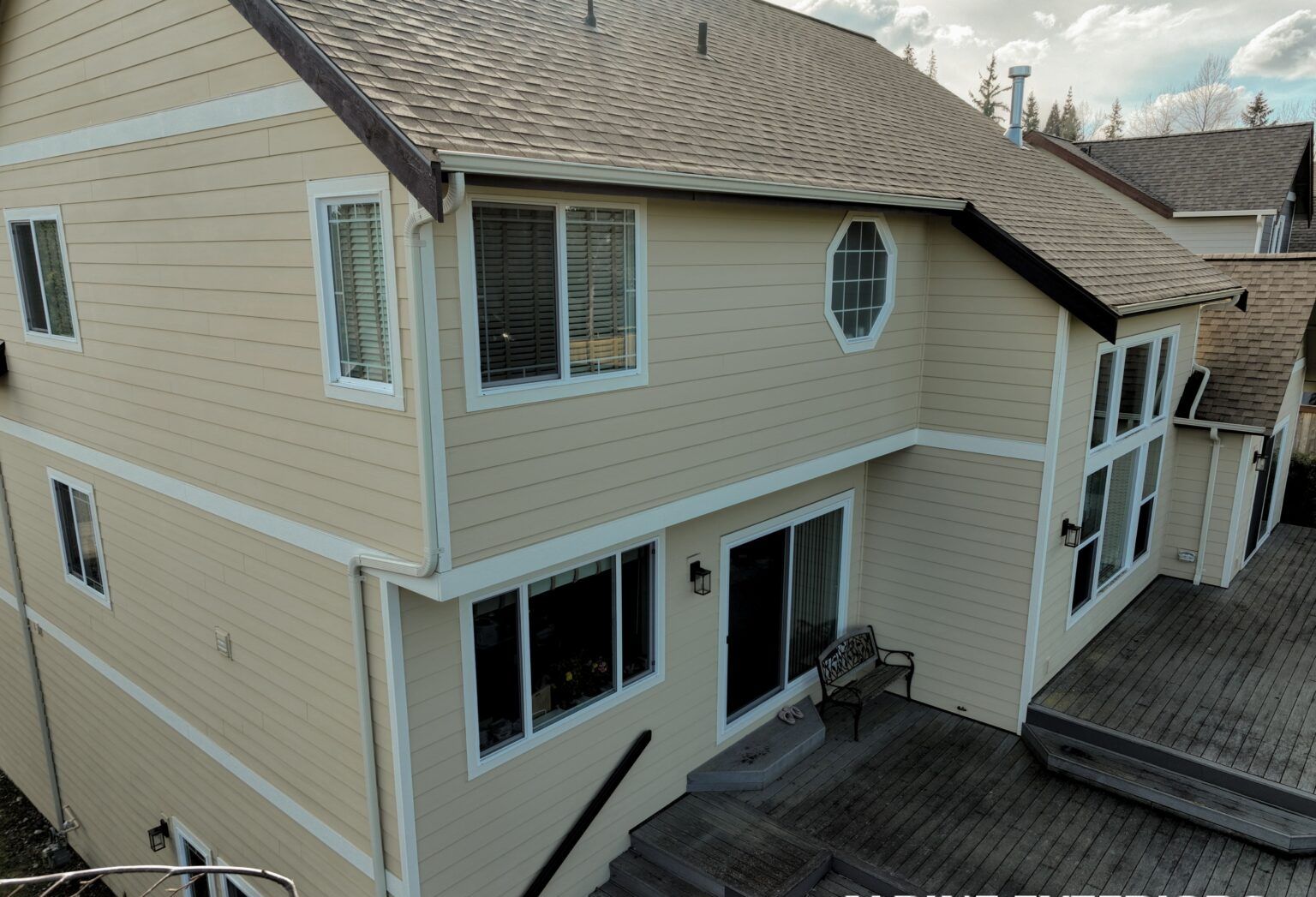
Cedar lap siding is one of the most requested upgrades we see across Bellingham, Ferndale, Lynden, Blaine, Birch Bay, Sudden Valley and the islands, and for good reason: real wood grain, a warm look that fits both farmhouses and waterfront homes, and a material that has proven itself in this climate for generations. It is also one of the harder products to price accurately from a distance, because the labor, prep work, and finish schedule vary so much from one Whatcom County property to the next. This page walks through realistic cost ranges, the variables that move those ranges, and what should be in a quote before you sign anything. Numbers below are ranges only, not quotes — every home is different, and a proper number only comes from someone measuring your walls in person.
For a typical single-family home in Whatcom County, cedar lap siding projects tend to land in a wide range once you account for tear-off, moisture barrier work, trim, and finishing. Homes closer to the water — Birch Bay, Blaine, Semiahmoo, and the bay-facing sides of Bellingham — often sit toward the higher end of that range because wind-driven rain off Bellingham Bay and the Strait of Georgia demands more careful flashing and water-resistive barrier detailing. Inland homes in Lynden, Ferndale, or the Sudden Valley foothills can sometimes land lower, though foothill properties bring their own freeze-thaw considerations that affect fastener choice and caulking.
| Cost Factor | Low End | High End |
|---|---|---|
| Tear-off and disposal of old siding (per house) | Lower cost when siding comes off in large sections with no hidden rot | Higher cost when layers of old siding, wood shakes, or rotted sheathing are found underneath |
| House wrap / weather-resistive barrier | Standard single-layer wrap on a straightforward wall | Rainscreen or drainage-mat systems, often specified on bay-facing or south/west walls |
| Cedar material grade and profile | Standard-grade bevel or Dolly Varden cedar | Clear or premium vertical-grain cedar, wider exposures, custom profiles |
| Installation labor | Simple rectangular home, easy access, minimal cutting | Complex rooflines, multiple stories, dormers, tight island-lot access |
| Trim, corners, and flashing detail | Basic trim package | Custom corner boards, extra kick-out flashing, window and door detailing for wind-driven rain |
| Finish (stain, paint, or clear sealer) | Factory pre-primed or single-coat field finish | Multi-coat stain or paint system with premium products for UV and moisture protection |
| Repair of hidden wood rot or damaged sheathing | None found — walls are sound | Significant rot repair, especially on north-facing walls or under old caulked joints |
The single biggest swing factor we see in this region is what is hiding behind the old siding. Whatcom County's persistent rain, combined with moss and algae growth on shaded or north-facing walls, means older homes — particularly those with wood siding installed decades ago and repainted repeatedly without addressing failed caulk joints — often have some degree of sheathing or framing rot by the time the old siding comes off. A home in Bellingham's older neighborhoods or a farmhouse near Lynden that has been well-maintained might need little more than standard prep. A similar-aged home near Birch Bay that has taken direct wind-driven rain off the Strait for years may need real carpentry repair before a single piece of new cedar goes up. There is no way to know for certain until the old material is removed, which is why a fair contract should spell out a per-square-foot rate for any rot repair discovered along the way rather than leaving it as a vague allowance.
Height and roofline complexity matter too. A single-story rambler in Ferndale with a simple gable roof installs faster and more cheaply than a two-story home in Sudden Valley with dormers, multiple roof planes, and steep site access. Island jobs — Lummi Island, the San Juans, and similar water-access properties — carry their own logistics cost: ferry schedules, barge freight for materials, and limited crew time on-site all factor into labor pricing in a way that mainland Whatcom County jobs don't.
Cedar grade is the other major lever. Clear, vertical-grain cedar with minimal knots costs meaningfully more than standard-grade cedar, and wider-exposure profiles use less material per square foot of coverage but require more precise installation to keep water from tracking behind the boards. Finish choice matters as well: a solid-color stain or paint system generally holds up better against this region's UV-filtered but near-constant moisture exposure than a clear or semi-transparent finish, but it also costs more up front and needs a recoat cycle to maintain that protection.
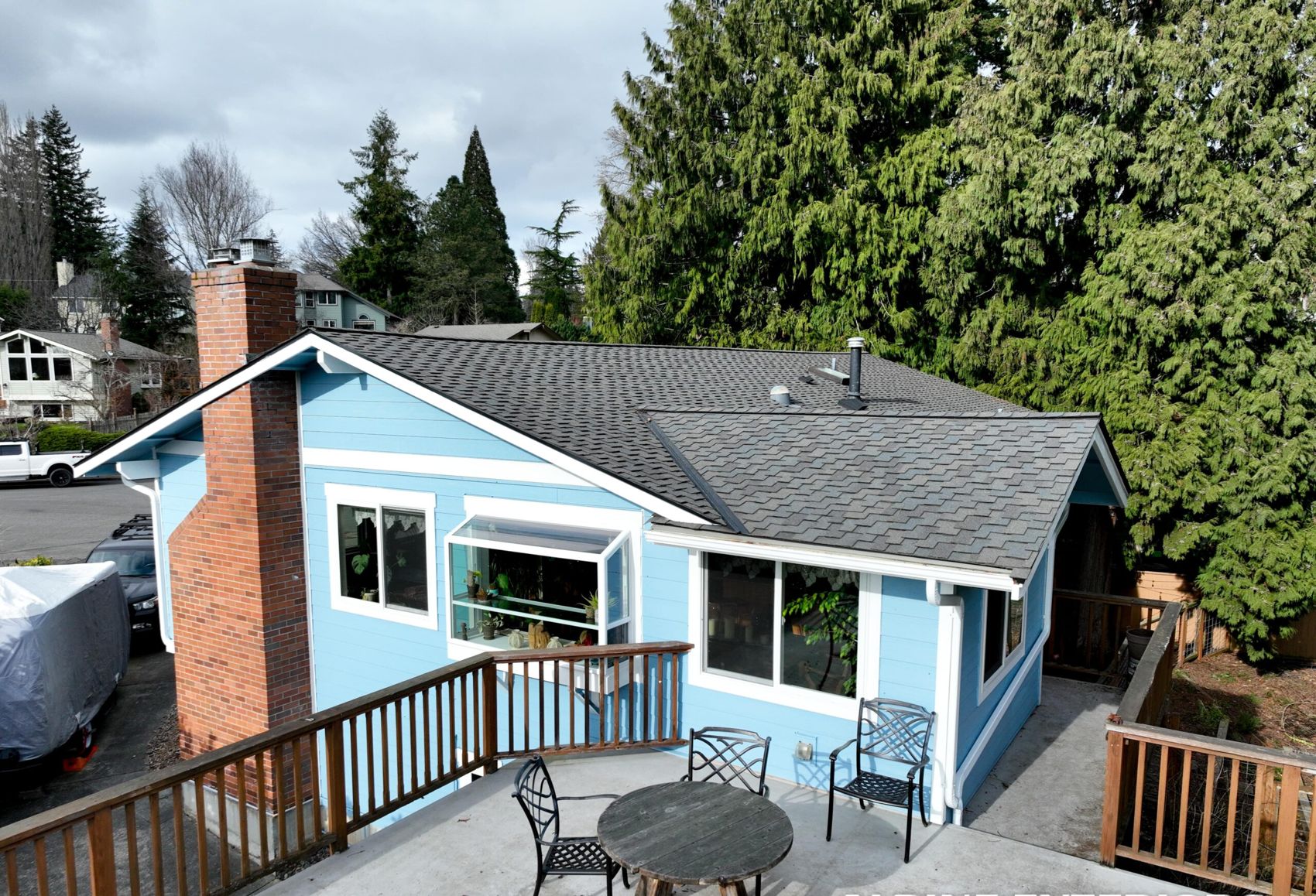
A complete cedar lap siding quote for a Whatcom County home should spell out more than a single lump-sum number. At minimum, it should include the cedar grade, species, and profile being installed; the weather-resistive barrier or rainscreen system specified, since bay-facing and exposed walls in this region often warrant more than a basic wrap; flashing details at windows, doors, and roof-to-wall transitions, which matter enormously given how much of our rain arrives sideways rather than straight down; the finish system, including number of coats and whether it is shop-applied or field-applied; a defined process and rate for handling any rot or sheathing damage found during tear-off; and a realistic project timeline that accounts for our wet-season weather windows. Anyone quoting siding work in this county should also be able to speak plainly about how they handle the code-required continuous insulation and water-resistive barrier requirements under the Washington State Energy Code, since those requirements affect both the wall assembly and the labor involved in installing it correctly.
Alpine Exteriors builds our quotes around these same line items rather than a single bundled figure, specifically so homeowners can see where their money is going and compare that against other bids on an apples-to-apples basis.
When you're holding two or three bids side by side, resist the urge to simply pick the lowest number. Start by confirming that every bid is quoting the same cedar grade and profile — a bid that looks 20 percent cheaper is often quoting a lower material grade or a thinner exposure, not a better deal. Next, check whether rot repair and sheathing replacement are included as a defined rate or buried as "included if minor," which can turn into a costly change order once the walls are opened up. Ask each contractor what weather-resistive barrier system they intend to use and why, particularly for any wall facing the water or prevailing wind, since this is where a lot of the region-specific value actually lives. Finally, ask about warranty coverage on both labor and finish, and confirm the contractor is licensed to do this work in Washington — Alpine Exteriors carries WA contractor license ALPINI751OW, and any legitimate siding contractor in this state should be able to give you their license number without hesitation.
It's also worth asking for references on homes similar to yours in exposure — a quote based on inland, sheltered installs doesn't necessarily reflect what a bay-facing or island property will require.
Cedar siding is a significant exterior investment, and most homeowners in this region either finance the project through a home improvement loan, a HELOC, or, in some cases, an insurance claim when the siding replacement follows documented storm or water damage. If you're pursuing an insurance-related claim, keep in mind that most policies distinguish between sudden damage and gradual deterioration — long-term wood rot from years of moisture exposure is typically treated as a maintenance issue rather than a covered event, while damage tied to a specific storm or wind incident may be handled differently. It's worth having a contractor document the condition of the siding and any underlying damage before work begins, since that record can matter if you do pursue a claim. On the financing side, ask any contractor you're considering whether they work with third-party lenders or offer a payment schedule tied to project milestones (materials ordered, tear-off complete, install complete, finish complete) rather than requiring a large payment up front.
Exposure is the main reason. Homes facing Bellingham Bay, the Strait of Georgia, or open water in Blaine and Birch Bay tend to need more robust flashing, drainage detailing, and sometimes rainscreen systems to handle wind-driven rain, which adds labor and material cost compared to a sheltered, inland home in Lynden or Ferndale with the same square footage.
It depends on your priorities. Cedar offers a natural look that many homeowners specifically want, and it performs well here when properly installed and finished, but it does require a recoat or restain cycle over time to keep its moisture protection intact, unlike some engineered alternatives. If low maintenance is your top priority, it's worth discussing fiber cement alongside cedar before deciding; if the look and feel of real wood matters to you, cedar remains a solid, proven choice for this region.
It can be substantial, and it's genuinely unpredictable until the old siding is removed. Homes with a history of moss and algae buildup, failed caulk joints, or previous water intrusion — especially on north-facing or shaded walls — are more likely to have sheathing or framing rot underneath. This is why a fair contract defines a repair rate up front instead of leaving it open-ended.
It can, particularly on projects that go beyond a simple like-for-like replacement. Depending on the scope of work, code requirements around continuous insulation and water-resistive barriers may apply, which affects both material choice and installation labor. A contractor familiar with local permitting should be able to explain how this applies to your specific project before work begins.
Every home in Whatcom County carries a different combination of exposure, roofline, and existing wall condition, which is exactly why the ranges above are a starting point rather than a final answer. Alpine Exteriors has priced and installed cedar lap siding across Bellingham, Ferndale, Lynden, Blaine, Birch Bay, Sudden Valley, and the surrounding islands, and we're glad to walk your specific property, point out what's driving your number up or down, and put together a detailed, itemized quote so you know exactly what you're paying for. Reach out to schedule a walk-through and get a real, project-specific estimate rather than a generic figure.