
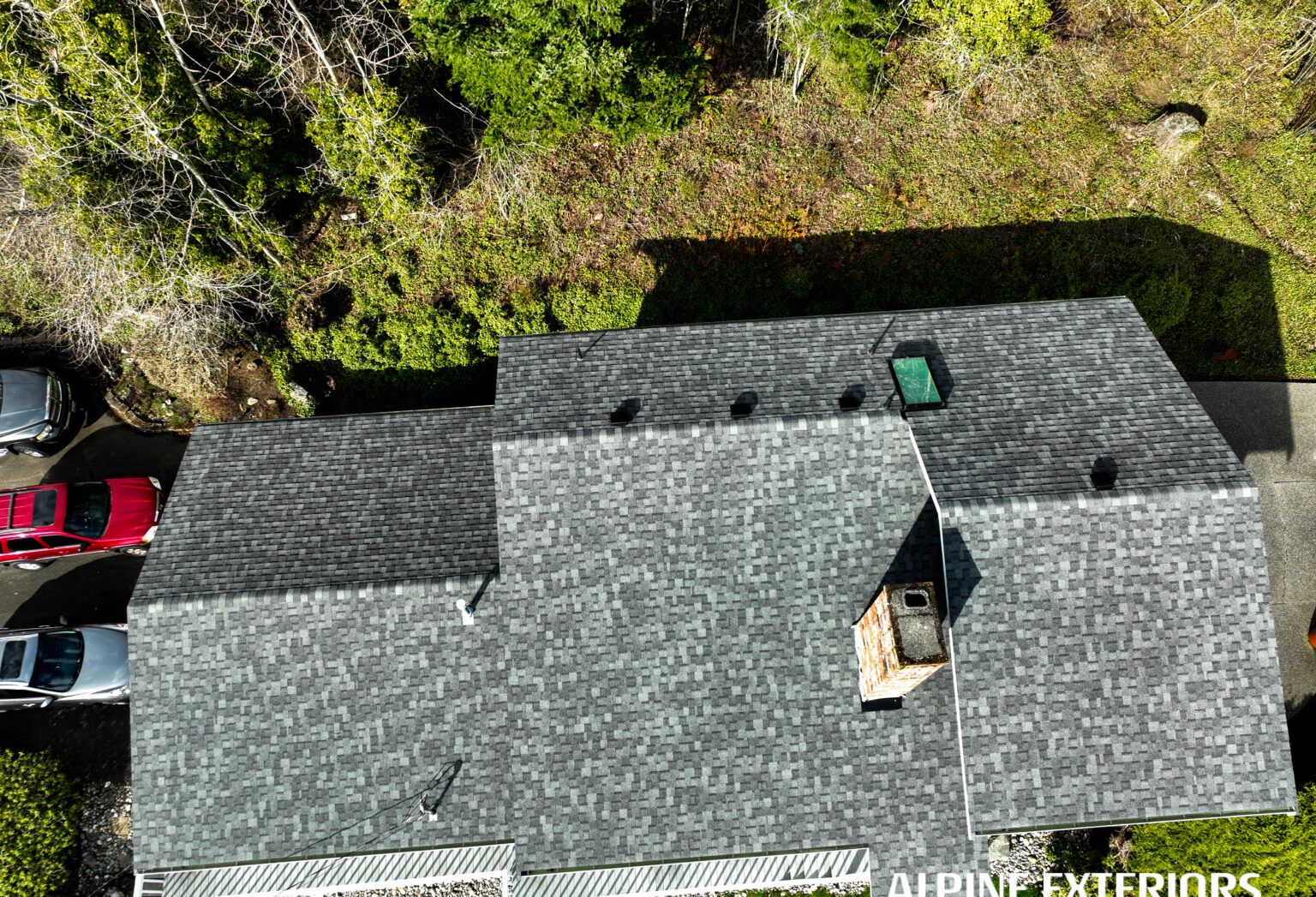
If you own a home near Downtown Bellingham — the older craftsman and foursquare housing stock around the Herald Building, the Eldridge and York neighborhoods, or the newer infill closer to the waterfront — you've probably already noticed what decades of Pacific Northwest weather do to siding. Wood clapboard checks and rots at the butt joints. Vinyl chalks, warps in a hard afternoon sun off Bellingham Bay, and cracks in a cold snap. James Hardie fiber cement has become the default upgrade for a reason: it shrugs off the wind-driven rain that comes off the Strait of Georgia and the Bay, it resists the moss and algae staining that's constant on north-facing walls under mature trees, and it holds paint far longer than wood in a climate that rarely gives a wall more than a few dry weeks in a row. This page walks through realistic cost ranges for a Downtown Bellingham fiber cement project, what actually moves the number up or down, what a competent quote should include, and how to compare bids without just chasing the lowest one. Alpine Exteriors is a licensed Washington siding contractor (license ALPINI751OW) working throughout Whatcom County, and this guide reflects what we see on real jobs in this specific market — not a national average pulled from somewhere with a very different climate.
Fiber cement siding pricing in Whatcom County is a function of material, labor, and the condition of what's underneath the old siding — and in Downtown Bellingham specifically, that last factor matters more than most homeowners expect. A lot of the housing stock predates modern water-resistive barrier standards, and once the old siding comes off it's common to find sheathing that's been absorbing moisture for years. That's not a scare tactic, it's just the reality of pulling siding off a 60-, 80-, or 100-year-old house in a wet climate, and it's the single biggest swing factor in any quote.
As a broad planning range, most full-tear-off James Hardie projects on a typical single-family home in this area land somewhere in the low-to-mid five figures on the low end, and can run into the high five figures or more on a larger or more complex home, or one that needs significant rot repair. Smaller homes, simple rectangular footprints, and houses already down to clean sheathing sit at the lower end. Larger homes, homes with lots of trim, dormers, and roof-wall intersections, and homes with hidden water damage sit at the higher end. Treat any number you're given — including the ones below — as a range, not a quote; the only way to get an actual price is a site visit and a written estimate.
| Cost Factor | Low End | High End |
|---|---|---|
| Home size / total siding square footage | Smaller footprint, single story | Larger footprint, multiple stories |
| Siding profile (lap vs. shingle/panel/board-and-batten mix) | Standard lap siding, one profile | Mixed profiles, architectural detailing |
| Substrate condition under old siding | Sound sheathing, minimal repair | Rot repair, sheathing replacement, structural framing repair |
| Trim and detail work | Minimal trim, simple corners | Extensive trim, dormers, multiple roof-wall intersections |
| Prep and access | Single story, easy ground access | Steep site, multiple stories, tight downtown lot access |
| Paint/finish (factory-primed vs. ColorPlus prefinished) | Field-painted after install | Factory-finished ColorPlus, custom trim colors |
| Removal and disposal of old siding | Vinyl or single-layer wood removal | Multiple layers, asbestos-containing siding testing/abatement |
A handful of things reliably push a Whatcom County fiber cement quote higher or lower, and understanding them ahead of time helps you read a bid intelligently instead of just reacting to the bottom-line total.
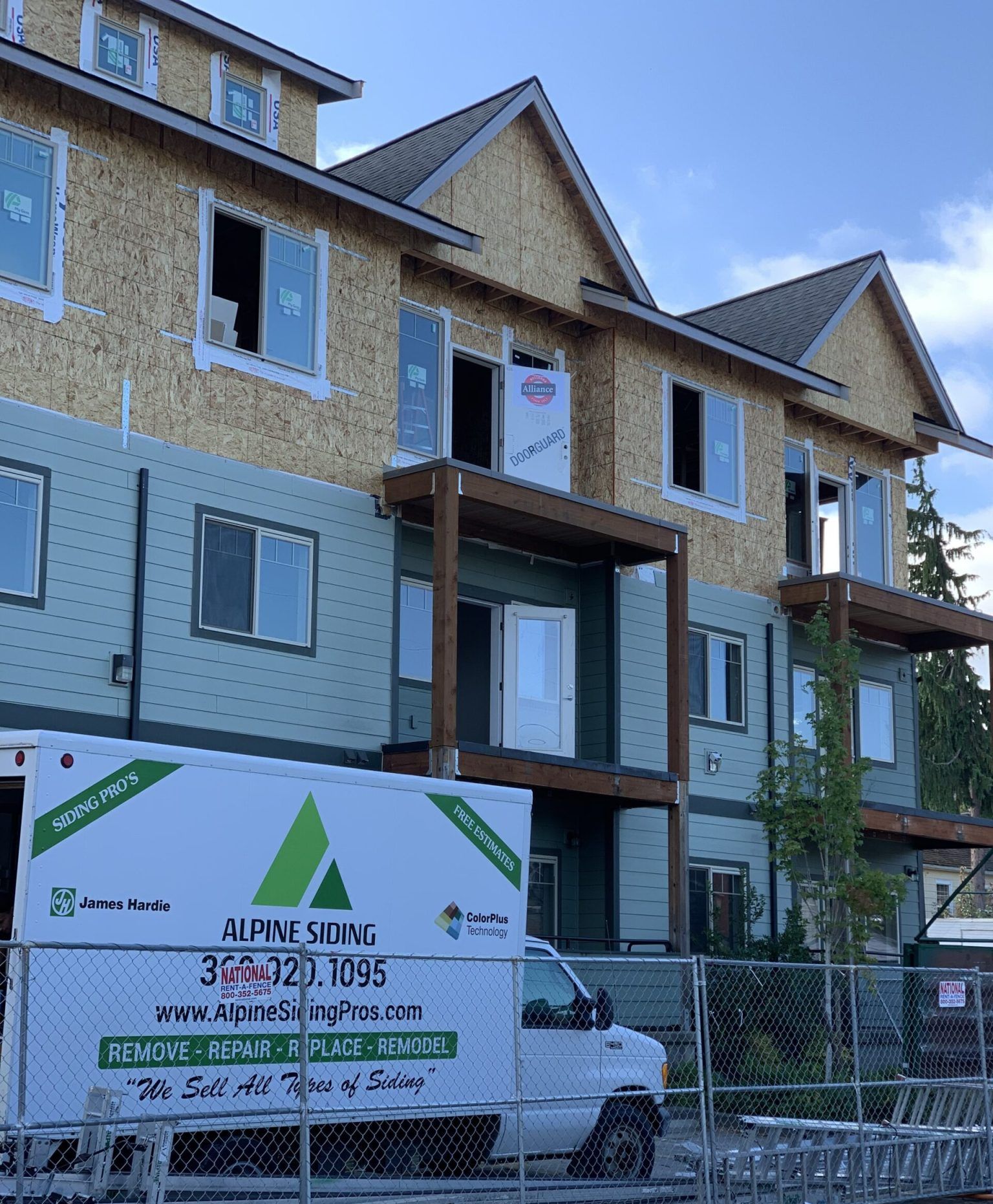
A vague one-page estimate with a single number on it is hard to compare against anything else you receive, and it usually means someone hasn't actually thought through the job. A detailed Whatcom County siding quote should spell out, at minimum:
Alpine Exteriors builds our written estimates around this level of detail specifically because Whatcom County homes vary so much — a quote for a 1920s craftsman near downtown and a quote for a newer build in Barkley or Sudden Valley shouldn't look the same, and a contractor who hands you an identical boilerplate number for both hasn't actually looked closely at your house.
The lowest number on paper is often the most expensive job in practice, because the gap usually comes from somewhere. Before comparing totals, make sure you're comparing the same scope: is one bid a full tear-off and the other an over-existing-siding install? Is rot repair included as an allowance in one bid and excluded entirely from the other, waiting to become a change order? Is one contractor quoting ColorPlus factory finish and another quoting field paint that will need recoating within a few years?
It's also worth confirming licensing and insurance directly rather than taking a business card at its word — Washington contractor license status is publicly searchable through the Department of Labor & Industries, and it's a five-minute check that tells you whether a contractor is bonded and insured to do the work. Ask each bidder how many James Hardie installations they've completed locally, whether they're a certified James Hardie installer (which affects warranty coverage in some cases), and ask for two or three recent Whatcom County addresses you can drive by. A contractor who's confident in their work has no problem sharing that.
Finally, read the fine print on warranty coverage. James Hardie's product warranty is separate from the contractor's labor/workmanship warranty, and the two aren't the same length or the same coverage — a bid that's silent on labor warranty terms is a bid that hasn't told you the full story.
Siding is a significant expense, and most Whatcom County homeowners aren't paying cash out of pocket. A few practical notes: many contractors, including Alpine Exteriors, can point you toward third-party financing options with monthly payment plans, which is worth asking about up front rather than after you've already picked a bid. If your project is being driven by storm or water damage rather than routine wear, it's worth a call to your homeowner's insurance carrier before work starts — coverage for sudden water intrusion damage differs from coverage for gradual deterioration, and an adjuster's assessment can affect both your claim and how the repair scope gets documented. Re-siding purely for wear, age, or a cosmetic upgrade is generally not an insurance matter and is treated as a standard home improvement expense. Keep every invoice and photo of the tear-off — documentation of substrate condition and any rot repair is useful both for warranty purposes down the line and if you sell the home and a buyer's inspector asks what was found under the old siding.
Fiber cement is heavier, requires more labor to cut and install correctly, and typically involves more detailed flashing and trim work than a vinyl install. In exchange, it holds paint and factory finish far longer in a wet, moss-prone climate like Whatcom County's, resists the wind-driven rain that comes off Bellingham Bay and the Strait, and doesn't warp or crack in a cold snap the way vinyl can. Most homeowners here view it as a longer-term value trade rather than a straight upfront cost comparison.
You should get a firm written estimate before work starts, but on older Downtown Bellingham homes it's honest to expect that some line items — specifically sheathing or framing repair — may adjust once the old siding is removed and the crew can actually see the wall assembly. A good contractor will quote a not-to-exceed range or a clear per-unit repair rate up front, rather than leaving that entirely open-ended, so you're not blindsided.
It depends on the scope of your project — a straightforward re-side over existing sheathing is different from a project that opens the wall down to the studs. Projects that qualify as a substantial re-side may trigger current energy code provisions around continuous insulation or air sealing. It's worth raising this with your contractor and, if needed, the City of Bellingham permit office early in planning, since it can affect both the assembly detailing and the cost.
Timelines vary with home size, complexity, and how much repair work turns up once the old siding is off, and Whatcom County's rain patterns can also affect scheduling since fiber cement installation and painting both need reasonably dry conditions. Your contractor should give you a realistic project window during the estimate process, along with how weather delays would be handled, rather than a generic figure that doesn't account for this climate.
The only way to move from a general range to an actual number is a site visit — someone needs to see your home's size, current siding condition, trim complexity, and site access before a real price makes sense. Alpine Exteriors serves Bellingham, Ferndale, Lynden, Blaine, Birch Bay, Sudden Valley, and the surrounding islands, and we're licensed to do this work in Washington under contractor license ALPINI751OW. If you're weighing a James Hardie project for a home near Downtown Bellingham, reach out for a written, itemized estimate — not a ballpark guess over the phone — so you can compare it against anything else you've received on equal footing.