
The Lettered Streets neighborhood sits close in to downtown Bellingham, with a mix of early-1900s bungalows, older Craftsman-style homes, and infill construction on narrow lots and alleys. A lot of the housing stock here has already gone through one or two re-siding cycles, and it's common for us to pull off old wood lap or non-vented vinyl and find soft sheathing underneath, especially on north- and west-facing walls that catch wind-driven rain off Bellingham Bay and the Strait of Georgia. That history matters more to your final number than any national average you'll find online. This page walks through realistic ranges for James Hardie fiber cement siding in this part of Whatcom County, what actually moves the price up or down, and how to read a quote so you're comparing apples to apples.
Fiber cement siding installed in the Bellingham area, including the Lettered Streets, tends to run in a broad band because so few homes here are simple boxes. Older homes in this neighborhood often have dormers, bay windows, porch details, and multiple roof lines that add labor. As a rough planning range, expect a full tear-off and re-side with James Hardie products, including trim, to land somewhere in the mid five figures for an average-size single-family home, with smaller homes and simple ranch layouts toward the lower end and larger or more architecturally detailed homes running well above that. Treat any number you see, including ours, as a starting point for a conversation, not a quote — the only way to get an accurate figure is a walk-around of your specific house.
| Cost Factor | Low End | High End | Why It Swings |
|---|---|---|---|
| Tear-off of existing siding | Lower | Higher | Single layer of old wood lap is straightforward; multiple layers, asbestos-era siding, or rigid foam underlayment add time and disposal cost. |
| Sheathing and framing repair | Minimal | Substantial | Decades of moisture intrusion around old window flashing and roof-wall intersections is common in this neighborhood and isn't visible until the old siding is off. |
| House size and wall complexity | Lower | Higher | Dormers, bays, gable returns, and porch trim on older Craftsman homes take more cutting and labor than a plain rectangle. |
| Plank profile and exposure | Lower | Higher | Standard lap runs less than staggered-edge shingle siding or mixed-material facades meant to echo the original architecture. |
| Factory finish (ColorPlus) vs. field paint | Lower | Higher | Factory-applied color reduces on-site labor and long-term repainting, but it costs more up front than field-painted primed siding. |
| Trim, corner boards, and fascia | Lower | Higher | Matching original trim details on an older home, or wrapping extensive porch and window trim, adds material and labor. |
| Access and site conditions | Lower | Higher | Narrow lots, alley access, mature trees, and tight setbacks common in this neighborhood can slow staging and material handling. |
Two houses on the same block can price differently for reasons that have nothing to do with the siding brand. The biggest swing factor we see in the Lettered Streets is hidden water damage. This neighborhood's housing stock predates a lot of current flashing and moisture-barrier practice, and Bellingham's persistent rain, combined with wind-driven rain off the Bay during fall and winter storms, has had decades to find its way behind poorly lapped siding, unflashed window trim, and old roof-to-wall intersections. Moss and algae staining on the north side of a house is often just cosmetic, but soft or spongy sheathing underneath tells a different story, and that repair gets priced once the crew can actually see the wall.
Wall complexity is the second big driver. A lot of the older homes here have front porches, dormers, and decorative trim that a 1990s tract house doesn't. More corners, more cuts, more caulk joints, more time. Third, whether you choose factory-applied ColorPlus finish or plan to prime-and-paint on site changes both the upfront number and the long-term maintenance cost — factory finish costs more initially but holds color longer against the region's damp climate and doesn't need repainting on the same schedule as field-applied paint. Fourth, the Washington State Energy Code applies to any siding project that opens up the wall assembly, which can mean adding or upgrading a weather-resistive barrier and, in some cases, continuous insulation to meet current prescriptive or performance paths. That's a code-driven cost, not an upsell, and it's worth asking your contractor to explain how your project meets it.
Finally, site access matters more here than in newer subdivisions. Several Lettered Streets lots are narrow with alley-only rear access, mature trees close to the house, and limited street parking for a dumpster or material staging. None of that is a deal-breaker, but it does affect how a crew plans the job and, sometimes, the labor time involved.
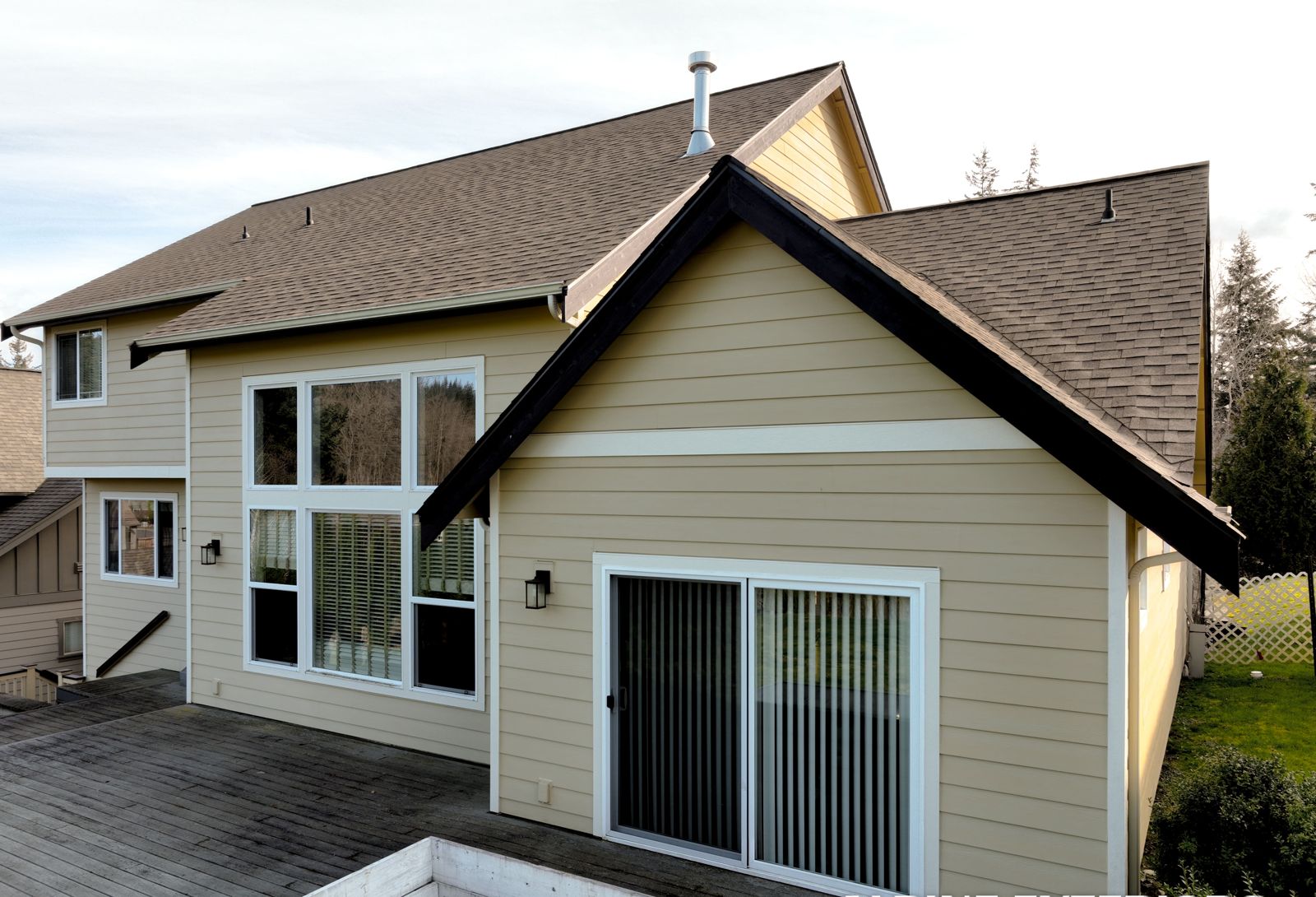
A usable quote for James Hardie siding is more than a single lump-sum number. It should spell out the plank profile and finish (for example, HardiePlank lap in a specified exposure, or HardieShingle in staggered-edge for a bungalow-style look), the specific trim package, whether the finish is factory ColorPlus or field-applied paint and who's responsible for that paint warranty, the weather-resistive barrier and flashing details being used at windows, doors, and roof intersections, and a clear allowance or process for what happens if rotted sheathing is found once the old siding comes off. It should also state whether tear-off and disposal of the existing siding is included, whether permits are pulled and by whom, and the manufacturer and workmanship warranty terms in writing. If a quote is just a total dollar figure with none of that detail, ask for it in writing before you sign anything.
When you're holding two or three bids side by side, line up the same categories rather than the bottom-line number. Confirm each bid specifies the same James Hardie product line and finish — a bid using standard primed plank with field paint will legitimately cost less than one using factory ColorPlus finish, and that's not necessarily a red flag, just a different scope. Check how each contractor handles unknown sheathing damage: a vague verbal promise to "deal with it if we find it" is a lot riskier than a written per-square-foot repair rate. Ask each bidder how they're addressing moisture barrier and flashing at windows and rooflines, since that detail is where a lot of long-term callbacks originate in this climate. And check license status directly with L&I rather than taking a business card at face value — Alpine Exteriors holds Washington contractor license ALPINI751OW, and any siding contractor working in Whatcom County should be able to give you a license number you can verify independently.
Most siding contractors, Alpine Exteriors included, can point you toward third-party financing options if you'd rather spread the cost over time than pay in full up front; terms and approval depend on the lender, not the contractor, so read the fine print on interest rates and any deferred-interest clauses. On the insurance side, siding replacement is sometimes bundled with a broader claim when storm damage, a fallen limb, or long-term water intrusion is involved — if you suspect your siding failure is tied to a covered event, it's worth a conversation with your insurance adjuster before work starts, and keep any photos of pre-existing damage or moss and algae staining as documentation. Routine wear, sun fading, and ordinary aging are typically not covered, so don't count on insurance to offset a standard update-and-refresh project.
Fiber cement is heavier, requires more precise cutting and fastening, and often takes longer to install correctly than vinyl, which drives higher labor cost. In exchange, it tends to hold up better against the region's damp climate, moss and algae growth, and repeated wet-dry cycles, and it doesn't warp or crack the way vinyl can in temperature swings. Whether that trade-off is worth it depends on how long you plan to own the home and how much you value long-term low maintenance over the lowest upfront number.
Not entirely. A contractor can give you a solid range based on square footage, wall complexity, and visible condition, but hidden rot behind old siding — common in this neighborhood given the age of the housing stock and decades of exposure to Bellingham's rain — often isn't confirmed until removal begins. A good quote will include a clear repair rate for that scenario instead of leaving it open-ended.
Often, yes. Because re-siding typically involves opening up the exterior wall assembly, it can trigger requirements under the Washington State Energy Code related to the weather-resistive barrier and, depending on the scope of work, insulation levels. Your contractor should be able to explain which path applies to your project and what that means for the bid.
Ask for their Washington contractor license number and check it directly through the Washington State Department of Labor & Industries website rather than relying on what's printed on a business card or flyer. Alpine Exteriors' license number, ALPINI751OW, is verifiable the same way. It's also worth asking for proof of current liability insurance and a written warranty before committing to any siding project.
Ranges only get you so far — the honest next step is having someone look at your actual walls, trim, and framing in person. Alpine Exteriors serves the Lettered Streets and the rest of Whatcom County, from Bellingham and Ferndale out to Lynden, Blaine, Birch Bay, Sudden Valley, and the islands, and we're happy to walk your property, point out what we see, and put together a written quote that spells out product, scope, and what happens if we find rot once the old siding comes off. If you're weighing James Hardie siding for an older Bellingham home, reach out to Alpine Exteriors (WA contractor license ALPINI751OW) for an on-site look and a straight answer, no pressure.