
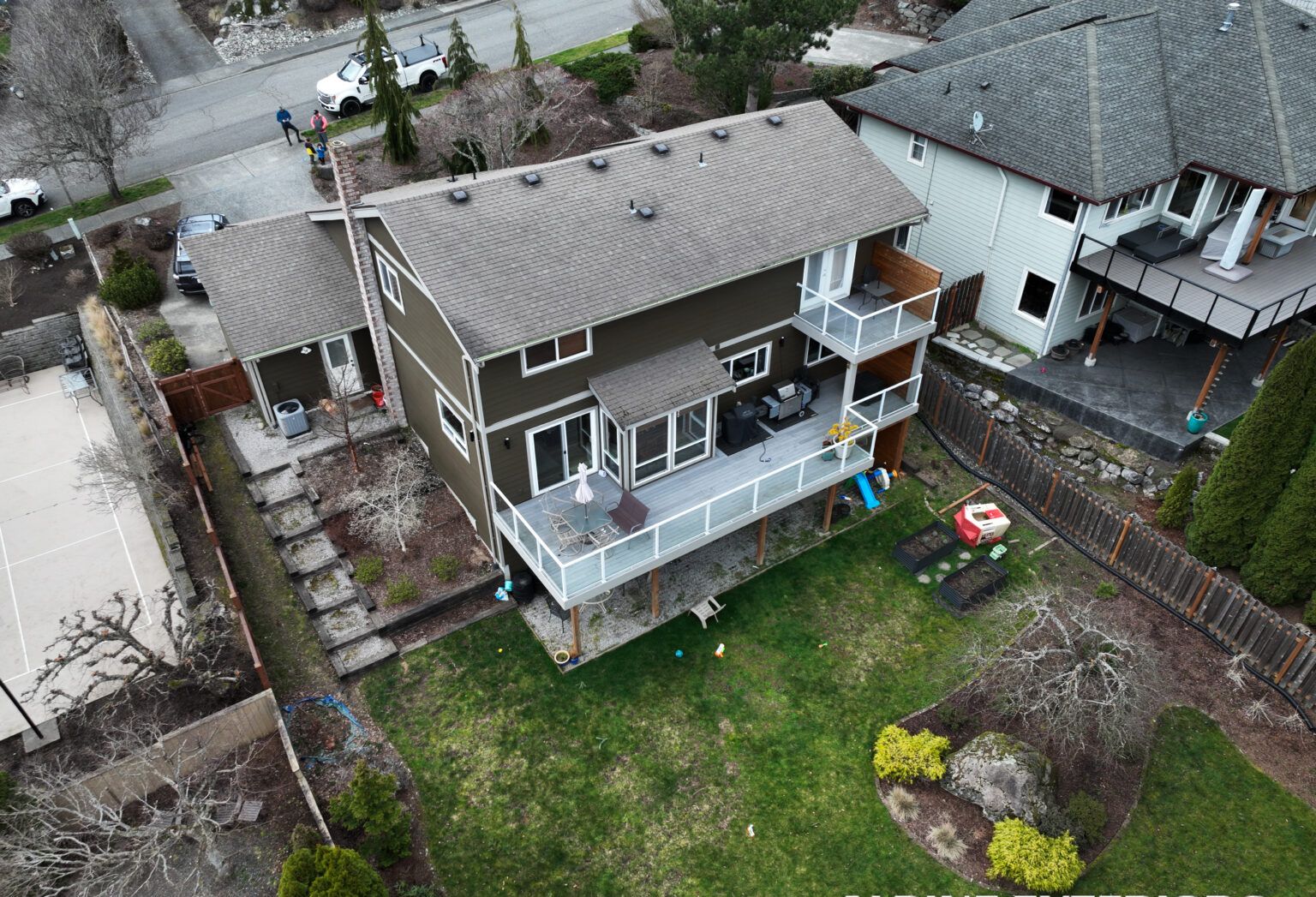
Sumas sits at the far northeast corner of Whatcom County, tucked against the Canadian border where the Nooksack lowlands give way to the foothills of the Cascades. It's a different microclimate than downtown Bellingham or the Birch Bay shoreline: winters run colder, frost hangs on longer, and outflow winds funneling down through the Sumas Gap from the Fraser Valley can hit a house from angles that coastal siding installers don't always plan for. If you're pricing out James Hardie fiber cement siding for a home here, the number on your final invoice depends on more than square footage. This page walks through realistic cost ranges, what actually moves the price, and how to read a quote so you're comparing apples to apples.
For a typical single-family home in the Sumas area, whole-house James Hardie siding replacement generally lands somewhere between the mid-teens and the mid-$40,000s, with most projects clustering in the $20,000–$35,000 range once you account for tear-off, moisture repair, trim, and paint. On a per-square-foot basis (measured as installed wall area, not floor area), contractors in this part of Whatcom County commonly price Hardie installation somewhere in the $9–$18 range, though larger, simpler homes trend toward the lower end and smaller or architecturally complex homes trend higher. These are broad planning figures, not a quote — the only way to get an accurate number is a walk-around inspection, because two houses of the same size can price a few thousand dollars apart depending on what's hiding under the old siding.
| Cost Factor | Typical Low | Typical High |
|---|---|---|
| Home size / wall square footage | Smaller ranch or single-story | Large two-story or complex roofline |
| Siding profile (lap, shingle, panel, board-and-batten) | Standard lap siding | Shingle or mixed-profile accent work |
| Tear-off and disposal of old siding | Vinyl or newer material, easy removal | Multiple layers, older material, or heavy staple/nail removal |
| Sheathing and rot repair behind old siding | Minimal, dry sheathing found | Extensive rot, soft sheathing, or hidden water damage |
| Trim, corner boards, and soffit/fascia work | Reuse or minor trim replacement | Full trim package with custom details |
| Finish (factory ColorPlus vs. field-applied paint) | Standard factory finish color | Premium ColorPlus texture or custom field-painted color |
| Access and site conditions | Single story, easy ground access | Steep roof pitch, tight lot lines, or multi-story scaffolding needed |
| Permits and code upgrades | Straightforward re-side, no code triggers | Added insulation or weather-resistive barrier upgrades required |
Whatcom County's weather is the biggest hidden factor in any siding estimate, and Sumas has its own version of it. The area gets the same steady, soaking rain that defines this part of Washington, but it also sees more freeze-thaw cycling than the immediate coastline because cold air pools in the lowlands and drains through the Sumas Gap in winter. That freeze-thaw pattern is hard on siding systems that trap moisture — water gets into a seam or a cut edge, freezes, expands, and over years that's how you end up with cracked caulk lines, warped trim, and eventually rot at the bottom courses. It's one of the reasons fiber cement holds up better here than some other claddings: it doesn't absorb and swell the way wood does, and it doesn't become brittle in cold snaps the way some vinyl products can.
Moss and algae staining is another near-universal issue on Whatcom County homes, and Sumas is no exception, especially on north-facing walls and anywhere tree cover keeps siding shaded and damp for long stretches. That's not usually a cost driver on its own, but if an inspector finds moss growth that's been sitting long enough to hold moisture against the wall, it often means the sheathing underneath needs a closer look — and that's where rot repair costs get added to a quote. Wood rot discovered during tear-off is probably the single most common reason a Sumas siding job ends up costing more than the homeowner expected going in. Old cedar siding, T1-11 panels, and even some earlier vinyl installations can hide years of slow water intrusion around windows, at butt joints, and behind trim that a visual estimate from the driveway simply can't catch.
Wind is a real factor too, even without hurricane-force events, which this region doesn't see. Outflow winds pushing through the Sumas Gap can drive rain sideways against east- and north-facing walls with enough force to test flashing details and butt-joint sealing. A crew that's used to installing on calmer, more sheltered lots in town may not automatically account for that when detailing joints and fastener patterns — it's worth asking a contractor directly how they handle wind-driven rain exposure on a Sumas property.
Finally, the Washington State Energy Code plays a role in project scope and, sometimes, cost. A full re-side is a natural point to address continuous insulation, air sealing, and weather-resistive barrier requirements, particularly on older homes that predate current code. Depending on the age and condition of the wall assembly, bringing things up to current energy code expectations during a siding project can add cost but also meaningfully cuts down on drafts and heating bills afterward — something worth discussing with your contractor rather than treating as an unwelcome surprise mid-project.
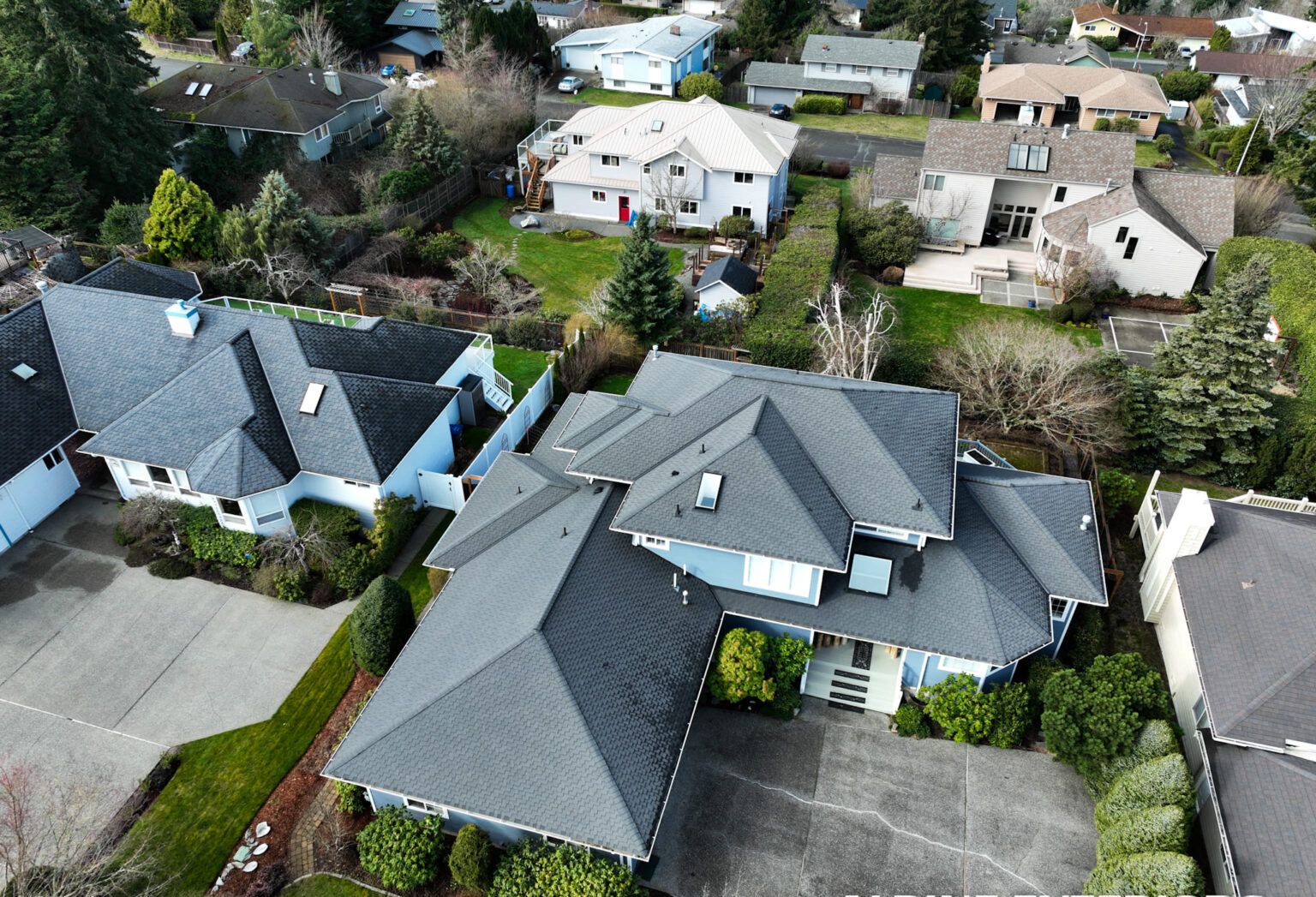
A siding quote that's actually usable for comparison should spell out more than a single lump-sum number. At minimum, look for line items or clear language covering: full tear-off and haul-away of existing siding, an allowance or process for sheathing repair if rot is found, the specific James Hardie product line and profile being quoted (not just "Hardie siding"), the finish type (factory ColorPlus versus field paint, since these age differently and carry different warranty terms), house wrap or weather-resistive barrier installation, trim and flashing details around windows and doors, fastener type and spacing (Hardie specifies particular fastener requirements by climate exposure), and a written timeline. If wood rot or sheathing damage is discovered once the old siding comes off, the quote should also state how that gets priced — as a pre-set allowance, a time-and-materials add, or a stop-work-and-requote clause. Vague quotes that skip these details tend to be the ones that balloon once work is underway.
The temptation with siding bids is to sort by bottom-line number, but that's how homeowners end up comparing genuinely different scopes of work without realizing it. Start by confirming every bidder is quoting the same James Hardie product and profile — a builder-grade lap board and a premium textured shingle profile are priced very differently, and a low bid sometimes reflects a lighter-duty product rather than a better deal. Next, ask each contractor how they've priced sheathing repair: an unrealistically low bid often assumes no rot will be found, which shifts risk onto you mid-project. Ask about crew experience specifically with fiber cement, since it requires different cutting tools, fastening technique, and joint treatment than vinyl or wood — a crew used to vinyl siding installing Hardie for the first time is a real risk factor for callbacks. Confirm licensing, insurance, and manufacturer certification, and ask whether the contractor pulls permits directly or expects you to. Alpine Exteriors holds Washington contractor license ALPINI751OW and can walk through how our scope compares line-by-line to another bid if you want a second read on what's included.
Many siding contractors, Alpine Exteriors included, can point homeowners toward financing options that break a project into monthly payments rather than requiring the full cost up front — worth asking about directly, since terms and availability vary by lender and change over time. On the insurance side, siding replacement is sometimes bundled with other exterior repairs after wind or water damage, in which case a homeowner's policy may cover part of the cost; that typically requires documentation of the damage and an adjuster's assessment before work begins, so loop your insurance company in early rather than after the job is done. Cosmetic wear like moss staining, fading, or general age is not something insurance typically covers — that falls under normal maintenance and gets priced as a standard remodel.
Fiber cement is a denser, heavier material that requires different tools, more labor time to cut and fasten correctly, and — depending on the finish chosen — factory-applied paint systems that cost more than standard vinyl coloring. In exchange, it tends to hold up better against the freeze-thaw cycling and persistent moisture that define Whatcom County winters, resists moss-related surface damage better than some wood products, and generally carries a longer service life, which is part of why many homeowners in Sumas and across the county choose it despite the higher upfront cost.
It varies enormously by house, which is exactly why a firm total price before tear-off is hard to give honestly. Homes with a history of moss cover, past roof leaks, or older wood siding are more likely to have hidden sheathing damage than homes with well-maintained vinyl or newer fiber cement. Ask your contractor for a rot-repair allowance built into the estimate and a clear process for what happens if actual repairs exceed it.
It depends on the age of the home and the scope of the project. A straightforward like-for-like re-side may not trigger major code requirements, but if the project involves removing sheathing or changes to the wall assembly, current energy code provisions around insulation and air sealing can come into play. Your contractor should be able to tell you upfront whether your specific project is likely to involve code-driven scope.
Yes. Beyond finding a fair price, multiple quotes help surface differences in scope — product line, finish type, trim detail, and how each contractor plans to handle wind-driven rain and freeze-thaw exposure on your specific lot. We're happy to be one of those quotes and to walk through, line by line, why our numbers land where they do.
Ranges are useful for planning, but the only way to know what your Sumas home actually needs is an in-person look at the siding, trim, and sheathing condition. Alpine Exteriors serves Sumas as part of our Whatcom County service area and can put together a detailed, itemized quote that accounts for this area's freeze-thaw exposure, wind patterns off the Sumas Gap, and current Washington State Energy Code considerations. Reach out to schedule an assessment and get pricing specific to your home rather than a countywide average.