
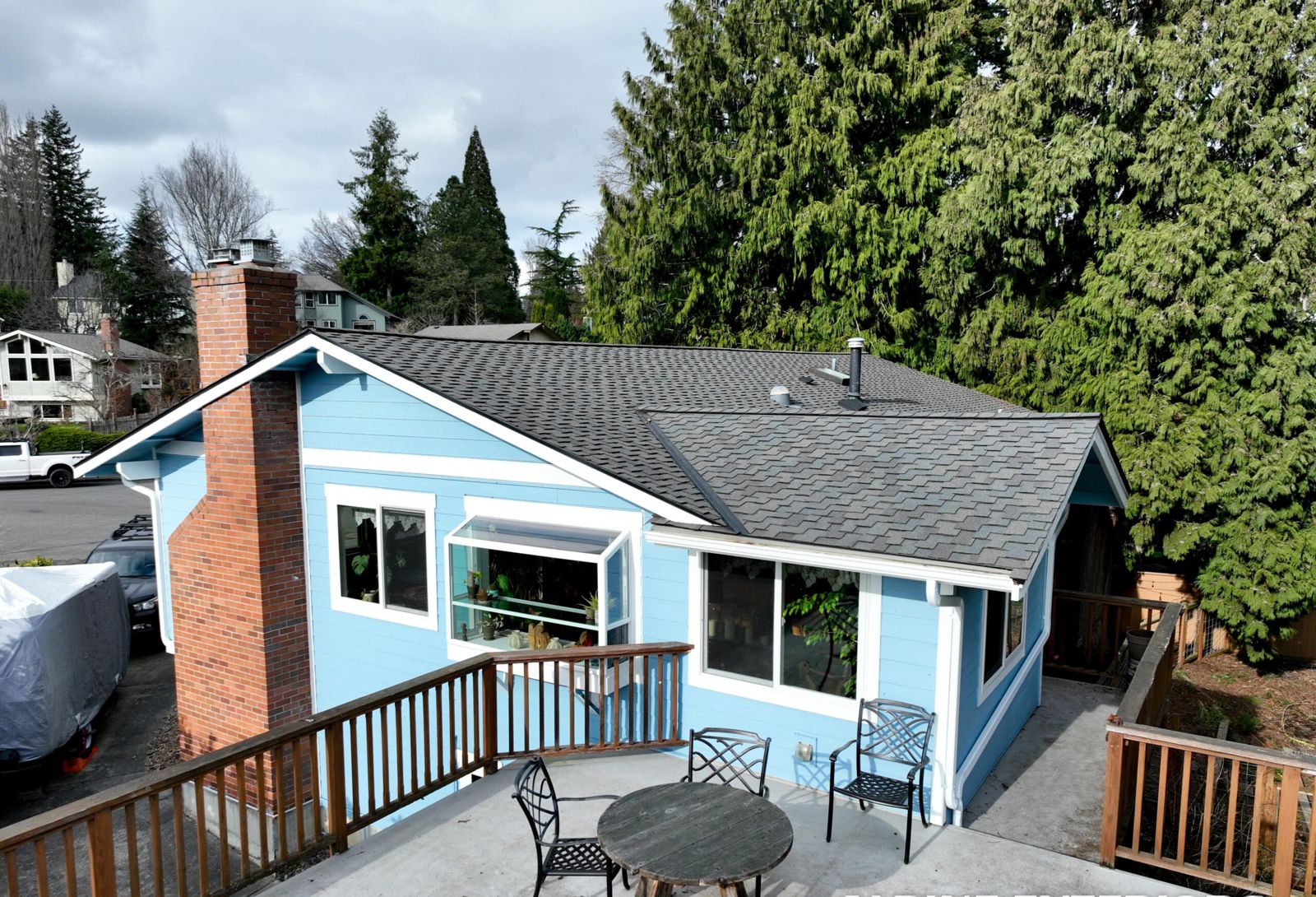
A straightforward, like-for-like siding replacement on a Silver Beach home usually does not require a building permit. The moment the project involves opening up the wall — replacing rotted sheathing, changing window or door flashing, or altering the wall assembly — a permit is almost always required, and whether you file it with the City of Bellingham or Whatcom County Planning & Development Services depends on exactly which side of the city line your parcel sits on.
Washington jurisdictions build their permitting rules on the International Residential Code as adopted and amended locally, layered with the Washington State Energy Code. Most of them keep a short list of permit-exempt work, and cosmetic re-siding — pulling off old lap siding or panels and nailing up new material over sound, unmodified sheathing — typically falls on that exempt list as long as no structural member is touched. That's the case that lets a lot of Whatcom County re-siding jobs proceed without a permit application, inspection scheduling, or plan review fee.
What pushes a project out of that exempt category is anything that changes the structure or the building envelope in a way the code cares about. In practice, that means:
That last item catches people off guard more than any other. The energy code doesn't just apply to new construction — it has specific language for alterations, and re-siding is one of the situations it anticipates. If your project opens enough wall area, the jurisdiction can require you to bring insulation levels closer to current standards even though you only set out to replace the exterior finish. It's worth asking about this before demolition starts, not after the wall is already open and the crew is waiting on an answer.
On jurisdiction: Silver Beach's neighborhood boundary runs close to where Bellingham city limits end and unincorporated Whatcom County begins along the Lake Whatcom shoreline, so two houses a few blocks apart can answer to two different permit offices. Homes inside city limits file with the City of Bellingham Permit Center; homes in unincorporated county territory file with Whatcom County Planning & Development Services (PDS). Don't assume based on your mailing address — pull up the parcel on the county assessor's GIS map or the city's permit portal address lookup and confirm before you call anyone.
Whatcom County's building conditions shape both the permitting conversation and the actual construction detailing in ways that don't show up in generic siding guides written for other climates.
Persistent rain. The marine climate here means a long wet season, roughly October through April, where a house can sit with an open wall for days between weather windows. Inspectors and experienced crews both pay close attention to how the weather-resistive barrier is lapped and how flashing is sequenced at every penetration, because a wall left exposed to a week of drizzle behaves very differently here than it would in a dry climate.
Moss and algae. Silver Beach sits under a lot of tree cover near Lake Whatcom, and shaded, north-facing walls hold moisture longer than walls in full sun. Moss and algae growth on siding isn't just cosmetic — it holds water against the surface and can mask early-stage rot underneath, which is one reason a permit-triggering repair sometimes turns up more damage than the initial estimate assumed.
Wood rot. A good share of the older housing stock around the lake was built with cedar lap siding or early fiber cement, and rot shows up predictably at corner boards, butt joints, and anywhere siding contacts grade or a deck ledger. Once a contractor opens a wall to address rot, that repair itself is what typically triggers the permit — the siding material choice is almost secondary to the structural fix underneath it.
Wind-driven rain off Bellingham Bay and the Strait. This matters more for homes closer to open water — Blaine, Birch Bay, Lummi Island, the other islands — than for Silver Beach itself, which sits inland against the lake rather than facing the Strait directly. It's still a countywide consideration worth knowing, because it's why flashing details at window heads and gable ends get scrutinized more closely on coastal-facing jobs than on a sheltered lakeside lot.
Freeze-thaw in the foothills. Areas at higher elevation around Lake Whatcom, including Sudden Valley, see occasional freeze-thaw cycling in winter that most of low-elevation Bellingham doesn't experience as often. That cycling stresses caulked joints and fastener holes over time, which is one reason manufacturer-specified expansion gaps matter more here than a casual installer might assume.
Washington State Energy Code and the Lake Whatcom watershed. Beyond the energy code's alteration provisions already mentioned, parcels close to the Lake Whatcom shoreline sit inside a watershed that supplies part of Bellingham's drinking water, and the city and county both apply extra scrutiny — critical areas review, stormwater rules, Shoreline Master Program provisions — to projects near the water's edge. A pure siding swap usually doesn't trigger any of that, but if your project involves ground disturbance near the shoreline, such as regrading or new footings, it's worth a call to the permit office before assuming siding-only rules apply.
Permit questions are cheap to ask up front and expensive to sort out mid-project. A few steps make the process go smoothly:
None of this is complicated, but it does take a phone call or two before demolition day rather than after.
Often not, if the work is a direct swap of old siding for new over sheathing that's staying in place and sound — that kind of cosmetic replacement is commonly permit-exempt. But if the crew finds rotted sheathing once the old siding comes off, or the project involves changing window and door flashing or any structural element, a permit becomes necessary. The honest answer is that you won't know for certain until the scope is confirmed, which is exactly why it's worth a quick call to the permit office before work starts rather than assuming either way.
It depends on which side of the city boundary your parcel falls on, and in Silver Beach that boundary runs close enough to the neighborhood that you shouldn't guess. Homes inside Bellingham city limits go through the City of Bellingham Permit Center; homes in unincorporated Whatcom County go through Whatcom County Planning & Development Services. Checking the parcel on the county's GIS map or the city's address lookup tool before calling saves you from being bounced between offices.
When a permit is required, the two inspections that matter most are a weather-resistive barrier and flashing check — done after the house wrap and flashing are installed but before the new siding covers them up — and a final inspection once the siding is complete. The mid-project inspection exists specifically because once siding goes on, nobody can verify the flashing and drainage plane underneath without tearing it back off, so inspectors want eyes on it while it's still visible.
It can. The Washington State Energy Code includes alteration provisions that apply to existing buildings, and re-siding is one of the scenarios it addresses directly — if enough of the wall cavity is exposed during the project, the reviewing jurisdiction can require insulation or air-sealing upgrades as a condition of the permit. This is worth asking about at the estimate stage, since it affects both cost and schedule, rather than finding out about it once the old siding is already off the wall.
Permit questions shouldn't be a guessing game, and they shouldn't fall on the homeowner to sort out alone. Alpine Exteriors works throughout Whatcom County — Bellingham, Ferndale, Lynden, Blaine, Birch Bay, Sudden Valley, Silver Beach, and the islands — and can walk a Silver Beach homeowner through whether a specific siding project needs a permit, which office to file it with, and what the inspection process will actually look like before any tear-off begins. If you're planning siding work and want that groundwork handled properly from the first phone call, reach out to Alpine Exteriors for a straightforward assessment of your project's scope and permit requirements.