
Yes — but in Whatcom County it rarely looks like a single dramatic event. Siding damage in South Hill usually builds up over several wet seasons as wind-driven rain, moss, and slow-soaking moisture work into seams, laps, and fastener holes until a board finally fails. If you're standing at your house right now looking at a stained, buckled, or soft-feeling section of siding, the storm that caused it probably wasn't one night — it was this winter, and the one before it.
South Hill sits on the hillside above downtown Bellingham, with a lot of older homes built to take in views west and southwest over Bellingham Bay and the Strait of Georgia. That orientation is the whole story. Whatcom County's weather isn't violent — it doesn't produce the sustained high winds that drive damage claims in other parts of the country — but it is relentless, and relentless low-grade exposure is exactly what wears siding down.
A few mechanisms do most of the work:
Most storm-damage guides are written for hail impact or hurricane wind, and neither applies here. Whatcom County doesn't generate hail damage claims or wind-uplift events at any scale worth planning around. What you're actually dealing with in South Hill is a chronic-moisture climate, and that changes what \"storm damage\" even means.
Three regional facts matter more than anything else:
Exposure to the water. South Hill's elevation and orientation toward Bellingham Bay and the Strait of Georgia mean west- and southwest-facing walls take meaningfully more wind-driven rain than the same house would see a few miles inland in Ferndale or Lynden. If your siding damage is concentrated on one face of the house, that's usually why.
Tree cover and drainage around older lots. Many South Hill properties were built decades ago around mature trees, with landscaping, gutters, and grading that haven't been reassessed in years. Clogged gutters overflow onto the wall below; downspouts that dump too close to the foundation splash back onto lower courses of siding; and overhanging branches keep whole wall sections shaded and damp. None of this is unique to storms, but storms are what finally push a chronically damp wall section into visible failure.
The county's marine-influenced but variable climate. Compared to the drier east side of the Cascades, Whatcom County simply spends more days per year with siding wet than dry, and the freeze-thaw swings that hit the foothills and higher elevations around Sudden Valley and the passes toward Mt. Baker can catch saturated siding at the worst possible moment. South Hill doesn't get that as hard or as often as the foothill communities, but it isn't immune to a cold snap following a wet stretch, either.
What this adds up to: in South Hill, the failure mode to watch for isn't a storm that tears siding off the wall. It's a storm — or a winter — that finishes off siding already compromised by months of moisture exposure most homeowners never had a reason to look closely at.
After a windy, wet stretch — or if you just haven't looked closely at your siding in a couple of years — walk the exterior and check the following. This takes twenty minutes and doesn't require a ladder for most of it.
On insurance: most Washington homeowners' policies cover sudden, storm-related siding damage — a branch through a wall, wind-driven debris, a specific wind event — but they typically exclude damage from gradual deterioration, ongoing moisture intrusion, or lack of maintenance. This is the distinction adjusters actually apply, and it's why the chronic, slow-building nature of Whatcom County siding damage can be a harder claim to make than damage from a single obvious event elsewhere. If a specific storm date lines up with when the damage became visible, note that date and any local wind or weather reporting from that day — it strengthens the claim. If the damage has clearly been building for a couple of seasons, be upfront about that; misrepresenting a maintenance issue as sudden storm damage is the fastest way to get a claim denied outright, and it's not worth it.
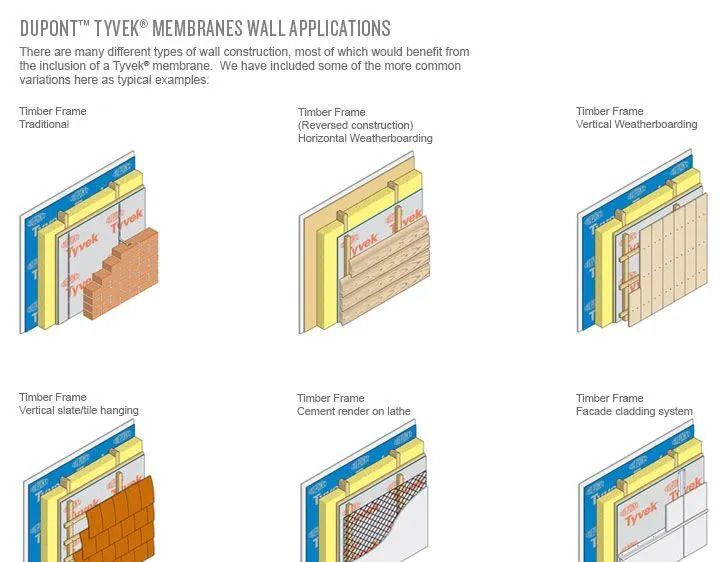
If you do end up replacing a section of siding, it's worth treating it as more than a patch. Once the wall is open, the Washington State Energy Code sets minimum requirements for insulation and for a continuous weather-resistive barrier behind the cladding — and a repair is the cheapest point in a project's life to bring an older wall assembly up to that standard rather than closing it back up exactly as it was. Alpine Exteriors treats that kind of assessment as part of a repair estimate: whether a section can be patched, whether it needs to be replaced back to the framing, and whether the underlying wall assembly is worth upgrading while it's already open.
Storm damage tends to be localized and sudden — a cracked or missing board where debris hit the wall, a section pulled loose after a windy night, or new water staining that appeared right after a specific weather event. Age-related deterioration is usually spread more evenly across a wall, with moss, chalky or fading paint, and softness concentrated at the bottom courses and around trim. In practice, most South Hill siding failures are a mix of both: years of moisture exposure that a storm finally exposes. If you're not sure, it's worth having someone look at it in person before deciding how to describe it to an insurer.
It depends on the cause, not just the outcome. A specific, sudden event — wind tearing off a section, a tree limb puncturing a wall — is generally the kind of damage covered under standard wind and storm provisions. Gradual moisture intrusion, rot from long-term maintenance neglect, or moss damage that built up over years is typically excluded, since most policies treat that as a maintenance issue rather than storm damage. Review your specific policy language, and if you're filing a claim, document when the damage appeared relative to an actual weather event.
Not necessarily. Moss and algae growth on its own is a maintenance issue, and on fiber cement or vinyl it can often be cleaned without harming the material. The concern is what's happening underneath — if moss has been established long enough for water to sit against wood siding or trim, there can be rot developing beneath a surface that still looks mostly fine. That's why a press-test on shaded, moss-prone walls matters more than the moss itself.
It varies widely depending on how much of the wall is affected, whether the sheathing and framing underneath are still sound, and what siding material you're matching or replacing. A small, localized repair on a single section is a different scope of work than replacing an entire wall where rot has spread behind the surface. Costs generally range from a few hundred dollars for a minor, contained repair to several thousand dollars for a larger section that requires opening the wall, addressing rot in the framing, and rebuilding the weather-resistive barrier. An in-person assessment is the only way to get a number that means anything for your specific house.
If your South Hill home took on wind-driven rain this season, or you've been putting off a closer look at a wall that's been holding moss or staining for a while, it's worth getting eyes on it before the next wet stretch makes the problem worse. Alpine Exteriors is a licensed Washington siding contractor (license ALPINI751OW) serving South Hill, Bellingham, and the rest of Whatcom County, and can walk your exterior, tell you honestly whether you're looking at a spot repair or something more involved, and explain what documentation would support an insurance claim if the damage warrants one. Reach out for an assessment before the next system rolls in off the Strait.