
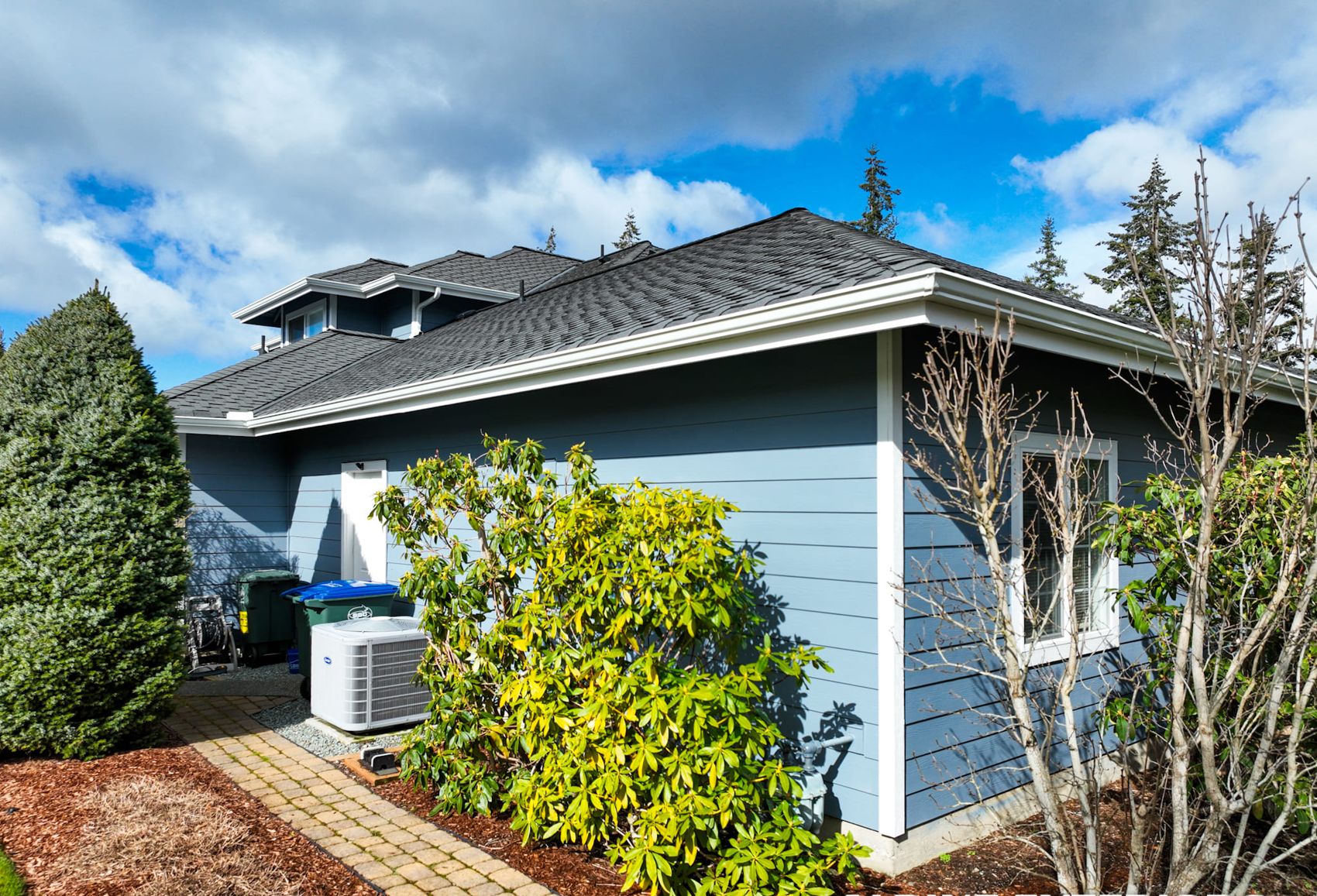
South Hill is one of Bellingham's oldest and most character-rich neighborhoods, a mix of early-1900s craftsman homes, mid-century additions, and newer infill, all sitting on steep, tree-shaded lots close enough to Bellingham Bay to catch wind-driven rain straight off the water and the Strait. That combination of age, slope, shade, and constant Pacific Northwest moisture puts more stress on exterior siding here than in drier, flatter parts of Whatcom County. Most homeowners don't catch a siding problem until it has already worked its way into the wall cavity. Below are the warning signs we actually see on South Hill homes, what causes them locally, and how to sort a cosmetic annoyance from a problem that needs attention now.
Walk your home's exterior after the next dry stretch and look for these. Any one of them on its own may be minor. Two or three together, especially on the same wall, usually means water has been getting behind the siding for a while.
Here's what's actually going on behind each of these, and why South Hill's terrain and weather make them more common on this side of town.
When siding panels lose their flat, even line and start to ripple or bow outward, it almost always means moisture has swollen the material underneath the surface — either the siding itself (common with older wood or hardboard products) or the sheathing behind it. On South Hill's sloped lots, gutters and downspouts often discharge close to the foundation or against a side wall, and that concentrated runoff, combined with our long rainy season, keeps certain wall sections wet far longer than the siding was designed to tolerate. Once panels warp, they stop shedding water the way they're supposed to, and the problem accelerates.
Press firmly on a section of siding, especially near the bottom of the wall, around window sills, or under a deck ledger. If it gives or feels spongy rather than solid, wood rot has likely set in behind or within the material. This is one of the most common issues we find on South Hill's older homes, where original wood siding or trim has been repainted many times over the decades without anyone checking what's happening underneath. Bellingham's rain doesn't need to be heavy to cause rot — it needs to be persistent, and it is, for months at a stretch.
Some moss and green algae staining is normal on almost any Whatcom County home, especially on north-facing walls or under mature trees, and South Hill has plenty of both. The concern isn't the occasional patch — it's growth that returns within weeks of cleaning, or streaking that's turned dark gray or black. That pattern usually means the siding surface is staying damp longer than it should, often because tree cover blocks sun and airflow, gutters are overflowing onto the wall below, or the siding has lost its protective coating and is absorbing water instead of shedding it.
Paint failure on siding is often the first visible clue of a moisture problem, not a cosmetic one on its own. Bubbles or blisters usually mean water vapor is trying to escape from inside the wall and getting trapped under the paint film. Peeling in sheets, rather than a slow fade, points to the same thing. Chalky, powdery paint that rubs off on your hand is more often just sun and age catching up with an older coating, which is common but less urgent than bubbling or peeling.
Wood and fiber cement siding expands and contracts with temperature and moisture, and older caulking eventually fails. On South Hill, freeze-thaw cycles during winter cold snaps — sharper here and in the Lake Whatcom foothills toward Sudden Valley than right on the water — can widen small cracks over a season or two. Once a seam opens, wind-driven rain off the bay finds it easily, especially on walls facing west and southwest where storms typically hit hardest.
The Washington State Energy Code sets minimum insulation and air-sealing standards for the walls behind your siding, but those standards only work if the assembly stays intact. Failing siding lets moisture and air infiltrate where it shouldn't, which can compress or saturate insulation and undercut the wall's intended performance. If a room has gotten noticeably colder or your heating costs have crept up without a clear reason, it's worth checking whether the siding on that side of the house shows any of the other signs on this list.
This is the sign that means water has already made it all the way through the wall assembly. A musty odor, a soft or discolored patch of drywall, or peeling interior paint on an exterior wall usually means the siding failure has been going on for a while. By the time moisture shows up inside, there's a good chance the sheathing and framing behind that wall need more than a surface repair.
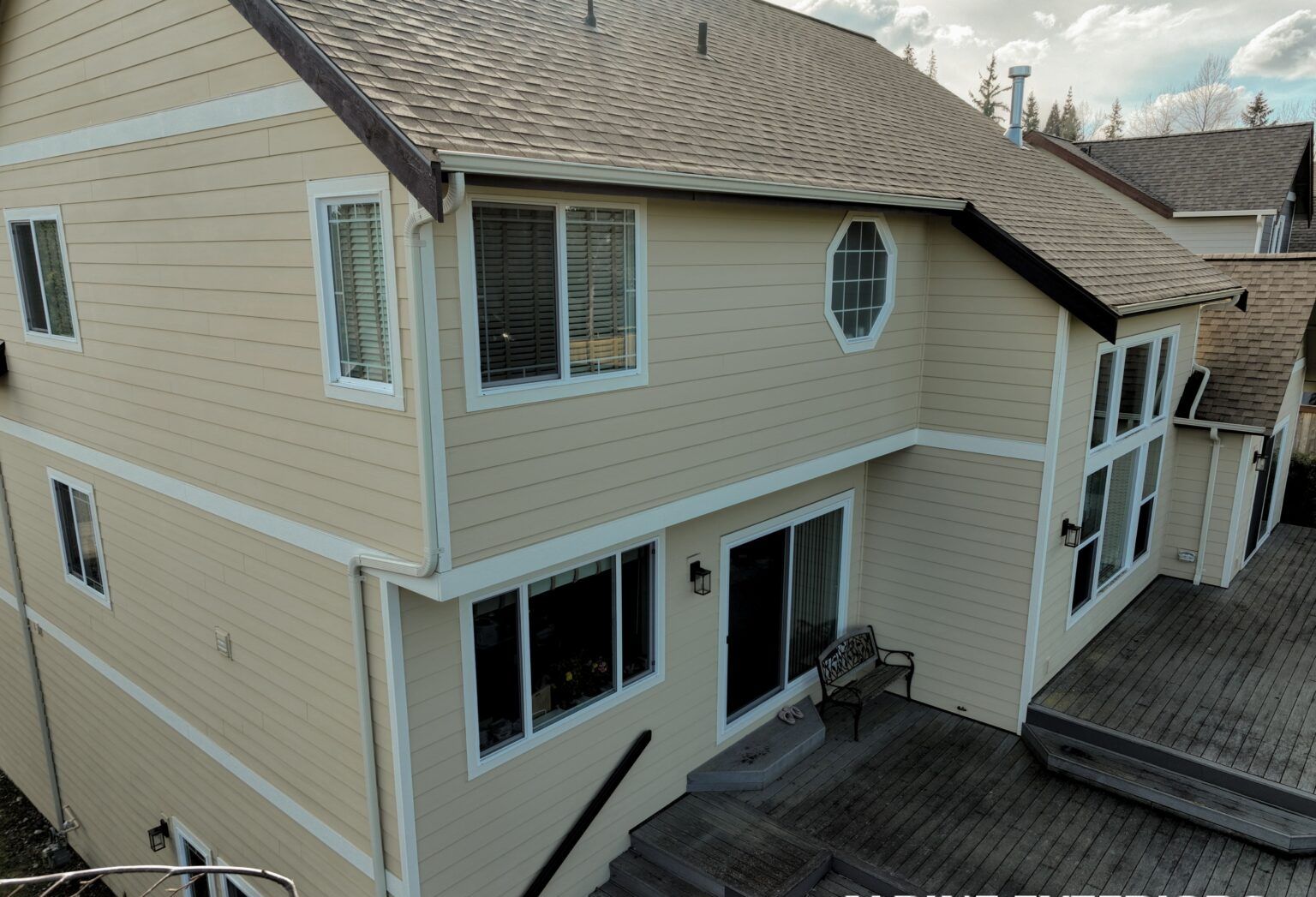
Not every sign on this list means you need a contractor out this week. Here's a general guide to sorting urgency, though any sign combined with an interior symptom should move up the list regardless of how it looks from outside.
| Treat as urgent | Can typically wait for a scheduled inspection |
|---|---|
| Soft or spongy wall sections | Light, easily removable moss or algae |
| Musty smell or staining on an interior wall | Chalky paint with no bubbling or peeling |
| Large gaps or missing sections of siding | A few loose or slightly bowed fasteners |
| Visible mold on interior trim near an exterior wall | Minor hairline cracks in caulking |
| Panels that have separated from the wall | Cosmetic fading or color mismatch after a repair |
When in doubt, the safer move is to have it looked at rather than guess. Rot and hidden moisture spread quietly, and a small repair now is almost always less disruptive than a larger one later.
If you've spotted one or more of these signs on your South Hill home, a few steps will help you understand what you're actually dealing with before committing to any repair path.
Repair costs vary widely depending on how much of the wall assembly is affected — a small spot repair might run a few hundred dollars, while a full re-side of a house this size can run well into five figures once siding material, trim, and any sheathing replacement are factored in. Anyone who quotes an exact number before opening up a wall section is guessing.
Cosmetic moss and algae sit on the surface and usually come off with a gentle wash, leaving sound, solid siding underneath. If the growth returns quickly, the siding underneath feels soft when pressed, or the paint nearby is bubbling or peeling, you're likely looking at more than a surface issue and it's worth having someone check what's happening beneath the growth.
Bellingham and the surrounding area see a long rainy season with frequent wind-driven rain off Bellingham Bay and the Strait, which pushes moisture into seams and joints more persistently than a drier climate would. South Hill's tree cover and sloped lots can also trap moisture against certain walls longer than open, sunnier sites, so siding here does tend to show wear sooner if maintenance has lapsed.
Repainting over a moisture problem usually hides it rather than fixing it, and the new paint will often bubble or peel again within a season or two. It's worth figuring out why the paint is failing first — trapped moisture, rot, or a failed seam — since painting over an active problem can let it continue unseen.
It depends on how contained the damage is. Isolated rot or a single failed seam can often be repaired without touching the rest of the house. But if multiple walls show signs, or if the siding is old enough that matching material is difficult, a broader re-side sometimes ends up being more practical and cost-effective than patchwork repairs over several years.
If your South Hill home is showing any of these signs, Alpine Exteriors can take a look and tell you plainly whether you're dealing with a minor repair or something that needs more attention, with no pressure toward the most expensive option. Alpine Exteriors is a licensed Washington contractor (license ALPINI751OW) serving Bellingham, Ferndale, Lynden, Blaine, Birch Bay, Sudden Valley, and the surrounding islands, and we've seen how differently siding ages on a shaded South Hill lot compared to an open one closer to the water. Reach out to schedule an inspection and get a clear picture of what your siding actually needs.