
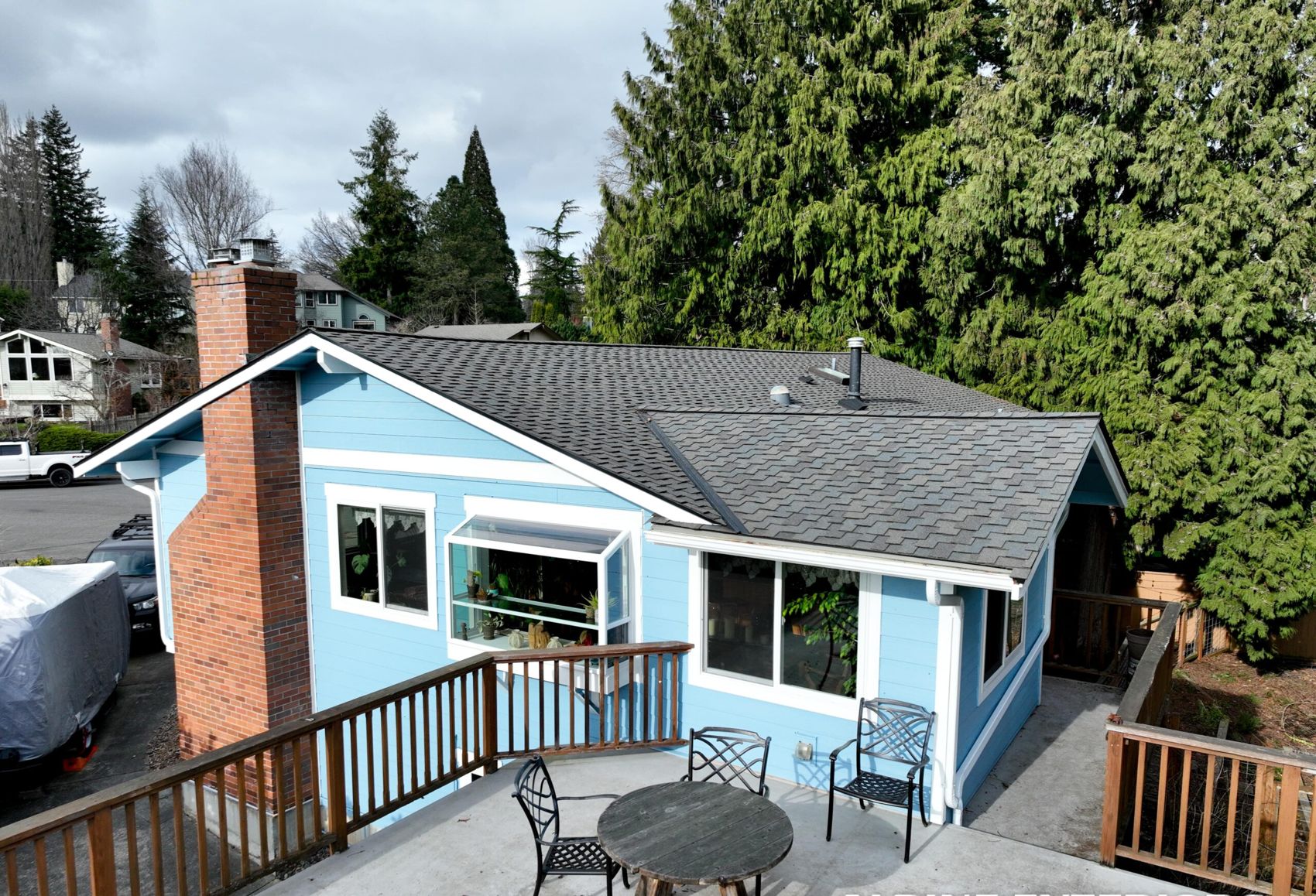
Most siding repair calls we get from Downtown Bellingham involve localized wood rot at trim boards and lower courses, cracked or buckled lap siding from moisture cycling, and heavy moss or algae staining on shaded north- and west-facing walls. If the damage is confined to one or two boards and the sheathing behind them is still sound, a targeted repair usually makes sense. If rot has spread into the sheathing, framing, or window trim, or if it shows up in more than one spot on the same wall, replacing that whole section is almost always the better use of your money.
Downtown Bellingham's housing stock is a mix of early-1900s Craftsman and foursquare homes near the Eldridge and York neighborhoods, mid-century infill, and newer construction closer to the waterfront and Railroad Avenue corridor. That mix means the siding itself varies a lot from house to house — original cedar lap and cedar shingle, later vinyl retrofits, some aluminum from the 1960s-70s remodel era, and fiber cement on newer builds. Repair strategy depends heavily on which of these you have.
Wood siding is the most repair-friendly material but also the one most likely to need it. Cedar lap and shingle siding in this part of town commonly fails at butt joints, around window and door trim, and at the bottom courses closest to grade or a porch roof, where splash-back and standing moisture do the most damage. Once you see soft, spongy wood, paint that's bubbling rather than just peeling, or a screwdriver that sinks in with light pressure, that board (and often the one below it) needs to come out. Left alone, rot travels along the grain and can reach the sheathing and wall framing, which turns a siding repair into a structural one.
Vinyl siding cracks and buckles differently — usually from age-related brittleness, a stray impact, or panels that were never given room to expand and contract with temperature swings. A cracked panel is a straightforward swap if you can find a matching profile and color; the harder problem is that vinyl fades unevenly over the years, so a brand-new panel next to twenty-year-old siding can look noticeably different even in the right style.
Fiber cement holds up well structurally but is vulnerable at cut edges and fastener penetrations if the factory or field-applied sealant has failed. Repairs here are less about rot and more about resealing joints and replacing individual planks that have chipped or delaminated at a corner.
Whatcom County's siding problems are driven almost entirely by moisture, not by wind load or storm impact. Bellingham gets a long, steady wet season rather than short, hard downpours, and that steady dampness is what actually causes damage — it gives water time to work into seams, end grain, and nail penetrations that would dry out fine somewhere with a shorter rainy season. Homes close to Bellingham Bay and along the Strait of Georgia also take wind-driven rain on south- and west-facing walls, which pushes moisture up under laps and around trim in ways that vertical rain doesn't. That's a very different failure pattern than what you'd design against in a hurricane zone, and it's why we look first at flashing, caulking, and lap orientation rather than at fastening schedules or impact resistance.
Shade is the other big local factor. Downtown Bellingham has a lot of mature street trees and tightly spaced lots, so north-facing and tree-shaded walls often stay damp for days after a storm passes. That's ideal growing conditions for moss and algae, and while the staining itself is mostly cosmetic, moss holds moisture against the siding surface and keeps wood siding wetter, longer, than it would be on a wall that gets afternoon sun. We treat heavy moss growth as a warning sign to check the wood underneath, not just a cleaning job.
Up toward the foothills and higher elevations around Sudden Valley, freeze-thaw cycling adds a second mechanism: water that's already worked into a crack or a failed joint expands when it freezes overnight, widening the gap and accelerating damage through the winter. Downtown Bellingham itself sees this less often than the foothills, but a cold snap can still turn a hairline crack into a real problem over one winter.
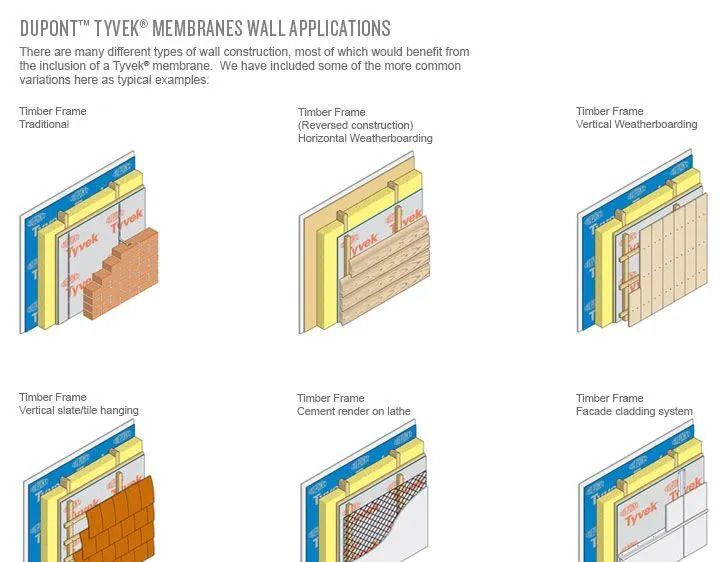
Any full or partial siding replacement in Whatcom County also has to account for the Washington State Energy Code, which sets minimum requirements for wall insulation and air sealing. When we open up a wall for a repair, that's often the easiest and cheapest time to add a weather-resistive barrier upgrade or continuous insulation behind the new siding — doing it during a repair costs a fraction of what it would to redo it later.
Start with a close look rather than a guess. Walk the perimeter of the house, paying particular attention to the base of walls, under windows, at outside corners, and anywhere a deck, porch, or roofline meets the siding — those transitions are where water concentrates. Press on any board that looks discolored or has peeling paint; if it flexes or feels soft, that's rot, not just weathering.
Matching existing siding is its own challenge, especially on the older homes downtown. Cedar siding weathers and the profile styles used decades ago aren't always stocked anymore, so an exact match sometimes means special-ordering material or reworking a wider section of wall so the seam falls somewhere less visible, like behind a downspout or at an inside corner. Vinyl and fiber cement have the same issue in reverse — the material is more consistent, but the color has usually faded enough that a new piece stands out until it weathers in over a season or two. Being upfront about that tradeoff before work starts saves a lot of frustration later, and it's something we walk through with homeowners during the initial look at the house.
If you're not sure whether what you're looking at is a quick patch or the first sign of something bigger, that's a reasonable thing to have someone look at directly. Alpine Exteriors does siding inspections and repair work throughout Whatcom County, including Downtown Bellingham, Ferndale, Lynden, Blaine, Birch Bay, and Sudden Valley, and we'll tell you plainly when a repair will hold and when it won't.
Cosmetic damage — moss staining, faded color, minor surface cracking in vinyl — doesn't affect the wood or sheathing underneath and can usually wait or be handled with cleaning and light repair. Structural damage shows up as soft or spongy wood, boards that have visibly warped or pulled away from the wall, or a musty smell coming from inside near an exterior wall. When in doubt, press on the suspect area; solid wood resists, rotten wood gives.
Often, yes, particularly with wood and fiber cement siding where individual boards or planks can be removed and replaced. The limiting factor is usually whether a close color and profile match is available and whether the rot has stayed contained to that section. If the damage traces back to a flashing or drainage problem behind the wall, we'll recommend fixing that root cause at the same time so the same spot doesn't fail again in a year or two.
North-facing walls in Downtown Bellingham get little to no direct sun, so they stay damp longer after rain and dry out more slowly overall — especially where mature trees add shade on top of that. Moss and algae thrive in that combination and will keep coming back after a cleaning unless something changes, like trimming back overhanging branches or improving airflow along that wall. It's rarely a sign of a bigger problem on its own, but it's worth checking the wood underneath heavy moss at least once.
Small, like-for-like patch repairs generally don't trigger code review. Larger repairs that open up the wall assembly, or any project that starts to look like a partial re-side, can bring Washington State Energy Code insulation and air-sealing requirements into play, and it's worth checking with your local building department before work starts. When we're already inside the wall for a repair, we'll flag whether an insulation or barrier upgrade makes sense to add at the same time, since doing it later costs more.
If you're seeing soft spots, cracked panels, or moss buildup on your home in Downtown Bellingham or anywhere else in Whatcom County, it's worth getting a direct look before deciding between a patch and a full section replacement. Alpine Exteriors is a licensed Washington contractor (ALPINI751OW) working throughout Bellingham, Ferndale, Lynden, Blaine, Birch Bay, Sudden Valley, and the islands, and we'll give you an honest read on what your siding actually needs — not just what's easiest to sell.