
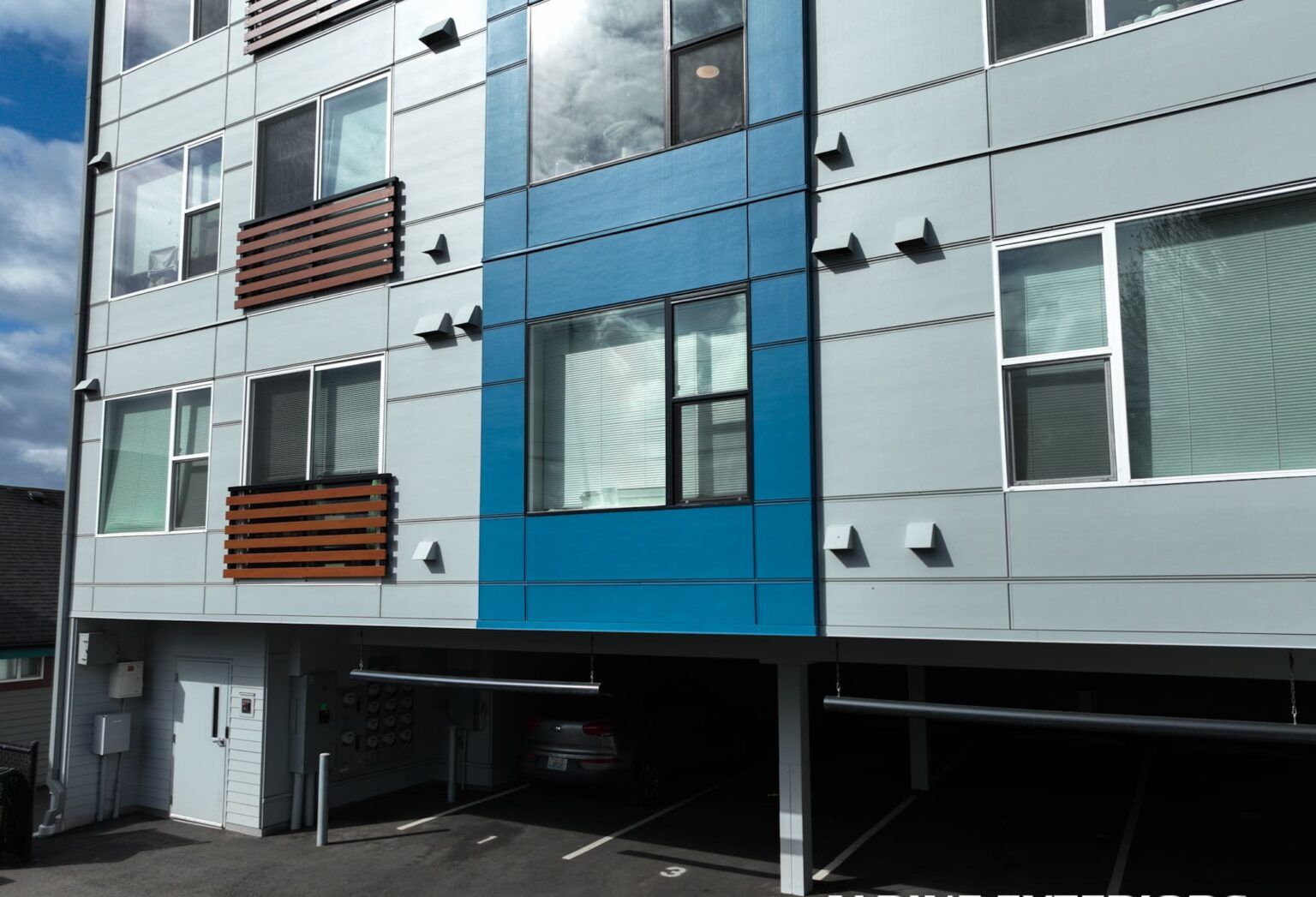
Geneva sits on the north shore of Lake Whatcom, tucked between the water and the timbered slopes that climb toward Sudden Valley and the Chuckanuts. It's one of the prettiest settings in Whatcom County, and also one of the hardest on a house exterior. Between the shade thrown by second-growth fir, the humidity that sits over the lake most mornings, and the wind-driven rain that comes through the gap toward Bellingham Bay in a southwesterly blow, a siding color here has to do more than look good in a showroom. It has to survive years of damp shade without turning green, hold its tone in the flat gray light that dominates most of the year, and read clearly against a backdrop of dark evergreens and water instead of disappearing into it. This guide walks through the colors that actually hold up around Geneva, the criteria we used to judge them, and the choices we'd steer a homeowner away from. Alpine Exteriors has been on enough roofs and scaffolding around this lake to know which colors are still doing their job five and ten years out, and which ones are the first thing a homeowner wants changed at the first repaint.
For most Geneva and Lake Whatcom properties, three color families consistently perform well and photograph well against the local landscape:
These three hold up here for a shared reason: they're mid-to-dark values with enough pigment density to resist visible fading, they don't rely on a stark white or a saturated tone that would show streaking from moss and algae, and they all pair cleanly with the stone, wood, and dark-frame window trends that dominate new builds and remodels around the lake. None of them is a universal answer — each has real tradeoffs we'll get into below — but if you're starting from zero and want a defensible default, this is the shortlist.
Whatcom County's marine climate narrows the field faster than most homeowners expect. The criteria below are specific to conditions around Geneva and Lake Whatcom, not siding advice in general.
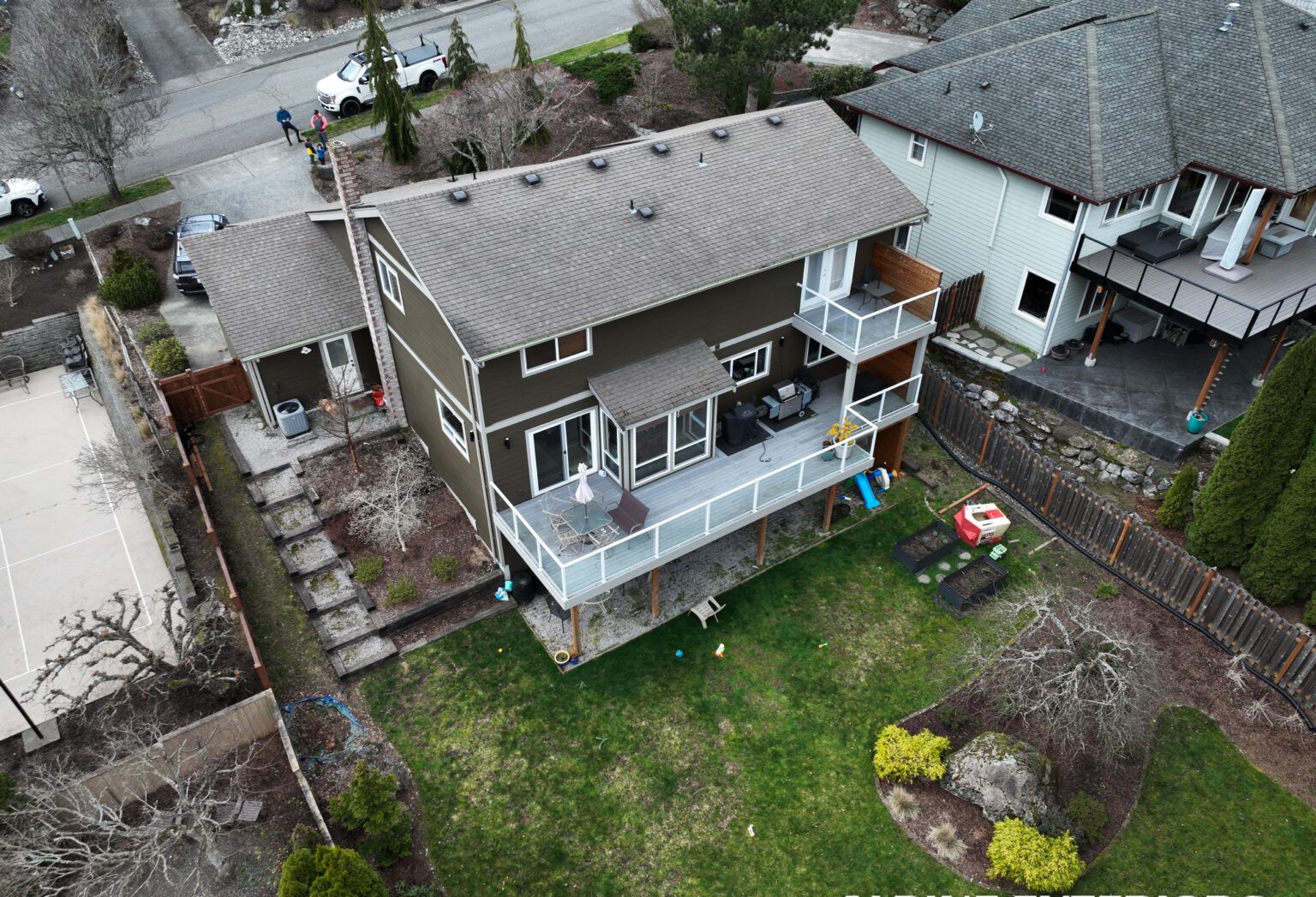
Dark grays are having a long moment around Bellingham and the lake, and for good reason: they photograph well against cedar and fir, they hide dust and pollen film between rains, and they pair naturally with black window frames and metal roofing, both common on newer builds here. The tradeoff is heat and fade. Very dark siding absorbs more solar energy, which on vinyl products can, over enough years, contribute to warping in the hottest, most sun-exposed wall if the product isn't rated for darker colors. Ask specifically whether the vinyl or fiber cement line you're considering is engineered for dark pigment before you commit a full south-facing wall to it. Fiber cement generally handles dark colors with less risk of warping than vinyl, at a higher material and install cost.
This is the safest, most broadly livable choice for the area, and it's the color family we get asked to match most often on repairs and additions because most manufacturers keep it in stock long-term. It doesn't compete with the tree line, it doesn't show moss as fast as a pure white, and it ages gracefully — a decade-old greige house doesn't look dated the way a decade-old trend color often does. The honest downside is that it can read as flat or forgettable on a lot that would benefit from more personality, and on very shaded, mossy lots even a warm gray can pick up a faint green cast in the crevices around butt joints and corner posts if the house isn't washed periodically.
Mid-browns and weathered wood tones sit comfortably against Whatcom County's evergreen backdrop and are a natural fit for the more rustic, tree-shaded lots common around Sudden Valley and the lake's east side. They also do a good job of visually absorbing the tannin staining that can run down from cedar trim or overhanging trees during heavy rain, which is a real and common cosmetic issue here. The downside is that browns can trend toward looking dated faster than grays currently do, and a brown that leans too orange or too yellow will clash badly with the blue-gray tone of Lake Whatcom itself on lakefront lots where the water is part of the view.
Green siding is a smaller niche choice, but it works surprisingly well here because it leans into the setting rather than trying to stand out from it, and it's a color HOA design committees around the lake tend to approve without much friction. The risk is subtlety: a green that's too close to the surrounding foliage can make the house genuinely hard to distinguish from the trees in overcast light, which some owners like and others find makes the home feel visually flat from the road. It also narrows your trim and accent options more than gray or brown does — not every white or black trim pairs cleanly with green field color.
White has real advantages: it's the easiest color to keep looking crisp with a light wash, and it maximizes daylight reflection inside the home during the county's darker months, which some owners genuinely value. The honest problem is moss and algae visibility. In the shaded, humid microclimate around the lake, white siding is the fastest of any color to show streaking, and it will need pressure washing on a noticeably tighter schedule than a mid-tone gray or brown to keep looking good. It's a legitimate choice for a full-sun, open lot with good airflow; it's a harder sell tucked under a canopy of fir on the north shore.
A few choices consistently disappoint owners around Geneva and Lake Whatcom, and it's worth naming them directly rather than leaving them implied. Pure flat white on a heavily shaded, low-airflow lot is the single most common regret we hear about, simply because of how fast moss shows on it. Very saturated, high-chroma colors — bright blues, reds, or yellows — tend to clash with the muted, natural palette that defines the area and can also draw HOA pushback in developments with architectural review, even when the guidelines are informal. And on the opposite end, extremely light pastels fade unevenly in the county's mix of shade and flat overcast light, developing a chalky, patchy look faster than either a true white or a mid-tone color would. None of these are wrong on every house — a bright, open lot with strong airflow off the lake can carry a white or a pastel just fine — but they're the choices most likely to need an early repaint or a heavier maintenance schedule than a homeowner expects going in.
Yes, noticeably. The humidity around Lake Whatcom and the shade from surrounding fir and cedar create favorable conditions for moss and blue-green algae on any exterior surface, and lighter, flatter colors show the resulting streaking and discoloration far sooner than mid-tone or darker colors do. Color doesn't stop growth — regular washing and good airflow around the house do that — but a darker or more textured color buys real time between visible staining and a needed cleaning.
Historically dark colors have faded faster than light ones because they absorb more solar energy, but the county's flat, moderate light load is easier on pigment than direct, high-UV climates, and many manufacturers now build heat-reflective pigment technology into their darker vinyl and fiber cement lines specifically to address this. If you want a dark color, ask the manufacturer or your contractor directly whether the specific product and color are rated for dark applications rather than assuming all dark siding performs the same.
Several developments around Sudden Valley and the Lake Whatcom shoreline have architectural review or design guidelines that favor natural, muted palettes over bright or high-contrast colors, and it's worth checking your specific HOA's covenants before ordering material. Even outside a formal HOA, most of the neighborhood character around the lake comes from houses in grays, browns, greens, and clays that sit comfortably against the tree line, which is a good informal guide even where nothing requires it.
Not directly — the energy code's requirements are about wall insulation values and air sealing, not surface color. But code-driven changes to the wall assembly, like added continuous insulation or thicker furring, can change which siding profiles and trim details are practical for a given product line, and that can end up limiting color and texture choices depending on the manufacturer. It's worth confirming the wall assembly plan with your contractor before you fall in love with a specific color or profile.
Picking a siding color that will still look good on a shaded, damp Lake Whatcom lot in ten years is a different exercise than picking one from a sample chip in good light. Alpine Exteriors works throughout Whatcom County, including Geneva, Sudden Valley, and the rest of the lake shoreline, and can walk your specific lot — its shade pattern, its wind exposure, its HOA rules if it has them — before you commit to a color and a product line. Alpine Exteriors holds Washington contractor license ALPINI751OW. Reach out for a walkthrough and an honest read on what will actually hold up on your house.