Best Siding for Edgemoor Homes in Whatcom County
Updated August 2026 · Alpine Exteriors · WA contractor license ALPINI751OW
Edgemoor sits on the bluff above Bellingham Bay, one of the oldest and most established neighborhoods in the city, with mature Douglas fir and cedar canopy shading many lots and a housing stock that ranges from mid-century originals to newer builds tucked between them. That combination — old growth shade, bay-facing exposure, and a wet marine climate that doesn't let up for most of the year — puts real demands on exterior siding that a lot of generic buying guides never mention. This page walks through what actually holds up on Edgemoor homes, what to watch out for, and where the trade-offs are honest ones rather than sales pitches.
The Short Answer
For most Edgemoor homes, fiber cement siding is the strongest all-around choice, and engineered wood siding is a reasonable second option where budget is tighter or a home's architecture calls for a wood-grain look with lower maintenance than real cedar. Cedar siding still has a place here — Edgemoor's tree-lined, upscale character suits it aesthetically — but only for owners who understand and accept the maintenance schedule that comes with it. Vinyl siding can work on modest, lower-visibility elevations, but it's rarely the right call on Edgemoor's more architecturally distinct homes, and it has real limitations in a neighborhood this shaded and this exposed to wind-driven rain off the bay. We'll get into why below, including where each of these choices falls short.
How We Judged Siding for This Neighborhood
Whatcom County's weather isn't dramatic, but it's relentless, and that changes which siding properties actually matter. We weighed each material against conditions Edgemoor homeowners deal with every year, not generic national criteria:
- Moisture resistance over months, not days. Bellingham sees an extended wet season, and Edgemoor's tree cover means siding stays damp longer after a storm than it would on an open lot. A material's ability to resist moisture intrusion over a sustained period matters more here than short-burst waterproofing.
- Moss and algae resistance. Shaded, north-facing walls under fir and cedar canopy are prone to moss and green algae staining. Some siding materials shed this easily with occasional cleaning; others provide a porous surface that moss can actually take hold in.
- Rot resistance at seams, corners, and ground contact. Wood rot is the single most common structural siding failure we see on older Edgemoor homes, usually starting at butt joints, window trim, or the bottom courses near grade where splash-back keeps wood damp.
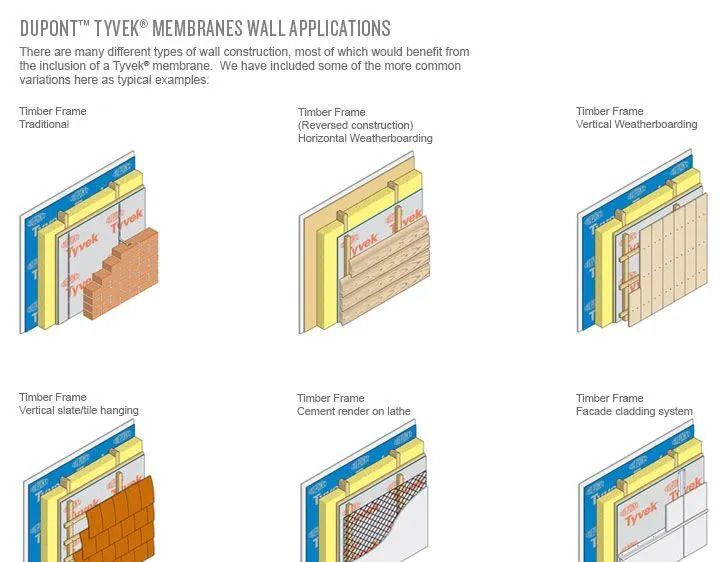
- Wind-driven rain performance. Homes on the bluff and along the water-facing streets take rain sideways off Bellingham Bay and the Strait of Georgia during fall and winter storms. Lap siding needs enough overlap and a properly detailed water-resistive barrier behind it to keep that rain from tracking behind the cladding.
- Fit with the neighborhood's architecture. Edgemoor has a stronger design identity than most Whatcom County neighborhoods — a lot of homes here were built or renovated with real material care. Siding that looks obviously synthetic can hurt curb appeal and, for some owners, resale value.
- Compliance with the Washington State Energy Code. Any full re-side is a chance to address the wall assembly's insulation and air-sealing to current code requirements, not just swap the outer skin. That affects which siding systems make sense with continuous exterior insulation.
Note on elevation: Edgemoor sits low, right along the bay, so freeze-thaw cycling — the kind that stresses masonry and some sidings up in Sudden Valley or the foothill areas of the county — is a minor factor here compared to moisture and wind-driven rain. We're not going to pretend it's a bigger concern than it is for this specific neighborhood.
Fiber Cement Siding
Fiber cement (products like James Hardie's lap and panel lines are the most common brand in this market) is cement, sand, and cellulose fiber pressed into planks or panels. It doesn't rot, it doesn't feed moss the way bare wood can, and it holds paint or factory finish far longer than wood siding does in a wet climate. For Edgemoor's shaded, moisture-heavy lots, that combination is hard to beat.
- Pros: Excellent rot resistance since there's no wood fiber for moisture to break down; holds up well to sustained dampness under tree canopy; available in smooth or wood-grain textures that read well on both traditional and contemporary Edgemoor homes; factory-primed and pre-finished options reduce the maintenance burden considerably compared to real wood.
- Cons: It's heavy, which makes installation more labor-intensive and means it has to be installed correctly — improperly caulked joints or missing flashing details are where fiber cement installations fail, not the material itself. It's also not cheap; expect it to sit above vinyl and most engineered wood on a cost basis, though generally below high-grade cedar. It needs to be cut with proper dust control, which adds to labor time.
Alpine Exteriors installs fiber cement on the majority of Edgemoor full re-sides we do, specifically because it handles the shade-and-moisture combination this neighborhood presents better than most alternatives.
Engineered Wood Siding
Engineered wood siding (LP SmartSide is the common brand here) is wood strand-based, treated and resin-bonded with a wood grain texture, and typically factory-primed. It's a middle option: it looks closer to real wood than fiber cement's texture usually does, it costs less than fiber cement in most cases, and it installs faster since it's lighter and cuts more easily.
- Pros: Good impact resistance for the price point, faster installation than fiber cement, a wood-grain look that suits Edgemoor's more traditional homes, and manufacturer treatments that resist fungal decay better than untreated wood.
- Cons: It's still a wood product at its core, so edge sealing at every cut is non-negotiable — an exposed, unsealed edge on a shaded Edgemoor wall is exactly where moisture will find a way in over time. It's also less proven over multi-decade timelines than fiber cement, and product recalls in this category over the past couple of decades have made some homeowners understandably cautious, even though current formulations have addressed most of those earlier issues.
Cedar and Natural Wood Siding
Cedar has real history in this part of Washington, and a lot of Edgemoor's older homes were originally clad in it. Western red cedar is naturally resistant to decay and insects compared to other wood species, and it looks right at home in a neighborhood built among cedar and fir trees. But "naturally resistant" is not the same as maintenance-free, especially with the moisture load this neighborhood sees.
- Pros: Unmatched authentic look for owners who want a wood exterior; ages well when maintained; historically appropriate for many of Edgemoor's older homes; can be refinished rather than replaced if damage is caught early.
- Cons: Requires re-staining or re-sealing on a recurring schedule — skip it for too long under Edgemoor's tree cover and moss will establish itself, followed eventually by rot at end grain, seams, and any spot where the finish has worn through. Shaded, north-facing walls are the highest-risk areas and need more frequent attention than sun-exposed elevations. It's also generally the most expensive option here on a lifecycle-cost basis once you factor in ongoing maintenance labor, not just the material.
We're honest with Edgemoor owners about this trade-off: cedar can be the right call for the right homeowner, but it's a genuine ongoing commitment, not a one-time purchase.
Vinyl Siding
Vinyl is the budget option, and it has legitimate uses — it's low-maintenance in the sense that it doesn't rot and doesn't need painting, and it's the least expensive material to buy and install. In a lot of Whatcom County, it's a perfectly sensible choice. In Edgemoor specifically, it has more limitations worth naming directly.
- Pros: Lowest material and installation cost; won't rot since it has no organic content; no repainting required; wide color and profile selection from most manufacturers.
- Cons: Under shaded, damp conditions, vinyl's textured surface and the gaps behind panels can trap moisture and organic debris, which is exactly what moss and mildew need to take hold — and vinyl is harder to clean thoroughly in those grooves than a flat fiber cement or engineered wood face. It also relies heavily on correct installation to resist wind-driven rain, since it's a lapped, non-adhered system that depends on proper overlap and a sound water-resistive barrier behind it — get that detailing wrong on a bay-facing wall and water tracks behind the panels. Aesthetically, it tends to look out of place on Edgemoor's more architecturally considered homes, which can be a real factor if resale value matters to you.
What to Avoid in Edgemoor and Why
A few choices come up often enough in this neighborhood that they're worth calling out directly, honestly, rather than glossing over.
- Untreated or poorly maintained wood on shaded, north-facing walls. This is where we find the most active rot on older Edgemoor homes. If a wall doesn't get direct sun for most of the day and sits under tree canopy, wood siding on that elevation needs a shorter maintenance interval than the sunnier sides of the same house — and a lot of homeowners maintain the whole house on one schedule, which under-serves the shaded walls.
- Re-siding over rot without opening the wall first. On a lot of the older homes in this neighborhood, we find soft or delaminated sheathing once old siding comes off. Covering that over with new siding, of any material, just hides a structural problem instead of fixing it. Any legitimate re-side on an older Edgemoor home should include an inspection of the sheathing and water-resistive barrier underneath, not just a new outer layer.
- Skipping a proper rainscreen or drainage gap on bay-facing elevations. Walls that take direct wind-driven rain off Bellingham Bay benefit from a ventilated air gap behind the siding that lets incidental moisture drain and dry rather than sit against the sheathing. This detail matters more on exposed, water-facing walls than it does on protected, interior-facing ones.
- Ignoring the Washington State Energy Code during a full re-side. A full tear-off is the practical time to bring wall insulation up to current code minimums, since the wall is already open. Skipping that step to save money up front usually costs more in comfort and energy bills over the life of the siding than it saved at install.
FAQ
Is fiber cement siding worth the extra cost over vinyl in Edgemoor specifically?
For most Edgemoor homes, yes, mainly because of the shade and moisture combination this neighborhood deals with. Fiber cement resists the moss, algae, and sustained dampness that shaded lots produce better than vinyl does, and it holds up to wind-driven rain off the bay with proper installation. The upfront cost is higher, but the reduced risk of moisture-related callbacks and the longer service life generally justify it here, though a smaller, less-exposed home on a sunnier lot might reasonably go a different direction.
How often does cedar siding need to be refinished on a shaded Edgemoor lot?
It depends heavily on sun exposure, but shaded, north-facing walls under tree canopy typically need attention more often than sunnier elevations on the same house — moss and moisture retention accelerate finish breakdown. We'd rather give a homeowner an honest inspection-based answer for their specific walls than a single number that doesn't reflect how differently sun and shade age a wood exterior.
Do I need to worry about wind-driven rain if my Edgemoor home isn't directly on the waterfront?
Less so, but it's not zero. Homes set back from the bluff or shielded by trees and other structures see less direct wind-driven rain than the water-facing bluff homes, but Whatcom County's winter storms can still push rain sideways enough to matter on exposed corners and upper stories. Siding installation quality — proper lap overlap, flashing, and a sound water-resistive barrier — matters on every Edgemoor home, just with more margin for error on the more sheltered ones.
Does re-siding my home mean I have to upgrade the insulation too?
Not always, but a full re-side is usually the most cost-effective time to do it, since the wall assembly is already exposed. Washington State Energy Code requirements apply to the scope of work involved, so what's required depends on the specifics of the project — we'll walk through what applies to your home before work starts rather than assume a blanket answer.
Get an Honest Look at Your Siding Options
Every Edgemoor home carries its own mix of sun, shade, tree cover, and exposure to the bay, and that mix should drive the siding decision more than a generic material ranking does. Alpine Exteriors is a licensed Washington contractor (license ALPINI751OW) serving Bellingham and the rest of Whatcom County, and we're glad to walk your specific walls with you, point out where moisture or rot risk is actually concentrated on your house, and lay out real options with honest trade-offs — not just the material we'd rather sell. Reach out to Alpine Exteriors to schedule a walkthrough of your Edgemoor home and get a straight answer on what siding makes sense for it.
Want a straight answer for your home? Alpine Exteriors gives free on-site assessments across Bellingham, Ferndale, Lynden, Blaine, Birch Bay, Sudden Valley and the islands.
Call (360) 543-4799 or
request an estimate.