
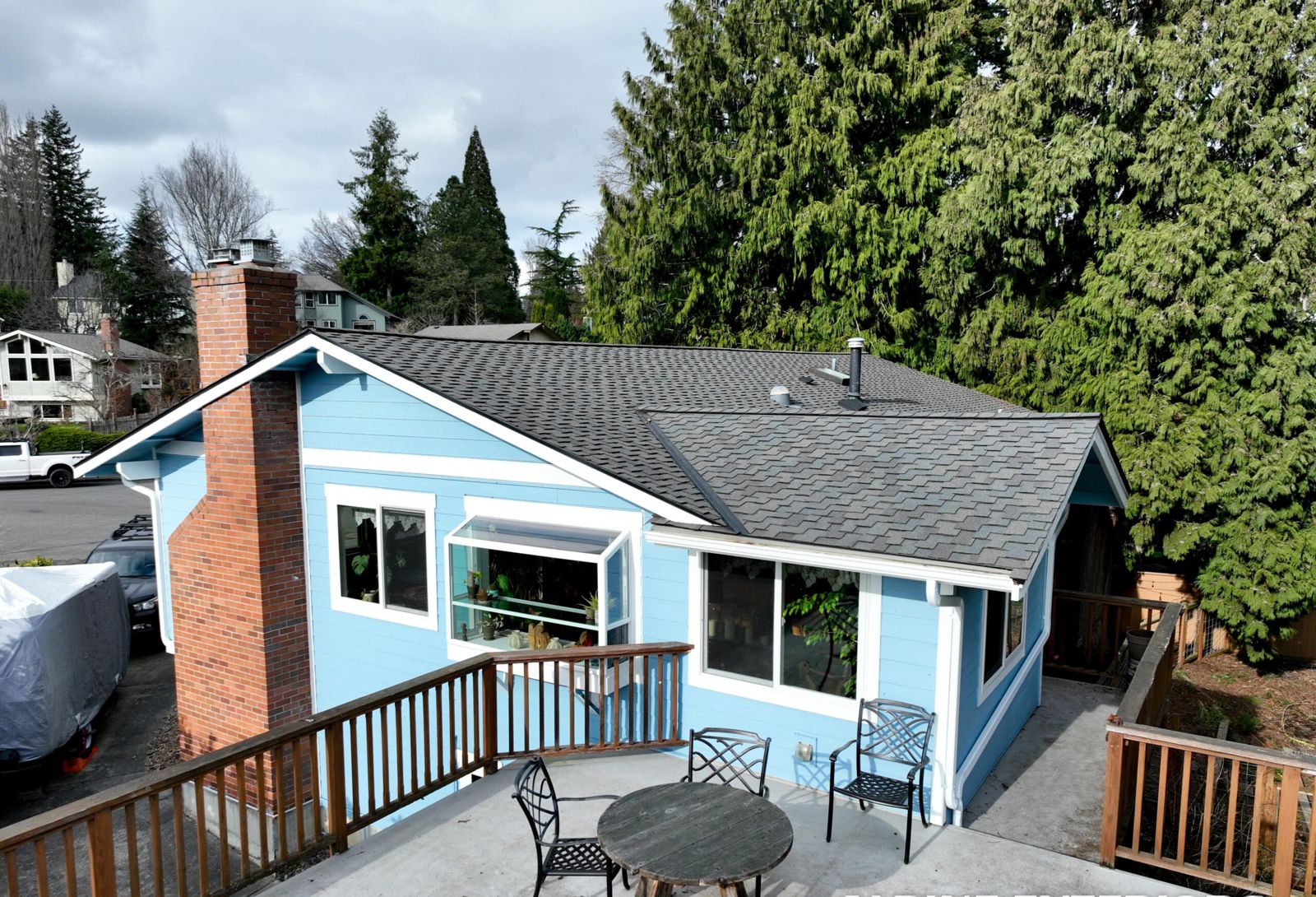
If you own a home in Roosevelt, on the east side of Bellingham between Alabama Hill and the I-5 corridor, you already know what our siding is up against. Long, wet winters. Marine air pushed in off Bellingham Bay and the Strait of Georgia. Mature tree canopy that keeps north-facing walls in shade for months, which means moss and algae get a head start. None of that is unique to your street, but it is the reason so many homeowners here end up comparing James Hardie fiber cement siding against vinyl siding before they commit. Both are legitimate choices. They just serve different budgets, different maintenance appetites, and different exposure levels, and the right call usually comes down to specifics about your particular house rather than a blanket rule.
If your home takes direct wind-driven rain — a west or southwest exposure with no real overhang, or a lot facing open water or a wind corridor — James Hardie fiber cement is the more durable long-term investment, and it holds paint and color far longer than most alternatives in our climate. If your home is more sheltered, you're working with a tighter budget, or you're prepping a rental or an ADU where minimizing upkeep matters more than maximizing resale polish, vinyl siding remains a reasonable and honest option, as long as it's installed with real attention to flashing and drainage behind it. Neither material is wrong here. What's wrong is installing either one without accounting for how much rain Whatcom County actually sees over a typical year, or without a water-resistive barrier detailed correctly for wall assemblies that meet the Washington State Energy Code.
James Hardie siding is a cement, sand, and cellulose fiber composite, sold locally in lap profiles like HardiePlank, panel products like HardiePanel, and shingle-style options for accent gables. It doesn't absorb moisture the way wood does, doesn't feed carpenter ants or rot fungus, and it's non-combustible, which some insurance carriers factor into premiums. In a climate where we go months at a time with damp air sitting against exterior walls, that resistance to moisture-driven decay is the main reason it's become the default recommendation for full re-sides on older Roosevelt homes where the original cedar siding has already started failing at butt joints and window trim.
The factory-applied ColorPlus finish is worth understanding before you buy: it's baked on under controlled conditions and holds color noticeably longer than field-applied paint, which matters here because repainting a two-story home with scaffolding access isn't cheap. The tradeoffs are real, though. Fiber cement is heavy — installation requires a crew that knows how to handle it, fastens it correctly for our wind exposure, and doesn't over-drive nails through the board. It costs more upfront than vinyl, both in material and labor. It can chip or crack if struck hard enough, and any field-cut edges need to be sealed and primed or they'll wick moisture over time. It's also not a material you want installed by a crew unfamiliar with proper flashing details, because the siding itself is only as good as the water management behind it.
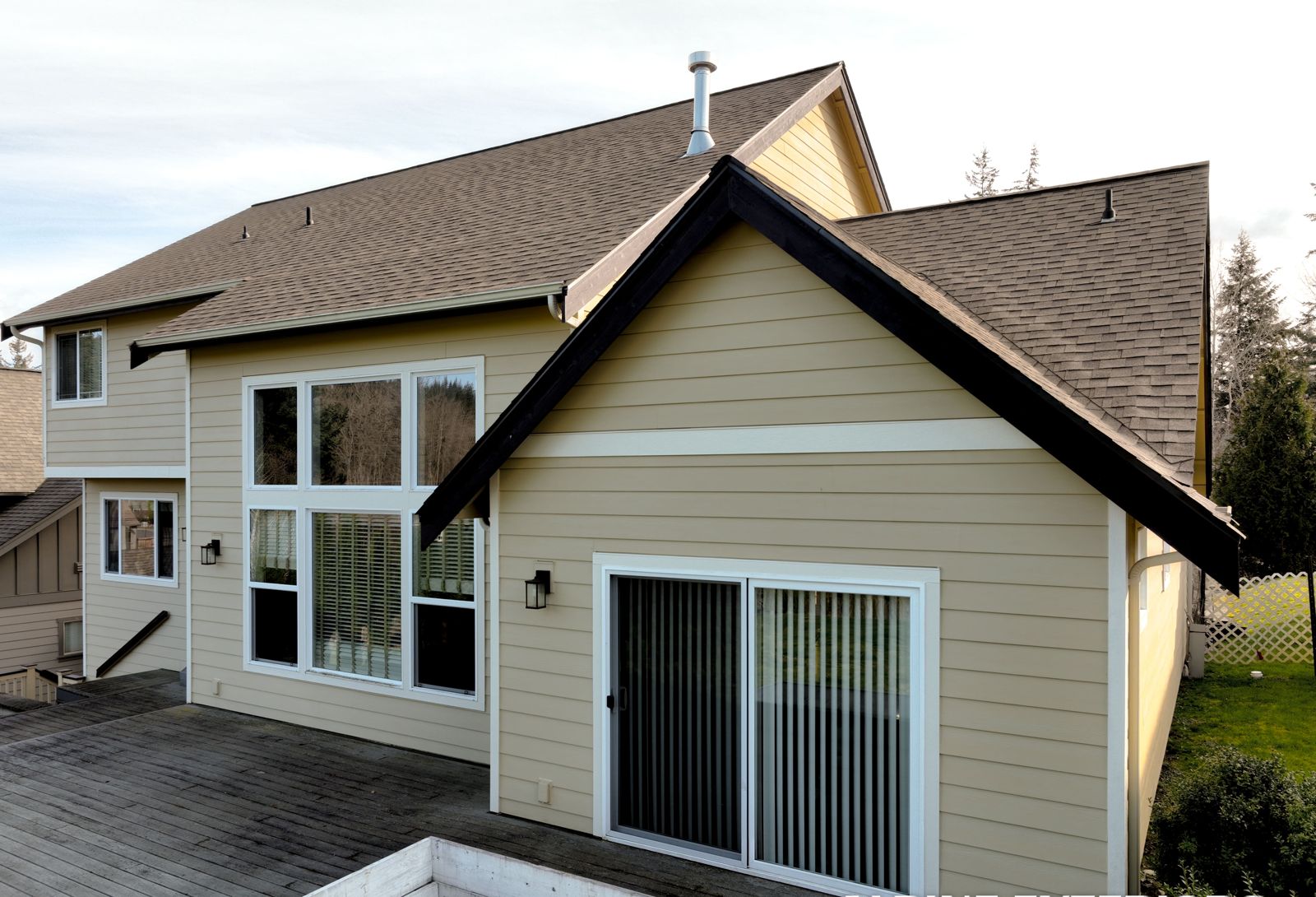
Vinyl siding is PVC formed into lap profiles — double 4, double 5, Dutch lap, board-and-batten — and it remains the lower-cost option for both materials and labor. There's no painting required, ever, which some homeowners genuinely prefer regardless of budget. Modern vinyl has improved on the brittle, chalky products from twenty years ago, and a well-installed vinyl job on a protected wall can perform acceptably for a long time.
The honest drawbacks matter more here than in a milder climate. Color is baked through the panel rather than applied on top, but darker colors still fade faster under UV exposure on south and west walls, and vinyl can't be repainted to refresh it the way fiber cement or wood can — once it fades or a panel cracks, you're replacing it or living with the mismatch. In the colder snaps we occasionally get in the Lake Whatcom foothills and around Sudden Valley, standard vinyl becomes more brittle and more prone to cracking on impact — a stray branch, a ladder bump, a thrown ball — right when temperatures are already working against you. There's also a lesser-known but well-documented issue where reflected sunlight off certain low-E, energy-efficient window glass can concentrate enough heat to warp nearby vinyl siding; it's not common, but it's worth knowing about if a neighboring home's replacement windows sit close to your wall. And because vinyl panels aren't sealed at the seams, they rely entirely on correct house wrap and flashing behind them to keep wind-driven rain from Bellingham Bay out of the wall cavity — a shortcut here shows up as hidden sheathing rot years later, not immediately.
| Factor | James Hardie Fiber Cement | Vinyl Siding |
|---|---|---|
| Installed cost | Higher — roughly the top tier of common siding options once material and skilled labor are factored in | Lower — generally the most budget-friendly common siding choice |
| Typical service life | Multiple decades with proper maintenance; often outlasts a single ownership period | Long-lasting on sheltered walls; more variable on exposed, sun-heavy, or impact-prone elevations |
| Maintenance | Occasional caulk and trim upkeep; ColorPlus finish delays repainting for years, but field-cut edges need sealing | Rinse to remove moss and algae; no painting, but cracked or faded panels usually mean full panel replacement, not a touch-up |
| Appearance | Convincing wood-grain or smooth texture, deep factory color range, holds a crisp look longer | Wide color and profile range, but a more uniform, plastic sheen up close and visible fade over time |
Roosevelt's mix of mature street trees and rolling, tree-shaded lots means a lot of homes here have at least one wall — often the north or east side — that stays damp longer after a rain event than a wall in a more open subdivision would. That's exactly where moss and algae take hold first, and it's also where any gaps in the water-resistive barrier turn into slow, invisible rot rather than an obvious leak. For homes with that kind of exposure, or for houses closer to open wind corridors that catch rain pushed in off the Bay, we generally steer owners toward James Hardie fiber cement precisely because it doesn't give rot a foothold and it tolerates the repeated wet-dry cycling of a Whatcom County winter better than most materials.
That said, we don't push Hardie on every job. A detached garage, a rental property where you're managing costs across the portfolio, or a home on a well-protected, south-sheltered lot with good overhangs can do fine with a quality vinyl install, provided the crew doesn't cut corners on flashing at windows, doors, and the water table. The Washington State Energy Code also plays into this decision more than homeowners expect — depending on your wall assembly and whether you're adding continuous rigid insulation to meet code during a re-side, fiber cement's screw-and-nail fastening generally handles thicker over-sheathing without the oil-canning or panel distortion that thicker foam backing can sometimes cause under vinyl.
We'll walk your specific walls with you — which elevations take the worst weather, where the moss keeps coming back, what your existing sheathing and house wrap look like once we open things up — before recommending one material over the other. Alpine Exteriors has done both fiber cement and vinyl re-sides across Bellingham, Ferndale, Lynden, Blaine, Birch Bay, and out to Sudden Valley and the islands, and the honest answer is that the right material depends on your exposure and your budget, not on which one happens to be trendier this year.
Siding itself isn't the primary compliance factor, but the wall assembly behind it is. If your re-side includes adding continuous insulation to meet the Washington State Energy Code's requirements for your climate zone, that changes fastening and detailing for either material, and it's worth discussing before you pick a product, not after.
Standard vinyl does become more brittle in sustained cold, and impact damage — from a falling branch or a ladder — is more likely during or right after a hard freeze than in mild weather. It's rarely a problem in an average Bellingham winter, but it's a real consideration for higher-elevation properties that see more freeze-thaw cycling than homes closer to the water.
Both materials can host surface growth on shaded, damp walls, and both are cleaned the same basic way — a gentle rinse, not pressure-washing that drives water behind seams. The difference shows up over time: fiber cement's factory finish tends to hold up to repeated cleaning better, while vinyl that's scrubbed aggressively or cleaned with the wrong chemicals can dull or discolor faster.
Sometimes, especially with vinyl profiles that are still in current production, but color and profile matching gets harder the older the existing siding is, and ColorPlus fiber cement batches can shift slightly between production runs. We'll be upfront with you if a perfect match isn't realistic and lay out options, including re-siding a full elevation instead of patching, before you commit to anything.
If you're weighing James Hardie fiber cement against vinyl siding for a home in Roosevelt, Bellingham, or anywhere else in Whatcom County — Ferndale, Lynden, Blaine, Birch Bay, or out to the islands — Alpine Exteriors will walk your walls with you, point out where moisture is actually getting in, and give you a straight recommendation based on your exposure and budget rather than whichever product happens to be easiest to sell. Alpine Exteriors holds Washington state contractor license ALPINI751OW. Reach out to schedule a walkthrough and get a written estimate for your project.