
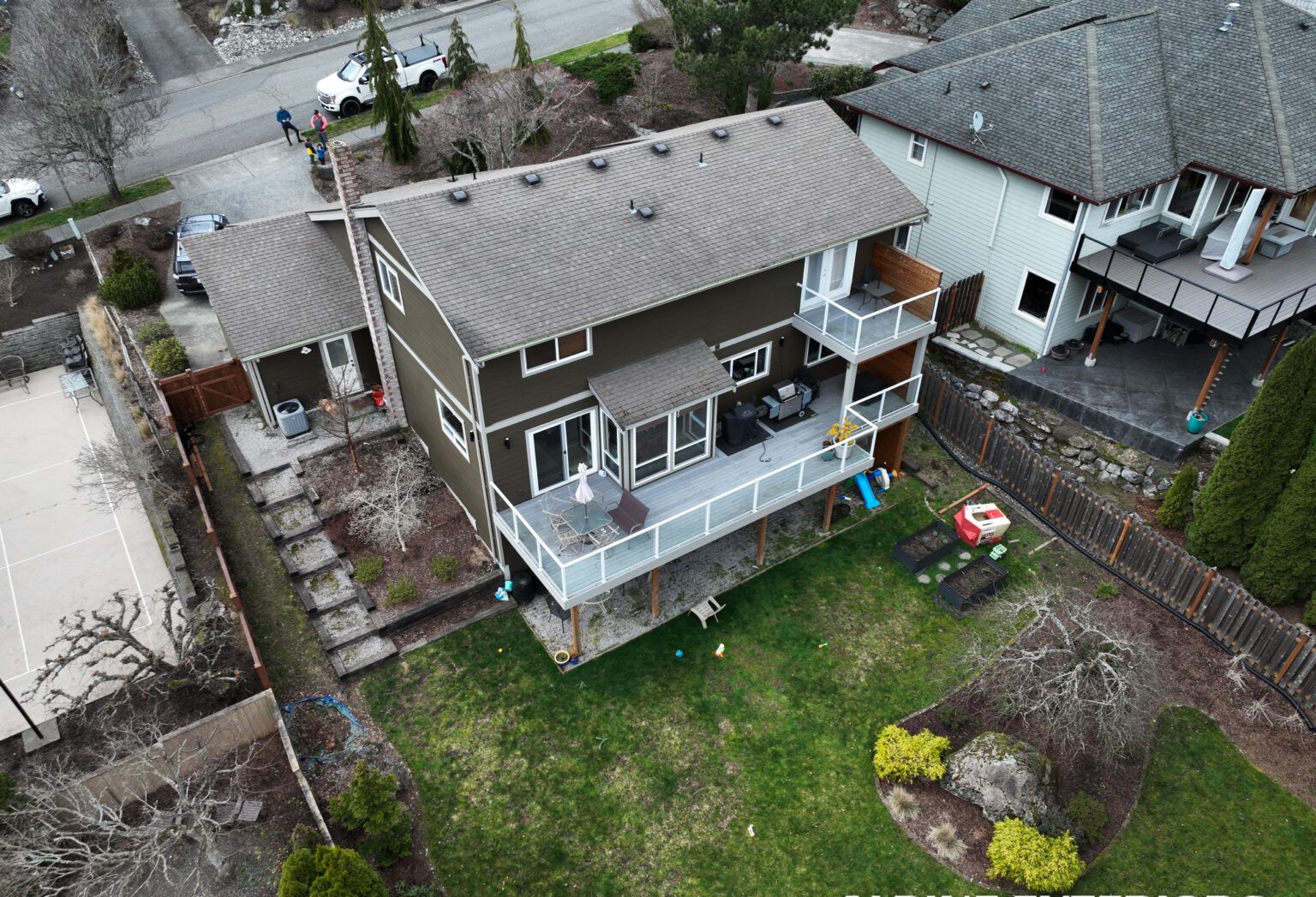
Trim boards frame every window, corner, and roofline on a house, and in Whatcom County they take a beating most homeowners never notice until the paint starts peeling or a corner board goes soft. Between Bellingham Bay, the Strait of Georgia, and the wooded slopes toward Sudden Valley and the Mt. Baker foothills, trim here deals with near-constant moisture, shaded north walls that never fully dry, and wind-driven rain that finds its way behind poorly detailed joints. Choosing between composite and cedar trim boards is less about which material is "better" and more about matching the material to where it sits on the house and how much upkeep you're willing to do. Alpine Exteriors installs both across Bellingham, Ferndale, Lynden, Blaine, Birch Bay, and the islands, and the honest answer is that most homes end up using a mix of the two.
If the trim faces prevailing weather — south and west walls exposed to wind-driven rain off the bay, ground-level corner boards, or window sills that catch runoff — composite trim generally holds up with less maintenance and less risk of rot. If the trim is on a covered porch, under deep eaves, or on a character-driven remodel where the owner wants the real wood grain and is committed to repainting on schedule, cedar still makes sense and looks the part. Neither material is wrong; the mismatch happens when cedar goes into a high-exposure spot with no maintenance plan, or composite gets used somewhere its plastic look doesn't fit the design.
Composite trim in this market usually means cellular PVC or a wood-polymer blend, milled to the same profiles as traditional cedar boards — flat stock for corner boards and window casing, or fascia-width boards for roof edges. It doesn't have wood grain to absorb water, so it resists the rot that shows up at end cuts, nail holes, and butt joints on real wood. It also doesn't feed moss and algae the way cedar's organic surface does, which matters on the shaded, tree-covered lots common around Sudden Valley and the Lake Whatcom corridor. The tradeoff is that composite expands and contracts more with temperature swings than cedar, so it needs to be installed with the right fastener spacing and expansion gaps or it will buckle at long runs. It also costs more up front than cedar, and while paintable composite exists, some cellular PVC products come pre-finished in a limited color range rather than a custom stain-matched look.
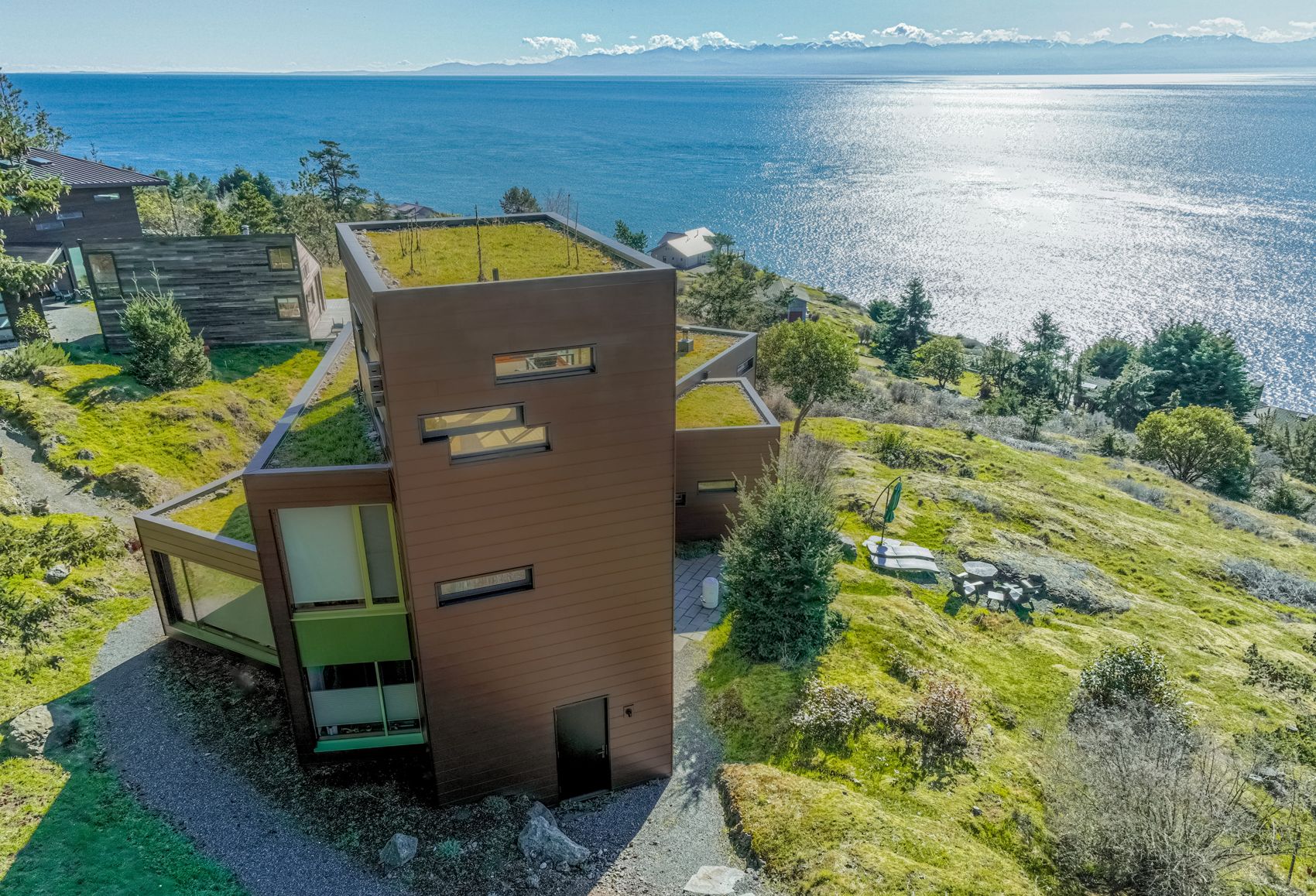
Western red cedar is a genuinely regional material — much of it milled within a few hours of Whatcom County — and it's still what a lot of homeowners picture when they think of a proper Pacific Northwest exterior. It's naturally resistant to decay compared to other softwoods, it takes stain and paint well, and it can be field-cut and coped in ways that make it forgiving for trim carpenters working around irregular window openings or older, out-of-square framing common in older Bellingham and Fairhaven homes. The catch is that "naturally resistant" is not "rot-proof." Once the factory seal or old paint film breaks down, cedar absorbs the region's near-constant rain, and end grain at miters and butt joints is where that starts. Left unpainted or under-maintained for a few seasons, especially on a north-facing or shaded wall, cedar trim develops moss and soft, punky spots that have to be cut out and replaced rather than just cleaned. It's a material that rewards a homeowner who will recoat it on a normal repaint cycle and punishes one who won't.
| Factor | Composite Trim | Cedar Trim |
|---|---|---|
| Cost | Higher material cost; installation labor is comparable to cedar | Lower material cost up front; labor similar to composite |
| Lifespan | Long service life with minimal decay risk if installed correctly | Long-lasting if painted and maintained, but end-grain rot can shorten life significantly if neglected |
| Maintenance | Occasional wash-down; repainting optional rather than required | Repainting or restaining on a regular cycle is not optional here — skipping it accelerates rot and moss growth |
| Appearance | Consistent, uniform look; convincing from a distance but reads as manufactured up close | Authentic wood grain and character, especially once stained; ages naturally but shows weathering faster if unmaintained |
Whatcom County's climate is the deciding factor more than personal taste. This is a place with persistent rain across most of the year, humidity that keeps shaded surfaces damp for days at a stretch, and wind-driven rain that hits walls facing Bellingham Bay and the Strait directly, especially in exposed spots like Blaine, Birch Bay, and Point Roberts. On those elevations, water isn't just falling on the trim, it's being pushed sideways into joints and fastener holes, which is exactly where cedar starts to fail first. Composite trim on those faces removes one of the recurring service calls we see: soft corner boards and rotted window sills on the weather side of a house.
Inland and up toward the foothills near Deming, Kendall, and Glacier, freeze-thaw cycling adds another variable — water that gets into a crack in painted cedar can freeze, expand the crack, and accelerate failure faster than the same crack would fail on the coast. Composite doesn't absorb water the same way, so it's less affected by that freeze-thaw cycling. On the flip side, covered porches, deep-eave gables, and interior courtyard walls that stay mostly dry are genuinely good spots for cedar, and a lot of the character homes in Fairhaven, downtown Bellingham, and the older Lynden and Ferndale neighborhoods look right with real wood trim in those protected locations.
The Washington State Energy Code also plays a role here, since it governs how the wall assembly behind the trim — continuous insulation, water-resistive barriers, and flashing details — has to be built and sealed. Trim material choice doesn't change those code requirements, but poor flashing behind either composite or cedar trim will cause problems regardless of what the boards are made of. Alpine Exteriors builds the flashing and water-resistive barrier detailing the same way under both materials, because that's what actually keeps water out of the wall assembly; the trim itself is really the last line of defense, not the first.
Our general approach on most Whatcom County projects: composite on ground-level corner boards, window sills, and any wall taking direct wind-driven rain, and cedar reserved for covered porches, gable ends under deep overhangs, and restoration work on older homes where matching the original wood profile matters more than long-term maintenance-free performance. That mixed approach isn't a compromise — it's usually the most honest way to spend a trim budget in this climate.
Yes, and it's common. Many homes end up with composite on exposed, ground-level, or weather-facing trim and cedar on covered porches or protected gable ends. The two materials can be painted to match closely enough that most people won't notice the switch from the street.
Not always. Some cellular PVC products come factory-finished and never need paint, while others are sold as paintable stock for a custom color match. If you want a specific stain-like or non-standard color, plan on a paintable composite product rather than assuming any composite trim comes pre-colored.
It varies a lot by exposure and how well the original installation was flashed and caulked. Cedar on a shaded, wind-driven-rain wall with a neglected paint job can show soft spots and moss within a handful of years, while the same cedar on a covered porch with regular repainting can last for decades. The maintenance schedule matters more than the wood itself.
Not directly — the code governs the wall assembly's insulation and air/water sealing, not the trim board material itself. What does matter is that the flashing and water-resistive barrier behind the trim are installed correctly, which Alpine Exteriors treats as the real line of defense regardless of whether the trim on top is composite or cedar.
Every home in Whatcom County has its own mix of exposure, shade, and wall orientation, so the right trim plan for a Blaine waterfront property isn't the same as one for a shaded lot near Sudden Valley. Alpine Exteriors (WA contractor license ALPINI751OW) will walk your home, point out which walls are actually taking the weather, and lay out a composite-and-cedar plan that fits your budget and how much upkeep you want to take on. Reach out to schedule a walkthrough and get a written recommendation before you commit to either material.