
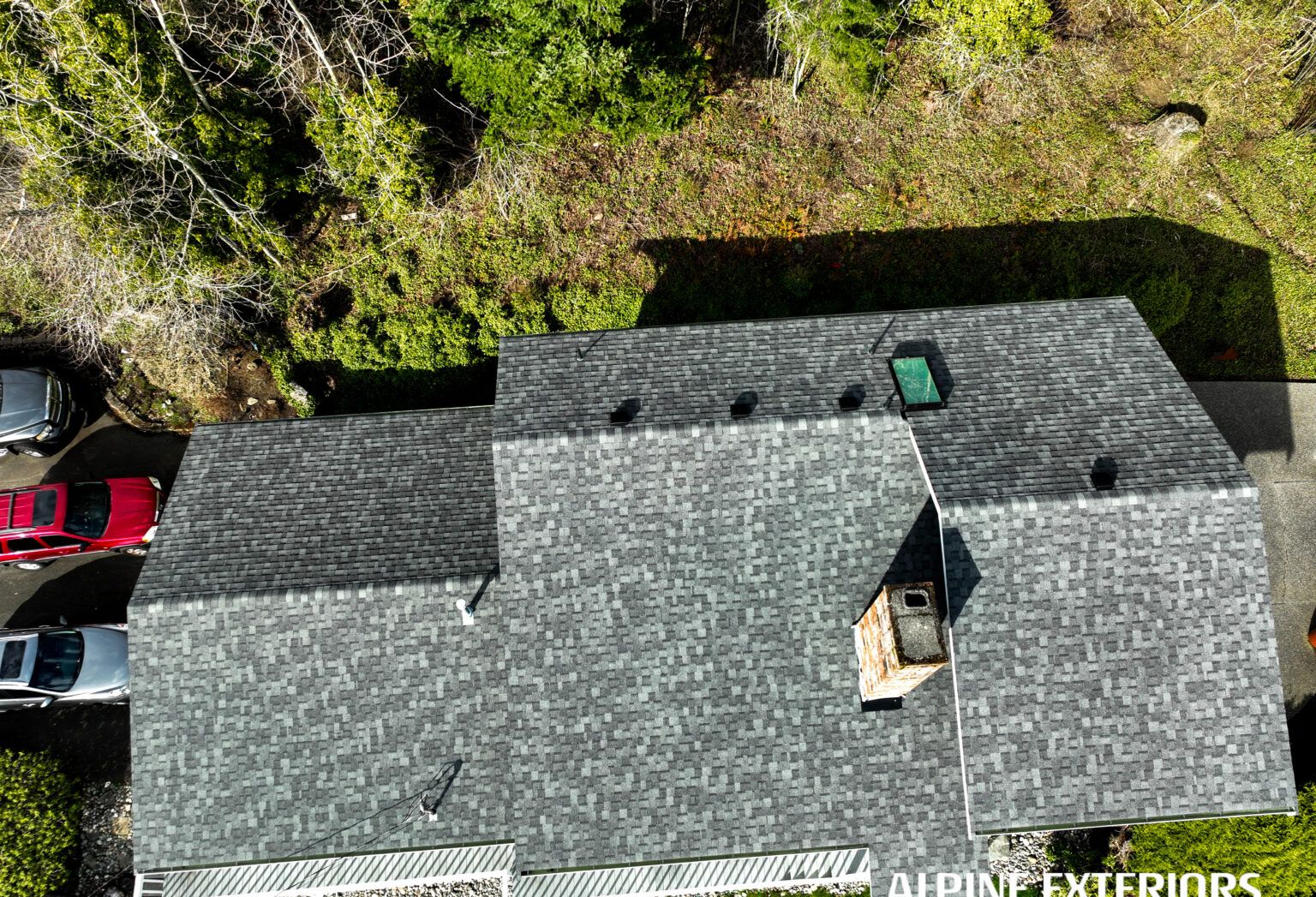
If you own or are re-siding a home in Barkley Village, the colors that tend to hold up best and look right against this setting are mid-tone warm greiges, deep charcoal or slate blue-grays, and muted cedar or forest greens. These three families share a common thread: they read as natural rather than manufactured under Bellingham's soft, overcast light, they sit comfortably next to the fir and cedar canopy and landscaped common areas that define the neighborhood, and they hide the slow green haze of moss and algae growth far better than stark white or pastel tones do. None of them are flashy, and that is by design. Barkley Village was built as a planned community with a consistent, understated architectural character, and siding colors that lean toward the loud or trendy tend to stand out in a way that draws complaints rather than compliments. We are not picking a single "winner" here, because the right color also depends on your roofline, stone or brick accents, and how much direct light your particular lot actually gets under the tree cover. What follows is the reasoning, not just the recommendation.
Whatcom County's climate and Barkley Village's specific setting narrow the field more than most homeowners expect. We weighed each color family against the conditions that actually affect siding here, not generic curb-appeal advice written for a different climate.
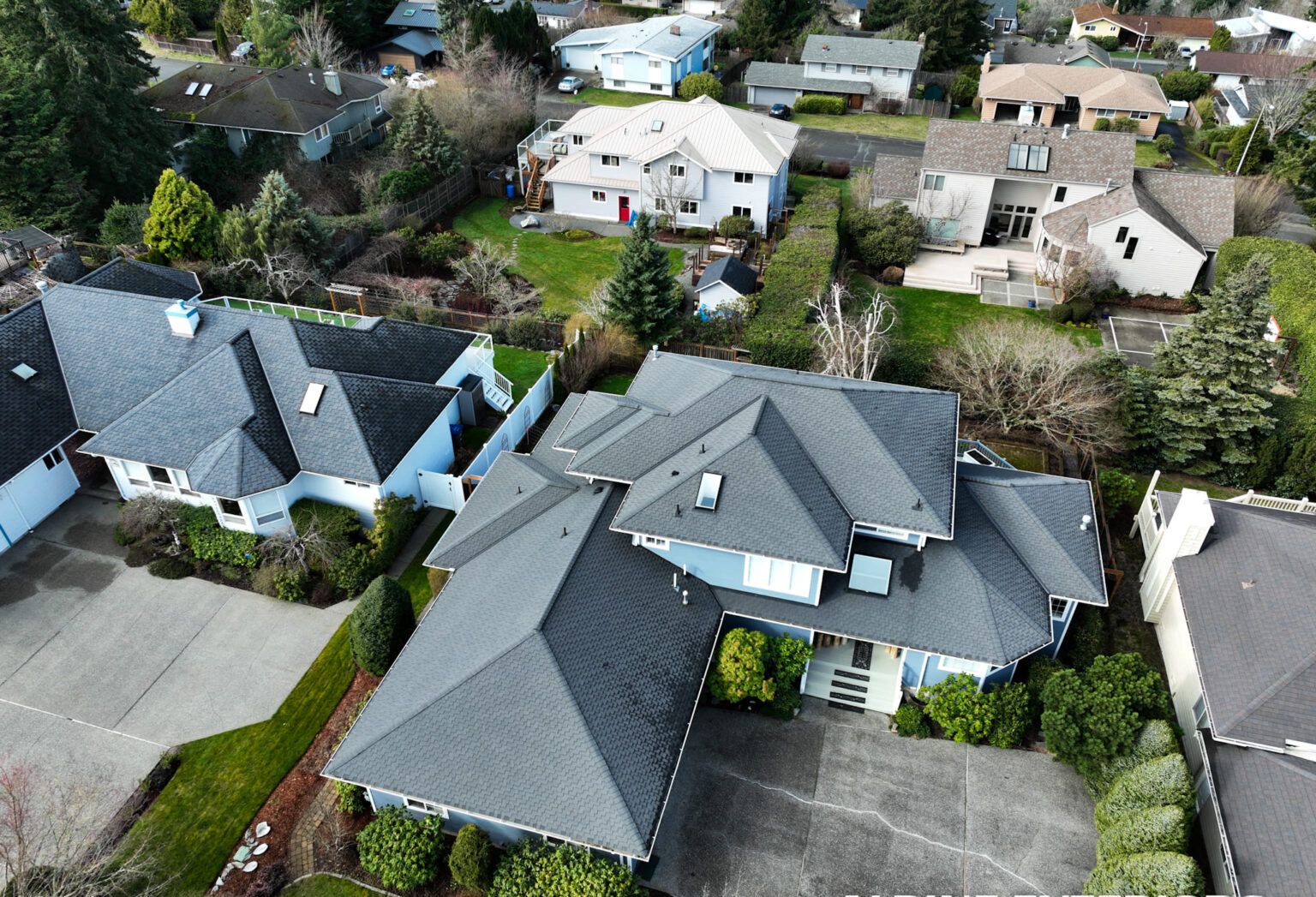
Warm greige, a blend of grey and beige with a hint of warmth, is one of the most forgiving colors for this climate. It reads as neutral and upscale without looking cold, and it pairs naturally with the stone, brick, and dark-stained trim common on Barkley Village homes. Under grey skies it holds its warmth rather than looking washed out the way a pure grey sometimes can.
The tradeoff is that greige can trend toward looking slightly dull if the undertone leans too grey rather than warm, and on heavily shaded lots it can show moss buildup on north walls faster than a darker charcoal would, simply because the contrast between clean siding and green streaking is more visible on a lighter mid-tone.
Deep charcoal and slate blue-gray tones have become popular around Whatcom County for good reason. They photograph well, they complement the deep greens of Douglas fir and cedar rather than competing with them, and they do an excellent job of visually absorbing minor moss shadowing and water spotting between cleanings, since the contrast against a dark background is much less noticeable than against white.
The honest drawback is heat and glare on the rare clear summer day. Very dark siding absorbs more solar heat, and on south- and west-facing walls that get afternoon sun, that can accelerate caulking and trim wear slightly faster than a mid-tone would, and it can make a shaded lot feel a bit heavy or closed-in if the whole house goes dark with no lighter trim to break it up. We generally recommend pairing full-charcoal siding with a lighter trim or fascia color for contrast and to keep the home from reading as a flat block from the street.
Fiber cement and engineered wood products now come in factory-finished woodgrain textures and warm cedar-tone colors that echo the timber character of the region without the maintenance burden of real wood. This is a strong option for homeowners who like the traditional Pacific Northwest look but are replacing rot-prone original wood siding.
The catch is that true wood-look finishes, whether real cedar or a wood-textured composite, need more attention to moisture management than a smooth painted finish. Real cedar left unfinished or under-maintained is genuinely at risk for wood rot in a climate this wet, which is exactly why so many Barkley Village homes have already moved away from it. If you want the cedar look, a factory-finished fiber cement product with a sealed, baked-on finish gets you the aesthetic with far less exposure to the moisture problems that plague real wood in this climate.
Soft, warm whites still work in Barkley Village, particularly on homes with strong architectural trim detail, black-framed windows, or a farmhouse-adjacent style. They brighten a shaded, tree-covered lot and read as clean and classic against a green landscape.
The tradeoff is real and worth stating plainly: white and near-white siding shows moss, algae, and general grime faster and more visibly than any other color family we cover here. On a lot with heavy tree cover or a north-facing wall that rarely gets direct sun or wind to dry it out, expect to wash white siding more often to keep it looking crisp. If you love the look, it is still a legitimate choice, just go in knowing the maintenance rhythm is different from a mid-tone or dark color.
A muted, greyed-down forest or sage green is one of the more distinctive choices that still fits the neighborhood's natural palette, since it essentially matches the surrounding tree line rather than contrasting with it. Done well, it can make a home feel settled into its lot rather than imposed on it.
The risk with green siding is picking a shade that is too bright or too saturated, which can look more like a craft-store paint chip than a considered exterior color, and can also stand out against a neighborhood of mostly neutral homes. A greyed, muted green with low saturation avoids that problem. Green is also one of the harder colors to color-match exactly if you ever need to repair or extend a section years later, since dye lots and product lines shift over time.
Black siding as a full exterior is not one of our top picks for this specific location, but as an accent, on a gable, a garage face, a porch surround, or window trim, it pairs very well with greige, cedar-tone, or soft white primary siding and gives a home real definition against the muted greens and greys of the landscape.
Used as a full-field color, black carries the same heat-absorption tradeoff as deep charcoal, just more pronounced, and it shows dust, pollen, and water spotting differently than lighter colors. On a heavily shaded, damp lot it also tends to hold visible moisture longer after a storm than a mid-tone will, simply because the darkest surfaces don't reflect as much heat to help them dry.
| Color family | How it handles shade and moss | Typical fit with Barkley Village's landscape |
|---|---|---|
| Warm greige / taupe | Moderate, shows buildup on north walls over time | Very natural, pairs with stone and dark trim |
| Charcoal / slate blue-gray | Good, visually absorbs minor streaking | Strong contrast against evergreen canopy |
| Cedar-tone woodgrain | Moderate, needs a sealed factory finish | Classic PNW look, echoes real timber |
| Soft white / Dover white | Weakest, shows moss and algae fastest | Clean and bright, best on sun-exposed lots |
| Muted forest / sage green | Good if properly muted, blends into tree line | Distinctive, matches surroundings directly |
| Black / near-black | Weaker in shade, holds visible moisture | Best as an accent, not a full field color |
Bright primary colors, high-gloss finishes, and anything that reads as trendy rather than timeless are the choices we would steer you away from here, and not because of a strict rule against them. Barkley Village's shared landscaping, mature tree cover, and generally consistent architectural tone mean a jarring color choice stands out far more than it would in a neighborhood with more visual variety already. Beyond aesthetics, there are practical reasons too. High-gloss siding finishes tend to show water spotting and mineral deposits from wind-driven rain more obviously than a matte or low-sheen finish, since the reflective surface highlights every drip mark. Very dark colors used across an entire, heavily shaded home can trap moisture longer after storms, which over many years is more of a maintenance and mildew consideration than a structural one, but it is still worth factoring in. And if your home still has original wood siding, we would caution against simply repainting it a trendy new color without first checking for wood rot underneath, particularly around window sills, butt joints, and anywhere caulking has failed. A fresh coat of paint on rotting wood buys very little time and can mask a problem that is cheaper to address honestly now than to discover later as a larger repair.
Yes, noticeably. Lighter colors like white and pale greige show moss, algae, and general grime faster than mid-tones and darker colors, especially on north-facing or heavily shaded walls that don't get much direct sun or wind to dry them out. A yearly soft wash is a reasonable rhythm for most colors here, but pale siding on a shaded lot may need attention more often to stay looking clean.
Barkley Village is a planned community with a consistent architectural character, and many sections have design guidelines or an architectural review process for exterior changes, so it is worth confirming with your specific HOA or covenant documents before ordering materials. Requirements vary by section and can change over time, so treat this as a step to verify directly rather than assume based on a neighbor's project.
Not necessarily, but it comes with real tradeoffs. Dark siding tends to hide moss shadowing and minor streaking better than light colors, which is a genuine advantage here. The downsides are that it absorbs more heat on the rare sunny day, which can stress caulking and trim slightly faster over time, and on heavily shaded walls it can hold visible surface moisture a bit longer after a storm than a mid-tone would.
We generally recommend coordinating with your roof and any stone, brick, or trim you're keeping rather than choosing siding color in isolation. A roof that leans cool grey will read differently next to a warm greige than a true grey, for example. If you're unsure how a specific color will actually look against your existing roof and trim under Bellingham's typical overcast light, ordering large sample boards and viewing them on the actual house, at different times of day, is worth the extra step before committing to a full order.
Picking a siding color that will still look right in fifteen years, and that won't fight the moss, rain, and muted light this part of Whatcom County throws at it, is easier with a second set of eyes that knows the neighborhood. Alpine Exteriors works with homeowners throughout Bellingham and Barkley Village on exactly this kind of decision, from matching a color to your roof and landscape to recommending materials that hold their finish through our wet winters. As a licensed Washington contractor (ALPINI751OW), Alpine Exteriors can walk your property, talk through sample boards in your actual lighting, and help you land on a color and material that fits both your home and this climate. If you're weighing a repaint against a full re-side, or just want an honest opinion on how a color will hold up on your specific lot, reach out to Alpine Exteriors to get that conversation started.