
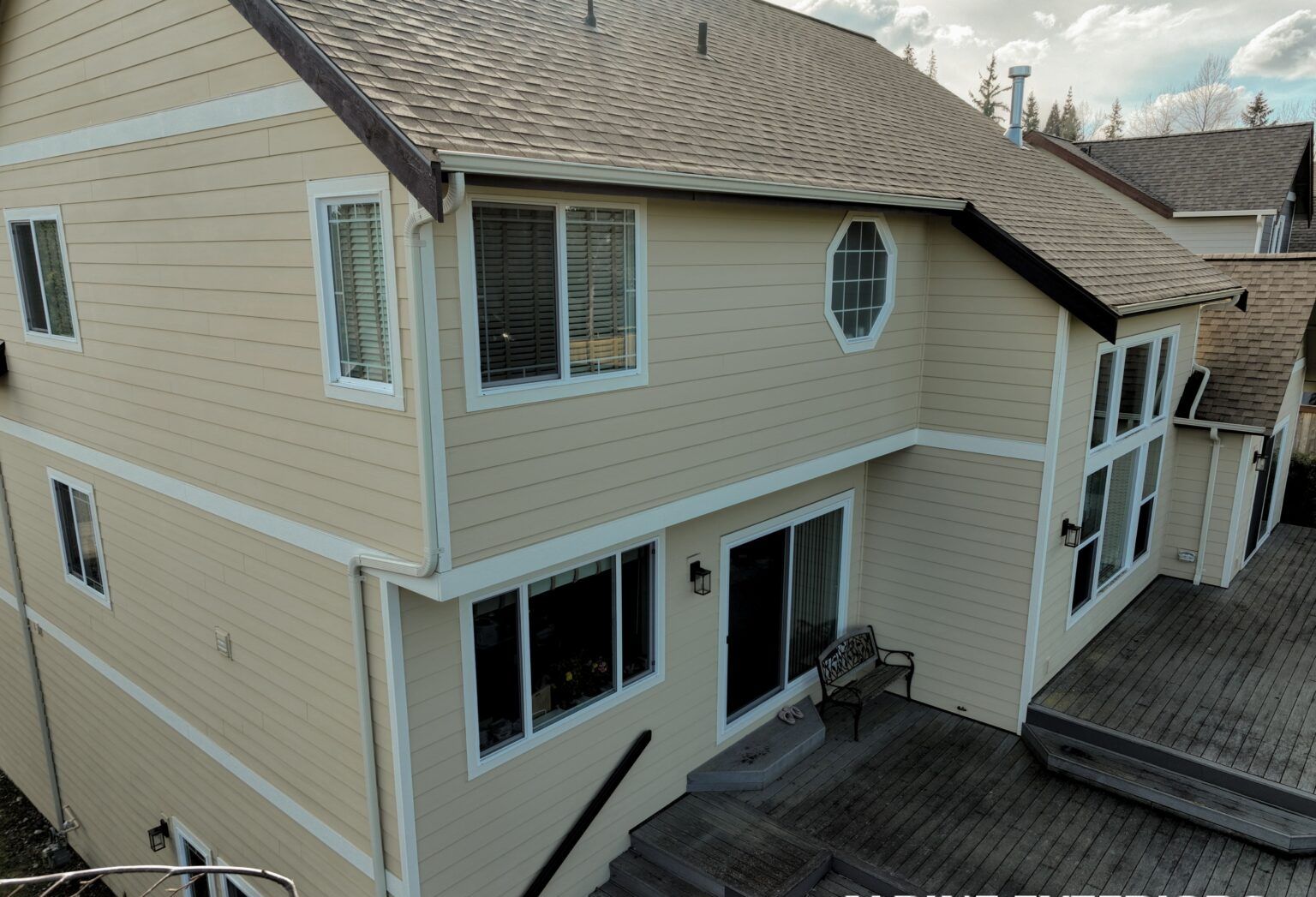
Barkley Village sits in a part of Bellingham where the housing stock is genuinely mixed — newer townhomes and condos built around the mixed-use core, older single-family homes tucked toward Whatcom Falls Park and the Electric Avenue corridor, and everything in between. That mix matters when you're pricing siding replacement, because the age, construction type, and current condition of your walls do more to set your final number than any single material choice. This page walks through realistic cost ranges for the area, the local conditions that push a project toward the high or low end, and what to look for when you're comparing bids from contractors. Alpine Exteriors has worked on homes throughout this part of Whatcom County, and the patterns below reflect what actually shows up once siding starts coming off — not a generic national estimate.
There is no single "average cost" that means much for a specific house, because a 1,400-square-foot rambler with sound sheathing and a straightforward gable roof is a different job than a three-story townhome with dormers, tight side-yard access, and rot hiding behind the water table board. What follows are typical per-square-foot ranges for installed siding in this region, plus the other line items that show up on most Whatcom County siding quotes. Treat these as planning ranges, not a quote — the only way to get an actual number is a walk-around inspection.
| Cost Factor | What It Covers | Typical Range |
|---|---|---|
| Vinyl siding (material + install) | Standard or insulated vinyl panels, trim, and accessories | Low-to-mid per square foot installed |
| Fiber cement (e.g., Hardie-type products) | Plank or panel fiber cement, factory-primed or prefinished | Mid-to-upper per square foot installed |
| Cedar or engineered wood siding | Traditional cedar lap or shingle, or engineered wood panels | Upper range per square foot installed, wider spread depending on grade |
| Tear-off and disposal | Removing existing siding, hauling and dumping debris | Modest add-on, higher if multiple layers exist |
| Sheathing and rot repair | Replacing water-damaged OSB, plywood, or framing found during tear-off | Wide range — can be minor or a significant add depending on what's behind the wall |
| House wrap and flashing | New weather-resistive barrier, window and door flashing, kick-out flashing at rooflines | Moderate add, scales with wall area and window count |
| Trim, fascia, and soffit work | Replacing or wrapping trim boards, fascia, and soffit vents | Moderate, higher on homes with extensive trim detail |
| Permits and code compliance | City of Bellingham or Whatcom County permit fees, energy code documentation | Small fixed range relative to overall project |
Because Barkley Village includes both attached townhomes and detached single-family homes, access and scope vary a lot from one property to the next. A detached rambler with a full perimeter to work around is usually simpler to bid than a townhome with a shared wall, HOA-mandated color matching, and a narrow gap between buildings for staging materials. Both are common in this neighborhood, and both belong in the same conversation with your contractor before you compare numbers.
A handful of conditions specific to living this close to Bellingham Bay and the Strait of Georgia consistently change what a siding job actually costs once the crew opens up the wall. None of these are exotic — they're just part of building in Whatcom County.
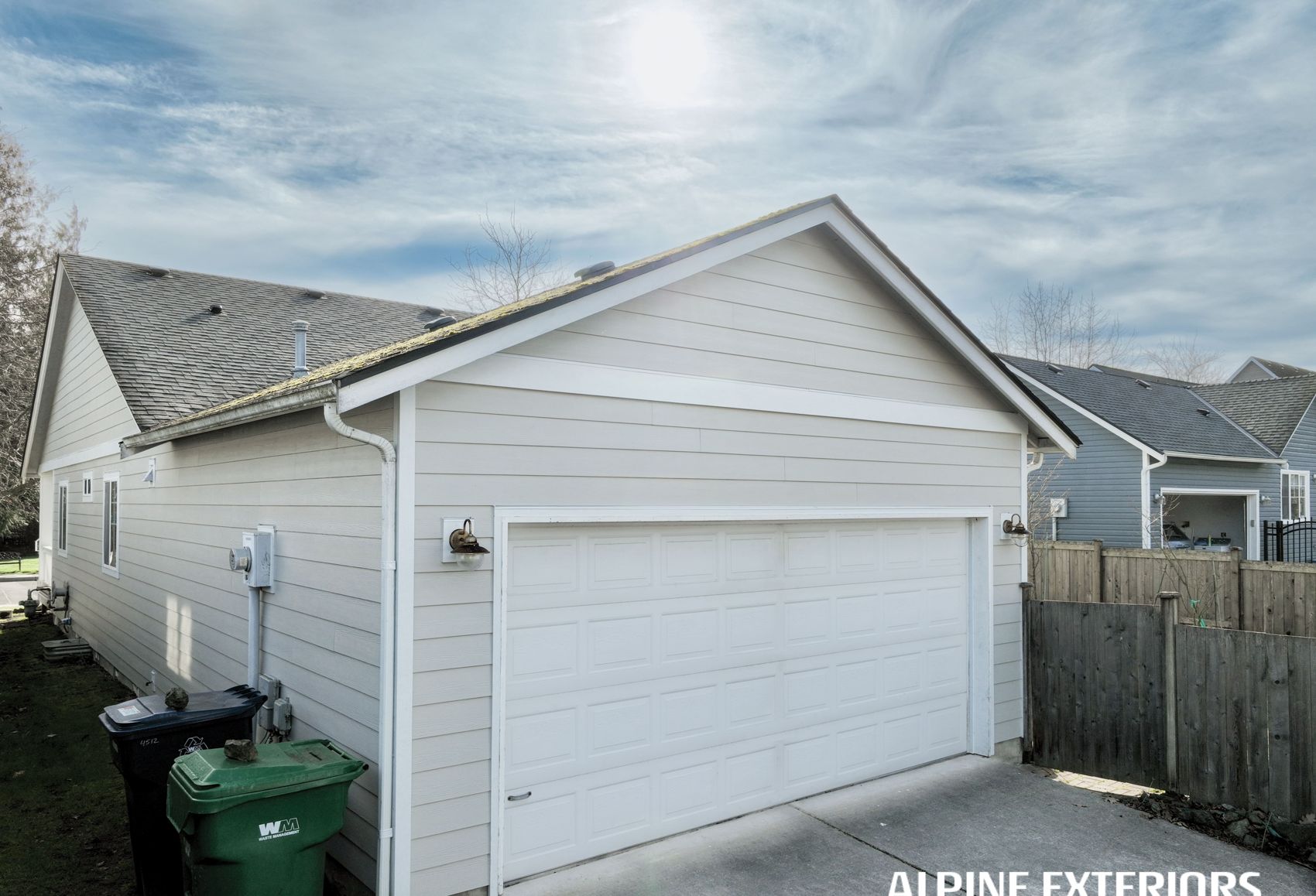
A usable, comparable quote is more than a bottom-line number. Before you sign anything, make sure the written proposal spells out:
The fastest way to end up frustrated with a siding project is to compare three bids that are actually three different scopes of work. Before ranking quotes by price, line them up side by side and check that each one specifies the same material tier, the same tear-off approach, and the same treatment of sheathing repair. A bid that's noticeably lower than the others is often missing something — sometimes it's simply a leaner crew, but sometimes it means overlay instead of tear-off, a lighter-gauge material, or no allowance at all for rot repair, which turns into a change order later.
It's also worth asking who actually performs the work. Some companies run their own installation crews start to finish; others subcontract labor out. Neither approach is automatically wrong, but you want to know which one you're getting, and who's accountable if a flashing detail is done incorrectly two years down the road. Alpine Exteriors will walk through scope differences with homeowners directly rather than leaving it for you to guess from a one-page estimate, and that kind of side-by-side conversation is a reasonable thing to expect from any contractor bidding your project.
Finally, check that every contractor you're considering is currently registered with Washington's Department of Labor & Industries, since that registration status is public and takes only a few minutes to look up. A contractor who resists giving you a license number, or whose number doesn't check out, is a red flag regardless of how competitive the price looks.
Many siding contractors, including Alpine Exteriors, offer financing arrangements through third-party lenders that let homeowners spread project costs over time rather than paying the full amount up front. Terms, rates, and qualification requirements vary by lender, so it's worth asking for the specific plan details in writing rather than assuming any financing offer works like a typical retail promotion. A home equity line of credit is another route some homeowners use for larger re-siding projects, particularly when the scope includes structural rot repair.
On the insurance side, it's important to be realistic about what a standard homeowner's policy actually covers. Damage from a sudden, covered event — a windstorm that tears siding loose, for example — is more likely to be covered than gradual deterioration from age, moss growth, or long-term moisture exposure, which most policies treat as a maintenance issue rather than a covered loss. If you do have storm damage, document it with photos before any repair work begins and get a written estimate that separates storm-related repair from any unrelated upgrades you're bundling into the same project, since insurers will want that distinction clearly laid out.
Start with the per-square-foot ranges in the table above for your preferred material, multiply by your home's exterior wall area, and then add a contingency for sheathing repair — homes in this area with original 1970s-90s siding or visible moss staining tend to need more of that contingency than newer construction. A walk-around estimate from a local contractor is the only way to narrow that range to something specific to your house.
Not always, but it's common enough in this climate that a responsible quote should address it rather than assume it away. Homes with wind-exposed walls facing the water, or with a history of moss and algae buildup, are more likely to have some degree of sheathing damage once the old siding comes off. Ask your contractor how they price repairs if damage is found, so you're not surprised by a change order mid-project.
Timelines depend heavily on house size, scope, and weather, since exterior work in Whatcom County is planned around the region's wetter months as much as possible. A straightforward single-family home might take a couple of weeks from tear-off to finished trim, while a larger or more complex project, or one that hits unexpected rot repair, can run longer. Your contractor should give you a schedule estimate that accounts for the likelihood of rain delays rather than a best-case-only timeline.
Fiber cement generally holds up well against the persistent moisture, moss, and wind-driven rain common in this part of Washington, and it doesn't have the same expansion and contraction behavior as vinyl in temperature swings. It also plays well with Washington State Energy Code continuous insulation requirements when installed as part of a full assembly. Vinyl remains a reasonable, lower-cost option for many homes — the right choice depends on your budget, how long you plan to stay in the home, and how much upkeep you want to take on.
Every one of the ranges above is a starting point, not a substitute for someone walking your specific walls in Barkley Village and telling you what they see. Alpine Exteriors is licensed in Washington under contractor license ALPINI751OW and works throughout Whatcom County, including Bellingham neighborhoods like Barkley Village, Ferndale, Lynden, Blaine, Birch Bay, and Sudden Valley. If you're ready to turn these ranges into an actual number for your home, request a written, itemized quote and use the comparison points above to evaluate it against any other bids you collect.