
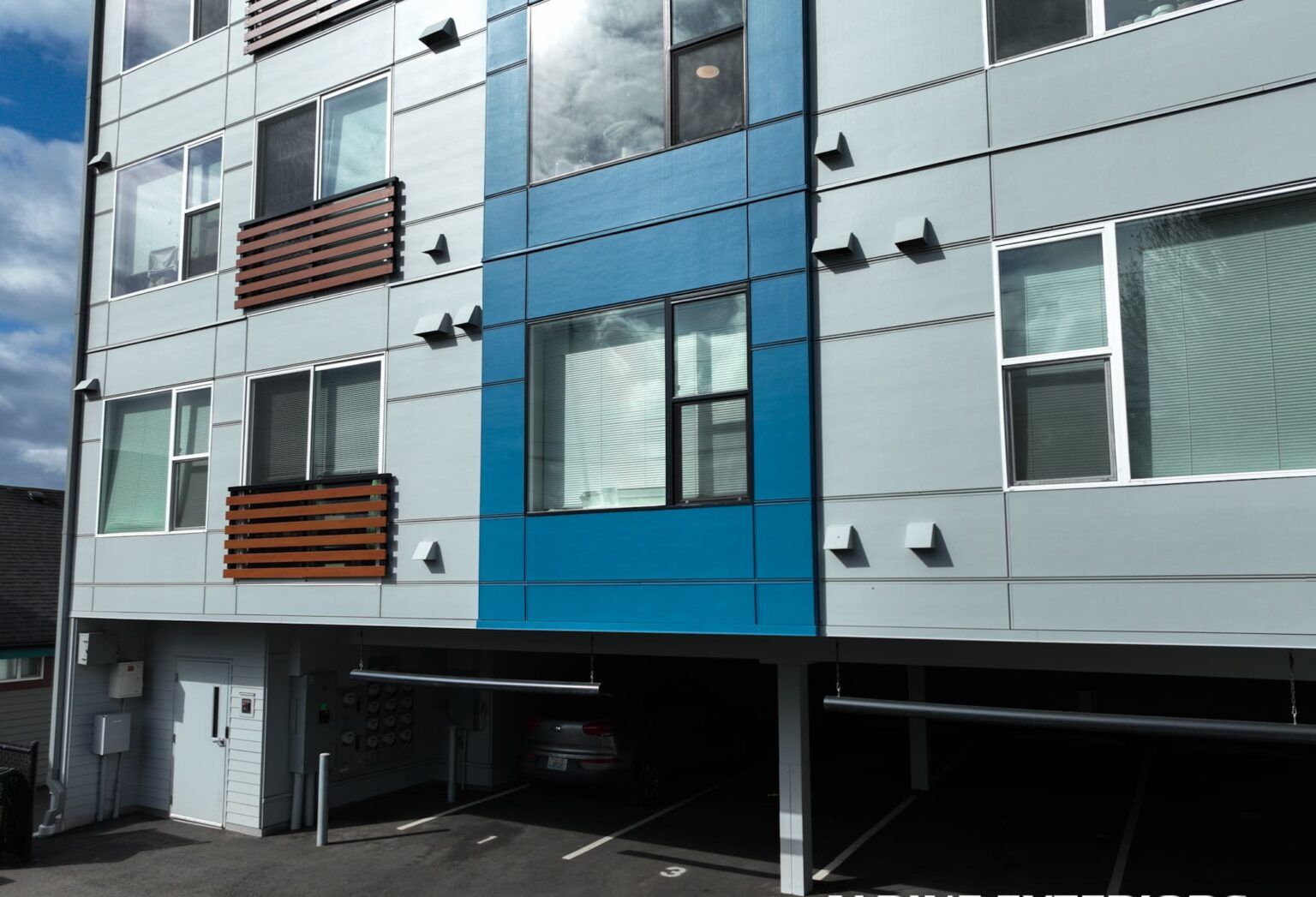
Acme sits in the foothill country south of Deming, in the shadow of Mount Baker, at a slightly higher elevation and closer to the timber line than the lowland parts of Whatcom County. That combination of elevation, dense fir and cedar canopy, and a long wet season puts a different kind of wear on exterior siding than a drier climate ever would. Western Washington's marine climate means Whatcom County gets many months of persistent, low-intensity rain rather than isolated downpours, so siding here spends more of the year damp than dry.
In the foothills around Acme and Sudden Valley, winter nights get cold enough that moisture trapped behind or inside siding materials can freeze, expand, and force open seams, caulk lines, and fastener holes, then thaw and refreeze the next cold snap. That freeze-thaw cycling repeats through the cold months and works joints looser over time. Closer to the water, in Bellingham, Blaine, Birch Bay, and along the approach through Lynden toward the Strait, wind-driven rain off Bellingham Bay and the Strait of Georgia pushes moisture sideways into wall assemblies during fall and winter storms, a different stress than the straight-down rain most siding is designed to shed.
Add the shade from evergreen tree cover common around Acme properties, and siding stays damp longer after each rain, which is exactly the environment moss, algae, and lichen need to establish themselves. None of that makes siding failure inevitable, but it does mean a regular, structured inspection is more valuable here than in a drier climate, because small problems, a lifted caulk line or a patch of moss holding moisture against a seam, have more chances to turn into wood rot or moisture intrusion before anyone notices from the ground.
This checklist is meant to help homeowners do a reasonable first-pass inspection themselves. It isn't a substitute for a trained eye, and some of what matters most, moisture readings behind the siding, the condition of the weather-resistive barrier, flashing at penetrations, genuinely can't be assessed by walking around the yard. Alpine Exteriors, a WA-licensed siding contractor (license ALPINI751OW) working throughout Whatcom County, built this list around the failure patterns actually seen on homes in and around Acme, not a generic national checklist.
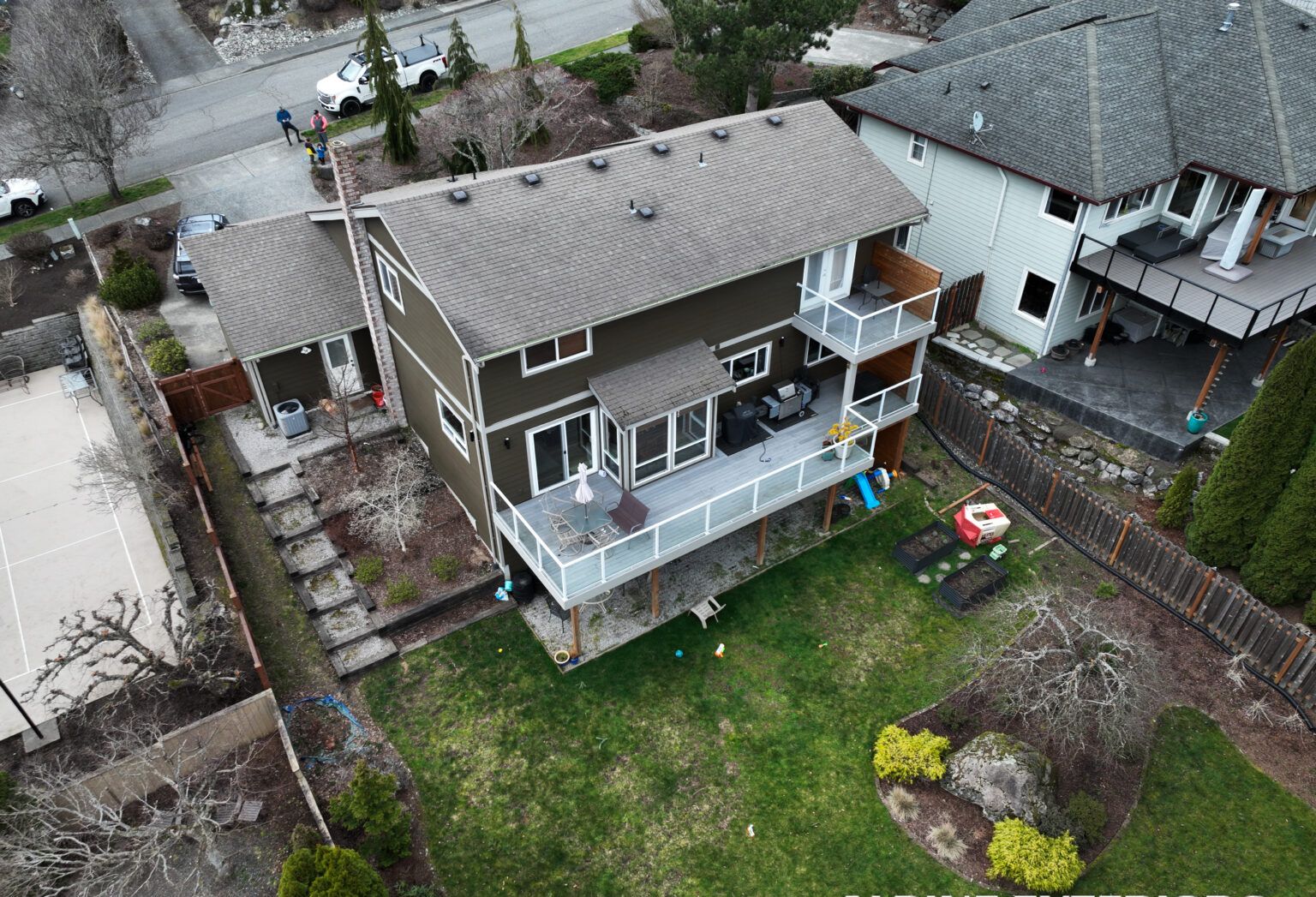
Not every item on this list means a full siding replacement. A cracked caulk line, a patch of surface algae, or a single warped panel are usually manageable repairs when caught early, cleaning, re-caulking, replacing a section of flashing, or swapping out one or two boards. The bigger risk in Whatcom County's climate isn't any single failed item, it's how long that item sits unaddressed while the rain keeps working on it.
If you find soft or spongy siding, staining that traces down from a specific point such as below a window or at a roof-to-wall intersection, or interior signs like a musty smell or attic staining, treat that as evidence moisture has already gotten past the surface. Surface cleaning or fresh caulk over a spot like that doesn't fix the underlying problem, and it can hide the issue from future inspections.
Take photos and note the location and approximate date for anything you find, even minor items. A record of what you saw and when makes it easier for a contractor to judge whether an issue is progressing and helps you confirm whether a repair actually resolved it.
Be honest about scope. Homeowners can reasonably handle re-caulking window trim or clearing moss off a low wall with a soft brush and an appropriate cleaner. Replacing rotted sheathing, correcting flashing at a roof intersection, or tracing a leak that's showing up somewhere other than where the water is entering are jobs that call for someone who does this work for a living.
Call a licensed contractor any time you find soft, spongy, or crumbling siding, especially near the foundation or under windows, since that almost always means rot has already reached the sheathing and needs to be opened up and assessed rather than patched from the outside.
Anything involving flashing at roof-to-wall intersections, chimneys, or multi-story penetrations is worth having a professional handle, both because those junctions are the most consequential place for a mistake and because the access itself, ladders at height, steep roof planes common on foothill homes near Acme, carries real fall risk not worth taking on solo.
If moisture is showing up on an interior wall or in the attic with no obvious exterior cause, that's a sign water is entering somewhere other than where it's showing up, which usually calls for someone experienced at tracing a leak path rather than trial-and-error patching.
If you're planning a larger renovation, an addition, or new siding on more than a small section of the house, bring in a licensed contractor early enough to make sure the work meets current Washington State Energy Code requirements for the wall assembly. Retrofitting for code compliance after the fact is more disruptive and usually more expensive than building it in from the start. It's also reasonable to call a professional simply for a second opinion; a same-day walkaround by someone who inspects siding regularly can often tell you whether what you're looking at is cosmetic weathering or something that needs attention now.
A full walkaround once or twice a year, once in late spring after the wettest months and again in early fall before winter storms, is a reasonable baseline for most homes in this climate. Homes with heavy tree cover, north-facing shaded walls, or a history of moss growth benefit from an extra look mid-winter, since that's when trapped moisture and freeze-thaw stress are doing the most damage and problems are easiest to catch while still small.
No. Surface moss and algae are extremely common on shaded, north-facing walls in Whatcom County and often just mean the surface stays damp longer than a sunnier wall, not that the material underneath has failed. That said, moss that has worked into a seam or lapped joint holds water against the siding continuously, so it's worth checking those specific spots more carefully rather than assuming all growth is purely cosmetic.
It can, but the siding itself is only part of the picture. What matters for meeting the Washington State Energy Code's requirements and for actual comfort and energy performance is the whole wall assembly working together: continuous insulation, an intact air barrier, and properly integrated flashing and siding. New siding installed without attention to those layers underneath won't deliver much energy benefit on its own, which is worth discussing with whoever does the work rather than assuming the visible finish material does it alone.
It means Alpine Exteriors is registered as a licensed contractor in Washington State under that specific license number, which homeowners can look up through the state's contractor licensing lookup to confirm active status and any bond or insurance information on file. Working with a licensed contractor gives homeowners a documented, verifiable relationship with the business doing the work, which matters more on projects involving structural repairs, flashing, or anything tied to code compliance.
If this checklist turned up soft spots, failed caulk, or signs of moisture you'd rather not guess about, Alpine Exteriors serves Acme and the rest of Whatcom County, including Bellingham, Ferndale, Lynden, Blaine, Birch Bay, and Sudden Valley, and can walk your property with you to sort cosmetic weathering from issues that need attention. Reach out to schedule an inspection and get a straightforward assessment of what your siding actually needs, if anything.