
Acme is unincorporated, so siding permits there are issued by Whatcom County Planning and Development Services, not by a city building department. Most structural or envelope-affecting siding work needs a permit; straightforward like-for-like re-siding sometimes does not, and the county decides that case by case.
Homeowners in Bellingham, Ferndale, Lynden, or Blaine pull permits from their city's own building department. Acme does not have one, because Acme is not a city. It is a small community in the South Fork Nooksack valley, in the foothills toward Mount Baker, governed directly by the county. So does Sudden Valley, the unincorporated stretch of Birch Bay, and the county's island communities. For all of them, Whatcom County Planning and Development Services (PDS) is the permitting authority, and county inspectors are the ones who show up on site.
That single fact changes how a siding project in Acme gets planned. A homeowner cannot walk into a city hall counter and get a same-day answer. PDS handles permits for the entire unincorporated county, from Sumas Mountain to Point Roberts, and a rural re-siding job competes for review time with everything else on their desk. Building in that lead time, rather than assuming a permit will be ready before the crew shows up, is the first thing to plan around.
We install and repair siding across Whatcom County, and Acme jobs get handled differently from a Bellingham city-lot job for exactly this reason: different counter, different review path, sometimes different questions asked. Alpine Exteriors pulls the permit on the county projects we run so the homeowner isn't the one chasing PDS.
Not every siding job needs a permit, and Whatcom County does not require one just because a house is getting new cladding. What triggers the requirement is what happens underneath the siding, not the siding itself. A straight tear-off-and-replace with the same siding type, over sheathing and a weather-resistive barrier that are staying in place and in good condition, is the kind of job that can sometimes proceed without one. Almost everything else crosses the line.
The clearest triggers are structural: replacing rotted sheathing, adding or removing wall openings, rebuilding a wall that has water damage behind the siding, or any work that touches the framing. Whatcom County follows the state-adopted residential and building codes for this kind of work, and structural repairs get reviewed and inspected regardless of how small the visible siding job looks from the street.
The less obvious trigger is the building envelope. When a project changes the weather-resistive barrier, the drainage plane, or the insulation assembly behind the siding, it can bring the job under the Washington State Energy Code even if no framing is touched. Older Whatcom County houses, especially in unincorporated areas like Acme that were built or added onto without much oversight, often have thin or missing continuous insulation and a house wrap that has already failed. Bringing that assembly up to current energy code requirements once a wall is opened is a real, reasonable requirement — but it does mean a "just replace the siding" job can turn into a permitted job the moment the crew pulls the old boards off and sees what's actually there.
Valuation matters too. Whatcom County, like most jurisdictions, exempts minor repair work below a certain dollar threshold from permitting. A full re-side of a house exceeds that threshold in almost every case; a small patch repair after storm damage may not. The honest answer is that the exact line depends on the scope and the county's read of it, which is one more reason to call PDS or have a licensed contractor confirm before work starts rather than assume either way.
Acme sits inland, up in the foothills toward Mount Baker rather than down on the water like Blaine, Birch Bay, or Bellingham's waterfront neighborhoods. That location changes which weather problem shows up first. Along Bellingham Bay and the Strait, wind-driven rain is the dominant threat to siding, pushing water sideways into laps and seams that were only ever designed for water running straight down. In Acme and the other foothill communities we serve, the bigger issue is freeze-thaw cycling. Temperatures there swing below freezing more often and more sharply than closer to the water, and any moisture that gets behind siding and into the sheathing has more chances each winter to freeze, expand, and work joints and fasteners loose.
Underneath both problems is the same regional constant: Whatcom County gets a lot of rain, spread across a lot of months, and siding here is fighting a long, low-grade battle against moisture rather than a handful of dramatic storms. Wood siding and trim on Acme's shadier, tree-covered lots pick up moss and algae quickly, and once organic growth is holding moisture against the surface, wood rot in the sheathing behind it is usually not far behind. By the time rot shows on the outside, it has often already spread further than expected on the inside — exactly the kind of discovery that turns a cosmetic re-side into a structural, permitted repair partway through the job.
This is also why the sheathing and weather-resistive barrier inspection matters more here than it would in a drier climate. A siding assembly that traps moisture through a Whatcom County winter doesn't just look bad in a few years — it can rot from the inside out well before the siding itself shows any wear. A county inspector checking that layer before it gets covered up is catching problems while they're still cheap to fix.
Start by finding out which side of the permit line a specific project falls on before signing a contract or scheduling work. For a house in Acme, that means a call to Whatcom County Planning and Development Services, or asking a licensed contractor who has pulled permits there before. Don't rely on what a permit required for a similar-looking job in Bellingham or Ferndale — those go through a different building department with its own forms and review timeline.
If a permit is required, have the contractor pull it, not the homeowner, unless there's a specific reason to do it personally. A contractor who is licensed and pulling the permit under their own name has an incentive to build to the inspected standard, because their license is tied to the outcome. Ask to see the actual permit number once it's issued, not just a promise that "it's taken care of."
Budget for the possibility that the scope grows once the old siding comes off. In a region with this much rain history, finding rotted sheathing or a failed weather barrier behind old siding is common enough that it should be treated as a real possibility in the estimate, not a surprise upcharge. A contractor who mentions this up front, before the first board comes off, is being straight with a homeowner; one who never brings it up is either working on a very new house or not looking closely.
Don't skip or wave off the inspections. The sheathing and weather-resistive barrier inspection, in particular, is the one point where an inspector can see the assembly before it's sealed behind new siding for the next few decades. Scheduling that inspection promptly, and not covering the wall before it happens, is worth the day or two of delay it usually takes.
Verify the contractor's license directly with the Washington State Department of Labor and Industries rather than taking their word for it. Alpine Exteriors carries Washington contractor license ALPINI751OW, and any homeowner working with us, or with anyone else, should be able to confirm active licensing and bonding before a crew starts pulling old siding off the house.
Not always. A straightforward replacement of siding material over sheathing and a weather-resistive barrier that are staying in place and in sound condition can sometimes proceed without a permit, but any work that touches framing, sheathing, insulation, or the drainage plane behind the siding generally does. Because Acme is unincorporated, the determination comes from Whatcom County Planning and Development Services, and it's worth confirming before work starts rather than assuming either way.
Whatcom County building inspectors, dispatched through Planning and Development Services, handle inspections for Acme and the rest of the unincorporated county, including Sudden Valley and unincorporated Birch Bay. There is no separate Acme building department; everything routes through the county office that serves rural Whatcom County as a whole.
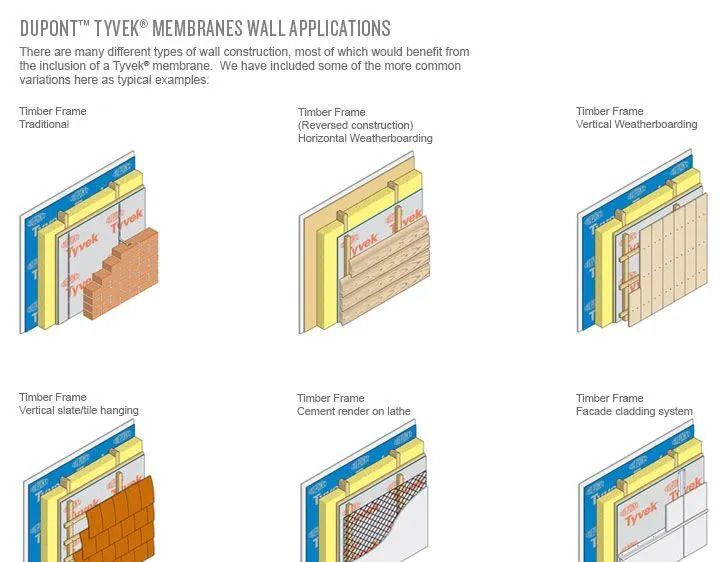
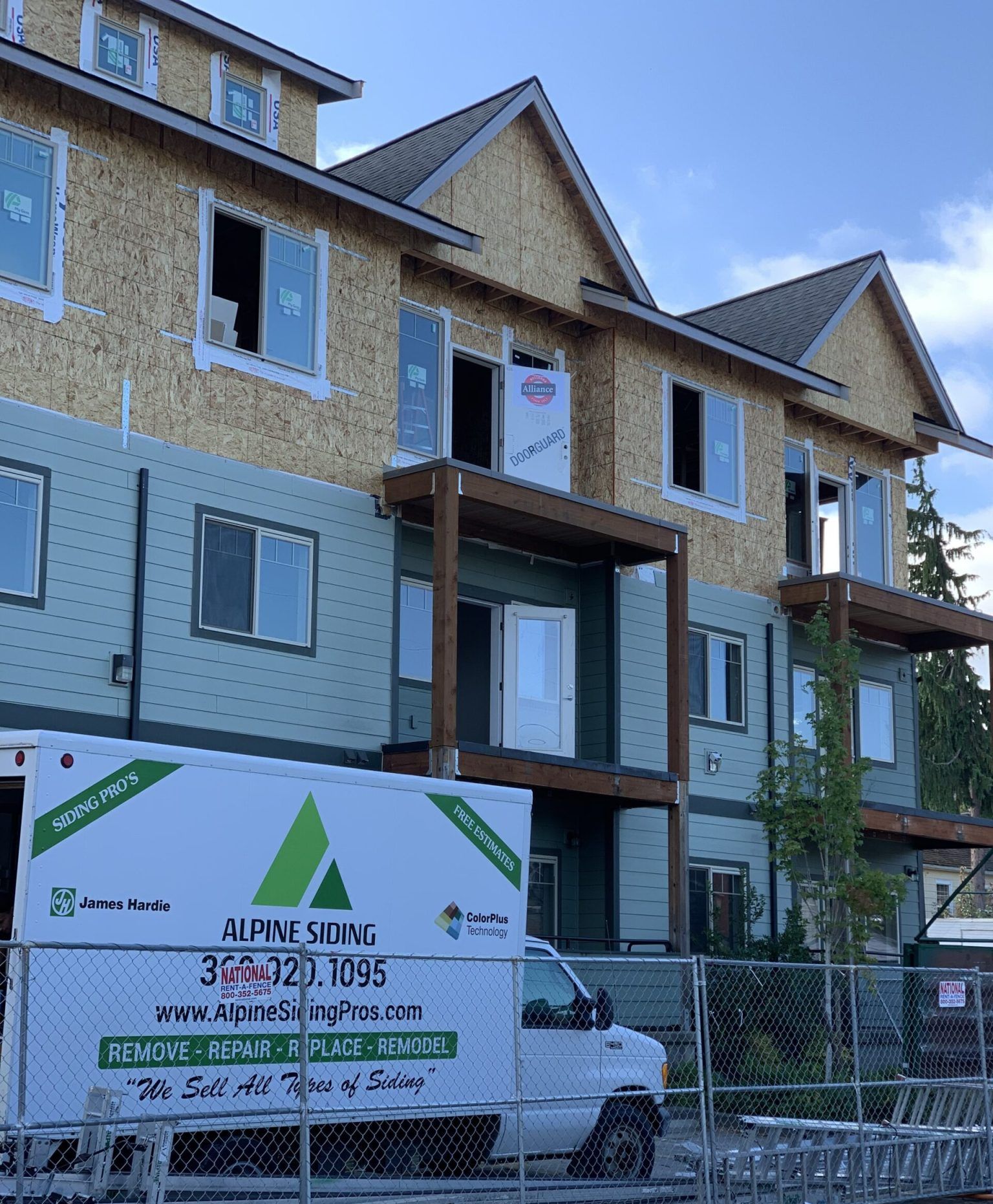
On a permitted siding job, the key inspection usually happens after the old material is off and the sheathing and weather-resistive barrier are exposed, before the new siding goes on and covers everything up. The inspector is looking for sound sheathing, properly lapped and sealed house wrap or building paper, correct flashing at windows, doors, and penetrations, and, where the Washington State Energy Code applies, the required insulation and vapor control layers. A final inspection typically follows once the siding itself is installed.
If sheathing or framing behind the old siding has rotted, that repair becomes a structural matter and isn't something a permit can be skipped on, even if the original re-siding job wasn't going to need one. The contractor should document the damage, extend the scope to replace the affected material, and, if a permit wasn't already pulled, get one before closing the wall back up. In Whatcom County's wet climate, finding some degree of hidden rot on an older Acme home is common enough that it's worth planning for rather than treating as a rare worst case.
Permit questions on a rural Whatcom County property don't have to be guesswork. Alpine Exteriors works on siding projects throughout Acme and the rest of unincorporated Whatcom County alongside our jobs in Bellingham, Ferndale, Lynden, Blaine, Birch Bay, Sudden Valley, and the islands, and we handle the Planning and Development Services paperwork on the county jobs we run. If you're planning a re-side in Acme and want to know upfront whether your project needs a permit, what it will likely take to bring an older wall assembly up to code, and how long the inspection process will realistically run, reach out to Alpine Exteriors for a straightforward assessment before you commit to a contract.