
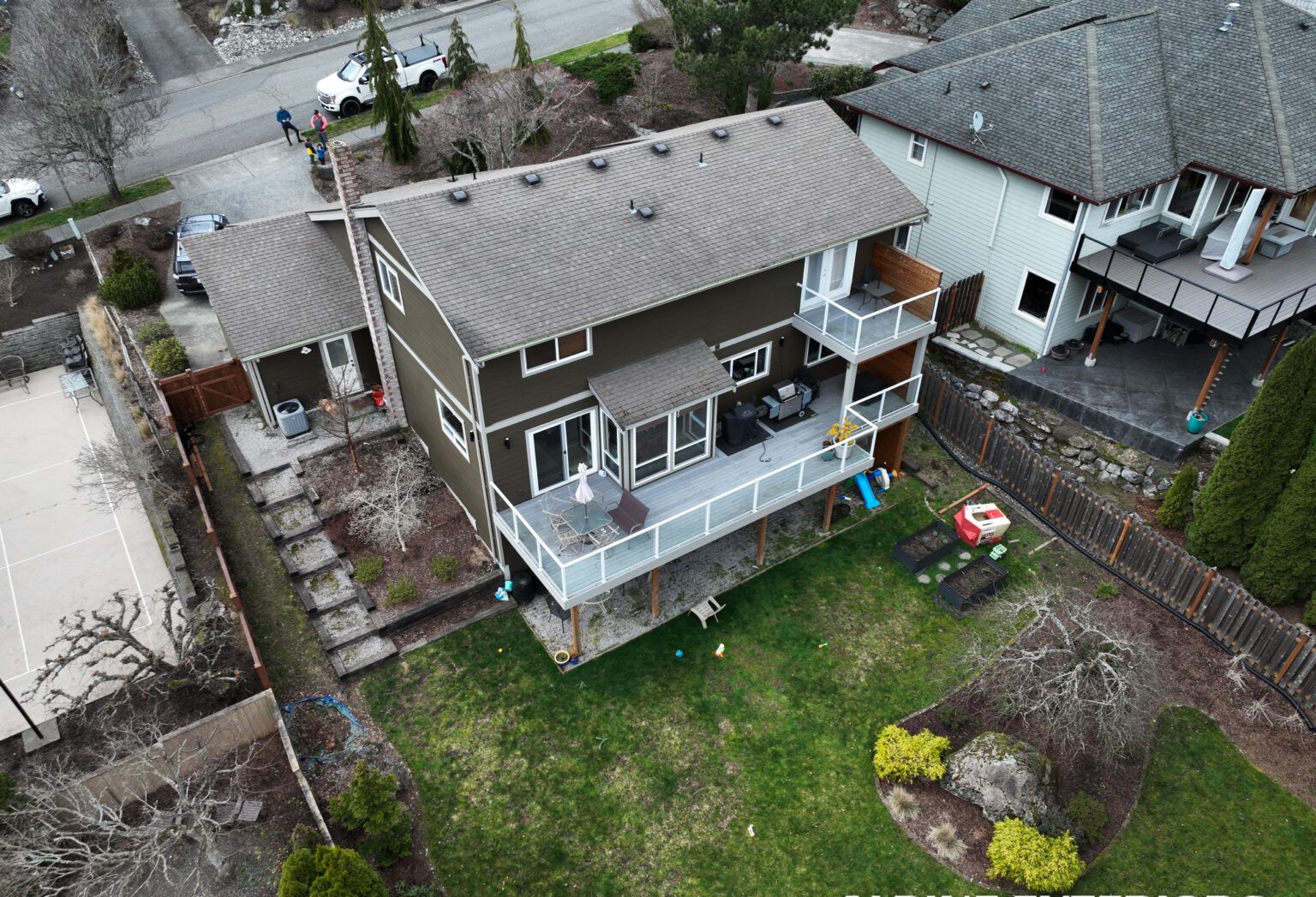
After a windstorm or a stretch of heavy rain, walk the perimeter of your Sehome home within a few days and look for lifted or cracked panels, dark staining at the seams, and soft spots along the bottom courses and around window trim. In this part of Whatcom County, most storm-related siding damage isn't wind tearing panels off the wall — it's wind-driven rain forcing water behind panels that were already loose, gapped, or poorly caulked, and that damage stays hidden until the rot underneath is already established.
Sehome sits on a hill above downtown Bellingham, close enough to the water that storms moving in off Bellingham Bay and the Strait of Georgia hit the neighborhood with real force, but rarely with the sustained straight-line winds that would physically strip lap siding from a wall. What actually happens is more gradual and more damaging over time. Wind pushes rain sideways and even slightly upward against the wall, and it finds any gap: a nail pop, a cracked caulk joint, a seam where two panels weren't lapped correctly, a spot where trim has pulled away from the sheathing by a few millimeters. Once water gets behind the siding, it's sitting against the weather-resistive barrier and, in older assemblies, sometimes directly against the sheathing or framing. It doesn't dry out quickly here, because the region doesn't get long stretches of warm, dry weather to pull moisture back out of the wall assembly. The result, months or years later, is soft sheathing, rotted trim boards, and in the worst cases, structural framing that needs to be sistered or replaced — none of which is visible from the driveway.
A single storm event is rarely the whole story. What you're usually looking at after a storm is either new damage from that specific event, or a storm that exposed a problem that had already been building. Both matter, and they need different responses.
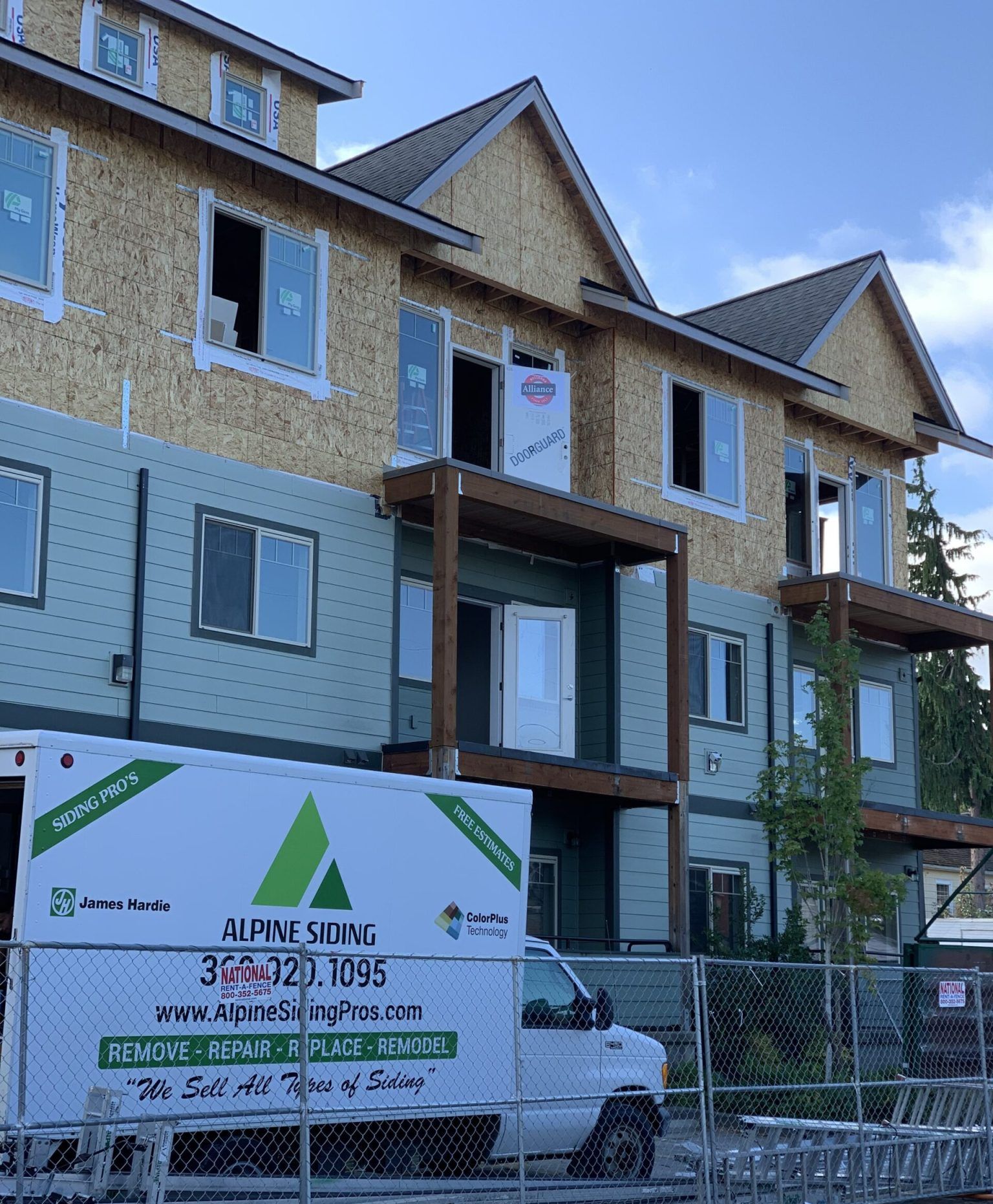
Contractors who learned their trade somewhere drier tend to underestimate how much of Whatcom County's siding damage is a rain-volume problem rather than a wind problem. A few things about this specific area change how siding fails and how it should be inspected and repaired:
None of this is hurricane-level wind exposure, and it's worth saying plainly: siding failure here is almost never about a storm ripping a house apart. It's a slower, wetter problem, which is actually good news, because it means most of it is preventable with attention to details that are easy to check.
The right response depends on whether you're looking at obvious storm damage or trying to figure out if a storm exposed something older. Either way, the sequence is similar.
If the damage turns out to be more than a panel or two, replacement of a full wall section — or the whole elevation — often makes more sense than patching, both because matching older siding exactly is difficult and because opening the wall is the only way to confirm the sheathing and framing underneath are sound. Costs for that kind of work vary widely depending on siding material, how much of the wall assembly needs to be replaced, and whether rot has spread into framing, so it's worth getting a written scope from an inspection rather than a rough guess over the phone.
Most standard homeowner's policies distinguish between sudden, accidental damage and damage from gradual wear or lack of maintenance. A tree limb that cracks a panel during a windstorm, or wind that peels a section of siding off in a single event, is the kind of thing insurers typically expect to cover. Rot that developed over a couple of wet seasons because a caulk joint failed and nobody caught it is usually treated as a maintenance issue, even if a storm is what finally made it visible.
| Typically covered | Typically not covered |
|---|---|
| Sudden wind damage to panels or trim from a specific storm | Gradual rot from long-term moisture intrusion |
| Damage from a falling tree or branch during a storm | Moss or algae growth and the cosmetic damage it causes |
| Water intrusion traced to storm-caused damage to flashing or trim | Damage from deferred maintenance, like siding that was never caulked |
This isn't a substitute for reading your specific policy, and coverage details vary by carrier. What matters practically is documentation: photos from before the storm if you have them, photos immediately after, and a contractor's written assessment of what caused the damage and when it likely occurred. An adjuster is more likely to treat a claim as storm-related when there's a clear, dated event and evidence the damage is consistent with that event, rather than with months of prior moisture exposure.
If you're re-siding a wall or a whole house as part of a repair, that work has to meet current Washington State Energy Code requirements for the wall assembly, which is a different standard than whatever was in place when the home was originally built or last re-sided. That typically means attention to the weather-resistive barrier, insulation continuity, and how the new siding is flashed and sealed — worth raising directly with whoever pulls the permit, since it affects both the scope and the cost of the repair.
Within a few days is reasonable for most storms, sooner if you noticed anything unusual during the event itself, like a panel flapping or water visibly running down an interior wall. Waiting through an entire wet season before checking gives any water that got behind the siding much more time to cause damage that's harder and more expensive to fix.
Sometimes, if the damage is limited to a failed caulk joint or a small crack and there's no evidence of moisture behind the panel. But caulk and paint are surface fixes — if a moisture check shows the sheathing underneath is already wet or soft, sealing the surface just traps that moisture in rather than solving the problem.
Not directly. Moss is mostly a function of shade and moisture exposure over time, and plenty of homes in Sehome have moss without any storm-related damage. But moss holds water against the siding surface longer, and heavy moss can make it harder to spot early signs of a real problem, so it's worth clearing and inspecting the wall underneath rather than assuming it's purely cosmetic.
There isn't one right answer, and it depends on your budget, your home's exposure, and how much maintenance you're willing to keep up with. Fiber cement and quality vinyl both perform reasonably well against sustained rain when installed correctly with proper flashing and a functioning weather-resistive barrier; wood siding looks great but needs more consistent upkeep in a climate this wet. The installation details usually matter more than the material choice itself.
If a recent storm left you wondering whether what you're looking at is cosmetic or something that needs real attention, it's worth getting eyes on it before another wet season adds to the problem. Alpine Exteriors is a Washington-licensed contractor (license ALPINI751OW) serving Bellingham neighborhoods including Sehome, along with Ferndale, Lynden, Blaine, Birch Bay, Sudden Valley, and the islands. We'll walk the affected walls, check for hidden moisture rather than just looking at the surface, and give you a straightforward assessment of what's storm damage, what's maintenance, and what your options actually are — no pressure to replace more than the house needs. Reach out to Alpine Exteriors to schedule an inspection.