
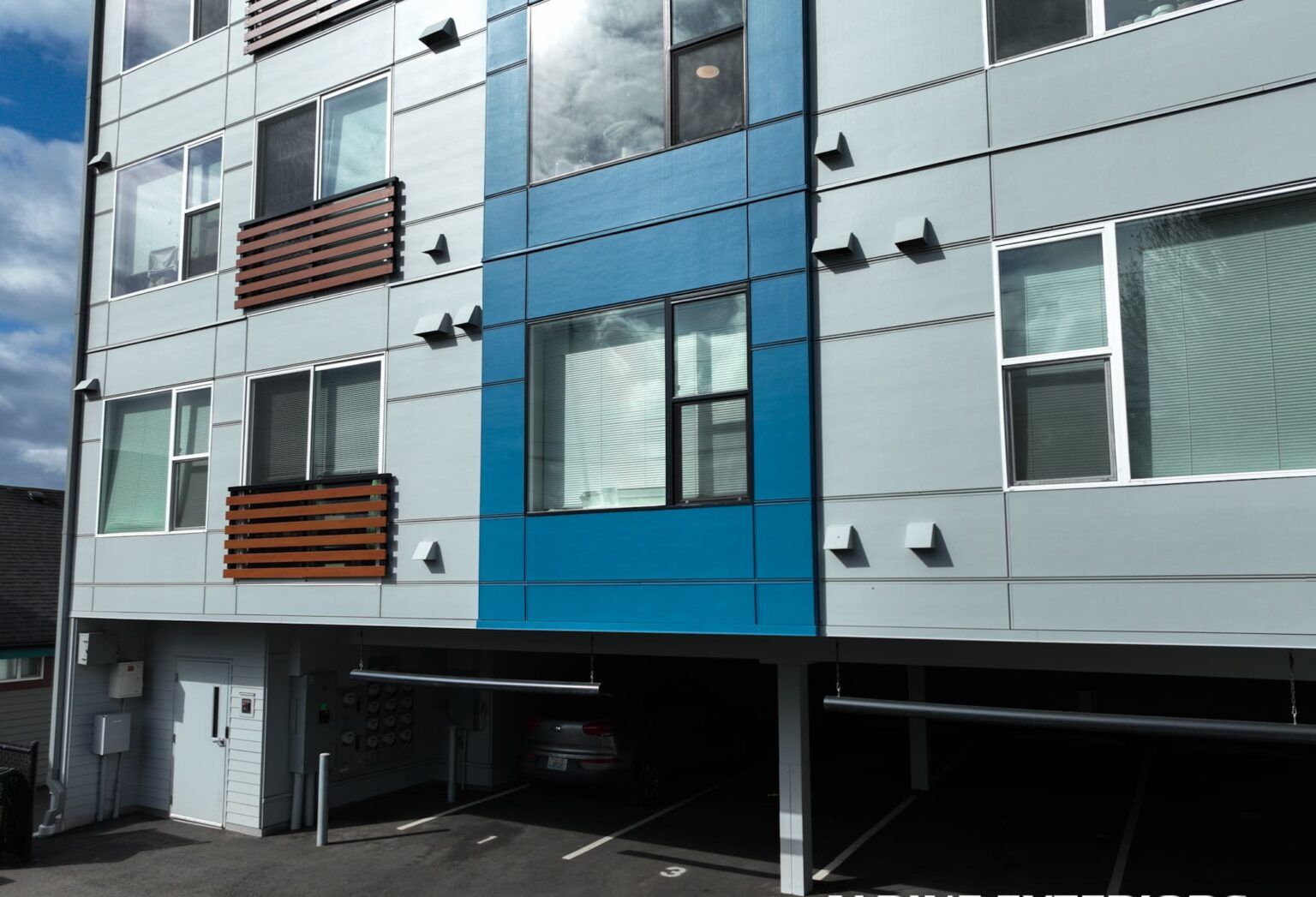
Columbia is one of Bellingham's older, tree-shaded neighborhoods, and that setting shapes siding color decisions more than most homeowners expect. Mature conifers throw deep shade across north- and east-facing walls for much of the year, wind-driven rain comes in off Bellingham Bay and the Strait of Georgia, and the humidity that keeps the lawns green also keeps moss and algae looking for a foothold on anything shaded and damp. Add in HOA covenants in nearby planned communities like Sudden Valley, and the "right" siding color here is really a compromise between what looks good, what holds up, and what the neighborhood allows. Alpine Exteriors has installed and repaired siding across Whatcom County long enough to have opinions about which colors earn their keep and which ones look great in a sample chip and disappointing after three winters.
For most homes in Columbia and the surrounding Whatcom County area, we steer clients toward mid-tone colors that split the difference between hiding dirt and resisting fade: warmed grays and greiges, cedar-toned browns, and muted sage or moss greens that echo the Douglas fir and bigleaf maple canopy already on the lot. These tones do double duty. They read as intentional and current, they don't show water spotting or pollen dust the way pure white does, and they don't telegraph every streak of moss the way a flat white or a glossy dark color can. Deep charcoal and near-black are having a real design moment and can look sharp on a home with good roof overhang and full sun exposure, but they carry real tradeoffs in a climate this wet and this shaded that we'll get into below. There is no single correct color for every lot in Columbia — a house tucked under a stand of cedars needs a different answer than one sitting open along a bay-facing slope — but the short list above is where nearly every successful project on our books starts.
We didn't rank these colors on looks alone. Four criteria matter more here than in drier or sunnier parts of the country, and we weighed every option against all four:
Greige — the blend of gray and beige — has become the default "safe modern" choice around Whatcom County for good reason. It reads as neutral and updated without looking stark, it pairs cleanly with the stone, brick, and wood accents common on Columbia's older homes, and it tends to hide both dust and light moss staining better than a true white. The tradeoff is that greige has become common enough that some buyers see it as generic, and cooler-toned grays can look flat and cold under our long stretches of overcast sky. If you go this route, look at a large sample board outdoors on an actual cloudy day, not just in a showroom — grays shift more than any other color family under gray-sky light.
Brown and cedar-toned siding is a natural fit for lots like the ones common in Columbia, where the house sits among real cedar and fir. These tones camouflage falling needles, pollen, and dirt splash-back from planting beds better than almost any other color family, and they age gracefully because minor fading reads as a warm patina rather than an obvious color shift. The downside is that cheaper synthetic wood-tone finishes can look plasticky next to actual wood trim or a neighbor's real cedar shakes, and some HOAs restrict how "woodsy" a palette can get if they're trying to keep a street looking cohesive. Fiber cement products with embedded wood-grain texture, like James Hardie's ColorPlus line, do this convincingly; flat vinyl in a brown tone can look less convincing up close.
Green siding is polarizing nationally, but in a landscape this green it can be the most site-appropriate choice on the list. A muted, low-saturation sage or moss tone visually merges the house into the tree line rather than standing out against it, and — practically speaking — it's one of the only siding colors where a light dusting of actual moss or algae doesn't look out of place before a cleaning. The risk is picking a green that's too bright or too blue; those read as an obvious, dated color choice rather than a natural one. Stick to desaturated, gray-leaning greens and test the sample against your actual roof and trim colors before committing.
White siding on a well-maintained home with good roof overhangs and full sun exposure can look sharp — clean lines, strong curb appeal, a classic Pacific Northwest farmhouse look. But white is genuinely the hardest color to keep looking good in this climate. It shows every streak of algae, every water spot from a sprinkler or downspout, and every bit of pollen dust in spring, and those show up faster and more visibly than on almost any other color. We don't tell clients to avoid white outright, but we do tell them to go in expecting more frequent washing, and to think hard about whether their lot gets enough sun and airflow to actually dry out between rain events. A shaded, damp wall in white shows dirt within a single wet season in a way that would take years on a mid-tone.
Deep charcoal siding, often paired with black windows and warm wood accents, is one of the more requested looks we see right now, and on the right lot it's striking. The tradeoff is twofold. First, dark colors absorb more heat, and on vinyl siding that can mean real risk of warping or buckling on unshaded south- and west-facing walls during our hotter summer stretches — fiber cement doesn't have this problem, which is one reason we steer clients toward it when they want a dark color. Second, dark colors show fade unevenly; a wall that gets partial shade from a tree for half the day will fade at a visibly different rate than the sun-exposed section next to it, and that mismatch becomes obvious well before the color has faded enough to need repainting on its own.
A few choices consistently cause regret in this specific climate, independent of personal taste. Bright, highly saturated colors — true reds, bright blues, saturated yellows — fade unevenly and quickly under UV exposure even in a mostly cloudy climate, and they're also the colors most likely to run afoul of an HOA's approved palette or a neighborhood's informal norms. Glossy or high-sheen finishes in any color tend to highlight water spotting and streaking rather than hide it, since a wet, shiny surface shows every drip mark as it dries. Dark vinyl on a wall with full southern or western exposure and no shade is a real risk for heat-related warping in this region's warmer summers, even though we don't deal with the extreme heat other parts of the country see — if you want a dark color on an exposed wall, fiber cement or engineered wood siding handles the heat load far better than vinyl. And pure white on a heavily shaded, poorly ventilated wall is close to guaranteed to show visible algae streaking well before your first scheduled cleaning, simply because that wall may never fully dry out between rain events in a Whatcom County winter.
Not directly — the Washington State Energy Code governs wall assembly performance, continuous insulation, and air sealing rather than exterior color, so it won't restrict your color palette. Where it does matter is in how the siding is installed: code-driven furring or continuous insulation can add depth to the wall, which changes how trim, reveals, and shadow lines read in a given color, especially with deep charcoal tones where shadow lines are more visible.
Possibly. A number of planned communities in Whatcom County, including sections of Sudden Valley and other covenant-controlled subdivisions, maintain approved color lists or require design review before a re-side. Always check your covenants or contact the architectural committee before ordering material, since returning custom-ordered siding in a rejected color is costly and slow.
Mid-tone colors with some texture or grain — cedar browns and muted sage greens in particular — hide early moss and algae growth better than either pure white or very dark tones, because the natural color variation in the finish visually blends with light green-black staining rather than contrasting against it.
Yes, generally. Even with fewer full-sun days than sunnier regions, west- and south-facing walls in Whatcom County still take a meaningful annual UV dose, and darker pigments absorb and degrade under that exposure faster than lighter, less saturated colors — the fade is usually just slower to become visually obvious than it would be in a sunnier climate.
Color chips and online visualizers only get you so far — the way a color actually behaves on your specific lot depends on tree cover, wall orientation, roof overhang, and material, and that's easiest to judge with someone who's watched these colors age on real Whatcom County homes for years. Alpine Exteriors, WA contractor license ALPINI751OW, works with homeowners throughout Bellingham, Ferndale, Lynden, Blaine, Birch Bay, Sudden Valley, and the surrounding islands, including neighborhoods like Columbia, to match siding color and material to the specific conditions of each lot. If you're weighing a re-side and want an honest read on how a color will actually hold up on your house, reach out to Alpine Exteriors for a walk-through and a straightforward recommendation before you commit to an order.