
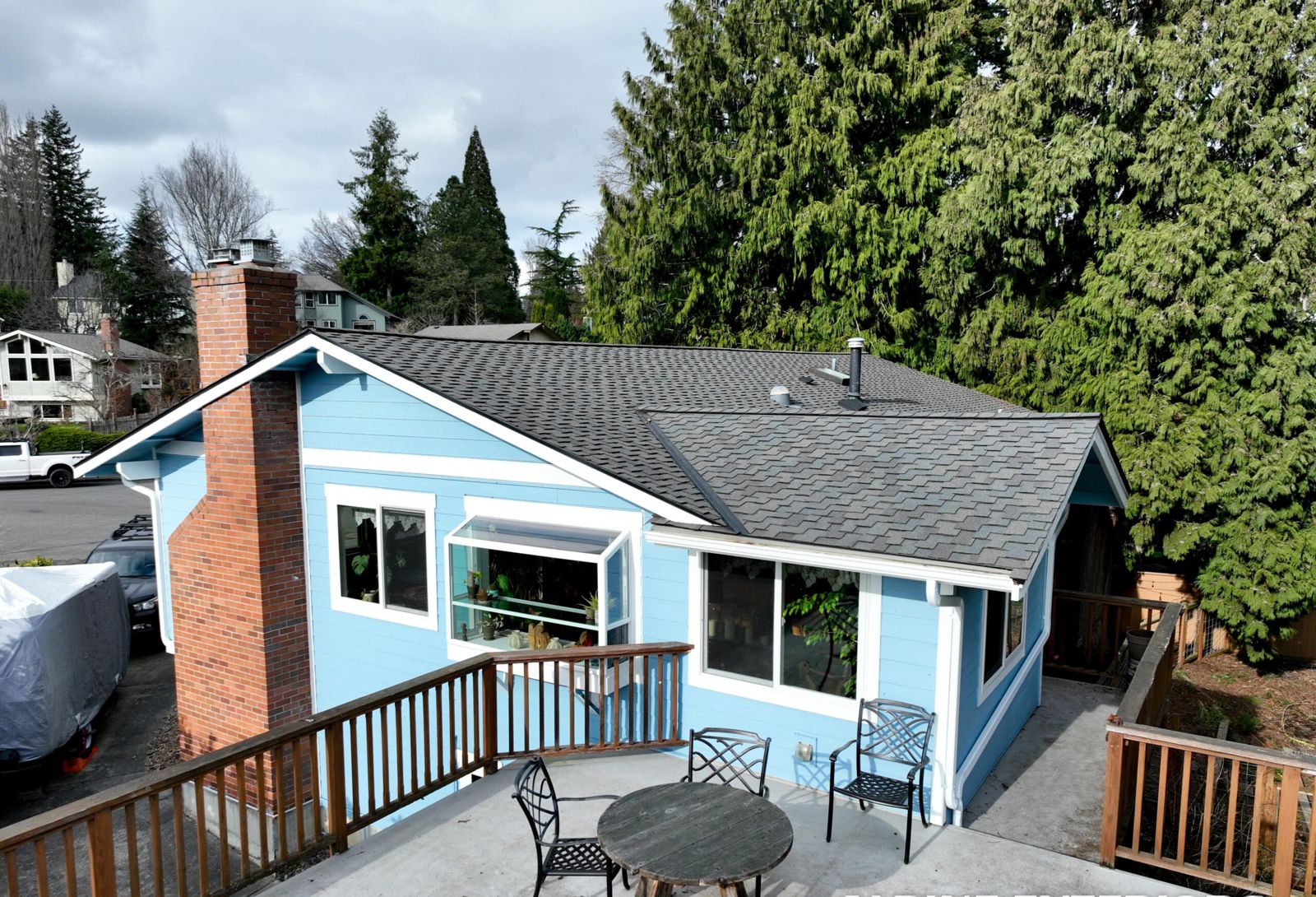
The Lettered Streets neighborhood carries some of Bellingham's oldest housing stock — Craftsman bungalows, American Foursquares, and a scattering of older cottages built in the early 1900s and updated in waves ever since. Walk any block between the bay and Western Washington University and you'll see original wood drop siding next to 1970s aluminum retrofits next to 1990s vinyl and the occasional recent fiber cement job. That mix isn't an accident — it's a hundred years of homeowners solving the same problem: how to keep a wood-frame house dry in a place that gets soaked most of the year. This guide walks through what actually holds up here, and what to skip, based on the housing stock and weather this neighborhood actually deals with.
For most Lettered Streets homes, fiber cement lap siding is the strongest all-around choice, and it's what we install most often on both re-sides and repairs in this neighborhood. It resists moisture better than wood without looking like plastic, it holds paint through Bellingham's long wet seasons, and it doesn't feed the moss and algae growth that shows up fast on north- and west-facing walls near the bay. If keeping the historic look of an original Craftsman is the priority and budget allows for more upkeep, real cedar siding — properly back-primed and detailed — is still a legitimate option, especially on homes where the trim and window proportions were designed around a wood reveal. Engineered wood siding sits in between: closer to the price of cedar, lower maintenance than cedar, but more dependent on flawless flashing and caulking to avoid the swelling problems that gave the category a bad name in the 1990s. Vinyl has its place on rental properties and budget-driven projects, but it's rarely our first recommendation on a house in a neighborhood where the architecture rewards a real shadow line.
We're not ranking these products against some generic national standard. We're ranking them against what a house one block off Bellingham Bay actually experiences over a Whatcom County winter:
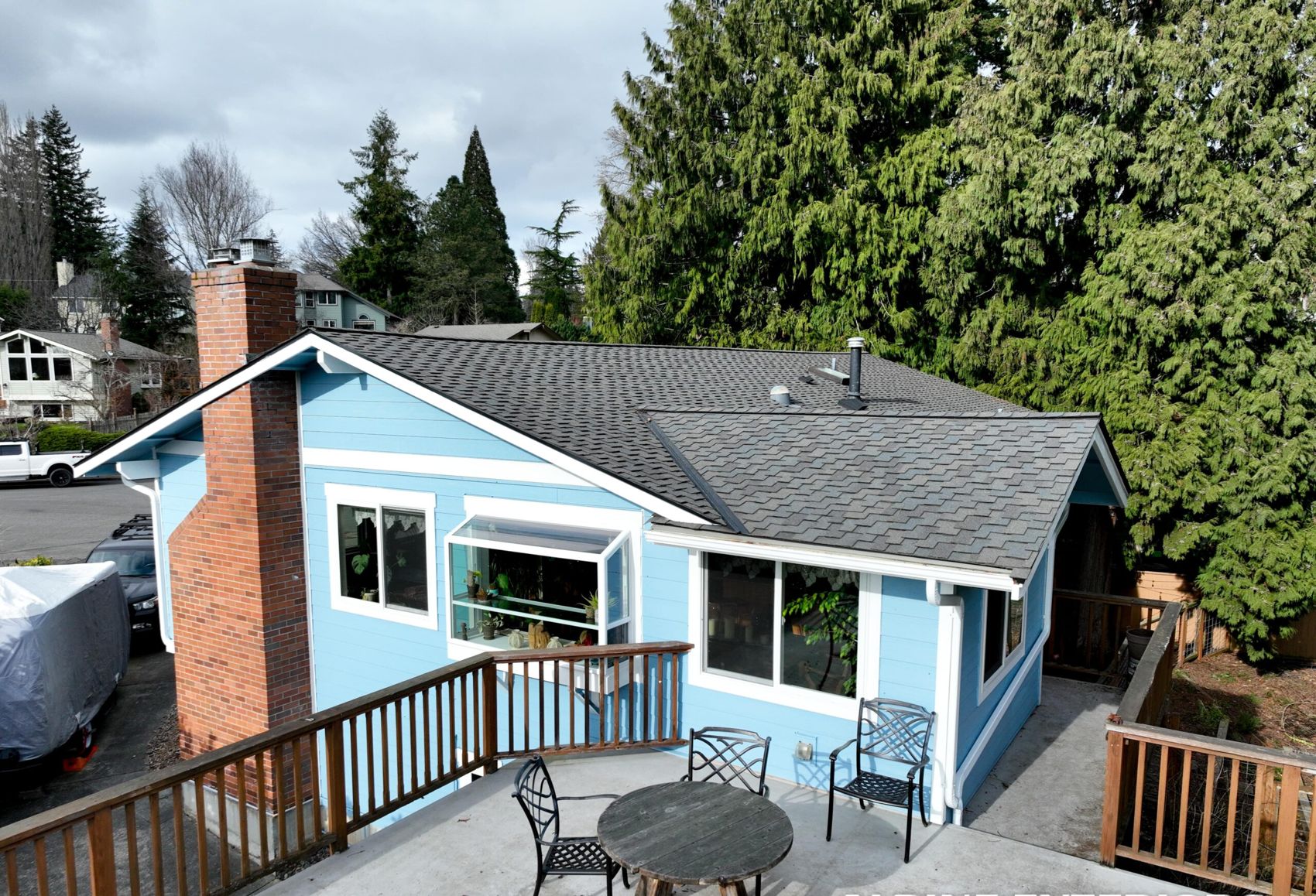
Fiber cement lap siding is cement, sand, and cellulose fiber pressed into planks that mimic a traditional wood reveal. It doesn't rot, it doesn't feed moss the way bare wood does, and it holds exterior paint far longer than wood siding does in this climate — we regularly see fifteen-plus years between repaints on fiber cement jobs we've installed, versus much shorter intervals on painted wood. It's heavy, so installation is more labor-intensive and a bit more expensive up front than vinyl, and it has to be field-cut and painted (or ordered pre-finished) correctly, or the cut edges will wick moisture over time. The honest downside: it's not cheap, and if it's installed without a proper rainscreen gap and correct flashing at every window and door, it can trap moisture behind it just like any other cladding. Done right, though, it's the material we'd put on our own house in this neighborhood.
Engineered wood siding (strand-based products like LP SmartSide and similar) uses wood fiber bonded with resin and coated with a factory finish. It gives a closer match to a traditional wood reveal than fiber cement in some profiles, it's lighter and faster to install, and current-generation products resist moisture far better than the OSB-based siding that caused widespread swelling and rot problems in the Pacific Northwest in the 1990s. That history is worth naming honestly, because some Whatcom County homeowners remember it and are wary for good reason. Modern engineered wood is a different, better-engineered product, but it still depends heavily on sealed cut edges, correct caulking at joints, and keeping the bottom edge off grade and hardscape. On a house with deep eaves and good gutters, it performs well. On a house with minimal roof overhang facing the prevailing wind off the bay, we'd lean toward fiber cement instead.
Real cedar — bevel, shingle, or shake — is the material a lot of the original Lettered Streets housing stock was built with, and it's still the right call when matching or restoring a historically detailed home matters more than minimizing upkeep. Western red cedar is naturally resistant to rot and insects compared to other woods, and it takes stain or paint with a texture nothing else fully replicates. The tradeoff is real: cedar needs to be back-primed before installation, refinished on a regular cycle (stain more often than paint), and watched closely at grade lines, deck ledgers, and anywhere it stays wet longer than it can dry. In a neighborhood with this much rain and this many shaded, moss-prone walls, unmaintained cedar is exactly the siding you'll see peeling, graying unevenly, or rotting at the bottom courses on older homes that haven't been kept up. It's a beautiful, authentic choice for someone willing to stay on top of the maintenance schedule — not a low-effort one.
Vinyl is the least expensive option and the easiest to maintain in the narrow sense that it never needs painting and rinses off with a hose. That's a real advantage for a rental or a budget-constrained project. But vinyl has genuine limits in this climate and this neighborhood: it can warp or buckle if installed too tight (it needs room to expand and contract, and installers in a hurry sometimes skip that), moisture can get trapped behind it if the water-resistive barrier and flashing underneath aren't done correctly, and it flattens the shadow lines and trim details that give a lot of these older homes their character. It also doesn't hold up as gracefully as fiber cement or well-maintained cedar when it comes time to sell — buyers looking at a historic-adjacent neighborhood tend to notice vinyl. We'll install it when a homeowner's budget or rental economics call for it, but we don't present it as the best long-term match for this particular neighborhood's housing stock.
Metal panel siding shows up more on newer builds and additions than on the historic core of Lettered Streets, but it deserves a mention because it handles wind-driven rain and moss resistance about as well as anything on this list — it simply doesn't feed organic growth the way wood-based products can, and a quality factory finish holds color for decades. The tradeoffs are cost (often comparable to or above fiber cement depending on profile and gauge), a more industrial or modern look that can clash with a Craftsman or Foursquare's original lines, and the need for correct fastening and expansion detailing to avoid oil-canning or loosening over time. It's a strong option for a modern addition or a detached garage/shop; it's a harder sell as a full re-side on an original 1910s bungalow.
A few choices come up often enough in this neighborhood that they're worth calling out directly:
For most homes in this neighborhood, yes. The price gap narrows once you account for how much less often fiber cement needs attention and how much longer it typically holds its finish through Whatcom County's wet seasons, and it tends to hold value better on a home in a historic-character neighborhood where buyers notice the difference.
It can, especially if you're restoring or matching original detailing and you're prepared to keep up a regular refinishing schedule. Cedar isn't a low-maintenance choice in this rainfall, but it's the most authentic match for the neighborhood's original housing stock when it's properly back-primed, flashed, and kept off grade.
Shaded, north- or west-facing walls near mature trees and the bay stay damp longer than they would in a drier climate, which speeds up moss and algae growth on porous or unfinished surfaces. Fiber cement and quality factory-finished products resist this better than bare or lightly finished wood, though nothing is fully immune without occasional cleaning.
Less than homes up in the foothills or around Sudden Valley — Lettered Streets sits close to sea level, so freeze-thaw cycling on the siding itself is a smaller factor here than sustained moisture and wind-driven rain are. It's still worth choosing a material and installation detail that don't trap water, since any trapped moisture that does freeze can accelerate existing damage.
Every house on these blocks has its own history — different additions, different past repairs, different trouble spots where moisture has been finding its way in for years. Alpine Exteriors has worked on enough of them to know that the right siding choice depends as much on your home's specific grading, roofline, and trim details as it does on the material itself. If you're weighing fiber cement against cedar, wondering whether your current siding is actually failing or just needs better flashing, or planning a re-side that meets current energy code expectations, Alpine Exteriors (WA contractor license ALPINI751OW) can walk your property with you and give you a straight assessment before you commit to a material. Reach out to schedule a look at your home.